Free making guides
Learn polymer clay
Step-by-step guides for conditioning, cutting, baking, finishing and adding hardware, plus fixes for cracked, sticky or stuck clay.
New to polymer clay?
Start here
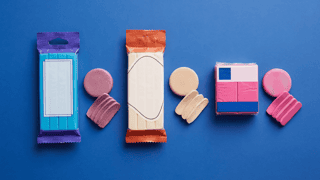
Five guides in making order, from choosing a clay to adding earring hardware.
Something went wrong?
Fix a problem
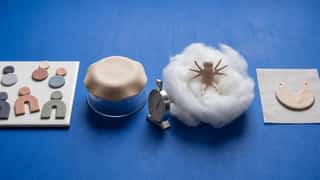
Pick what you are seeing to open the guide that covers it.
- Clay is cracking
- Clay is too soft or sticky
- Clay is stuck in the cutter
- Slabs come out uneven
- Pieces sag or bend in the oven
- Earring posts come off
- Jump ring holes tear or crack
- Paint or sealer stays sticky
64 guides
Browse by topic
Topics run in making order, and each one starts with its most complete guides.
018 guides
Clay and tools
Which clay to buy, the tools worth having first, and a setup that fits a small table.
All tool guides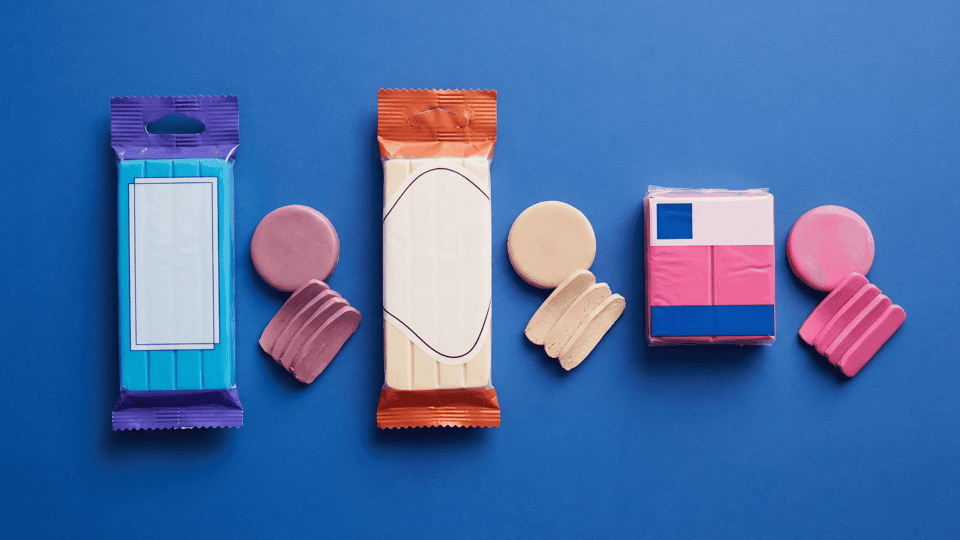
Premo vs Soufflé vs FIMO: which polymer clay to buy for cutter and layered pieces
Buy Sculpey Premo first for cutter and layered pieces, Soufflé when the pair must stay light, and FIMO Professional when a design cuts many small pieces from one slab.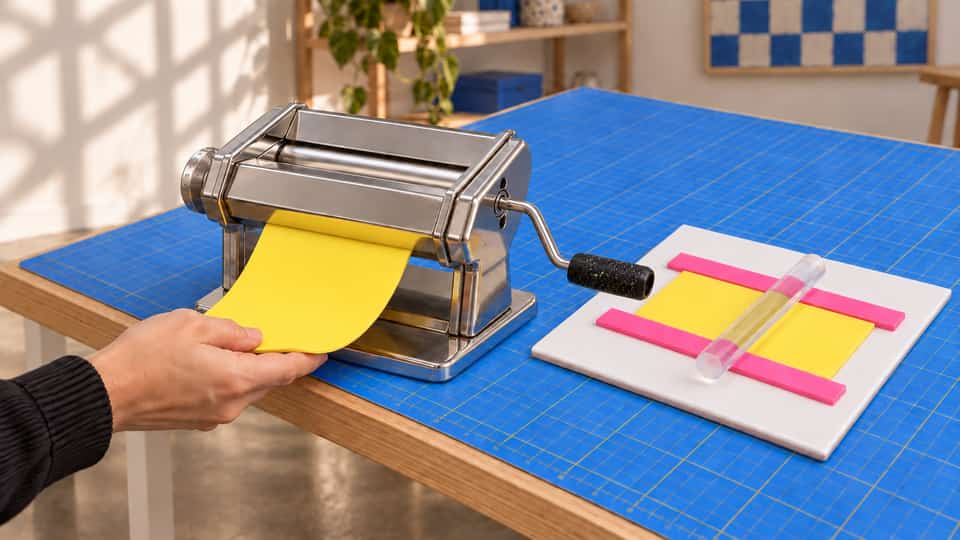
Best pasta machine for polymer clay: Atlas, Sculpey, Makin's or a roller
Buy the Marcato Atlas 150 for earring slabs and blends, or the Atlas 180 for slabs over 14 cm wide. Measured widths, thickest settings and lower-cost machines, compared.
What’s in my polymer clay kit? 10 things I’d buy first
The ten things I would replace first, from the pasta machine that saves my hands to the small tools, work surfaces, cutters, and clay I would choose again.
024 guides
Preparing and cutting clay
Soften every colour evenly, roll slabs to one thickness and get clean shapes out of the cutter.
Conditioning guides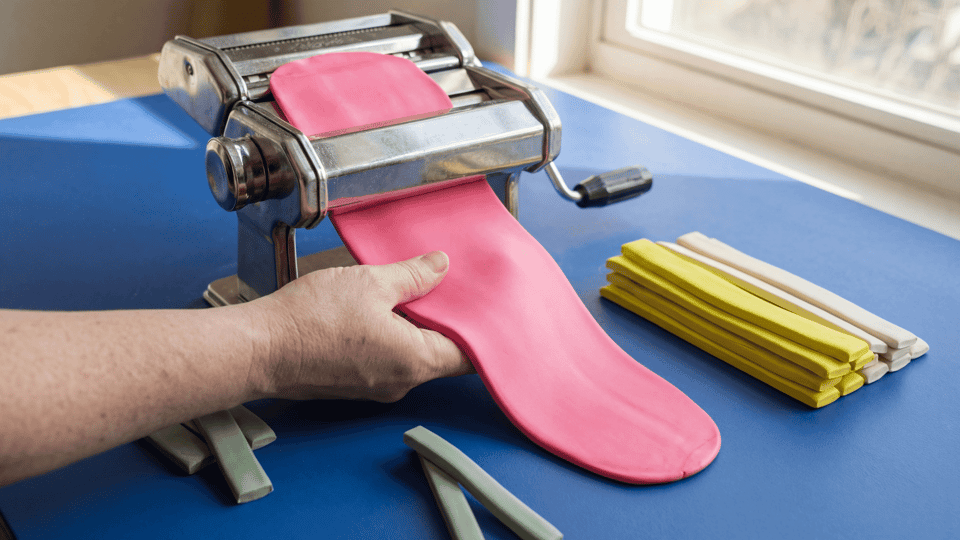
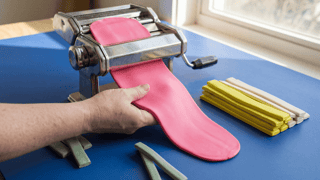
How to condition polymer clay and roll an even slab for cutters
Get every clay colour to the same softness, roll each layer to its measured thickness on a tile, and let warm clay firm up before you cut.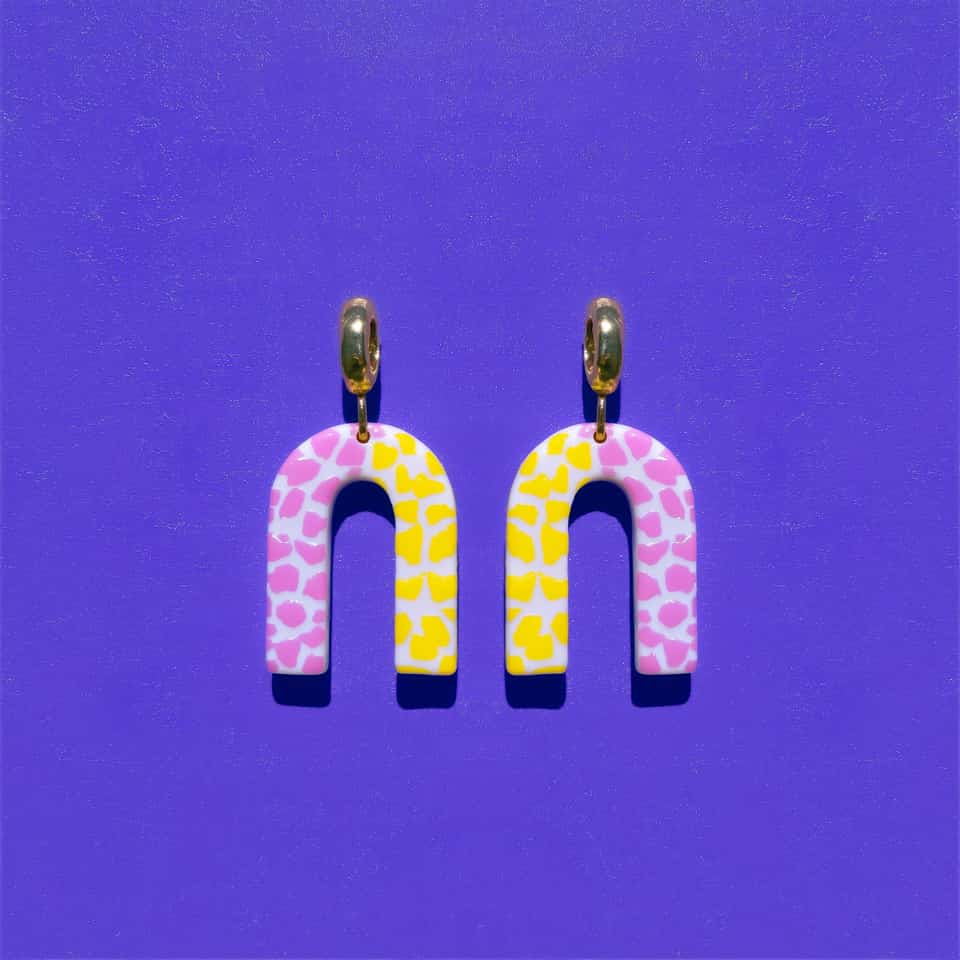
How thick should polymer clay earrings be?
Roll flat earrings about 3 mm thick or a little thinner, measure the raw slab, and size the jump ring, post pad and pasta machine setting to that thickness.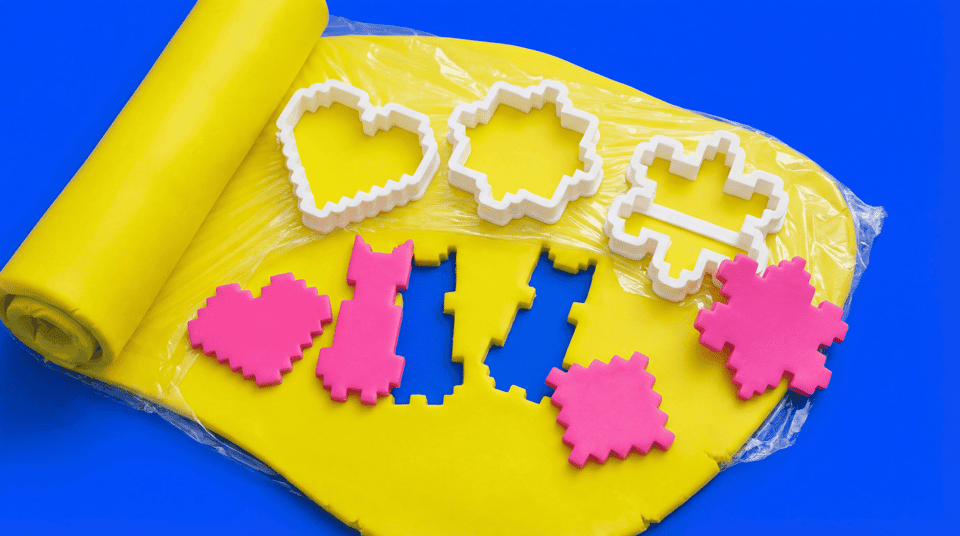
Polymer clay stuck in your cutter? How to release it and stop it sticking
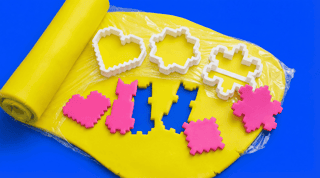
Free a trapped shape, dust the cutter without leaving white clumps, and set up the slab for the next clean release. Includes the cling-wrap method for softer edges.
033 guides
Baking
Check the real oven temperature, choose what to bake on, and find out why pieces crack.
Baking guides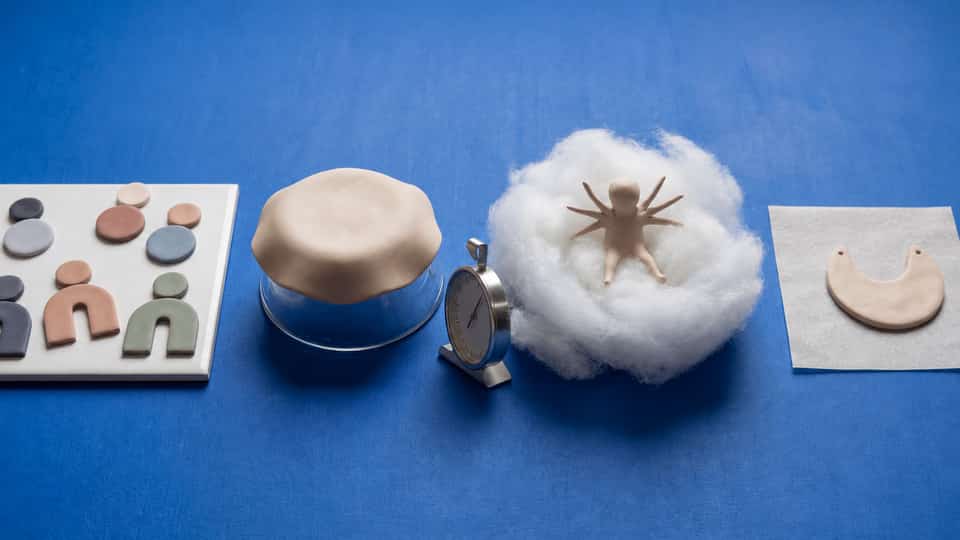
What to bake polymer clay on: tile, card and supports for flat, folded and large pieces
Bake flat pieces on a glossy tile and move them onto plain card only for a matte back. Hold curves, limbs and overhangs with fiberfill, crumpled foil or an oven-safe glass form, bake round beads on skewers, and leave everything on its support until it feels cool.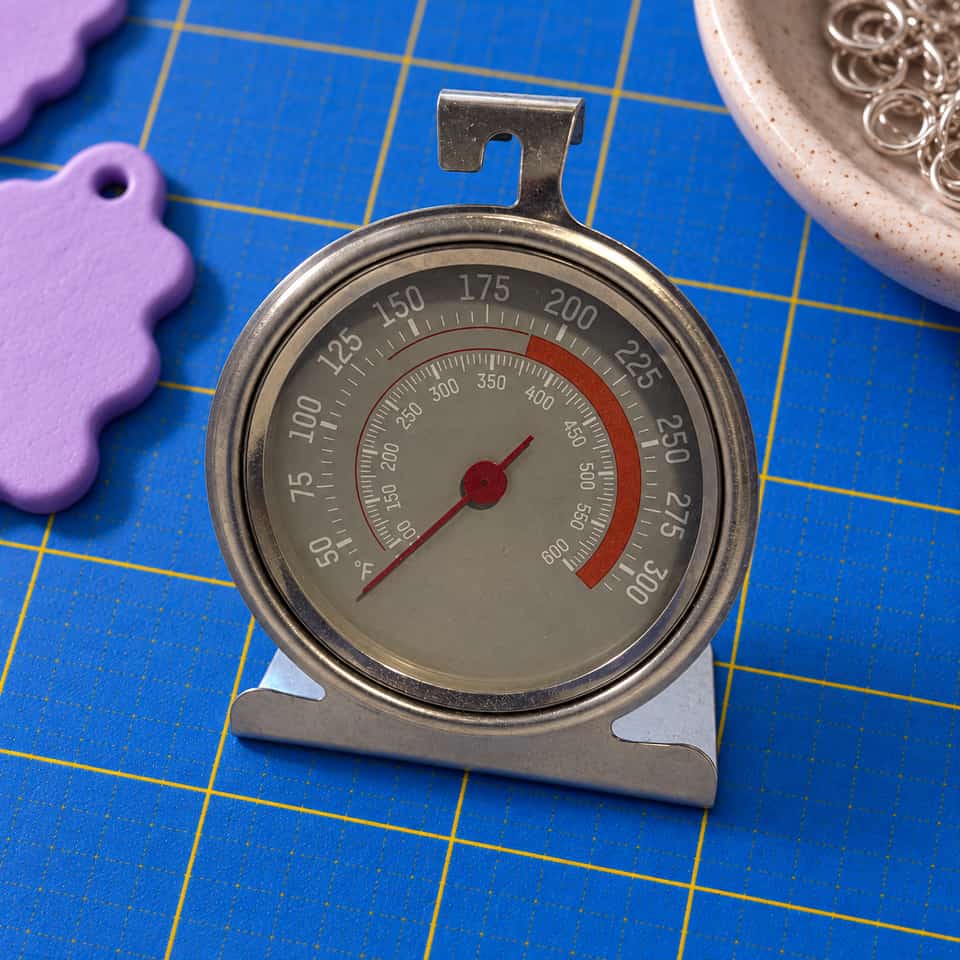
Best oven thermometer for polymer clay: what to buy and how to use it
Choose a dial you can read through the oven door, or an oven-rated air probe with an outside display. Then check the temperature beside your clay.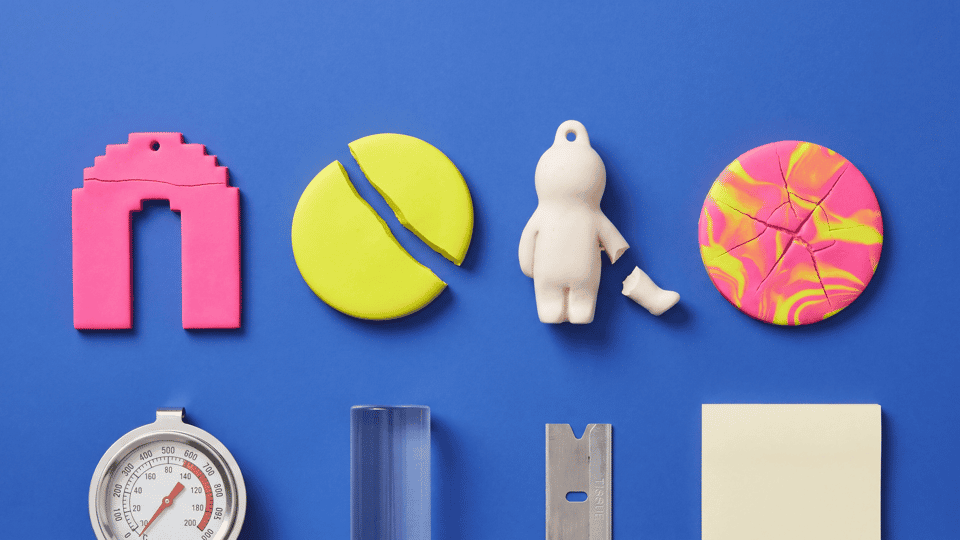
Why Is My Polymer Clay Cracking? Causes and Checks
When polymer clay cracks, check the package bake, measured oven temperature, conditioning, thickness, and support before assigning one cause.
0415 guides
Colour and pattern
Colour blends, marbling, mixing, canes and surface patterns you can cut shapes from.
Surface effect guides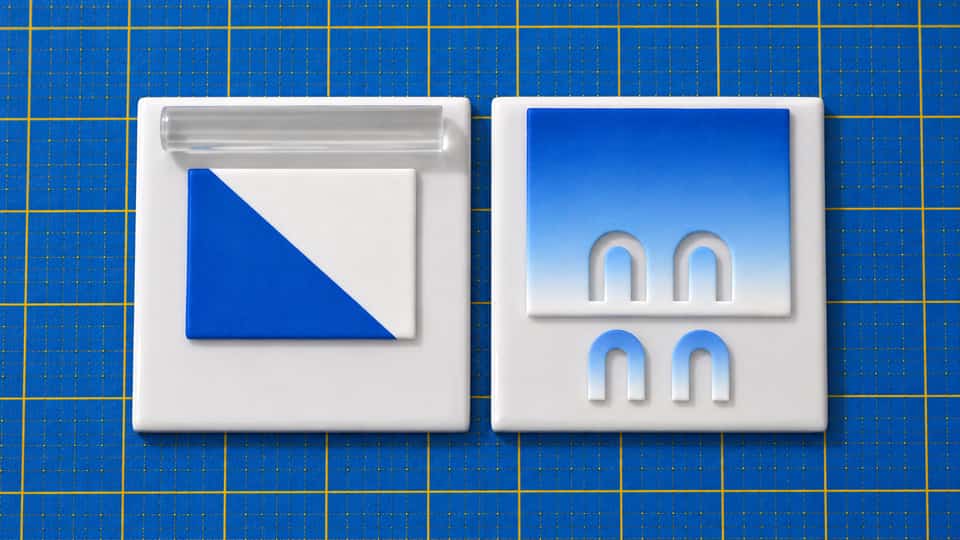
How to make a Skinner blend with polymer clay
Make polymer clay fade from one colour into another: the offset layout, the fold rule, how many passes, the no-machine method, cutting an ombre pair, cane plugs and rainbow blends.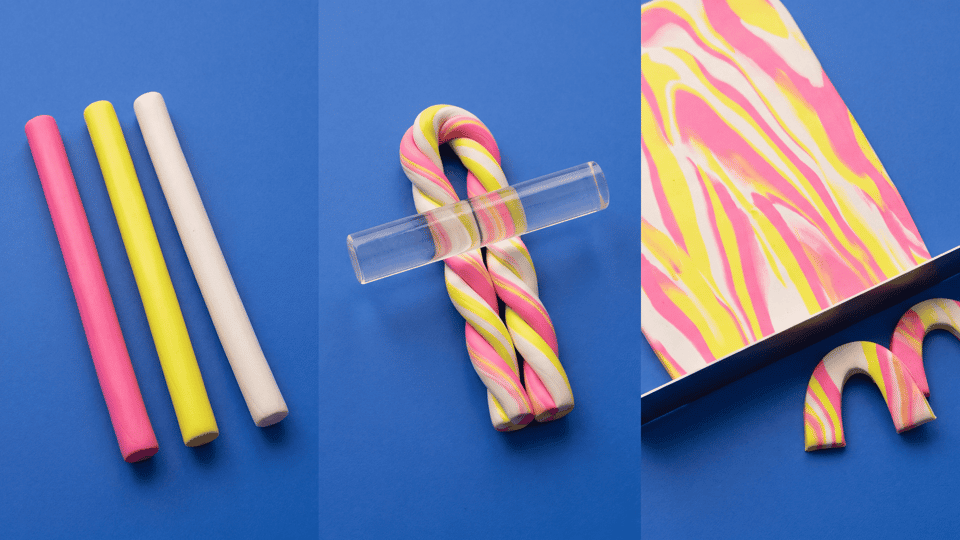
How to Marble Polymer Clay: Beginner Tutorial (Step by Step)
Learn how to marble polymer clay with three colors, a roller, and a blade. A beginner tutorial with pulled, stacked, and tile-cut variations, plus the fix for muddy slabs.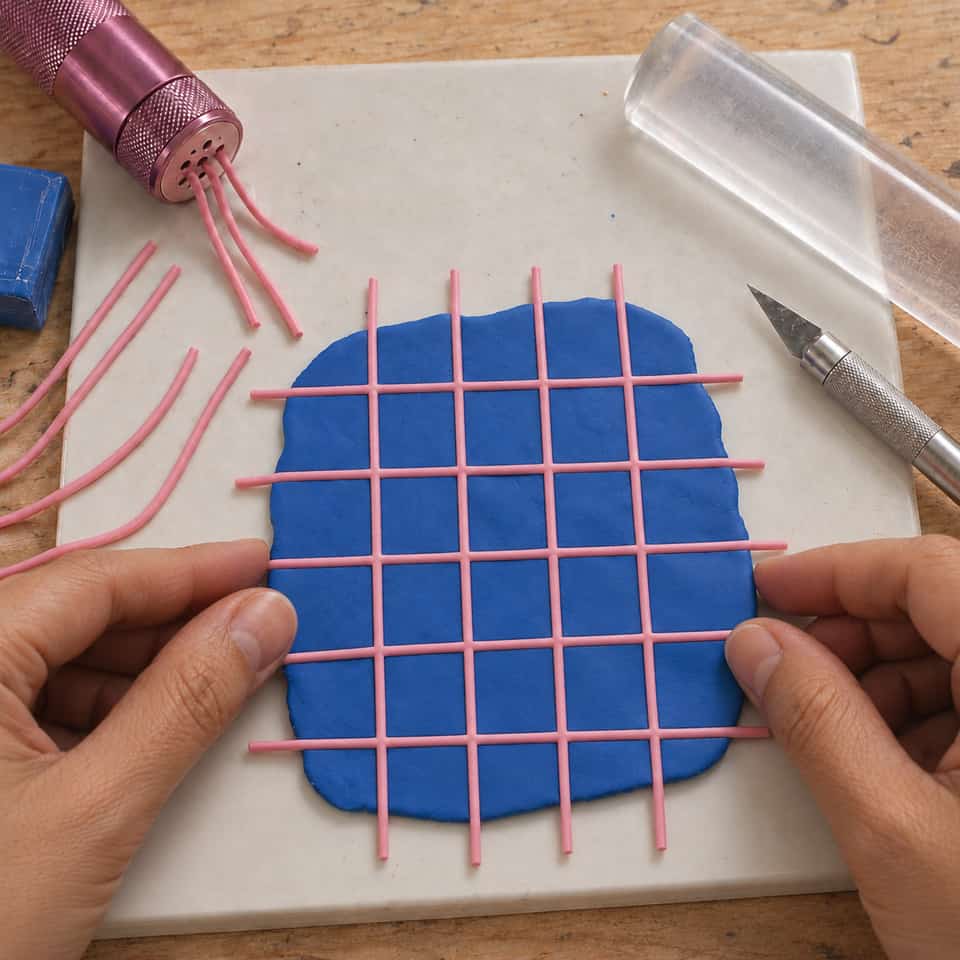
How to make grid-patterned polymer clay slabs
Lay thin strands of contrasting clay in two directions, then roll the grid into your slab before cutting. Follow the four illustrated steps.
- Polymer Clay Color Mixing: Sage and Terracotta Swatch Tests
- Polymer Clay Surface Effects: Cane, Inlay, Texture, or Print
- Polymer Clay Cane: A Small Recorded Pattern Exercise
- Layered Polymer Clay Pattern Block (Nerikomi-Inspired)
- Polymer Clay Mokume Gane: Reduction, Distortion, and Slicing
- How to make polymer clay terrazzo: chips, slab, cut and sand
- How to Make Faux Bakelite in Polymer Clay (Cherry-Amber Swirl Tutorial)
- Sculpey Soufflé Sutton Slice: One Official Project
- Polymer Clay Silkscreens, Stencils, And Halftone Graphic Slabs
- Polymer Clay Domed Studs, Metallic Inlay, and Gilded Details
- Faux Stone and Translucent Effects With Cernit Tests
- Three 2026 Paint Color Signals to Test in Polymer Clay
054 guides
Pixel designs
Layered pixel earrings, stepped pixel edges and bead grids, and how to choose between them.
Pixel art guides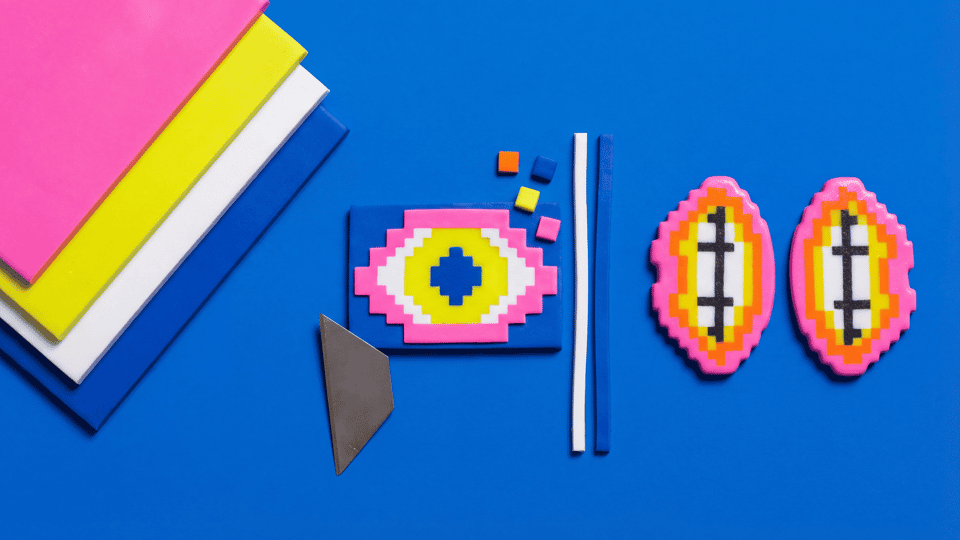
Layered pixel clay earrings: how to line up thin colour layers without stretching them
Your cutters shape each piece, but you place every colour layer by hand. Lift thin layers on a flat blade, line each one up before any pressure, then press the stack lightly through parchment.
Polymer clay pixel art: pick the build method for your design
Five ways to build polymer clay pixel art, compared on one 12 x 12 design: stacked cutter layers, one stepped silhouette, square tiles, a pixel cane or clay beads, plus the sum that sets each pixel's size.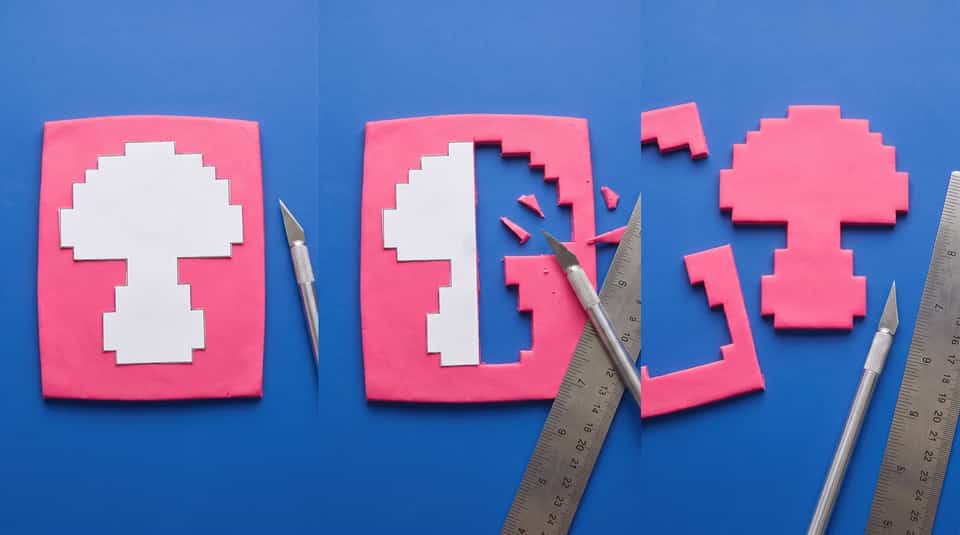
Cut 8-Bit Pixel Polymer Clay Earrings: Staircase Guide
True 8-bit pixel earrings and brooches need stepped-edge silhouettes that look like deliberate pixels from a distance, not softened curves. This guide covers grid-based templates, blade-cut checks, and keeping the staircase crisp through cure.
0610 guides
Findings and hardware
Jump rings, earring posts, glue, holes and brooch backs, and how to attach each one.
All findings guides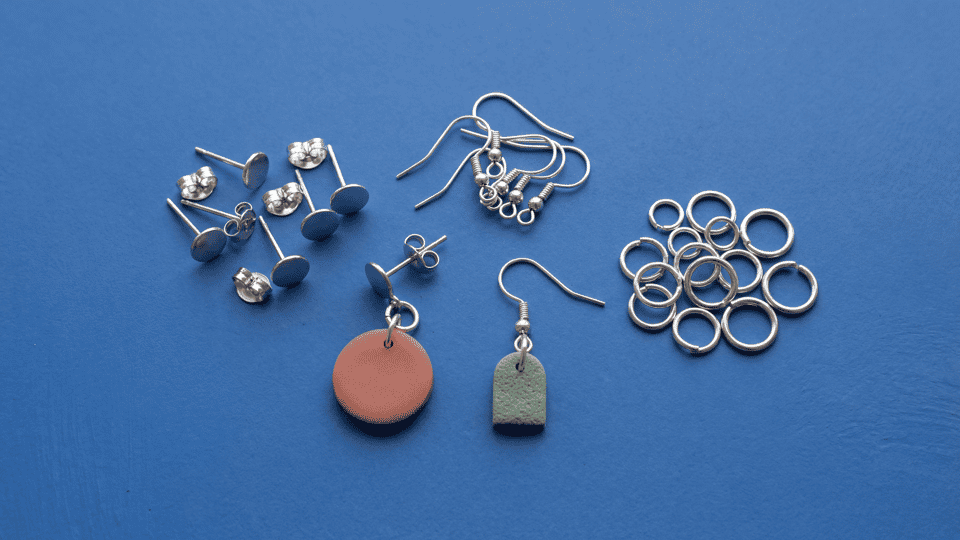
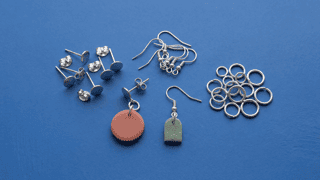
How to attach earring findings to polymer clay earrings
Choose a fish hook, leverback or looped stud, join it with a jump ring, add a second ring if the drop shows its edge, and check the pair before you wear it.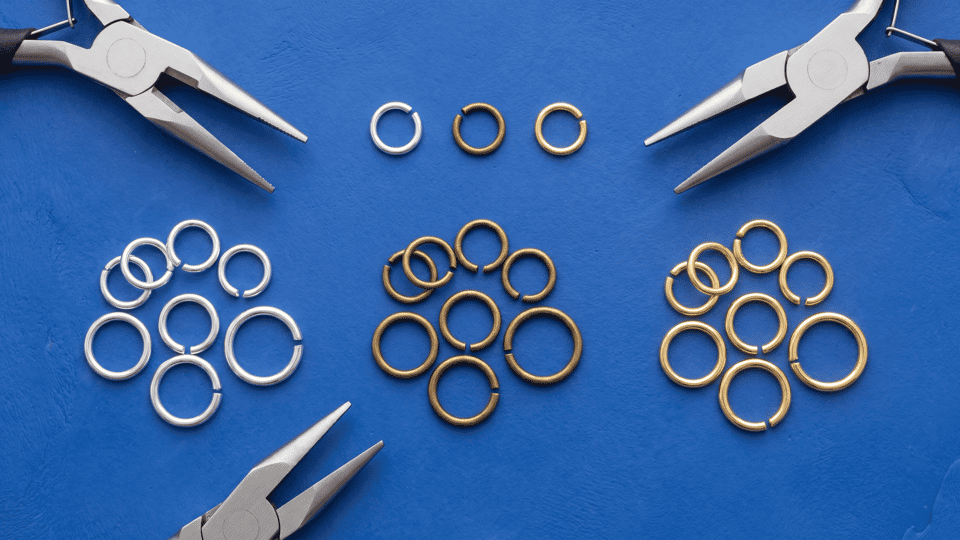
How to choose jump rings for polymer clay jewellery
Learn how to measure jump rings, choose a size that lets your clay earrings swing freely, and open and close the rings with pliers.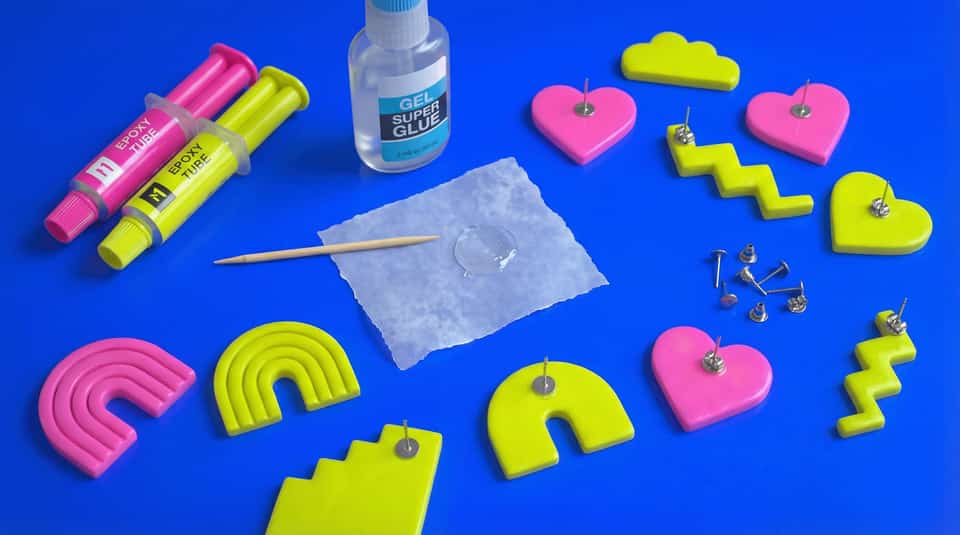
Best glue for polymer clay earring posts: what makers use
Two published maker sources name gel super glues such as Loctite's Gel Control and Gorilla Super Glue Gel for posts. Sand the spot to bare clay, use a small dot and wait 24 hours before wearing.
- Best earring posts for polymer clay studs: pad size, backs and metal
- Jump ring holes in polymer clay: punch before baking or drill after?
- How to attach a brooch pin to polymer clay so it sits straight and stays on
- Polymer Clay Pendant Holes, Bails, and Jump Ring Placement
- Brooch backs for polymer clay: which pin to choose before you bake
- Polymer Clay Stud Toppers, Flat Pads, and Connector Rings
- Polymer Clay Cutout Arch Earrings and Hoop Drops
074 guides
Sanding, painting and sealing
Smooth baked edges, paint small details and choose a finish that dries properly.
Sanding and buffing basics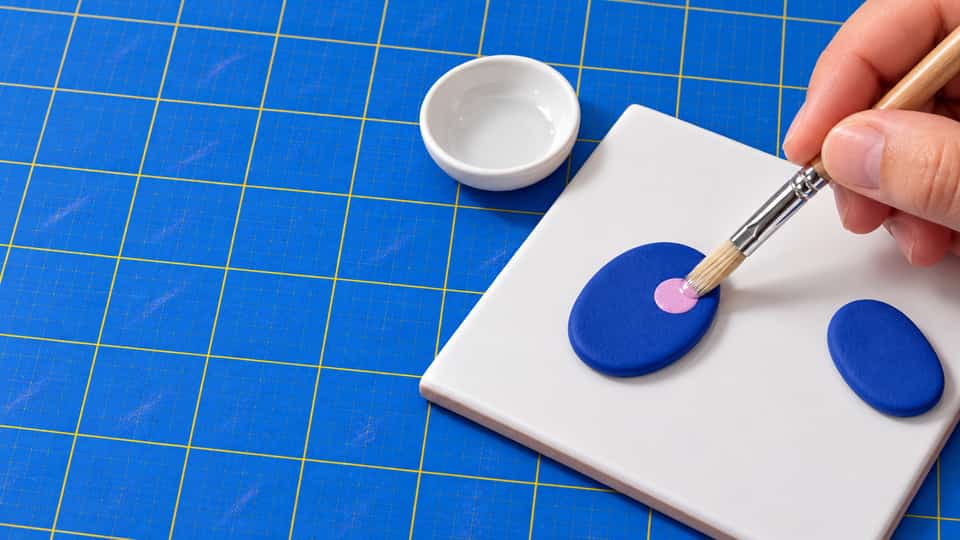
Painting baked polymer clay: which paint to use and whether to seal it
Painted details on a baked piece can smudge, rub off or leave a glaze sticky at the very last step. See which paint grips baked clay, how to brush small details cleanly, and when a coat is worth adding.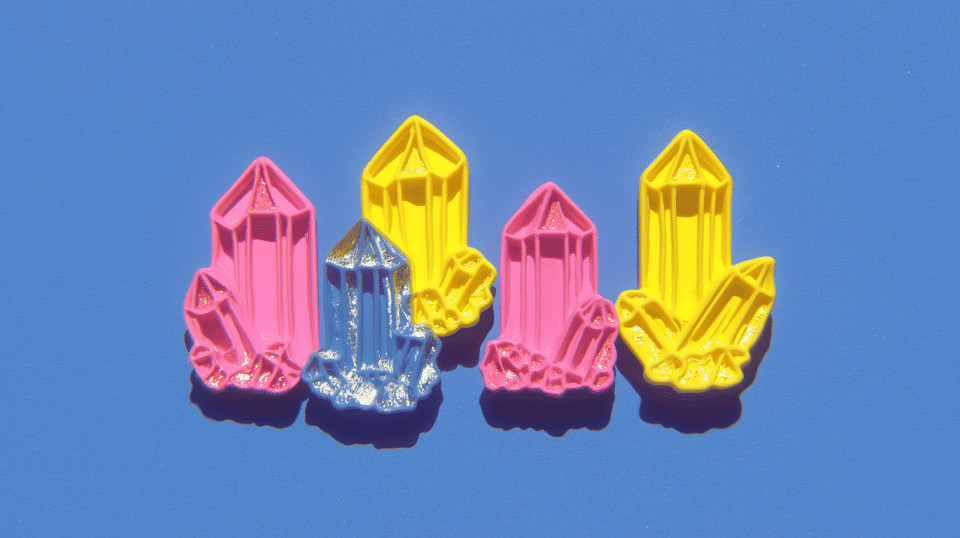
Sanding and Buffing Polymer Clay: Pressure and When to Stop
Smooth rough edges on baked clay with wet/dry paper and water. Support small details, remove the scratches from each grit, then hand-buff for a soft sheen.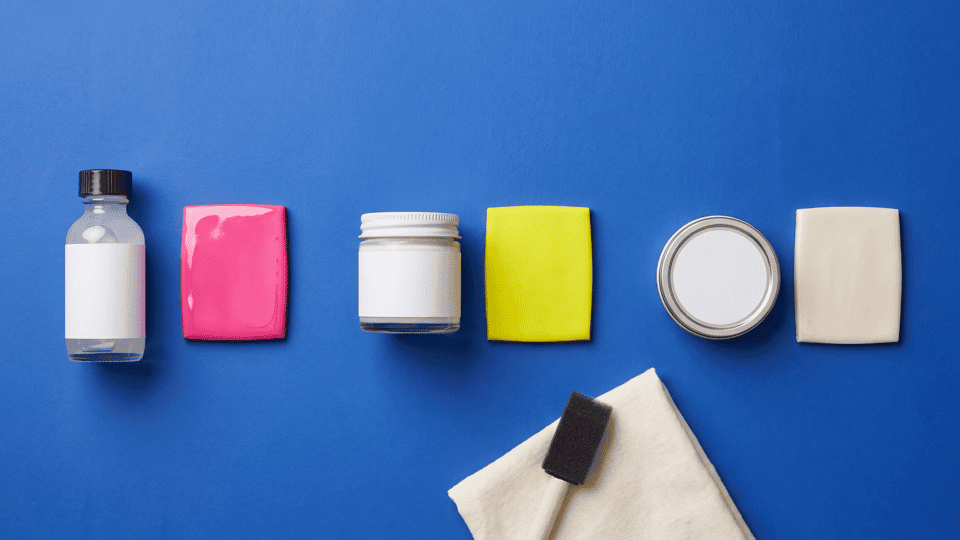
Do You Need a Sealer for Polymer Clay? Compatible Finish Options
Leave a good cured surface bare, or choose one documented water-based finish, test it on the same clay line, and follow the current product label.
0814 guides
Buttons, figurines and more
Build order, supports and small details for buttons, figurines, miniature food, dishes and statement jewellery.
Build order overview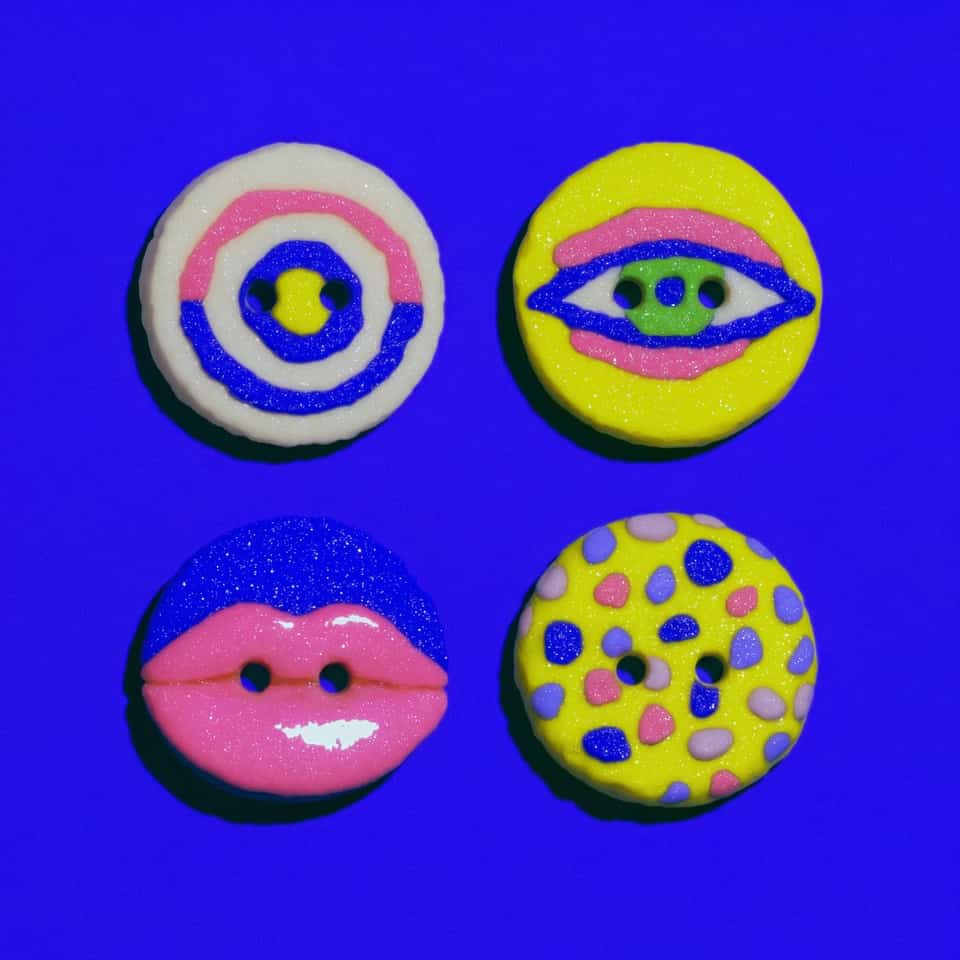
How to attach small polymer clay details so they stay on and keep a crisp edge
Stop small clay details popping off after baking or spreading as you press them. Decide on liquid clay before you start, then carry, place and tap each piece so it stays on with a crisp edge.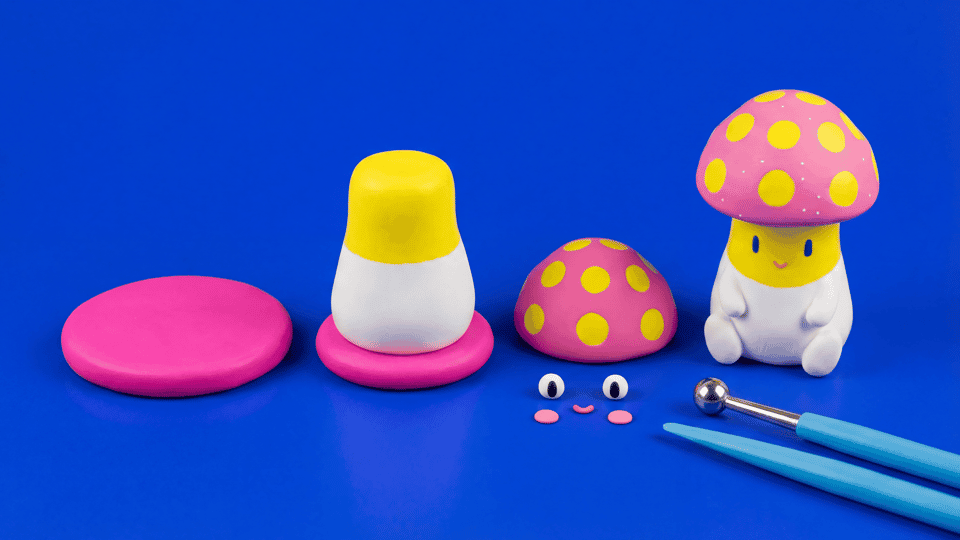
Polymer Clay Figurines: Stable Bases and Clean Features
Small figurines look simple until the base wobbles, the cap droops, or the face gets smudged while you are still shaping the body. This guide covers the order of operations that keeps polymer clay characters stable with cleaner features.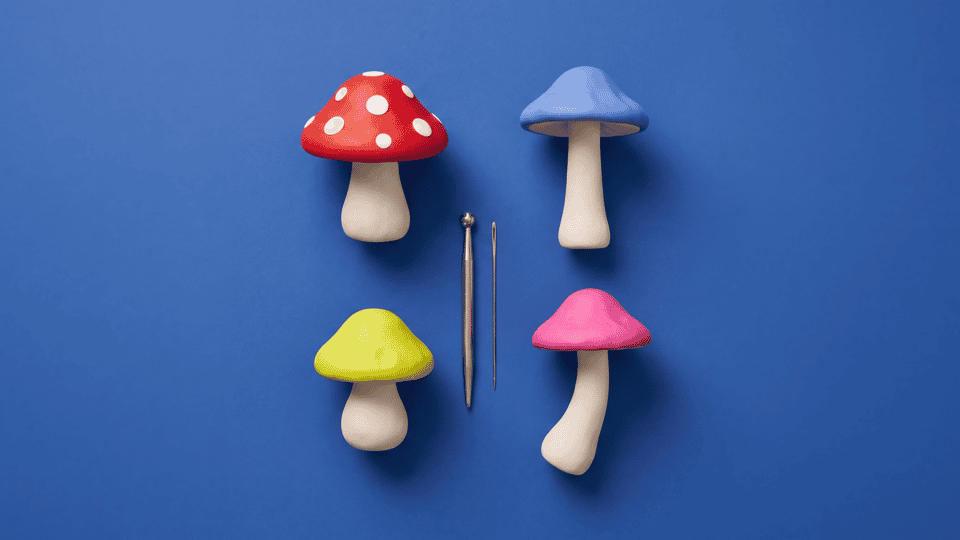
How to make polymer clay mushrooms: a desk toadstool, an earring charm and a plant-pot pick
A polymer clay mushroom is a domed cap with a socket pressed into its underside and a teardrop stem seated in it. Make a desk toadstool from a quarter bar of clay per piece, an earring charm with the eye pin set before baking, or a pick for a plant pot.
- Polymer Clay Assembly: Build Order and Join Planning
- Polymer Clay Buttons: Holes, Flat Baking, and Thickness
- Polymer Clay Striped Buttons: Chevron Wraps and Drum Blanks
- Two-Color Flower Applique: Buttons, Pendants, Earrings
- Polymer Clay Miniature Food Charms: Bowls, Fish, and Tiny Toppings
- How to Make Polymer Clay Ramen Charms (Broth and Noodle Build)
- Polymer Clay Trinket Dishes, Forms, and Rims
- Polymer Clay Snake Bangles: Size, Sculpt, Texture
- Polymer Clay Collar Necklaces, Bibs, and Curved Bases
- Polymer Clay Relief Faces, Portrait Plaques, and Stud Toppers
- How to Reverse-Engineer a Polymer Clay Design from a Photo
092 guides
Selling and batches
Make matching pieces for orders and restocks, and get past a creative rut.
Selling polymer clay earrings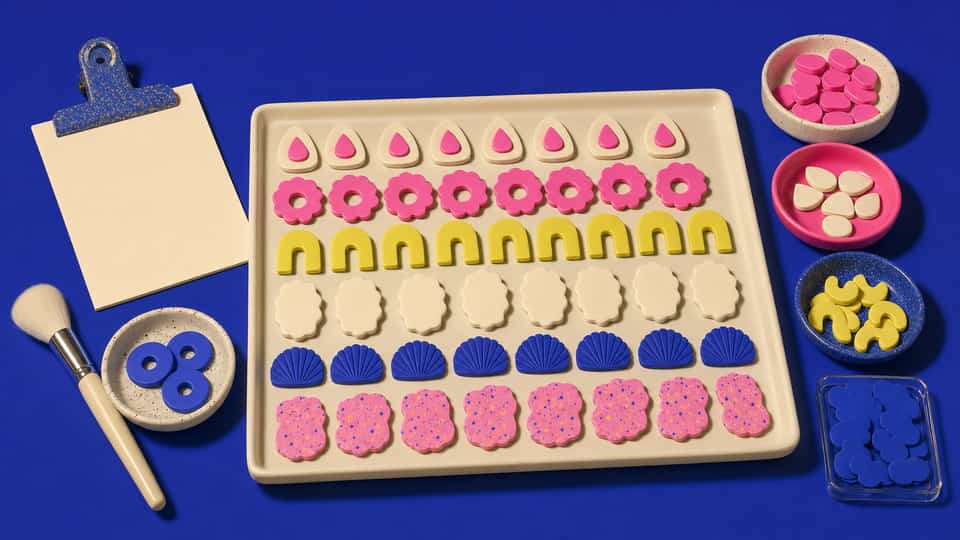
Batch production checklist for polymer clay sellers
Make matching pieces for your next order or restock. Includes cutting every drop from one recorded slab, weighing hand-shaped portions, recording colour recipes, checking finished earrings and keeping track of supplies.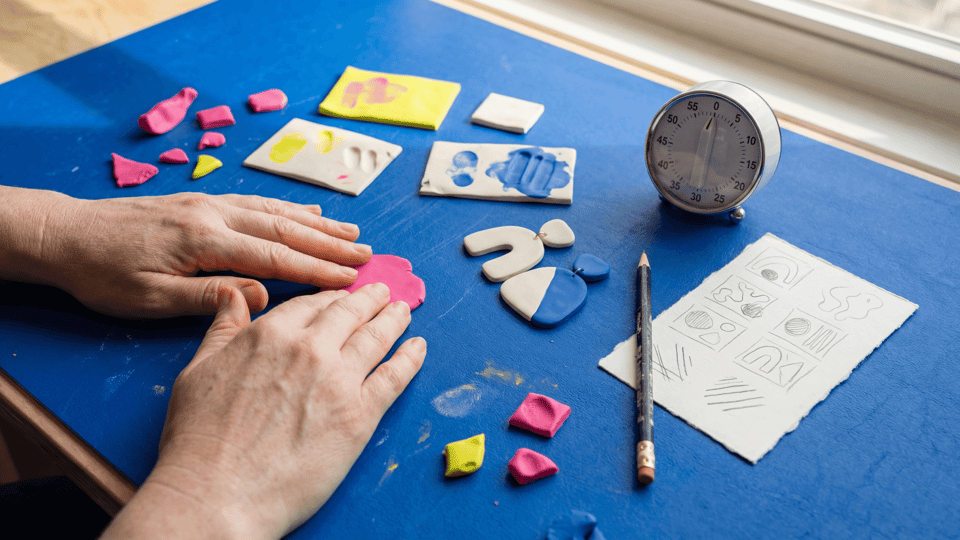
Polymer Clay Creative Block and the Bestseller Trap
The block that stops sellers is usually not 'no ideas.' It is being trapped by the one design everyone buys, or staring at orders you no longer want to make. This guide names the seller-specific triggers and gives 8 resets that clear the worktable faster than another mood board.
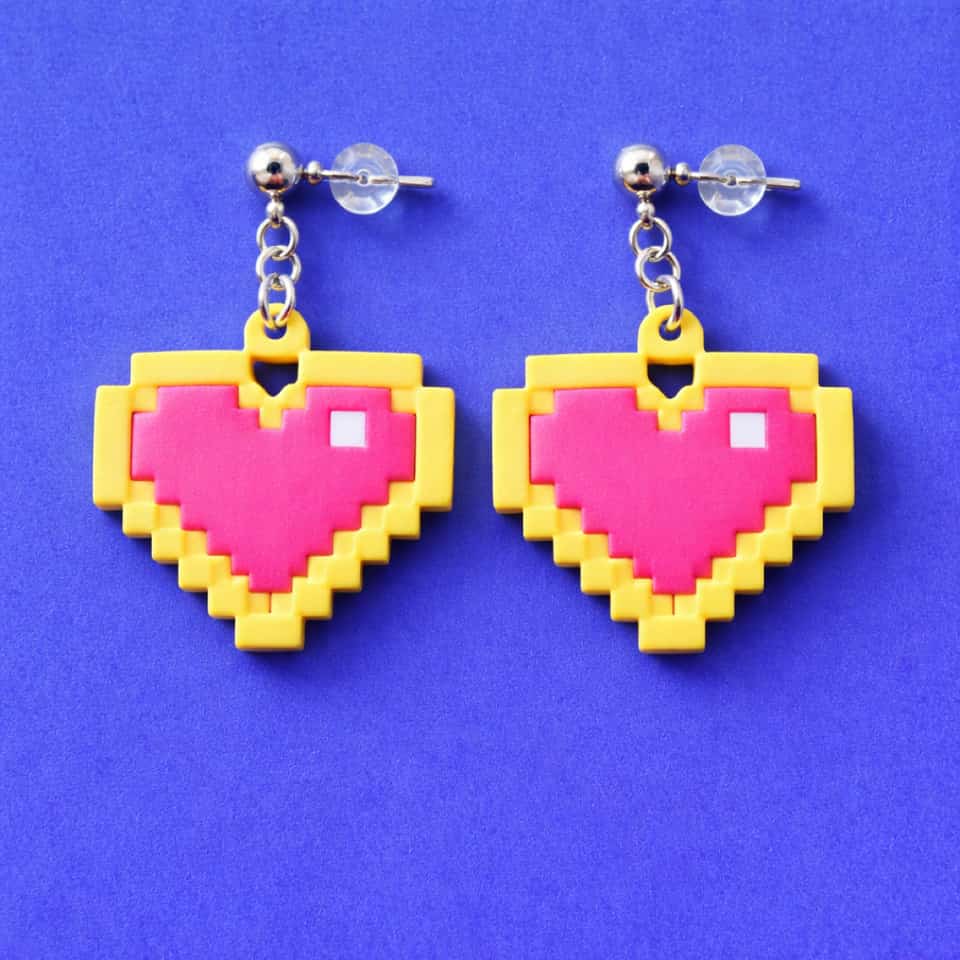
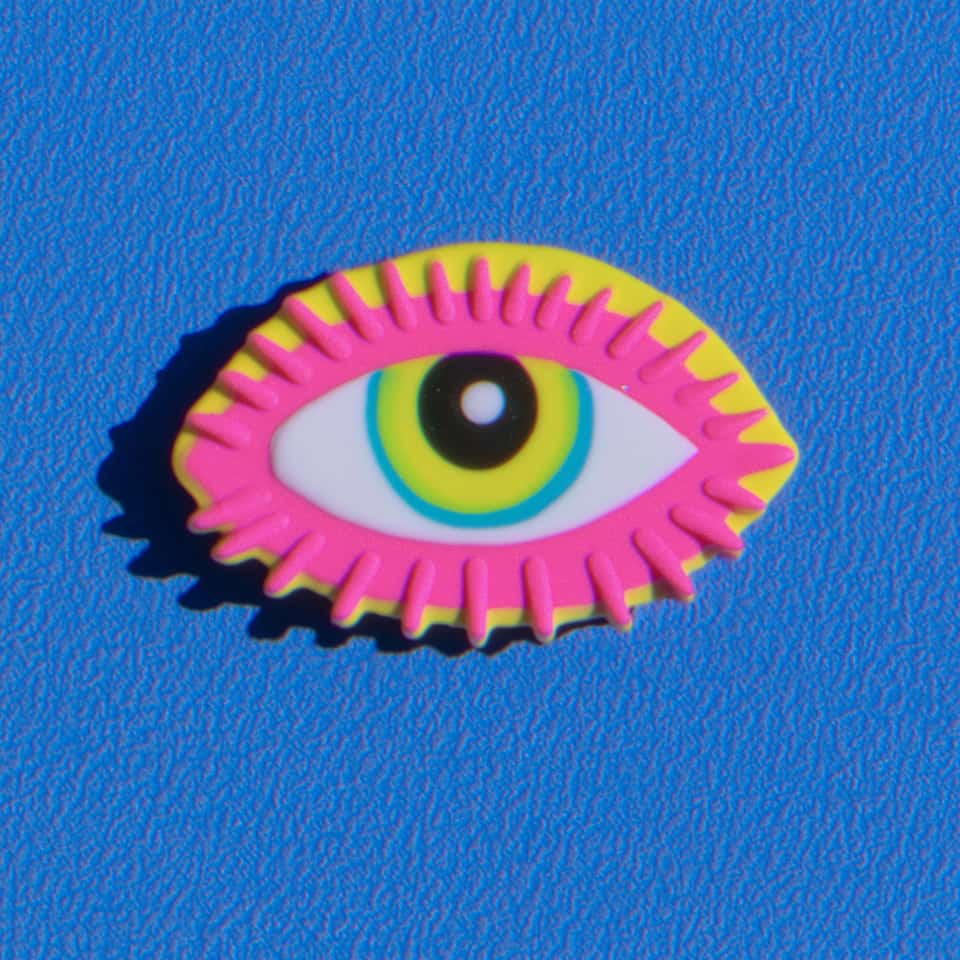
Lookbook
Learn from a finished piece
Each lookbook design comes with notes on shape, palette, clay, finish and technique. Build kits add 3D-printable tool files and a making guide for one design.
Studio notes
Get new guides by email
New technique guides, fixes and tool notes as they publish. Free, no spam, unsubscribe anytime.
By subscribing you agree to get Clay Bake Studio emails about new guides, tools, build kits and offers. Unsubscribe anytime. We do not sell your email. Read our privacy policy.