In brief
Key takeaways
- 1Bake and cool the polymer clay piece fully before any resin work. Warm or under-cured clay can fog the dome or warp it as it cools
- 2Mask earring or sew-through holes with low-tack tape from the back so resin does not seep into them during the pour
- 3Wear nitrile gloves and work with airflow. Uncured resin can cause sensitization with repeated unprotected handling, and the SDS for your specific brand is the source of truth
- 4Choose UV resin for fast cures under a 405 nm lamp or two-part epoxy for a slower self-leveling glassy dome that needs 24 to 72 hours to cure
A resin dome on polymer clay can turn a flat cured surface into a glassy raised finish, but only when the clay is fully cured, the drop volume is controlled, the holes are protected, and the resin instructions match the exact product in your hand. The common failures are cloudy spots under the dome, bubbles trapped during the pour, holes filled by runoff, and tacky surfaces that point back to resin, lamp, layer, or cure mismatch.
Two resin systems dominate polymer clay doming. UV resin cures under the lamp conditions printed for that product and is convenient for small batches and one-off pieces. Two-part epoxy self-levels and cures by the kit's own mix ratio, working time, and full-cure instructions. Both have a place. The right choice depends on your batch size, your surface stack, your equipment, and whether a scrap test cures cleanly.
Cure The Polymer Clay Piece Fully First
Resin goes on after the polymer clay is fully baked and cooled. Do not apply resin to under-cured clay.
Bake the clay piece per your line's package directions. Verify oven temperature with a separate oven thermometer; many home ovens run hot or cold. Sculpey Premo cures at around 130 C (275 F) for 30 minutes per 1/4 inch (about 6 mm) of thickness. FIMO Soft and Cernit have their own profiles, so always follow the printed directions for your specific line.
Let the piece cool fully on the ceramic tile after baking. Resin applied to warm clay can pull unevenly, creep toward one edge, or cure with a patchy surface. Plan to do the resin step in a separate session from the bake, ideally after at least an hour of cooling and inspection.
If you plan to sand the clay surface for smoothness, do it before resin. Start with the lowest wet-sanding grit that removes the marks you actually have, rinse away grit, and let the piece dry fully before any resin work. Residual moisture or sanding slurry can fog the resin from underneath.
Mask Any Holes With Low-Tack Tape
If the piece has earring holes, sew-through holes, or jump ring openings, mask them before resin or the resin will fill them in.
Apply small pieces of low-tack masking tape (washi tape or painters tape) over the holes from the back. Press the tape firmly so resin cannot seep underneath. For two-hole buttons, mask both holes from the back side of the piece so the front face stays clean.
The tape comes off easily after the resin cures. If any small drip of resin worked its way under the tape, a needle tool or a small drill bit can clear the hole after cure. Plan for a quick cleanup pass once the dome is fully set.
Follow The Resin Label For PPE And Ventilation
Resin is its own chemical finishing system. The exact product label or SDS controls gloves, airflow, eye protection, and cleanup.
Keep uncured resin off bare skin. Before you pour, read the label or SDS for the gloves, eye protection, airflow, and cleanup method the product requires. If the resin instructions mention specific glove materials or ventilation requirements, follow those over generic craft advice.
Work where you can control airflow and keep resin away from food prep, children, and pets. Odor is not a reliable safety measure, because different resin products smell different and warning labels vary. Treat the product instructions as the authority.
Cover the work surface with a silicone craft mat or another product-supported disposable surface. Cured drips on a wood table or fabric can become a permanent mess, so set up the surface before the bottle opens.
Resin Label And SDS Check
Before you use a new resin on polymer clay, write down four things beside your setup: glove and eye protection requirements, airflow instructions, maximum supported layer depth, and the label's full-cure time before handling or wear. If the label, SDS, and online listing disagree, use the most conservative product documentation or choose a resin with clearer instructions.
UV Resin Workflow: Drop, Spread, Cure By The Label
Drop UV resin in small amounts, spread with a toothpick, and cure using the lamp, layer depth, and exposure time printed for your resin.
Hold the UV resin bottle close to the piece and dispense a small drop in the center of the surface to be domed. The resin will start to spread on its own due to surface tension. Use a clean toothpick to guide the resin to the edges if needed.
Aim for the dome shape you want before curing. UV resin cures fast and stops moving the moment the lamp turns on, so any unevenness in the drop will be locked in. For small pieces like buttons or studs, one drop is often enough; for larger drops or pendants, work the resin out from the center until it nearly reaches the edge.
Place the piece under the lamp specified for your resin. Lamp wavelength, wattage, distance, layer depth, colorants, and exposure time all affect cure. If the dome stays tacky, treat that as a product setup problem to solve on scrap before you coat a finished batch.
For a thicker dome, use the layer sequence supported by the resin instructions. Stacking thin tested layers usually gives more control than trying to lay one giant drop.
Manage Bubbles Right After The Pour
Bubbles usually show up early. Use a toothpick or the product-supported bubble-release method before curing.
After dropping the resin, look closely for trapped bubbles. Pop obvious bubbles with a toothpick or follow only the bubble-release method printed for the exact resin before curing.
If bubbles still show up after cure, the next batch usually fixes them by mixing or stirring more slowly, dropping from a lower height, and giving the resin more time to release bubbles before the lamp goes on.
Two-Part Epoxy: The Slower, Self-Leveling Alternative
Two-part epoxy mixes a base with a hardener and cures according to the exact kit instructions. The trade-off is patience and careful measuring for a glassier finish.
Mix the two parts at the ratio printed on the bottles. Stir for the time on the product label, scraping the sides and bottom of the mixing cup if the instructions call for it. Under-mixed epoxy may never cure completely.
Follow the kit instructions for resting, pot life, bubble release, pour depth, and dust protection. Some products support heat-assisted bubble release and some do not, so keep that decision product-specific.
Pour the resin onto the cured polymer clay piece. Epoxy self-levels, so it will spread to the edges on its own. Use a toothpick to nudge it if needed. Cover the piece with a dust cover (a cardboard box turned upside down works) and leave it undisturbed for the cure window printed on your epoxy.
Do not wear, package, sell, or stress the piece before the epoxy reaches the full cure time on its label. Premature handling can leave fingerprint dimples in the dome that cannot be fixed without re-pouring.
Remove The Tape, Clear The Holes, Inspect
After full cure, peel off the masking tape and inspect for missed spots.
Lift the tape from the back of the piece slowly. The cured resin should pull cleanly from the tape edge. If any resin seeped under the tape and partly filled a hole, clear it with a needle tool or a small drill bit run through the hole.
Check the dome surface under raking light. Only sand or topcoat a cured UV resin defect if that resin label supports repair layers; otherwise treat the defect as a scrap or test result. Epoxy defects are harder to repair without re-pouring.
The Steps That Make A Dome Look Glassy
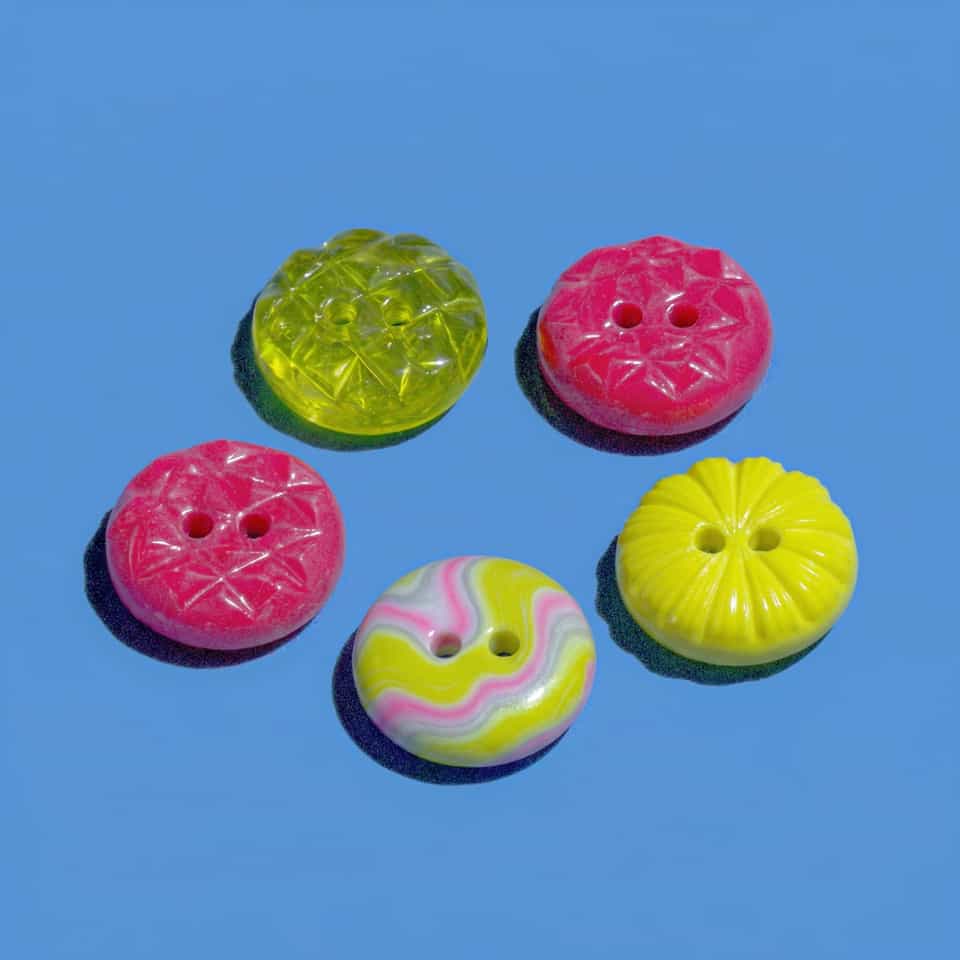
Resin domes, glassy finishes, and domed bakelite-style buttons follow the same short sequence: cure the clay first, mask the holes, control the resin drop, and inspect under raking light before any assembly.
The same four-step rhythm shows up on:
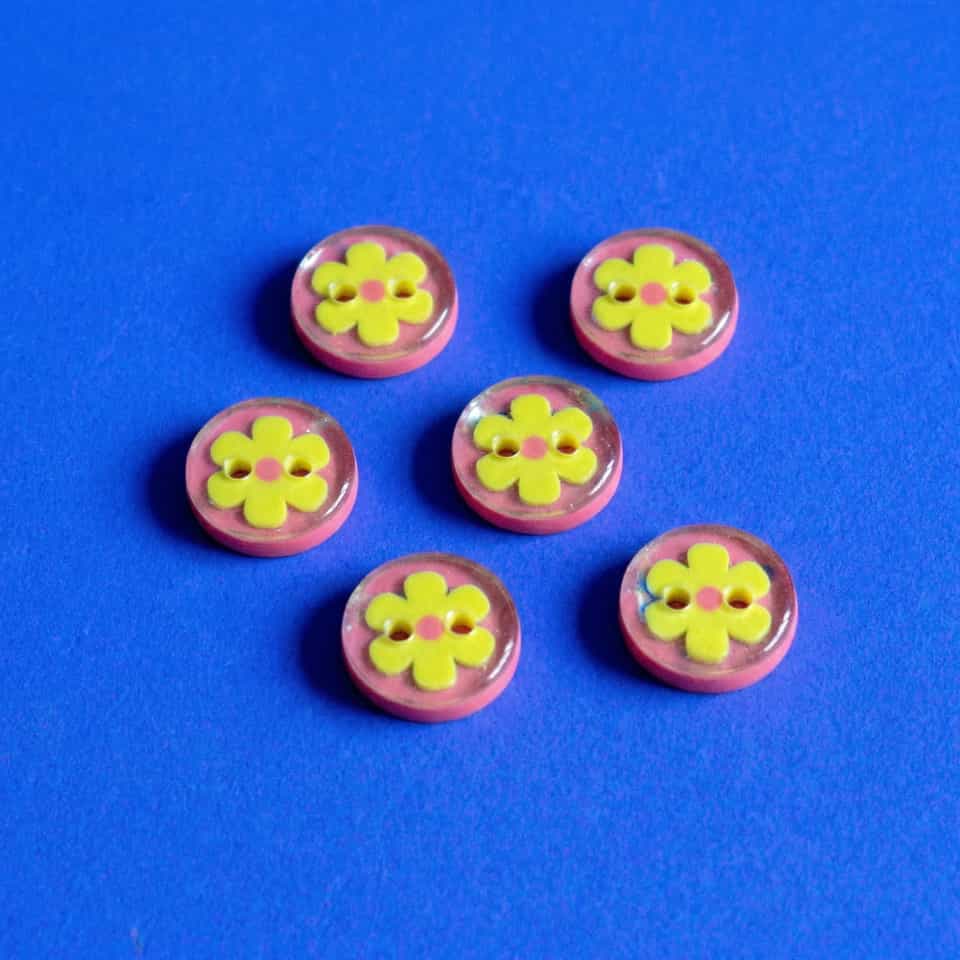
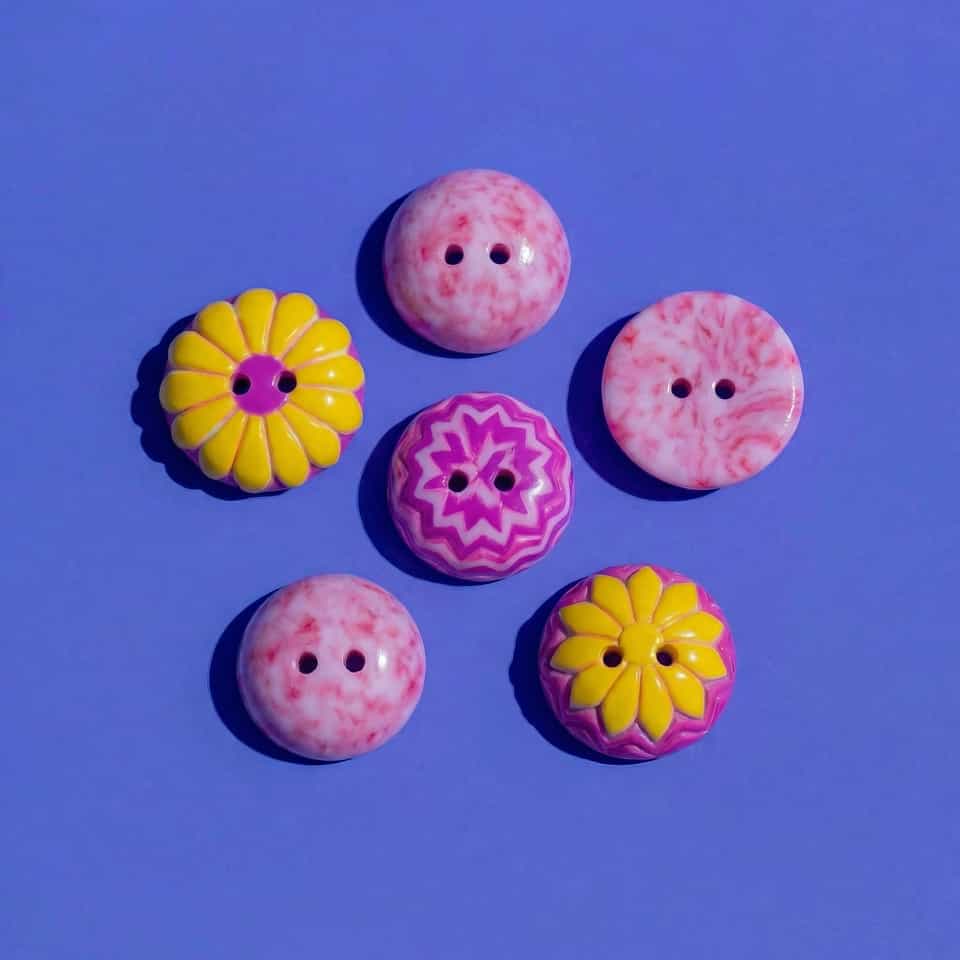
- resin-domed flower and floral-relief buttons
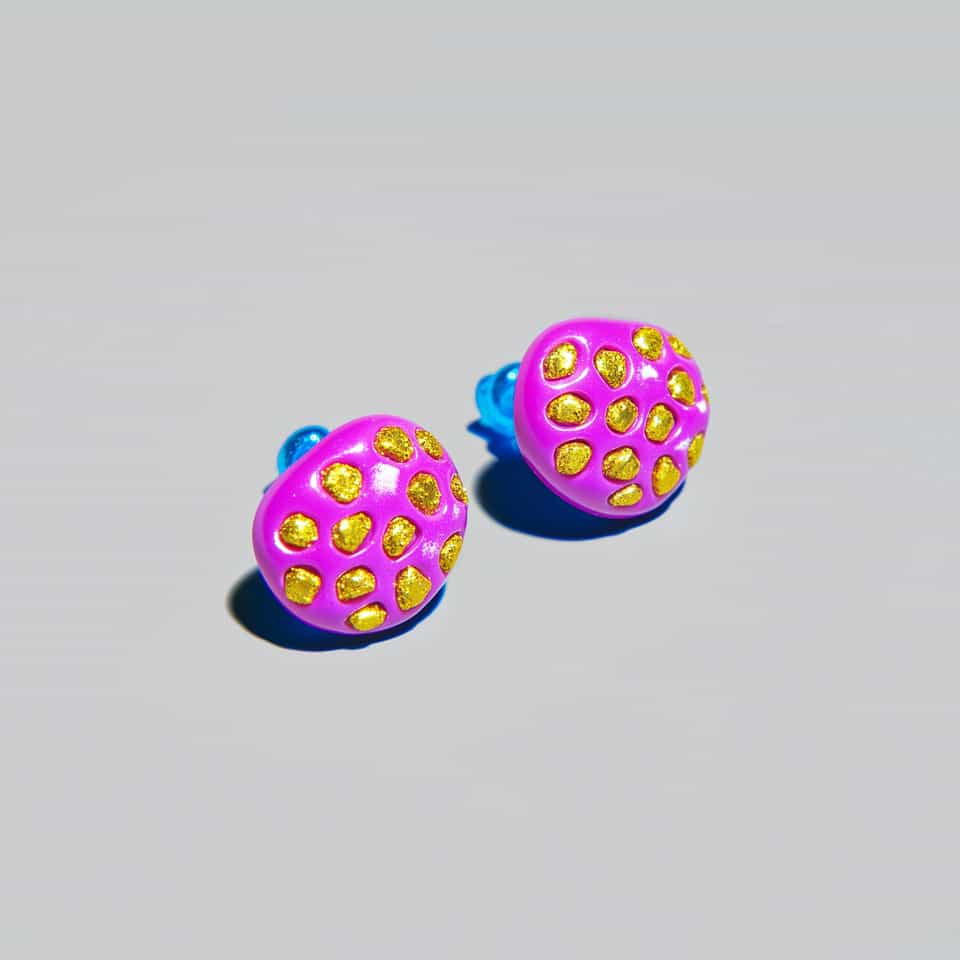
- UV-domed earring drops and pendants
- glossy-finish brooches where the dome is part of the design
For the swirl pattern that often sits under a resin dome on vintage-style buttons, see the faux bakelite swirl guide.
More guides in this path
Open these when the next decision is material choice, attachment, or finishing.

Sanding and Buffing Polymer Clay: Pressure and When to Stop
Your finish looked streaky or the edges rounded because you used the same pressure on curves as on flat backs. Sand curved surfaces with light pressure and flat areas more firmly. Stop the moment the next grit stops improving the test chip. Always test the finish on a scrap of the exact clay line.

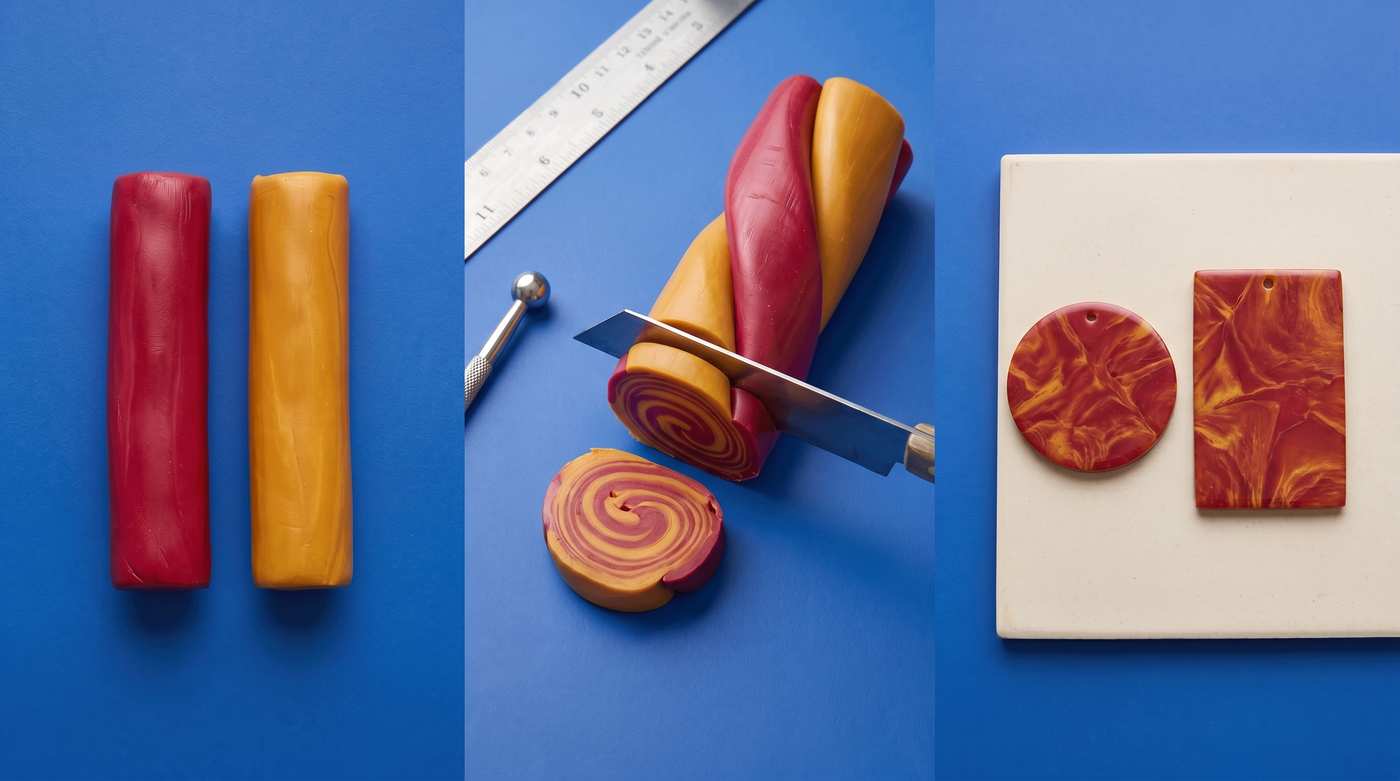
How to Make Faux Bakelite in Polymer Clay (Cherry-Amber Swirl Tutorial)
The cherry-amber faux bakelite look depends on a twisted swirl, not an over-blended marble. This guide covers the color mix, how to stop before the vein muddies, and how to slice the cane so the pattern stays distinct on buttons or drops.
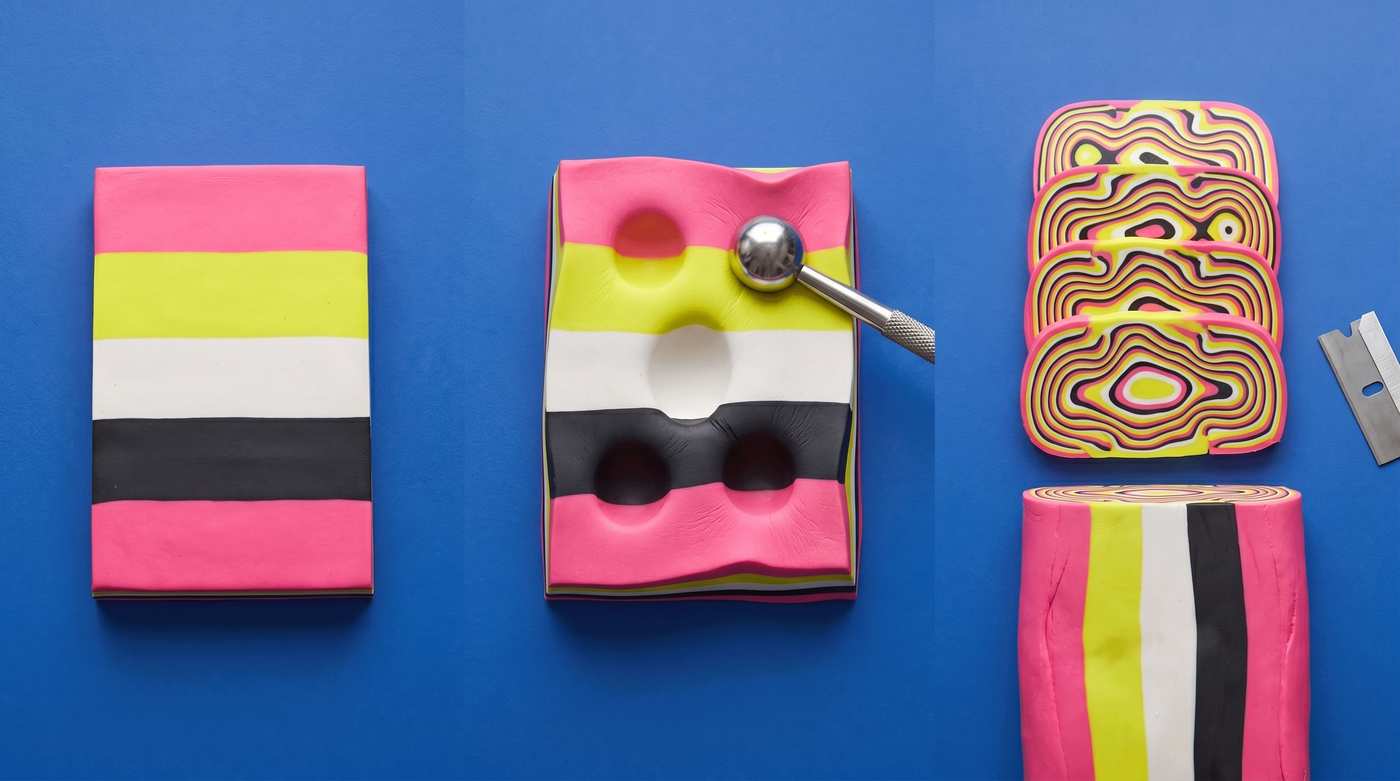
Polymer Clay Mokume Gane: Reduction, Distortion, and Slicing
Mokume gane only reveals its topographic pattern when the stack is distorted before slicing. This guide covers slab thickness, the poke-and-press distortion step, and slicing the stack so each layer makes a clean ring instead of a smear.
Finished examples with related clay decisions
Each piece shows how a material, attachment, or surface choice changes the final form.