How to attach a brooch pin to polymer clay so it sits straight and stays on
A clay brooch that flops forward on a jacket, spins round, or loses its pin comes down to where the pin sits and how the pad is glued. The fabric check at the end shows if you got both right.
Some links on this page are affiliate links. If you buy through them, we may earn a commission at no extra cost to you. As an Amazon Associate I earn from qualifying purchases. Disclosures

In brief
Key takeaways
- Put the pin in the top third of the back, centred left to right, so most of the brooch hangs below it and stays upright
- Scuff the pad and the clay patch, wipe both with isopropyl alcohol, and glue only onto bare clay
- Glue with E6000 Jewelry & Bead, whose label names polymer clay, or a Loctite or Gorilla gel super glue, the brands Sculpey names, and finish every bake first
- A brooch that turns gets a second tie-tack at the same height, spaced apart from the first, or a bar pin with its catch opening facing down
Article contentsOpenClose
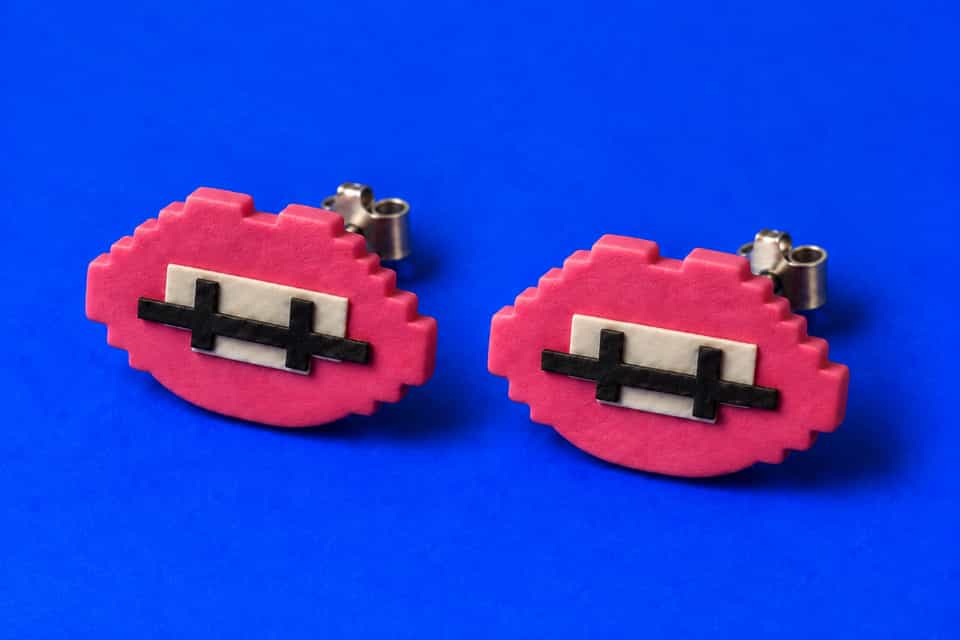
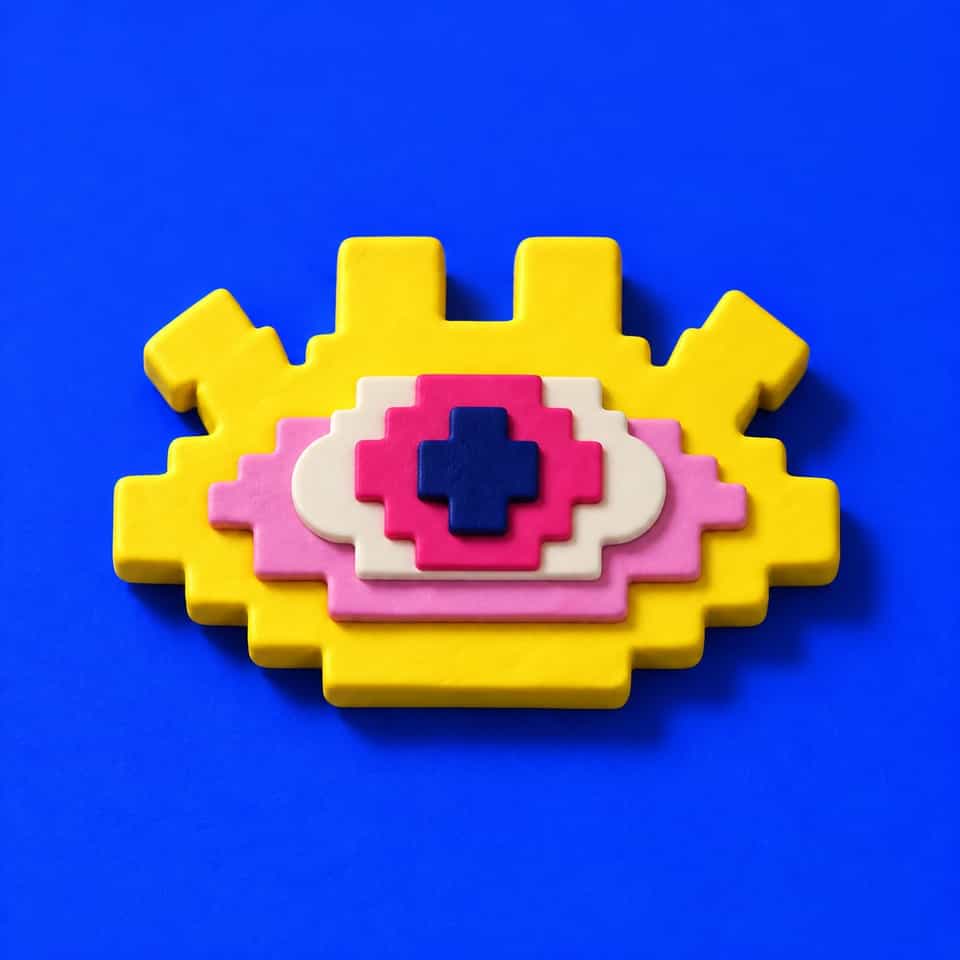
Once the brooch is baked and cool, dry-fit a flat-pad pin in the top third of the back, glue the pad to bare clay, and leave the glue for its full cure before you pin the brooch on. Use one of the glues below and follow its own label. A brooch pin fails when the glue lets go, or when the pin sits where the piece can tip forward or spin. If you are finishing the Clay Bake Studio Pixel Lips Brooch or Pixel Eye Brooch Build Kit, keep the pin position your kit guide shows.
Which pin back suits a flat polymer clay brooch?
A tie-tack pin suits most flat clay brooches, and a bar pin suits a wide one. Either is glued on or held under a layer of clay, because Sculpey notes that clay will not stick to a metal pad on its own, even in the oven.
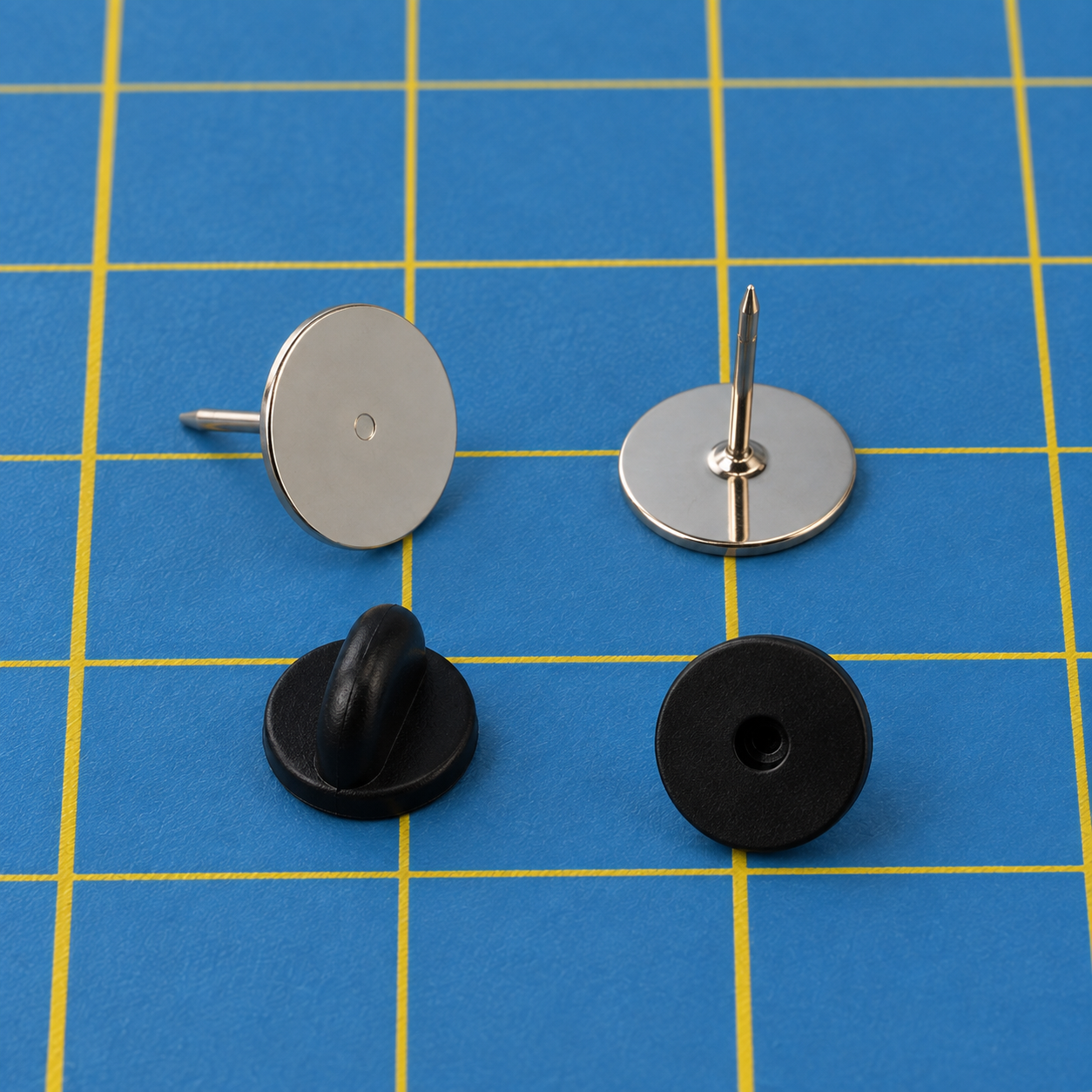
- Tie-tack pin. A flat round pad with a pointed post, plus a clutch: a separate small back that pushes onto the post from inside the fabric and grips it. Suppliers describe the pad as made to be glued to something flat. One pin-back supplier finds that rubber and metal butterfly clutches hold about equally well.
- Bar pin. A flat metal bar with a stem, the pointed pin that opens and closes, hinged at one end and resting in a catch at the other. A locking catch stops a loose pin tip slipping out.
The Pixel Lips Brooch and Pixel Eye Brooch kits use a tie-tack because its small pad fits a flat area of the back. Buy flat-pad tie-tack pins with clutches (search Amazon) for most pieces. Locking backs for denim, magnetic backs for delicate fabric, sewn-on pieces and loop pins are compared in the brooch backs guide, which also covers what to plan on the back of the clay before it is baked.
Where should the pin go on the back?
In the top third of the back, centred left to right. Published jewellers' guidance places a brooch pin there, and a Sculpey pin project sets the pin back towards the top. With the pin high, most of the brooch hangs below it and stays upright. With the pin low, nothing holds the top half against the fabric, so it tips forward.
Keep the whole pad on flat clay, inside the outline and clear of thin edges. The Pixel Lips Brooch and Pixel Eye Brooch kit guides both place the tie-tack high on the back, centred left to right, inside the outline.
A wide brooch can turn on one post. One pin maker explains that a single centred post lets a wide pin rotate, and that two posts far enough apart stop it; another puts double posts on pins wider than about 4 cm (1.5 inches). If your brooch turns on fabric, glue a second tie-tack at the same height, spaced well apart from the first, or use a bar pin. When you plan two tie-tacks from the start, set them at the same height, one either side of the centre line. If you are making a kit brooch, follow your kit guide for the second pin.
What glue holds a metal pin to baked clay?
E6000 Jewelry & Bead, or a gel super glue from Loctite or Gorilla, two instant-glue brands Sculpey's FAQ says work well with polymer clay. Follow the label of the one you use.
- E6000 Jewelry & Bead. Its label names polymer clay and metals.
- Loctite gel. The Loctite Super Glue Ultra Gel Control label lists metal and hard plastics such as PVC, but not polymer clay by name. Loctite describes it as rubber-toughened for flexibility.
- Gorilla gel. The Gorilla Super Glue Gel label lists plastic and metal.
Choose by how much working time you want. E6000 Jewelry & Bead gets tacky in about 2 minutes and takes 24 to 72 hours to cure fully, leaving time to position the pad. A gel super glue grabs within seconds and needs a pad that lies flat against the clay with no gap: Loctite's data sheet asks for close-fitting surfaces, and Gorilla says gaps and uneven surfaces slow the bond.
Work with good airflow, as the labels ask. Super glue bonds skin in seconds and can cause skin allergy and eye irritation, so keep it off your skin and away from your eyes.
Getting the clay back and the pin pad ready
Glue needs a back that is fully baked, cool, flat and bare where the pad goes.
- Fully baked. Bake by your clay packet or kit guide. Under-baked clay can tear away with the pin still glued to it. To hold the pin with clay, decide now: the method at the end goes on in place of glue.
- Cool and flat. Let the piece cool lying flat, as a Sculpey pin project does before gluing, so the back stays flat.
- Bare clay where the pad goes. Glue holds to whatever it touches, so a pad glued onto paint, mica or glaze is only as strong as that coating. If you will paint or glaze the front, keep paint and finish off that patch, and read the paint and finish guide before you start.
Gluing a tie-tack pin, step by step
Set out the pin and clutch, the glue, a soft pencil, fine sandpaper, a paper towel dampened with isopropyl alcohol, a craft blade and a soft cloth.
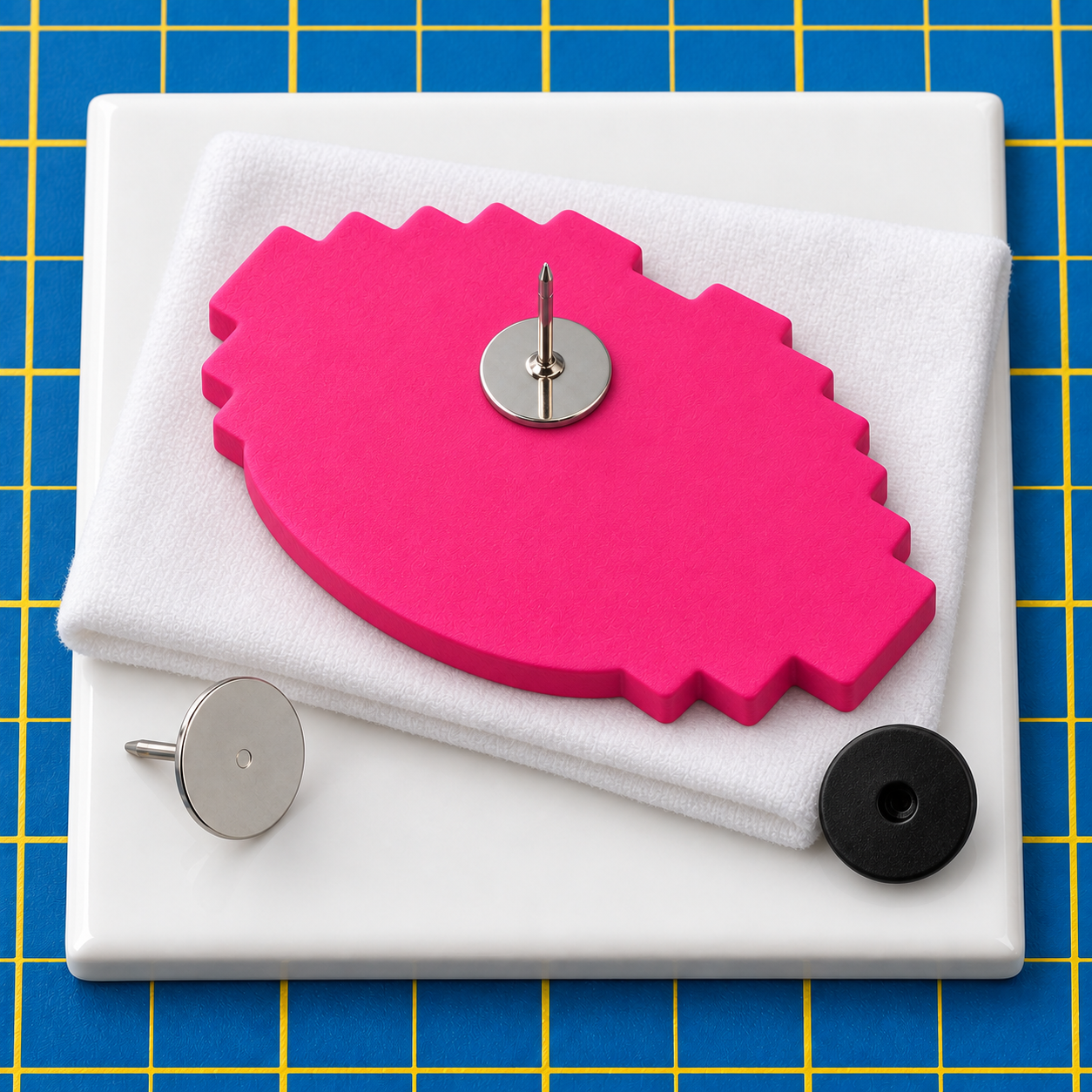
- Lay the brooch face-down. Fold the cloth into a pad and lay the brooch on it front down, so the raised front is protected and the back sits level. Turn the brooch over the way you turn a page, so its top edge stays farthest from you. Press lightly on the back: if it rocks, fold the cloth thicker.
- Dry-fit the pin. Set the tie-tack pad-down on the back, post up. Picture the back as three equal bands from top to bottom, and centre the pad in the top band with the whole pad on flat clay inside the outline. On a small brooch the pad may reach a little below the top band; keep it as high as flat clay allows. Look along the back from the side at eye level: the pad should lie flat with no gap under it. If it rocks or shows a gap, slide it to a flatter spot.
- Mark the spot. Trace lightly around the pad with the soft pencil.
- Check the clutch clears the clay. Hold the pad on the mark with fingernails at its edge, away from the post point, and push the clutch down the post until it stops. The clutch rim, its outer edge nearest the clay, should sit clear of the clay and of any raised part of the back. If the rim touches clay, move the pad to flatter clay, re-mark and check again. Pull the clutch off, set it aside until the fabric check, and take the pin away.
- Scuff and clean both surfaces. With fine wet/dry sandpaper, sand lightly inside the mark until the clay looks slightly dull, then sand the flat underside of the pad, the side without the post, the same way. The Loctite data sheet and the E6000 labels ask for smooth surfaces to be lightly roughened. Wipe both with isopropyl alcohol from the centre of the patch outwards, so no pencil is dragged in, and let them dry. Jewellery suppliers clean metal with alcohol or acetone, but acetone attacks baked polymer clay, so use the alcohol. From now on, hold the pin by its post, below the point.
- Glue the pad only. Put a small drop of glue on the flat underside of the pad and spread it thin with the point of a needle tool, stopping short of the edge. Gorilla notes that one drop of super glue covers about 6 square centimetres (a square inch), and that excess glue can delay or spoil the bond. Keep glue off the post.
- Press and hold. Lower the pad straight onto the patch, post up, and press it down with two fingernails on top of the pad, one either side of the post and back from the pad's edge, keeping your fingertips off the glue line. Look straight down: the pad should sit inside the mark with the post upright. If it has slid, nudge it back by the post before the glue grabs, then hold it for the time the label gives.
- Leave any squeeze-out. If a small bead appears at the edge, leave it and keep paper and cloth away from it: Loctite's safety data sheet warns that super glue on fabric or paper can heat up and smoke. Once cured, trim the bead off with the craft blade, cutting away from your fingers.
- Leave it to cure. Leave the brooch face-down and undisturbed, clutch off, for the full cure time on the glue's label. Loctite gives 12 to 24 hours for its gel, Gorilla gives 24 hours for its gel, and E6000 Jewelry & Bead gives 24 to 72 hours.
Gluing a bar pin instead
Prepare the back and lay the brooch face-down as for a tie-tack.
- Choose the length. If your kit guide gives a bar length, use it. Otherwise, lay a bar across the top third of the back and look along it from the side at eye level: the whole bar should touch flat clay, with no gap or overhang at either end. The jewellers' rule for irregular shapes is the longest stem at the highest position, so start with the longest bar and step down until one sits fully on flat clay. Glue-on bar pins in assorted lengths let you try several.
- Turn the catch. Set the bar so the opening of the catch faces the bottom edge of the brooch, the edge nearest you. If the catch works loose, gravity keeps the stem resting in it. For a right-handed wearer, the catch goes on the left as you look at the back.
- Mark, scuff and clean. Trace around the bar, then scuff and clean inside the line and the flat underside of the bar as for a tie-tack.
- Glue the flat underside only. Spread a thin layer of glue on the flat underside of the bar, well back from the hinge and the catch, using little enough that none comes up through the holes in the bar. Glue that runs into the hinge or catch sets it stiff.
- Press, hold and leave it. Press the bar onto the mark with the catch opening still facing the bottom edge, hold it for the time the label gives, and leave it face-down for the full cure.
How to check the brooch on fabric
After the full cure, pin the brooch to the fabric you plan to wear it on. Push the post through from the front and fit the clutch on the inside, or take the bar pin's stem in and out of the fabric and close the catch. Hold the garment up and watch the brooch as the fabric hangs:
- It stays upright. The pin is in the right place.
- The top tips forward. The pin is too low.
- It turns. It is swinging on a single post: glue a second tie-tack at the same height, spaced well apart from the first, or use a bar pin.
- It drags the fabric down. A heavy brooch pulls soft fabric such as silk. Jewellery sellers give these fixes: with a bar pin, take the stem through the fabric twice (a tie-tack post is too short for this); with either pin, pin at a seam or lapel, or wear the brooch on wool or denim.
Jewellers wear test pieces on several fabrics before relying on them, so check each garment the brooch will go on. Last, take the clutch off and refit it once, or open and close the catch, and look at the edge of the pad or bar: it should sit tight to the clay with no lifted edge.
Brooch pin problems and how to fix them
| What you see | What to do |
|---|---|
| The brooch tips forward | The pin is too low. On the next piece, plan it higher in the top third. On this piece, re-glue it higher only if the pad has already lifted; do not force a firmly glued pad off. |
| It turns on the fabric | Add a second tie-tack at the same height, spaced apart from the first, as in the placement section, or use a bar pin. |
| It drags soft fabric down | Use the soft-fabric fixes in the fabric check above. |
| The pad lifted or came off | Scrape the old glue off the clay and the pad with a craft blade, cutting away from your fingers; the glue labels say to scrape cured adhesive away. Then scuff, clean, re-glue and wait for the full cure. If the pad sat on paint or glaze, sand a bare patch of clay first. |
| Clay came away with the pad | The piece was likely under-baked. Bake the next piece fully by the clay packet. Keep the glued piece out of the oven: baking might weaken super glue. |
| The clutch slides on loosely | Replace the clutch. Clutches wear, and rubber ones loosen with heat and age. |
| On thick fabric, the clutch grips only the tip of the post | The fabric is using up the post. Pin through a thinner part of the garment, or use a bar pin. |
| The hinge or catch is glued stiff | Replace the pin. Next time, keep glue on the flat underside of the bar only. |
Holding the pin under a layer of clay instead of glue
Use this in place of glue, and only on a piece that has never had glue, paint or glaze on it. Sculpey says to rebake only unpainted, unglazed pieces, Loctite says its gel is not for oven use, and makers report that baking can weaken super glue.
Experienced makers find that glued findings can let go after a few years of wear and prefer covering the pad with clay, which holds the metal by closing over it. Sculpey's FAQ also suggests wrapping clay around metal, and metal can be baked in clay.
This join is harder than raw clay on raw clay. Sculpey's FAQ says raw clay does not fuse with baked clay, and a cover can peel if it is not fully baked. In one published raw-to-baked bond test, FIMO liquid was the only bonding agent that made this join strong in three of the brands she tested. The guide to adding raw clay to baked clay has more on this join. Before covering a finished brooch, try the cover on a spare pin and a baked scrap, including the fingernail check at the end.
- Take the clutch off. Remove the clutch from a tie-tack and keep it out of the oven.
- Set the pin in place. With the brooch face-down on the folded cloth as before, set the pin in the top third, centred, as in the dry-fit, with a bar pin's catch opening facing the bottom edge.
- Clean around the pad. Holding the pin still by its post or bar, wipe the baked clay around the pad with isopropyl alcohol and let it dry.
- Roll and cut the sheet. Roll a thin sheet of raw clay, thin because the sheet uses up post length, and cut a piece that reaches well past the metal on every side.
- Open holes in the sheet. Lay the sheet on parchment. For a tie-tack, press the post point lightly into the middle of the sheet to mark it, then open a small hole at the mark with a needle tool. For a bar pin, open the stem so it points up, press the hinge and catch lightly into the sheet to mark them, cut a small hole for each, and cut a slit along the line of the stem, so the stem can still close. Keep the sheet inside the brooch outline.
- Brush on FIMO liquid and lower the sheet. Brush a thin layer of FIMO liquid on the baked clay around the pad, then lower the sheet onto it over the post, or over the hinge and catch.
- Press the sheet down. Lay parchment with a hole cut for the post, or a slit for a bar pin, over the sheet. Press through it from the pad outwards, fingers clear of the post point, until the sheet sits down with no trapped air and the shape of the pad shows. Open and close a bar pin's stem once to check it still moves.
- Bake face-down, supported. Spread polyester fibrefill or tissue paper into an even bed on the tile and nest the raised front in it, so the pin points up, the back sits level and nothing touches the fresh cover; the baking support guide covers both. Bake by your clay packet, away from the heating element. Let the brooch cool completely in the nest without lifting it, then check the back is still flat.
- Check the cover. Run a fingernail gently along the edge of the cover. If no edge lifts, close a bar pin's stem into its catch and go on to the fabric check. If an edge lifts, peel the cover away, sand that patch back to bare clay, and glue the pin on instead.
Supplies
Supplies mentioned here
Quick links to the materials and tools that fit this article. ClayBake tools stay on our own catalog.
Loctite Super Glue Ultra Gel Control
A gel super glue from one of the instant-glue brands Sculpey's FAQ says work well with polymer clay. Its label lists metal and hard plastics such as PVC, though not polymer clay by name, and Loctite describes it as rubber-toughened for flexibility.
Brooch bar pin backs (assorted sizes)
Flat metal bars with a hinged pin at one end and a catch at the other, glued across the upper back. Assorted lengths let you try the longest bar that still sits fully on flat clay.
Flat-pad tie-tack pins with clutches
A flat round pad with a pointed post, plus a clutch that grips the post from inside the fabric. The small pad fits a flat area high on the back of most clay brooches.
More guides in this path
Open these when the next decision is material choice, attachment, or finishing.
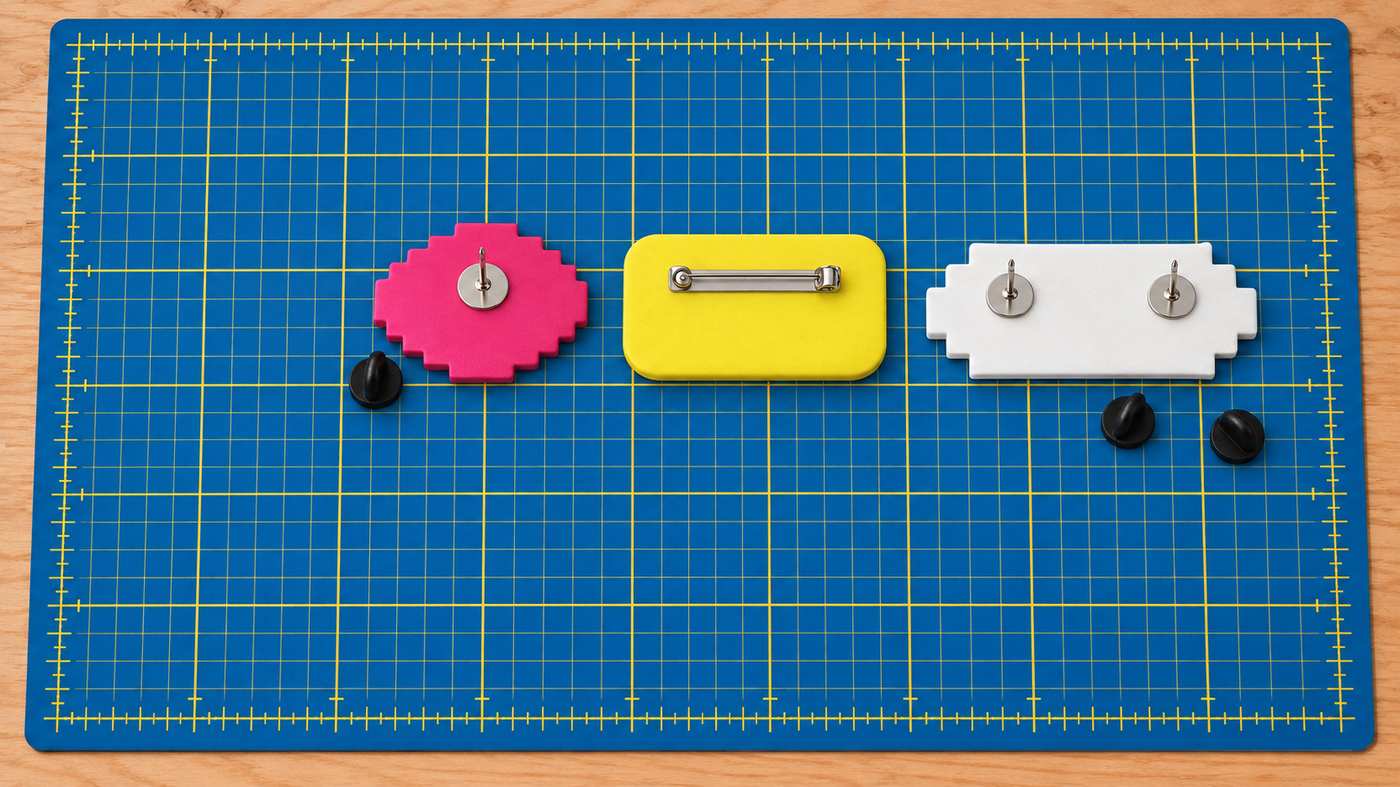
Brooch backs for polymer clay: which pin to choose before you bake
Tie-tack, bar pin, locking clutch or magnet: which brooch back suits a flat clay piece, and what to leave on the back of the clay before it goes in the oven.
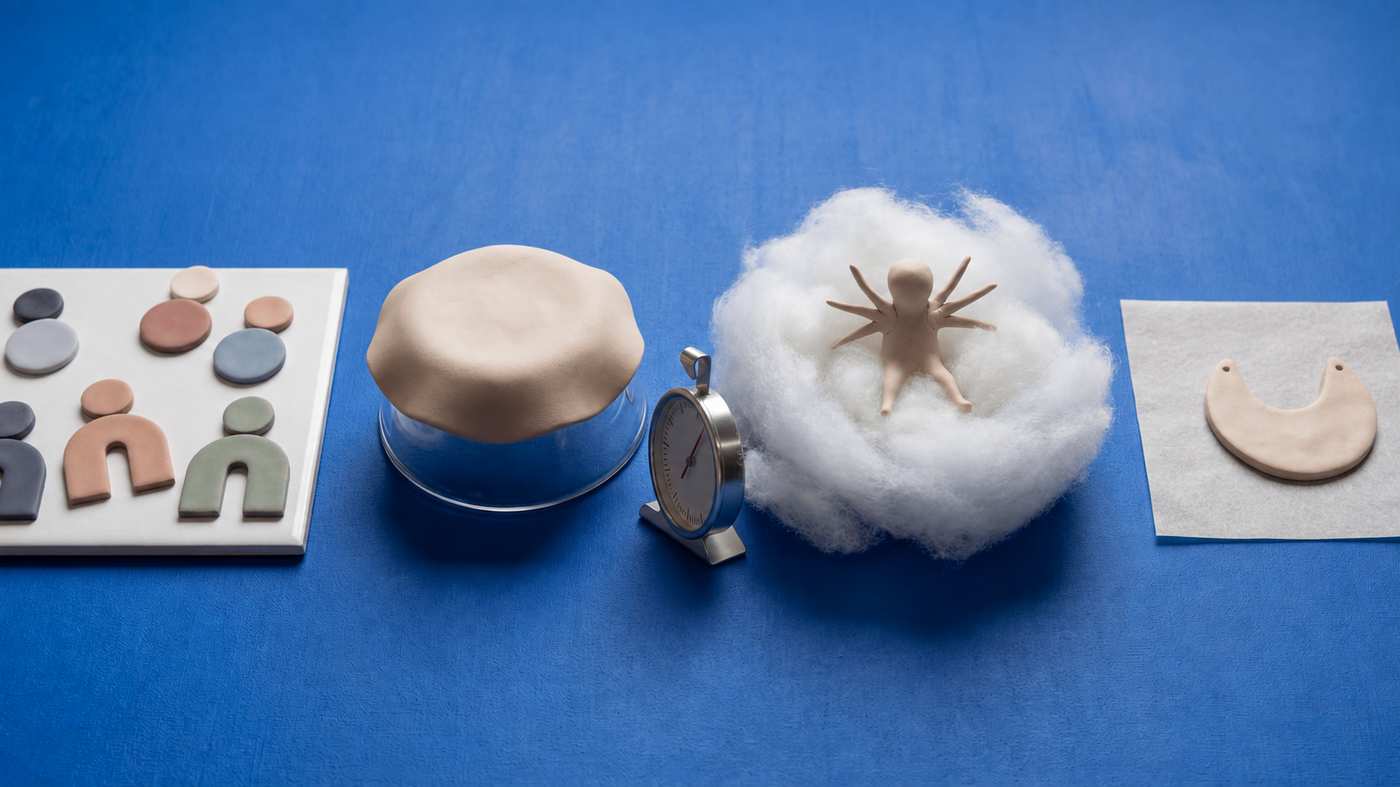
What to bake polymer clay on: tile, card and supports for flat, folded and large pieces
Bake flat pieces on a glossy tile and move them onto plain card only for a matte back. Hold curves, limbs and overhangs with fiberfill, crumpled foil or an oven-safe glass form, bake round beads on skewers, and leave everything on its support until it feels cool.
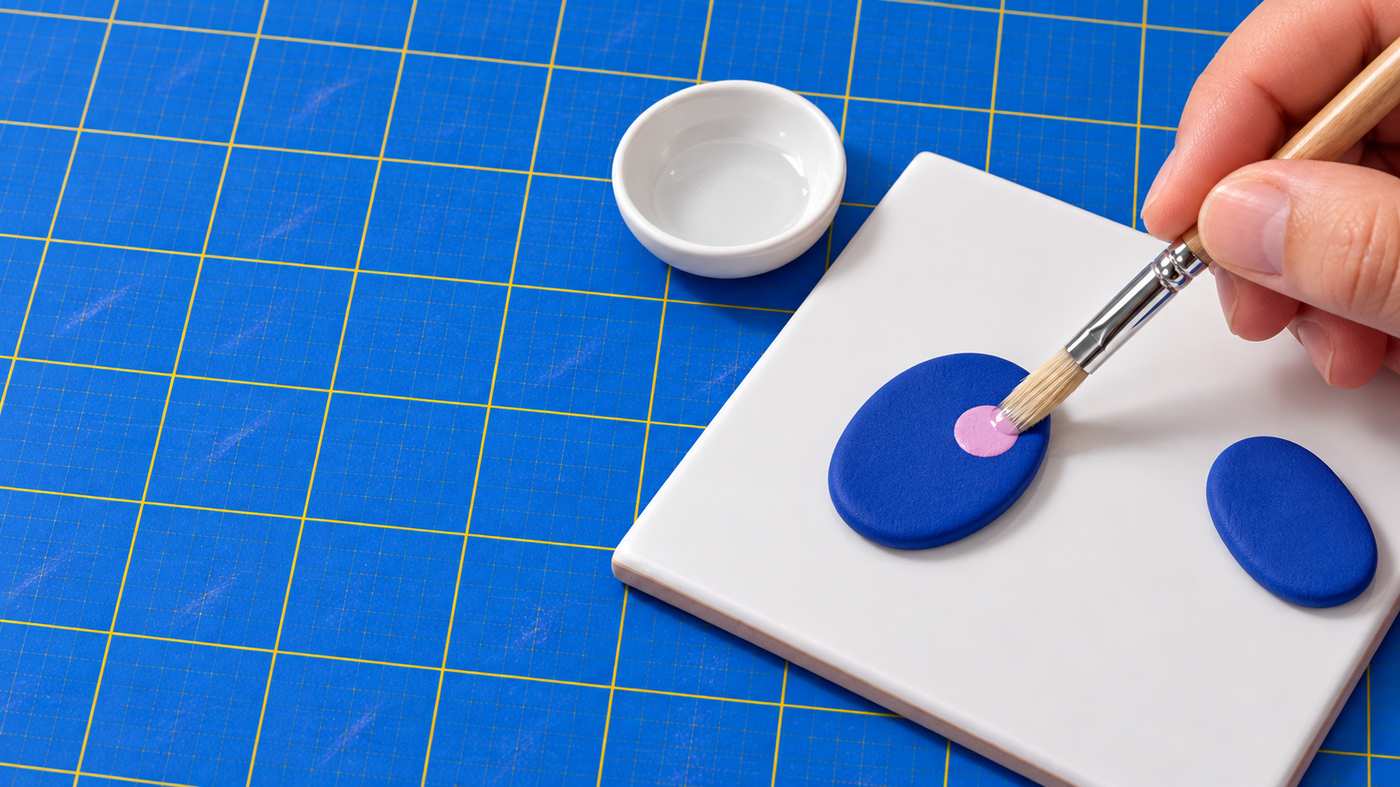
Painting baked polymer clay: which paint to use and whether to seal it
Painted details on a baked piece can smudge, rub off or leave a glaze sticky at the very last step. See which paint grips baked clay, how to brush small details cleanly, and when a coat is worth adding.
Finished examples with related clay decisions
Each piece shows how a material, attachment, or surface choice changes the final form.