A polymer clay setup that packs away in one tray
Set up one active polymer clay project on a portable tray, move the supported work toward baking, and clear a shared table without rebuilding everything next time.
Some links on this page are affiliate links. If you buy through them, we may earn a commission at no extra cost to you. As an Amazon Associate I earn from qualifying purchases. Disclosures

In brief
Key takeaways
- Use one portable tray for one active project. Keep the task light, oven, bake surfaces, sanding, resin, and larger supports outside it
- Put a rigid clay-compatible work surface on the tray so a flat piece can move with its support instead of being lifted raw
- Keep only the current project's tools within reach, then place a consistent neutral light where hands do not cover the cut line
- Move the supported piece to a separate bake area and let the exact clay package and a baking-area thermometer take over
- Return open clay to its approved wrapper or container, park unfinished work on its support, and enclose every sharp edge before moving the tray
Article contentsOpenClose
A first polymer clay studio can be one portable tray on a table that needs to become a dining table again. Give one active project a rigid work surface, the few tools it needs, a clear route to the bake area, and a place to stop without losing your work.
Think of the setup in three states: packed, making, and ready for the bake handoff. The tray is the carrier between those states. It is not the bake surface, the lamp, the oven, or a promise that every polymer clay process belongs in one box.
What fits in the tray, and what stays out
Use the tray as a boundary around one active project. It should hold the rigid work surface, the clay or slab currently in use, the current cutter or shaping tools, and separate storage places for unfinished work and sharp tools.
Keep the task light, oven, bake surface, sanding water, resin, adhesives, and larger sculpting supports outside it. If you have not chosen a first project yet, start with one clay line, three basic tools, and a small test piece, then size the tray around that work.
Choose a hard work surface that can move
Put a rigid clay-compatible surface on the tray so the active piece can move with its support. A flat glazed tile is one option for small slab work. The surface protects the table and gives the roller and blade a stable base.
This ceramic tile is one current example of the flat surface meant here. Check its current dimensions and instructions before buying, and only treat a tile as bakeable when its instructions allow the temperature on the clay package.
If direct contact leaves an unwanted shiny patch, test one piece on baking parchment whose instructions allow the clay-package temperature. Check the cooled back before changing a full batch.
Flat work and shaped work do not need the same support. Use the bake-support guide when a curve, raised part, or larger span needs more than a rigid tile.
Keep only this project's tools on the tray
Bring out the tools for the piece in front of you. A small flat project may need one plain acrylic roller, one clay blade, one cutter or shaping tool, and the clay. These are current examples, not a required set. Check the listing details and the exact tool instructions before buying.
This keeps the work surface visible and stops a generic studio list from deciding what you buy. Use the Beginner Toolkit when you are ready to compare the fuller kit and decide which tools you reach for often enough to keep nearby.
Place the light where your hands do not block it
Place a consistent neutral task light above and slightly to the side, then move it until your hands and tools no longer cover the cut line. Use the light to inspect lint, dragged edges, fingerprints, and shallow surface marks before the piece leaves the tray.
Neutral light makes comparison easier, but it cannot guarantee that another room, phone, or buyer will show the colour the same way. Keep the lamp position consistent when you compare two clay colours or check the next piece against the first.
Clay getting too soft? Pause before adding tools
If the slab starts dragging under the blade or losing a crisp edge, pause before buying another cutter or release aid. Let the clay rest and follow the clay maker's handling guidance. Move the tray away from direct sun or another heat source while you work.
When softness keeps interrupting the session, use the soft and sticky clay guide to decide whether the first change is rest, short cooling, or a cautious test on a small sample.
Move the work to a separate bake area
Move the supported piece to the bake area, let the exact clay package set the time and temperature, and place a separate oven thermometer where the piece bakes. This is one current analog example, not a substitute for the clay package or appliance directions. The oven thermometer guide covers placement and how to compare the reading with the package target.
Only the supported piece and an approved bake surface make this handoff. The carrier tray, loose tools, storage containers, lamp, and any non-oven-rated work surface stay out.
Pack clay, unfinished pieces, and blades separately
Give open clay, unfinished work, and sharp tools separate closed places before the tray moves. Return open clay to its original wrapper or a storage material recommended for that clay line. Do not choose a plastic container from colour, clarity, or its previous use alone.
Keep unfinished flat pieces on their support and cover them from dust without pressing the cover into the surface. Follow the exact blade set's instructions and enclose every cutting edge in its supplied guard, wallet, or a closed case before the tray moves. A handle alone is not a cover if the edge remains exposed.
Pack the table away in the same order
- Write down or photograph the next move while it is still obvious.
- Return open clay to its approved wrapper or container.
- Park unfinished work flat on its support and cover it from dust.
- Put sharp tools into their guards or closed case.
- Return the remaining tools to their fixed places on the tray.
- Lift the rigid surface last, close the tray, and clear the table.
The order matters because it leaves the next session ready to begin. The note tells you where to restart, the unfinished piece stays supported, and the sharp tools are already contained before the tray is lifted.
Add a permanent area only when one step keeps taking over
Add a cart, shelf, or fixed table area when the same part of the process repeatedly overflows the tray. A conditioning machine may need to stay clamped. Several unfinished projects may need a flat parking shelf. Photography, wet sanding, resin, or hardware assembly may need a separate area because they should not share the active clay surface.
Start with the smallest arrangement that holds the real project, then enlarge the part that keeps interrupting the work. The useful setup is not a room. It is the same clear path from supported clay to the next step, then back into storage when the table is needed again.
More guides in this path
Open these when the next decision is material choice, attachment, or finishing.
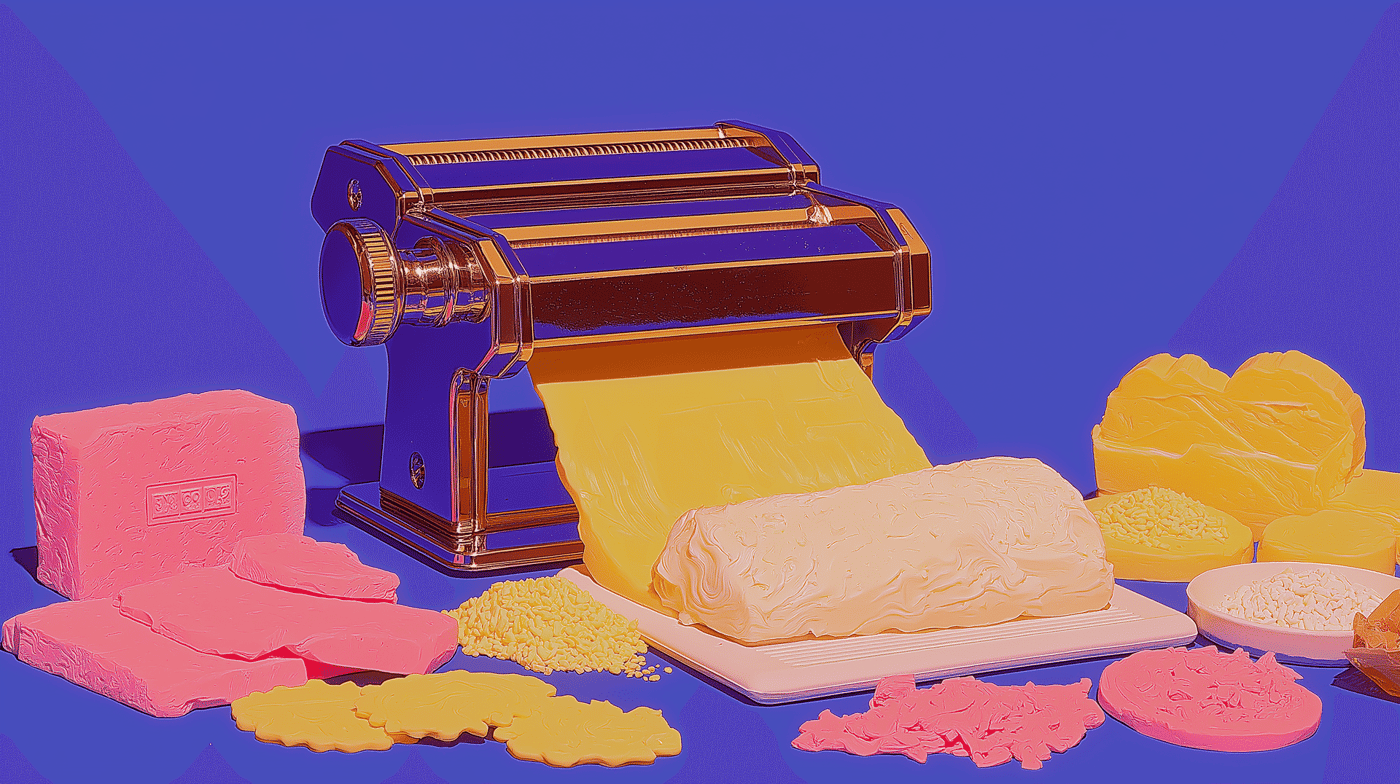
Polymer Clay for Beginners: Clay, Tools, and a First Test Piece
Choose one clay line, use three basic tools, and make a small package-directed test piece before adding more supplies.

What’s in my polymer clay kit? 10 things I’d buy first
The ten things I would replace first, from the pasta machine that saves my hands to the small tools, work surfaces, cutters, and clay I would choose again.
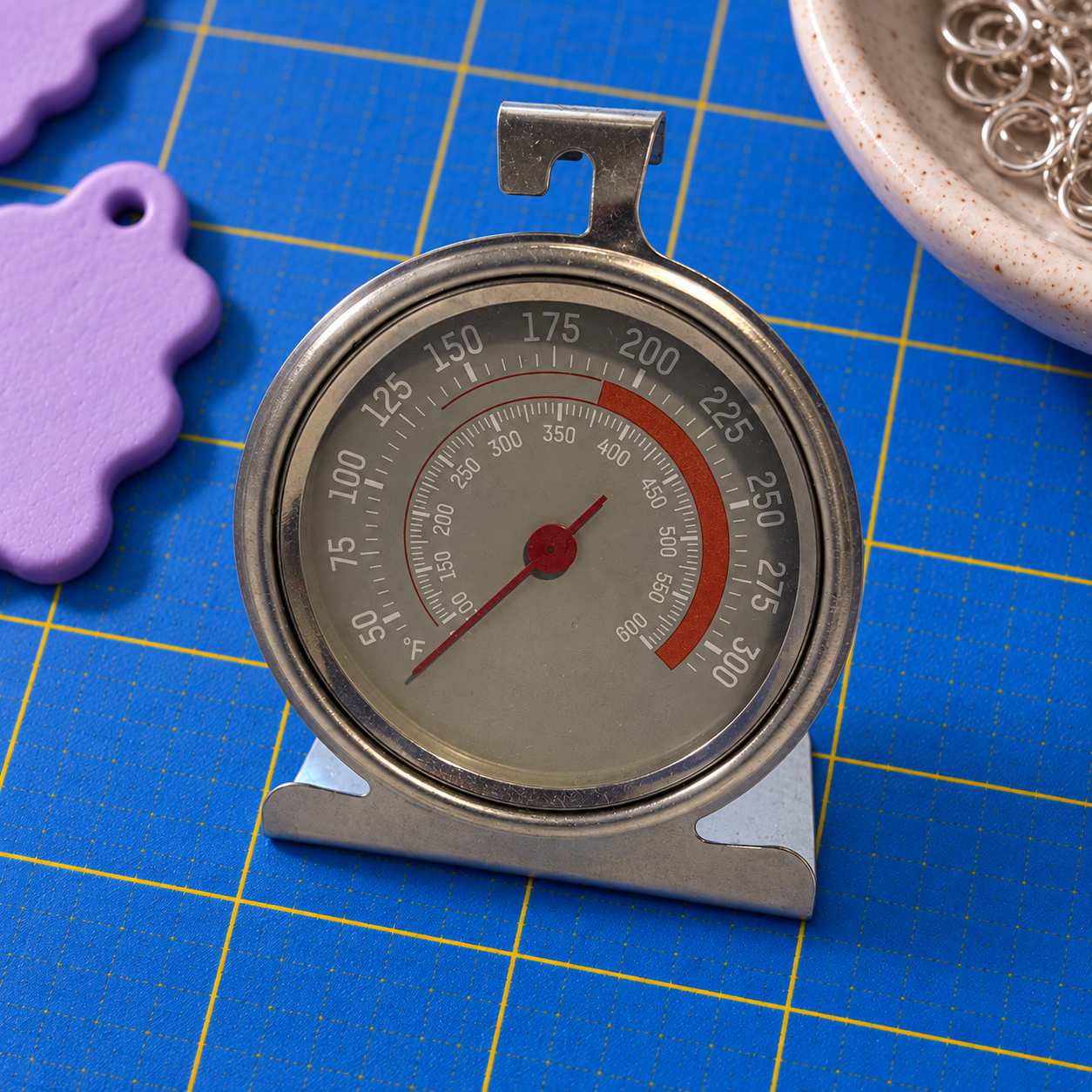
Best oven thermometer for polymer clay: what to buy and how to use it
Choose a dial you can read through the oven door, or an oven-rated air probe with an outside display. Then check the temperature beside your clay.