Sanding and Buffing Polymer Clay: Pressure and When to Stop
Smooth rough edges on baked clay with wet/dry paper and water. Support small details, remove the scratches from each grit, then hand-buff for a soft sheen.
Some links on this page are affiliate links. If you buy through them, we may earn a commission at no extra cost to you. As an Amazon Associate I earn from qualifying purchases. Disclosures

Start here
What to choose and check first
Start with wet-dry sandpaper before you reach for a glaze. A flat, properly sanded surface improves most pieces, while top coats only help once the surface is already clean.
The finish shortlist is weighted toward tools that change the surface itself: leveling scratches, improving sheen, and lowering failure risk before any glaze or sealer enters the workflow.
Article contentsOpenClose
Wet sand a fully cured piece when the surface needs leveling, then buff it when you want more sheen. A coating is optional and comes after the cured surface is already sound.
Start With Wet/Dry Paper And Water
Use wet/dry paper with water to control dust and deep scratches. Grit numbers describe the abrasive: a higher number gives a finer scratch. Sculpey gives 400 through 1,000 grit as an example progression. Start with the least aggressive grit that changes the visible flaw, then move progressively finer.
Work over a small dish of water rather than under a running tap. Sculpey asks makers not to wash clay dust down the sink, because water treatment plants cannot remove the fine particles. When you finish, wipe the dish out with a paper towel and put the towel in the bin.
Hold Small Pieces Close To The Edge
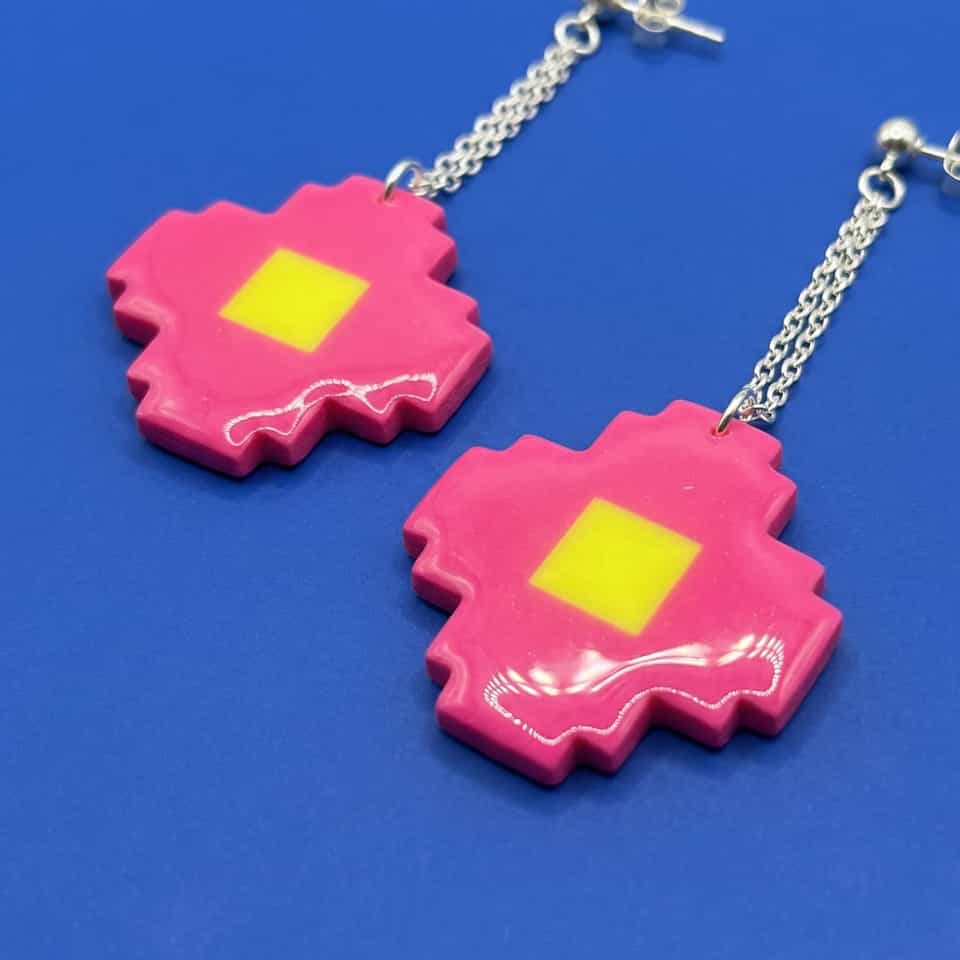
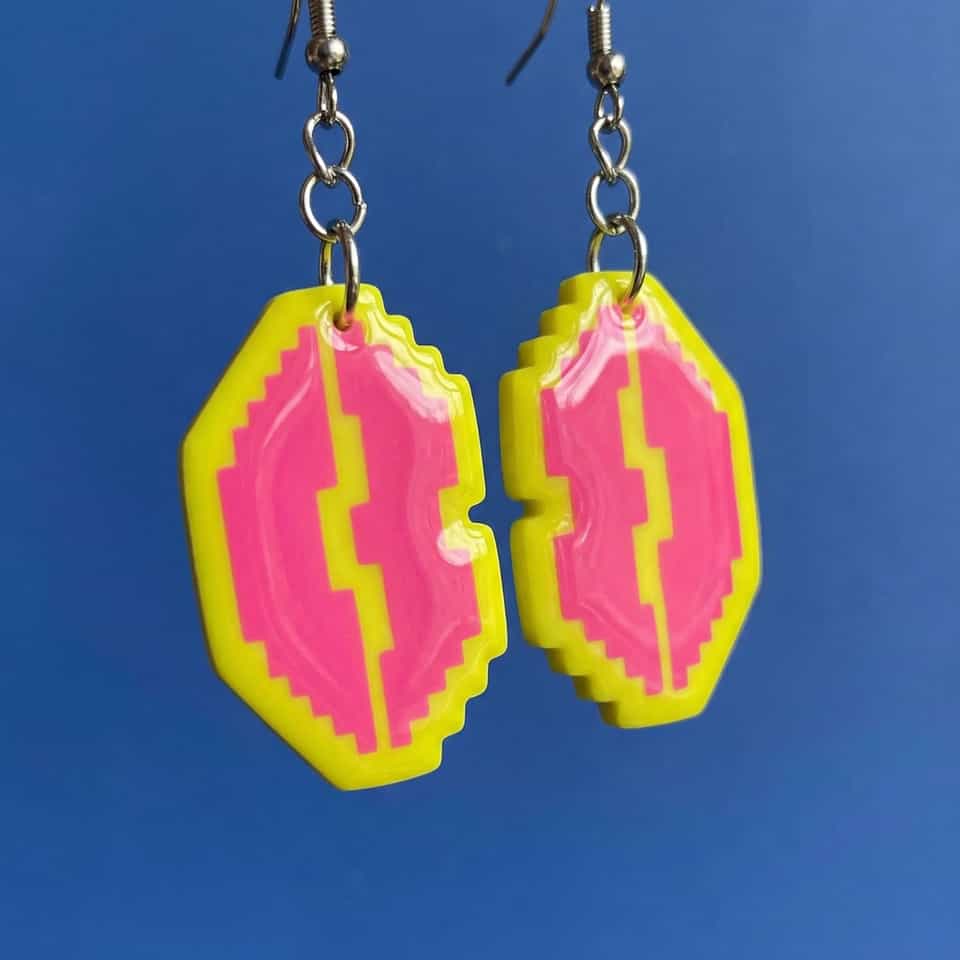
Hold the broad body of the cooled piece between your fingertips, close to the edge you are smoothing. Keep your grip off thin tips, Pixel Eye lashes and raised colour layers. Move a small piece of wet paper along the rough edge with light pressure, keeping it on that edge rather than rounding over the front. Stop when the roughness is gone and the original outline is still intact.
For a broad, undecorated face, rub the wet paper in small circles. Wipe the residue off the clay with a damp paper towel, then inspect the surface. Move to the next finer grit and smooth the scratches left by the previous paper. If a deep scratch remains, return to the previous grit instead of rubbing harder with very fine paper. Sand only the area that needs it; a raised Pixel Eye face does not need flattening.
Buff The Sanded Surface
Wipe off the sanding residue with a damp paper towel and let the clay dry. Rub the surface with clean denim or muslin in small circles for a soft sheen, supporting the body and keeping the cloth from catching on thin projections. Deep scratches need more sanding before buffing. A buffing wheel is optional; follow its tool instructions and use it dry, away from sanding water.
Fix Larger Flaws Before Glaze
Do not use glaze to hide a crack, deep divot, or incomplete cure. Repair or reject the piece first. If you add a coating for appearance, test the exact product on cured scrap and follow its label for application, drying, and handling.
Keep A Sample With The Finish Notes
Record the clay line, grit sequence, buffing method, and any coating beside one cooled sample. Keep it with the project notes so you can repeat the finish on matching pieces.
In brief
Key takeaways
- Wet sanding with waterproof wet/dry paper keeps clay dust out of the air and gives you more control over how much you take off a baked and cooled piece
- Pick the starting grit by the defect you are fixing, not by a fixed grit ladder. A small fingerprint and a deep scratch do not need the same first pass
- Buffing can raise a soft shine without any coating, but the result depends on the clay line, prep grit, hand pressure, and heat
- Once the surface itself feels right, the finish compatibility guide is the next read for choosing glaze, wax, paint, or resin
More guides in this path
Open these when the next decision is material choice, attachment, or finishing.
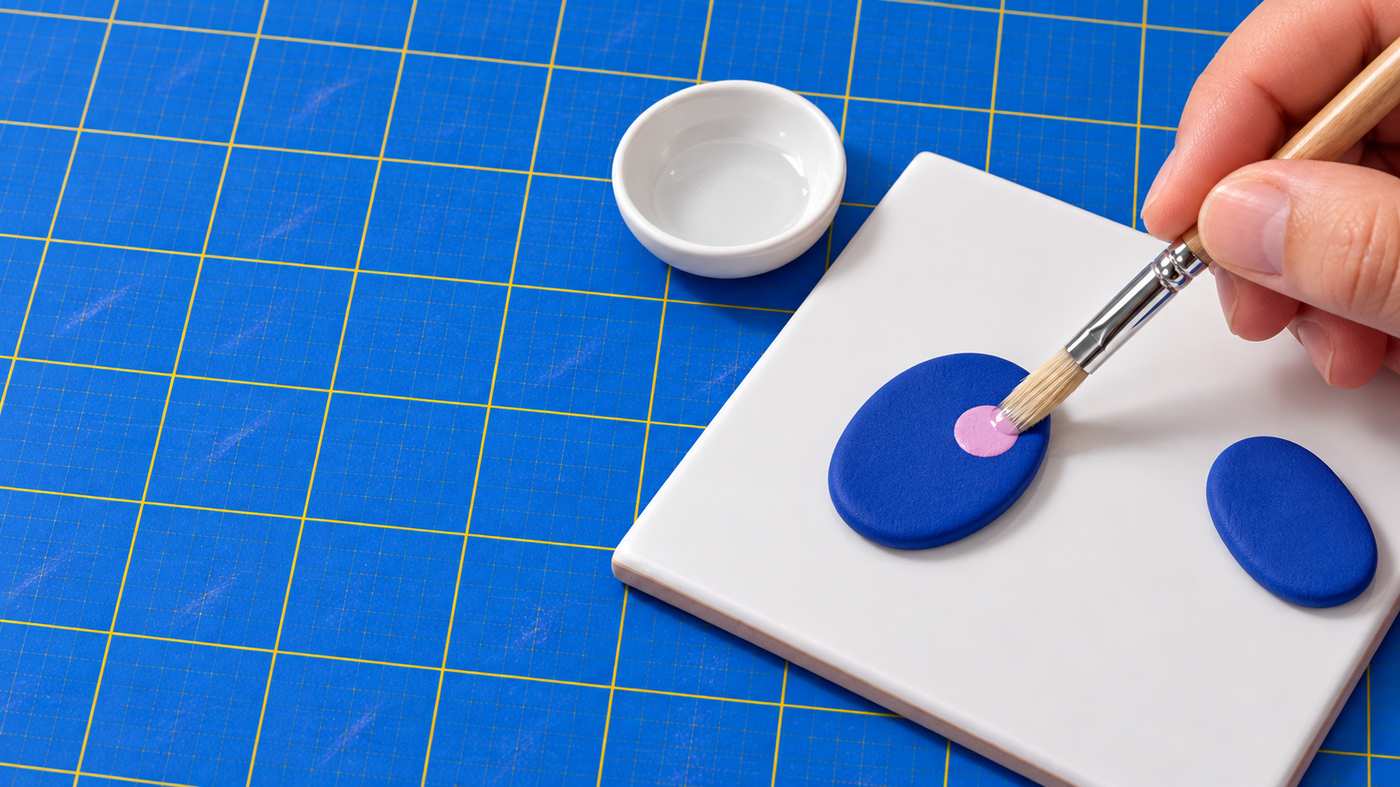
Painting baked polymer clay: which paint to use and whether to seal it
Painted details on a baked piece can smudge, rub off or leave a glaze sticky at the very last step. See which paint grips baked clay, how to brush small details cleanly, and when a coat is worth adding.
Do You Need a Sealer for Polymer Clay? Compatible Finish Options
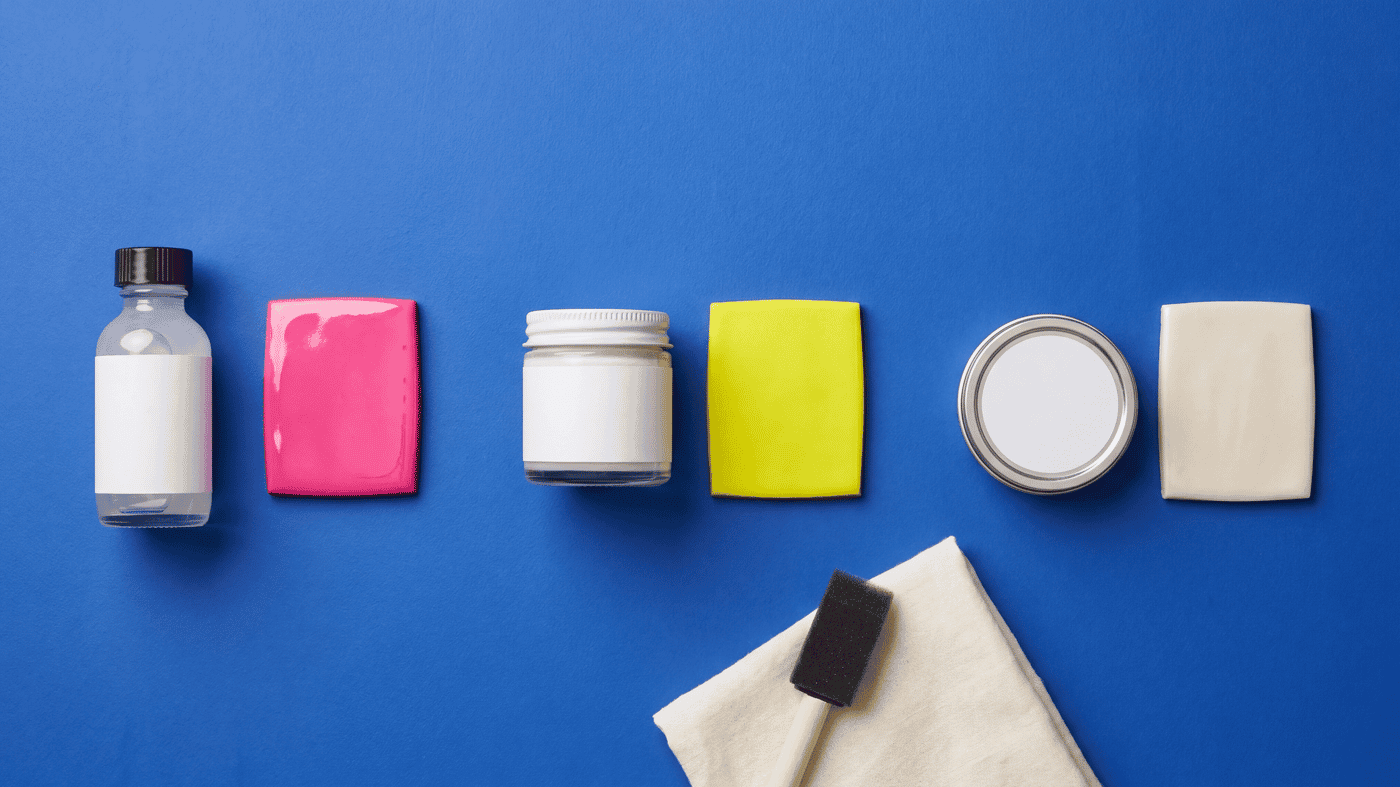
Leave a good cured surface bare, or choose one documented water-based finish, test it on the same clay line, and follow the current product label.
Resin on Polymer Clay: Label-First UV and Epoxy Checks
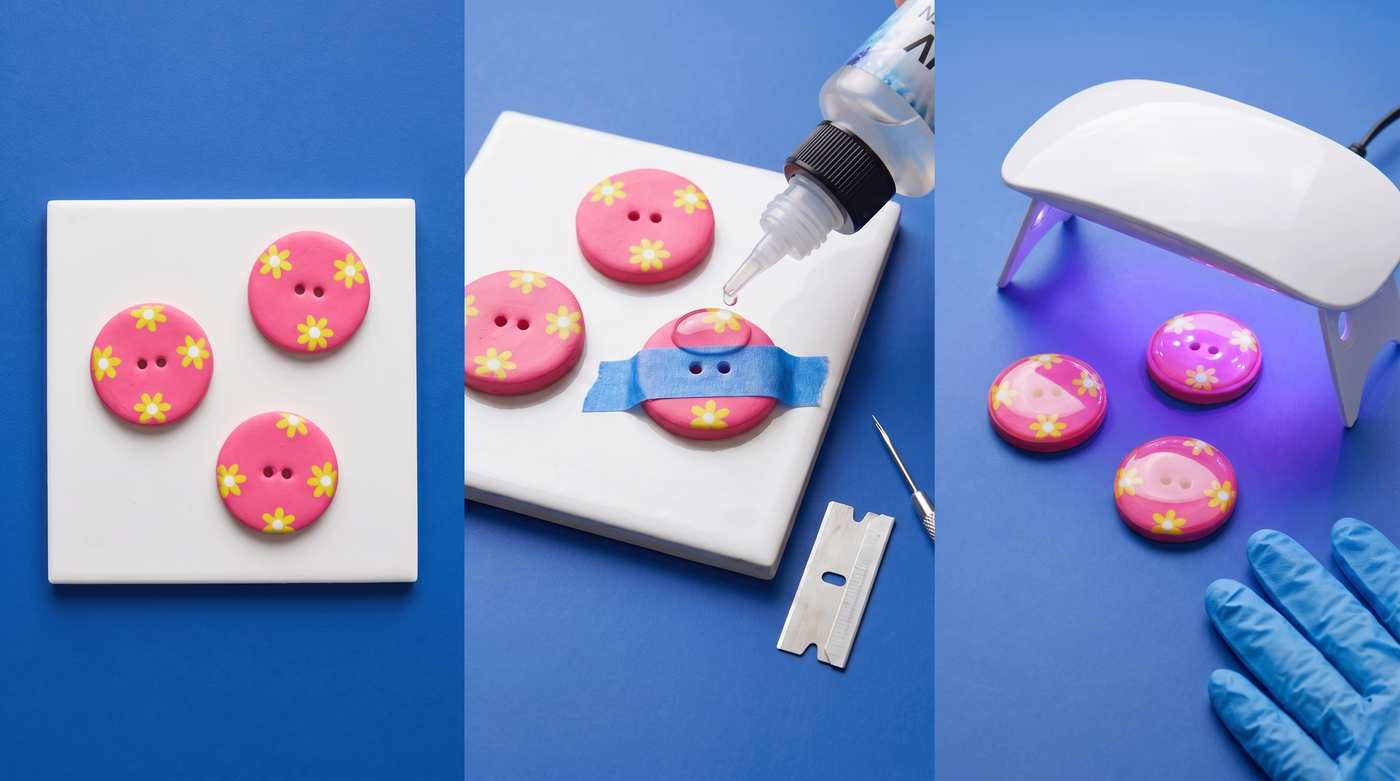
Bake and cool the clay first, then use the exact resin maker's instructions for compatibility, PPE, lamp or mixing requirements, layer depth, and cure.
Finished examples with related clay decisions
Each piece shows how a material, attachment, or surface choice changes the final form.