How to Make Faux Bakelite in Polymer Clay (Cherry-Amber Swirl Tutorial)
Faux bakelite reads as cherry-amber veining only when the swirl is twisted, not over-blended. This guide covers the color recipe, the twist-and-fold count, and how to slice the cane so the bakelite vein stays distinct on every button or drop.

In brief
Key takeaways
- 1Build a warm translucent base with red and a touch of brown so the swirl glows like aged bakelite instead of reading as flat plastic
- 2Add the contrast color as a separate log inside the base, then twist and fold four to six times so the veining stays distinct
- 3Slice perpendicular to the twist axis or the cane will show stripes instead of swirled cross sections
- 4Press slices onto the backing slab without re-rolling so the cherry-amber veining keeps its shape through the bake
When your faux bakelite swirl reads as muddy stripes instead of cherry-amber veining, the issue is usually one of three things: too much contrast color in the mix, too many passes through the pasta machine after the twist, or slicing the cane in the wrong direction. Faux bakelite is a swirl, not a marble; the difference is a controlled twist that keeps the veins distinct.
Real bakelite from the 1930s and 1940s carries a deep amber glow with darker veining that looks irregular but never actually mixes. Polymer clay can read that way too, but only when the build keeps the contrast color partially separated from the warm base. The trick is in the recipe, the twist count, and the slicing angle. Get those three right and the swirl will hold up across a full set of buttons or drops.
Maker reference only. Verify brand instructions, seller details, dimensions, and safety guidance for your own setup.
Build A Warm Translucent Base, Not A Solid Red
Faux bakelite glows because the base clay is partly translucent. Solid red clay alone reads flat and plastic, not like aged bakelite.
A common starting recipe for the base is one part translucent clay, one part warm red, and a small pea of burnt umber or dark brown for warmth. Translucent clay carries light through the cured surface, which is what gives bakelite its characteristic depth. Without it, the swirl will look like a saturated red marble, not a vintage button.
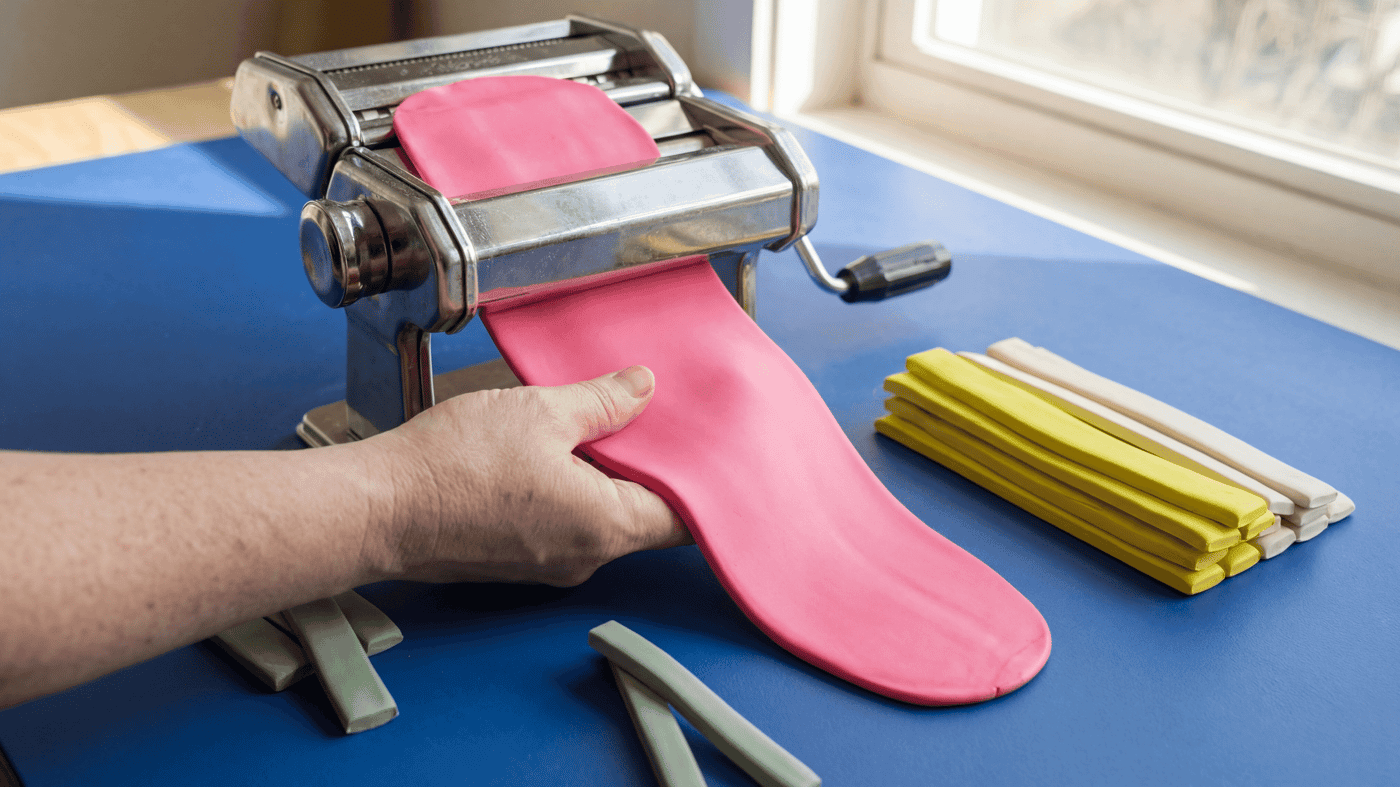
Condition each color separately first. The translucent and the red need to be at the same softness before mixing, or the swirl ends up uneven from the start. If one feels stiffer than the other, give the harder block a few extra passes through the pasta machine before combining anything.
Mix the base by rolling the colors together until they are fully blended into one uniform warm amber. This is the only fully blended step in the whole build. Everything that comes after stays partially separated on purpose.
Translucent batches vary. Some Sculpey Premo Translucent blocks read more amber, others read more milky. Cernit Number One Translucent is often warmer in tone. FIMO Effect Translucent can read cooler. Test a small pea-sized cured sample before you commit a whole batch, since the same recipe can shift across boxes.
Add The Contrast Color As A Separate Log, Not A Mix-In
The contrast color stays its own piece of clay until the twist. Do not pre-mix it into the base.
Roll the contrast color into a thin log roughly half the diameter of the base log. A darker red or red-brown works well; pure black usually reads too harsh and does not match the bakelite character. If you want a more dramatic vein, try Sculpey Premo Burnt Umber or a deep cranberry mix.
Lay the contrast log along the length of the base log, then gently fold the base around it so the contrast color sits inside without touching itself. This sets up the swirl properly. If the contrast color crosses itself early, the twist later will create thick clumps rather than veining.
Twist And Fold, Four To Six Passes
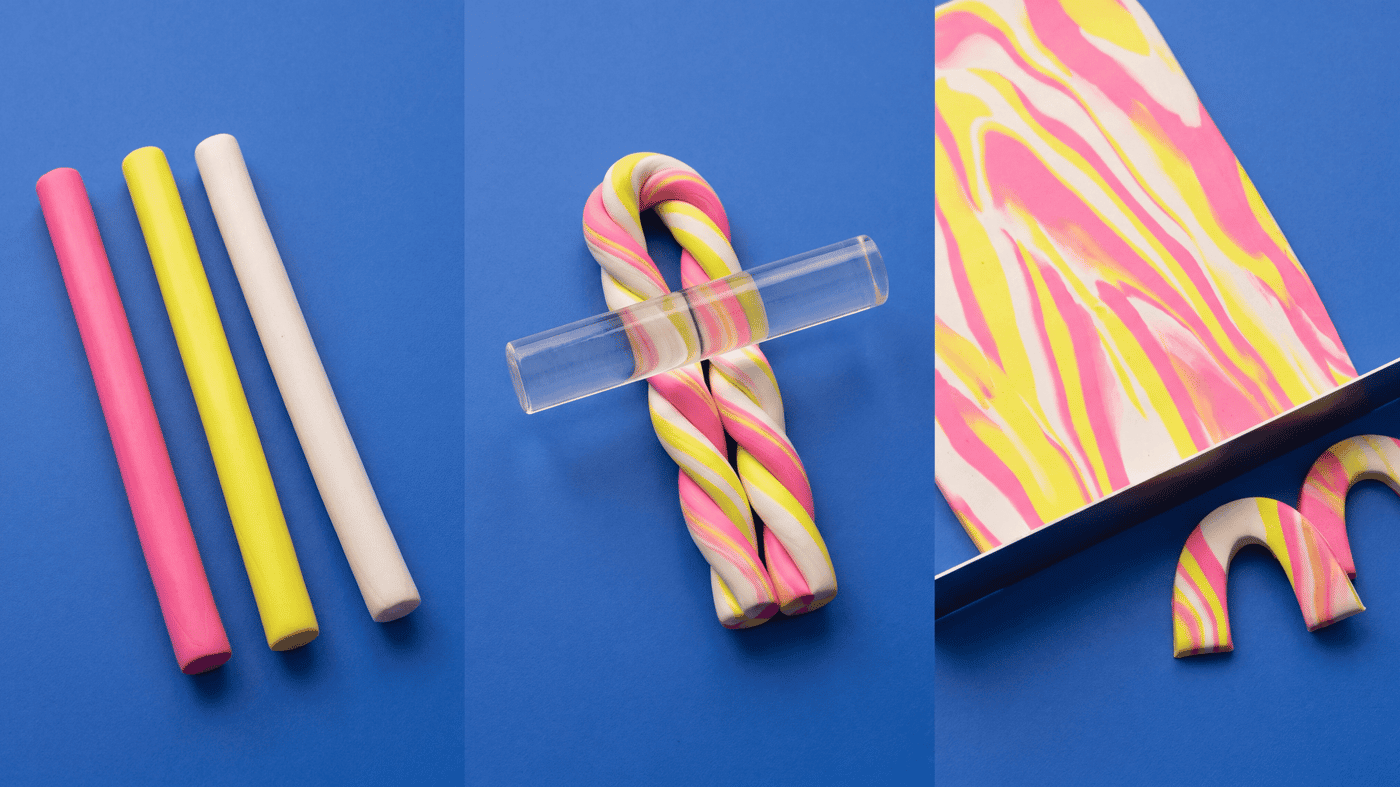
The twist is the technique. Twist the combined log along its length, fold it in half, and twist again. Most cherry-bakelite swirls land in the four to six pass range.
Hold the log at both ends and rotate one hand forward while the other hand stays still. The clay log spirals along its axis. Once it looks ropy, fold it in half end to end, press the two halves together gently, and roll it back into a single log. Then twist again.
Each twist-and-fold pass thickens the swirl by halving the spacing of the contrast color. Two passes leaves obvious bands. Four to six passes usually lands at the cherry-bakelite vein density. Past about eight passes, the contrast color starts blending into the base and you lose the swirl entirely.
Stop watching pass counts and start watching the slab. As soon as the contrast color reads as veining rather than blocky bands, stop. If you pushed too far and the swirl is fading, add a fresh thin contrast log along the side and re-twist once more. You cannot un-blend, but you can refresh.
Slice Perpendicular To The Twist
Slice across the twist axis, not along it. This is what exposes the swirl pattern instead of long lines.
Stand the twisted log upright or hold it horizontally and run a thin clay blade through it at a roughly 90 degree angle to the long axis. Each slice should be 1.5 to 3 mm thick depending on whether you are making a button face, an earring slab, or a stacked layer.
If you slice parallel to the twist, you get long stripes instead of swirls. That is the muddy striped look people complain about. Stay perpendicular and the swirl reads cleanly on every slice.
For buttons, plan the slice thickness so the front face will be about 4 to 6 mm thick after layering on a backing slab. For drops or studs, 2 to 3 mm is often enough since the back can be plain or matched scrap.
Press, Do Not Re-Roll
Press the bakelite slice gently onto its base layer or into a button mold. Avoid rolling it again, which smears the swirl.
If you need to thin the slice slightly to fit a build, press it with a flat acrylic block or with light fingertip pressure rather than running it back through the pasta machine. Each pass through the rollers stretches the swirl into stripes again, undoing the twist work.
For buttons cast in a silicone mold, lay the bakelite slice face-down into the mold cavity and back it with a calmer color of conditioned clay. Press the back of the mold flat with a tile and pop the button out. The face shows the swirl, the back is clean, and the slice never had to be re-rolled.
For drops and slab earrings, lay the slice on a thicker backing slab of solid color, press the seam closed at the edges, then trim the final shape with a cutter. Cut once, lift cleanly, and avoid working the surface after the cut.
Bake Flat And Finish For Depth
Bake the bakelite pieces flat per your clay line's package directions. Finish for warmth, not just shine.
Bake on a ceramic tile at the temperature printed on your clay package. Sculpey Premo cures around 130 C for 30 minutes per 6 mm of thickness, but verify your oven with a separate thermometer before baking a full batch. Translucent clay can darken if the oven runs hot, which can either deepen the bakelite glow nicely or push it past the cherry-amber tone you wanted.
After cure and full cooling, sand the back with 400 then 600 then 800 grit wet sandpaper. Buff the front gently. A satin or low-gloss water-based polymer clay glaze will deepen the amber tone the way a vintage bakelite finish reads. Heavy gloss can flatten the veining read, especially on small buttons or drops where the swirl scale is already small.
Use This Guide With The Lookbook
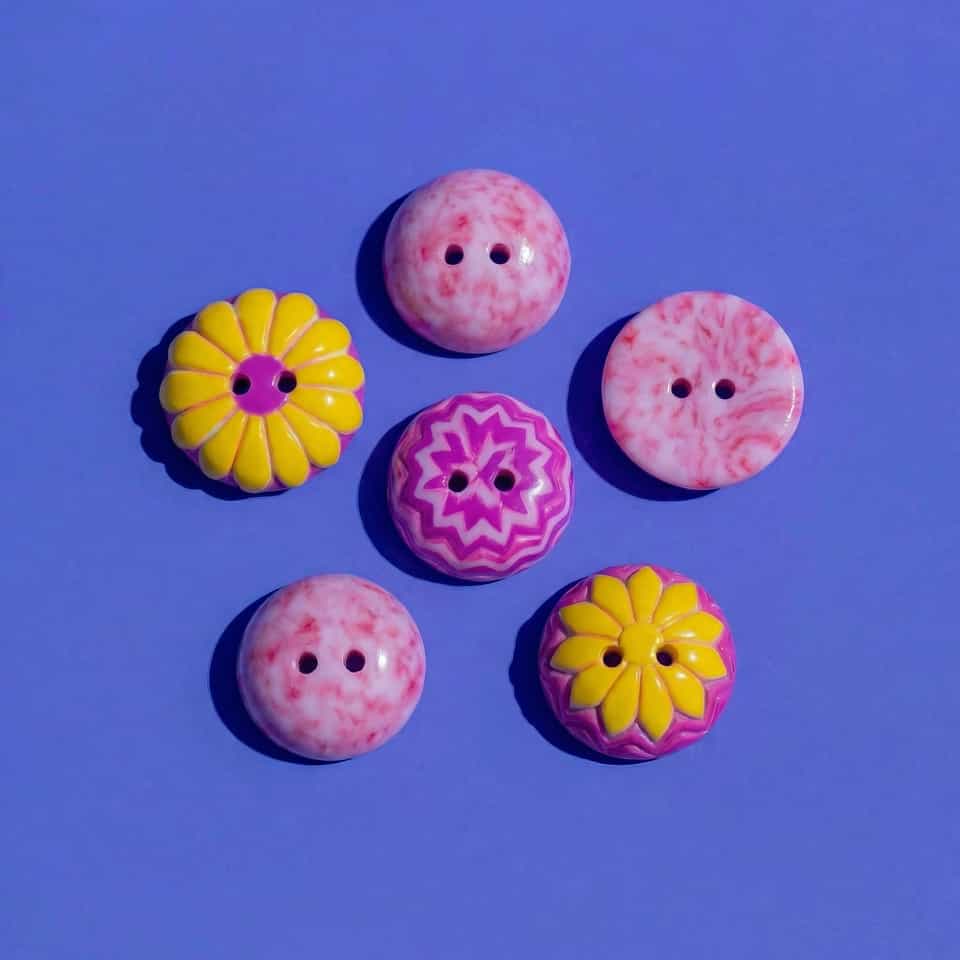
If an item page mentions faux bakelite, cherry amber swirl, or vintage button swirl, use this guide as the build logic behind the technique.
It is most useful for:
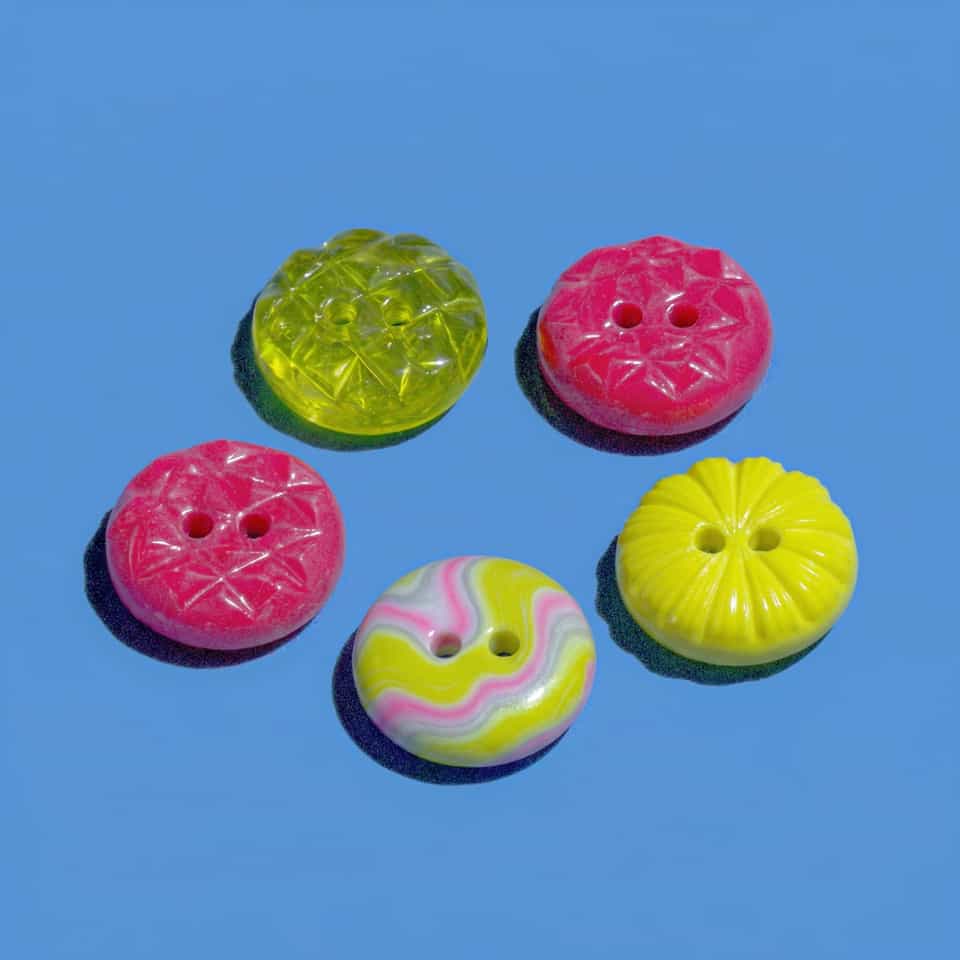
- chevron and floral faux-bakelite button sets
- amber-toned drop earrings and brooches
- vintage-style closures on knit cardigans and coats
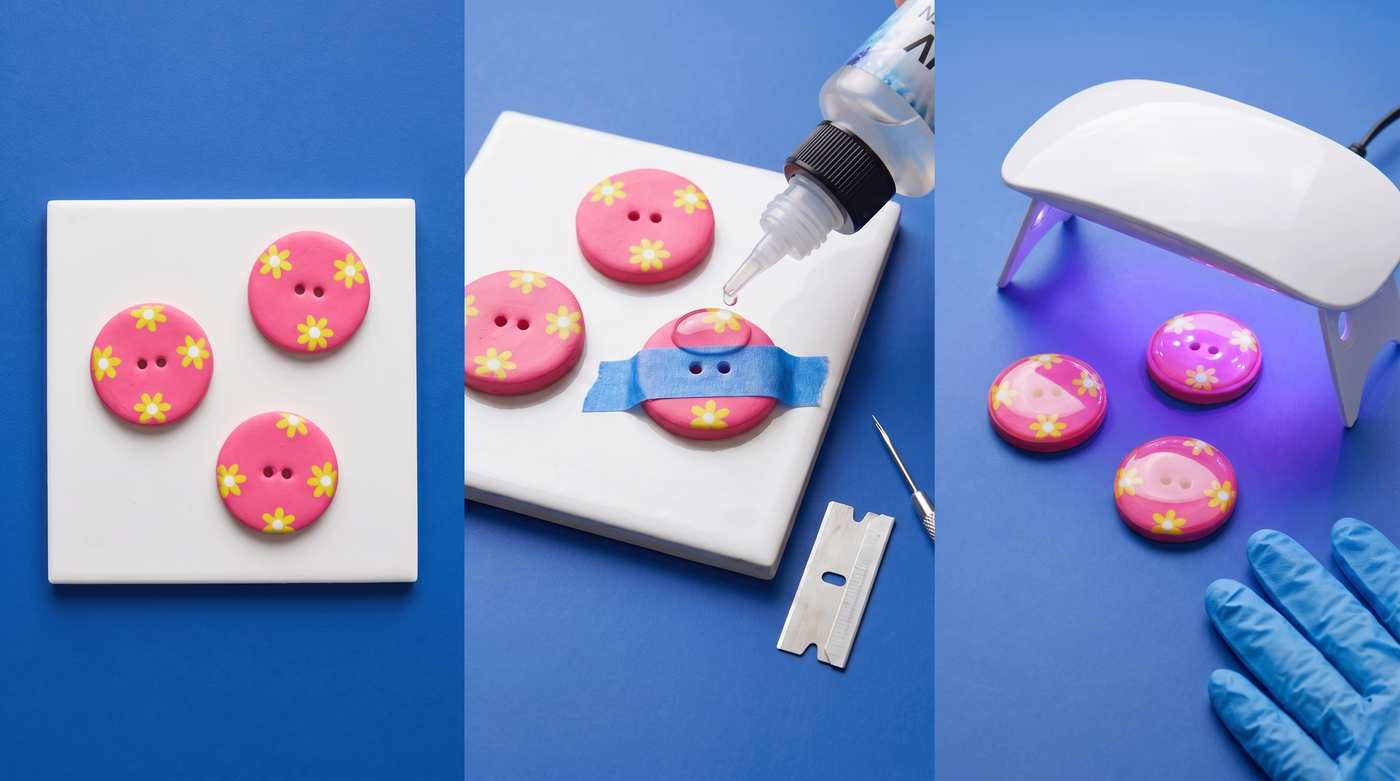
For the resin-domed finish that often pairs with bakelite buttons, see the UV and epoxy resin doming guide next.
Take the next step
Continue the series with the next guide in this path.