Sculpey Soufflé Sutton Slice: One Official Project
This guide stays within one official Sculpey Soufflé project and does not turn that example into a universal stamp, clay, depth, or transfer rule.
Some links on this page are affiliate links. If you buy through them, we may earn a commission at no extra cost to you. As an Amazon Associate I earn from qualifying purchases. Disclosures

In brief
Key takeaways
- Follow the cited official Sculpey Soufflé project with its named clay, rubber texture sheet, roller, blade, and package bake
- Treat any stamp, clay, color, pressure, or dimension substitution as a new recorded sample
- Use the clay blade only as the official project and tool safety instructions direct
- Do not add a backing, chill time, sanding ladder, finish, or failure diagnosis unless an exact primary source covers it
Article contentsOpenClose
This page follows one official Sculpey Soufflé Sutton Slice earring project. It does not turn that project into a universal clay, stamp, depth, pressure, transfer, backing, sanding, or finish rule.
Use The Official Project As The Source
Sculpey's Soufflé Sutton Slice Earrings project credits Lisa Pavelka with introducing the technique and documents one exact sequence with a rubber texture sheet, Sculpey Soufflé, an acrylic roller, a clay blade, cutters, and package-directed baking.
Keep The Materials Exact
The flexible texture sheet holds the coloured clay in its recesses. A clay blade removes excess clay from the raised surface, and an acrylic roller presses the filled pattern against the backing sheet. Choose a flexible sheet you can peel back as the project shows.
Follow The Documented Sequence
- Prepare the named work surface, tools, Soufflé colors, and texture sheet.
- Condition and sheet the Igloo clay to the dimensions in the project.
- Press and roll it into contact with the texture sheet.
- Use the clay blade as the project shows, following the tool's safety instructions.
- Prepare the Glacier sheet, place the texture sheet in the documented orientation, and apply the stated pressure.
- Flip and peel in the documented order, then cut and pierce the pieces as shown.
- Follow the exact Soufflé package and project bake with an oven thermometer, then let the pieces cool.
Compare the Sample Against the Record
If part of the pattern stays in the texture sheet, look for gaps in the filled recesses and areas that did not contact the backing clay. Refill the missing shapes, press the backing into contact, then peel the flexible sheet back slowly while watching the transfer.
Keep Extensions Out Until They Are Sourced
The cited project gives the sequence; chill time, stamp depth, backing slab, sanding ladder, and finish are settings you confirm on your own sample. Record the values you used on the sample that came out clean, and add a step to the sequence only after a sample with that step has passed the same check.
A successful sample supports only the official sequence and the exact substitutions you recorded. It does not prove every product sold under the words Sutton slice, stamp, texture sheet, or surface inlay.
Supplies
Supplies mentioned here
Quick links to the materials and tools that fit this article. ClayBake tools stay on our own catalog.
Sculpey Tools Nature flexible texture sheet set
Sculpey's cited project uses a rubber texture sheet. Verify the exact listing and test one sample with the named clay sequence.
Clay blade set
Sculpey's cited project uses a clay blade at its scrape step. Follow the blade safety instructions and the exact project.
Acrylic roller for polymer clay
Sculpey's cited project uses an acrylic roller to press the clay into contact with the texture sheet.
More guides in this path
Open these when the next decision is material choice, attachment, or finishing.
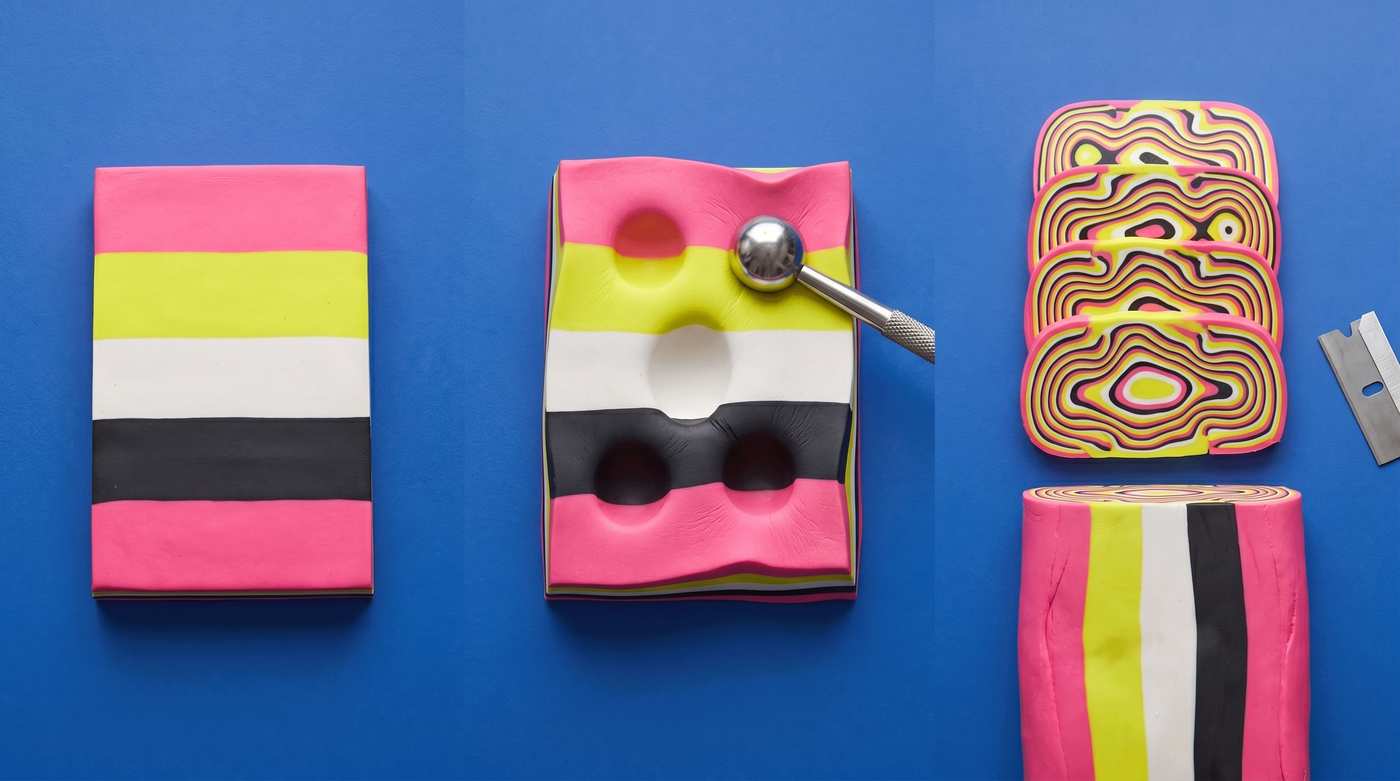
Polymer Clay Mokume Gane: Reduction, Distortion, and Slicing
Mokume gane only reveals its topographic pattern when the stack is distorted before slicing. This guide covers slab thickness, the poke-and-press distortion step, and slicing the stack so each layer makes a clean ring instead of a smear.
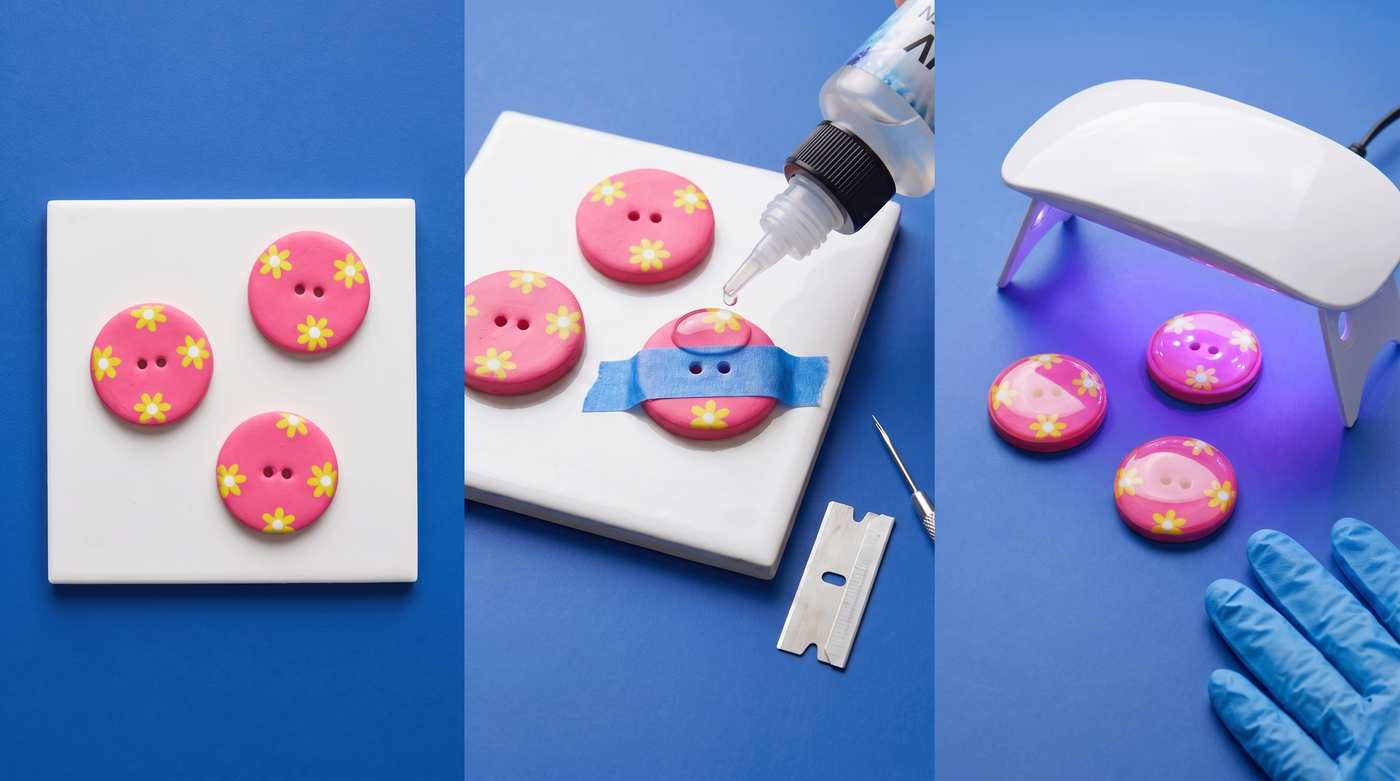
Resin on Polymer Clay: Label-First UV and Epoxy Checks
Bake and cool the clay first, then use the exact resin maker's instructions for compatibility, PPE, lamp or mixing requirements, layer depth, and cure.
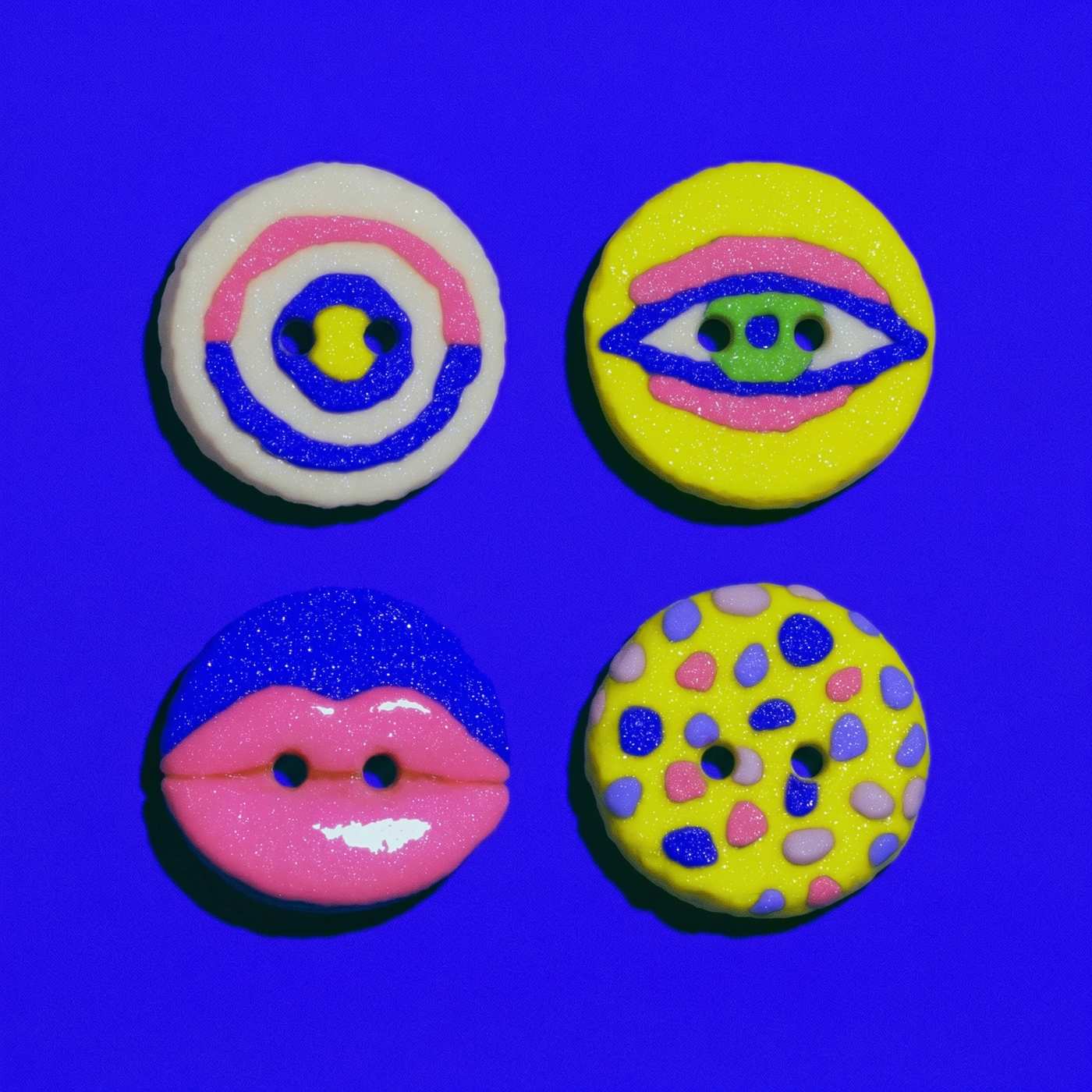
How to attach small polymer clay details so they stay on and keep a crisp edge
Stop small clay details popping off after baking or spreading as you press them. Decide on liquid clay before you start, then carry, place and tap each piece so it stays on with a crisp edge.
Finished examples with related clay decisions
Each piece shows how a material, attachment, or surface choice changes the final form.