Premo vs Soufflé vs FIMO: which polymer clay to buy for cutter and layered pieces
Buy Sculpey Premo first for cutter and layered pieces, Soufflé when the pair must stay light, and FIMO Professional when a design cuts many small pieces from one slab.
Some links on this page are affiliate links. If you buy through them, we may earn a commission at no extra cost to you. As an Amazon Associate I earn from qualifying purchases. Disclosures

Start here
What to choose and check first
Buy Sculpey Premo first for cutter and layered pieces: Sculpey describes it as soft enough to blend easily, holding fine detail, and strong and flexible after baking. Choose Soufflé, the lighter Sculpey line with a matte suede finish, when a long or large pair must stay light, and FIMO Professional when a design cuts many small pieces from one slab. Bake by the temperature printed on the packet you bought.
Article contentsOpenClose
For cutter and layered pieces, buy Sculpey Premo first. Sculpey describes it as soft enough to blend easily while holding fine detail, and strong and flexible after baking, so a thin earring bends instead of snapping. Chill the rolled slab for a few minutes and thin layers cut and lift cleanly. Choose Sculpey Soufflé when a long or large pair needs to stay light, and FIMO Professional when a design cuts many small pieces and you want a firmer block that holds the cut edge while you lift each one.
Which clay line each Clay Bake Studio kit guide is written for
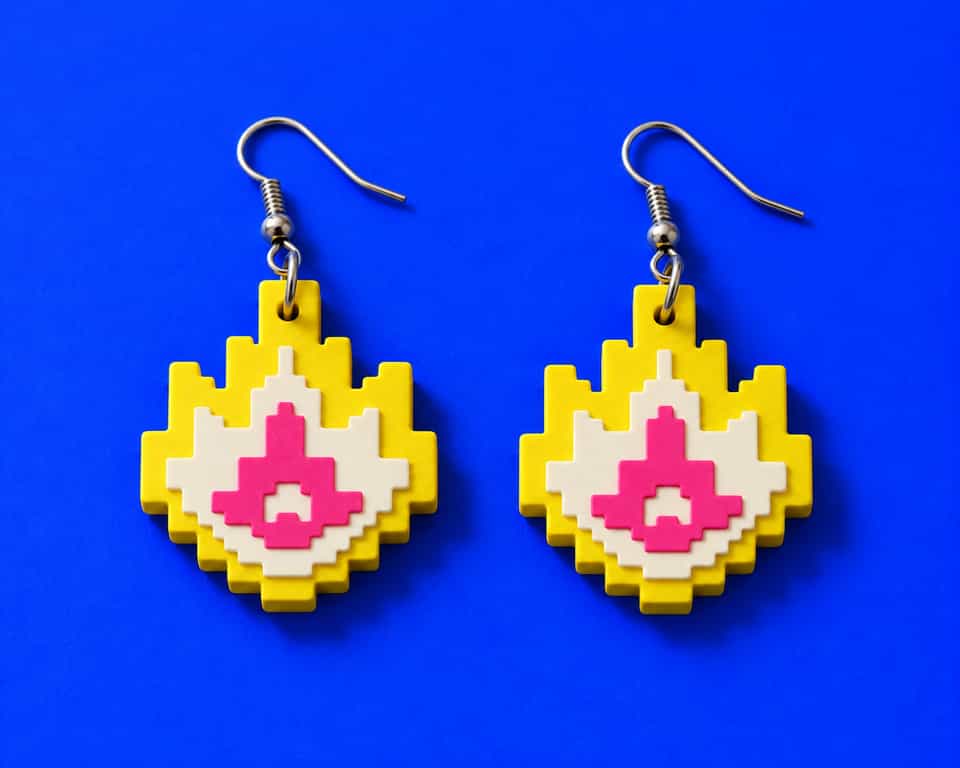
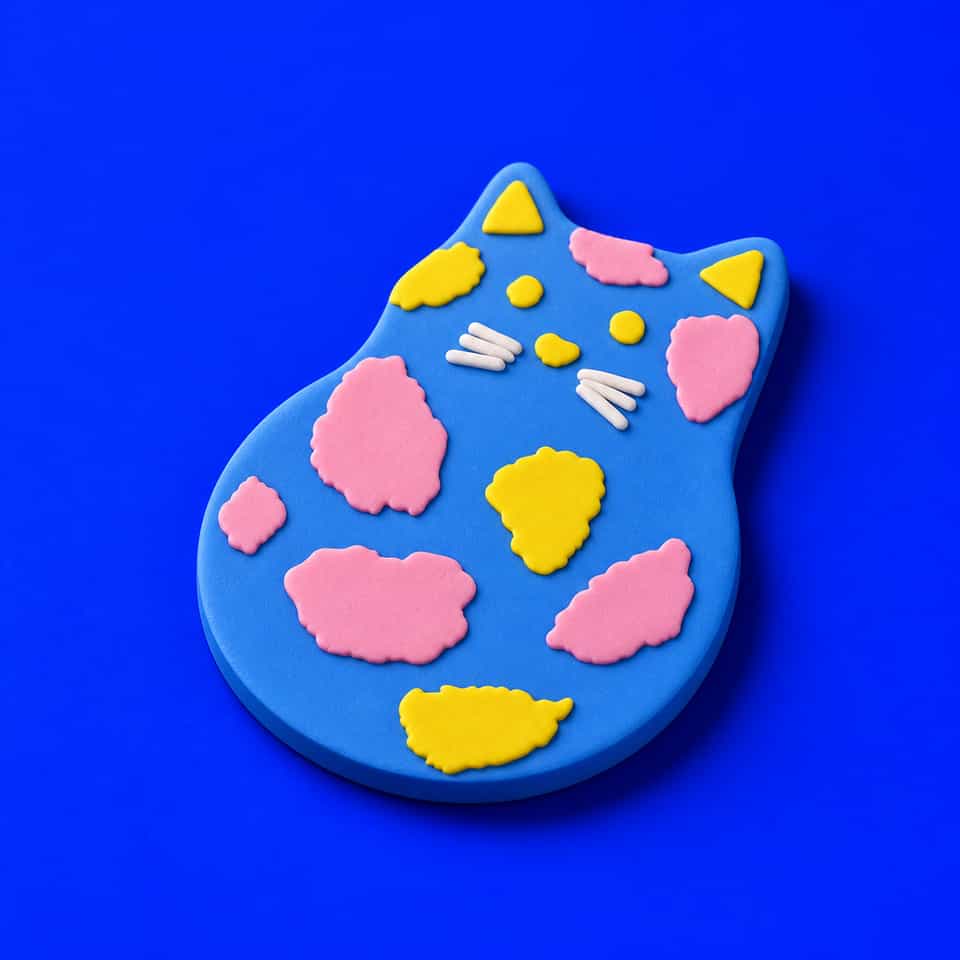
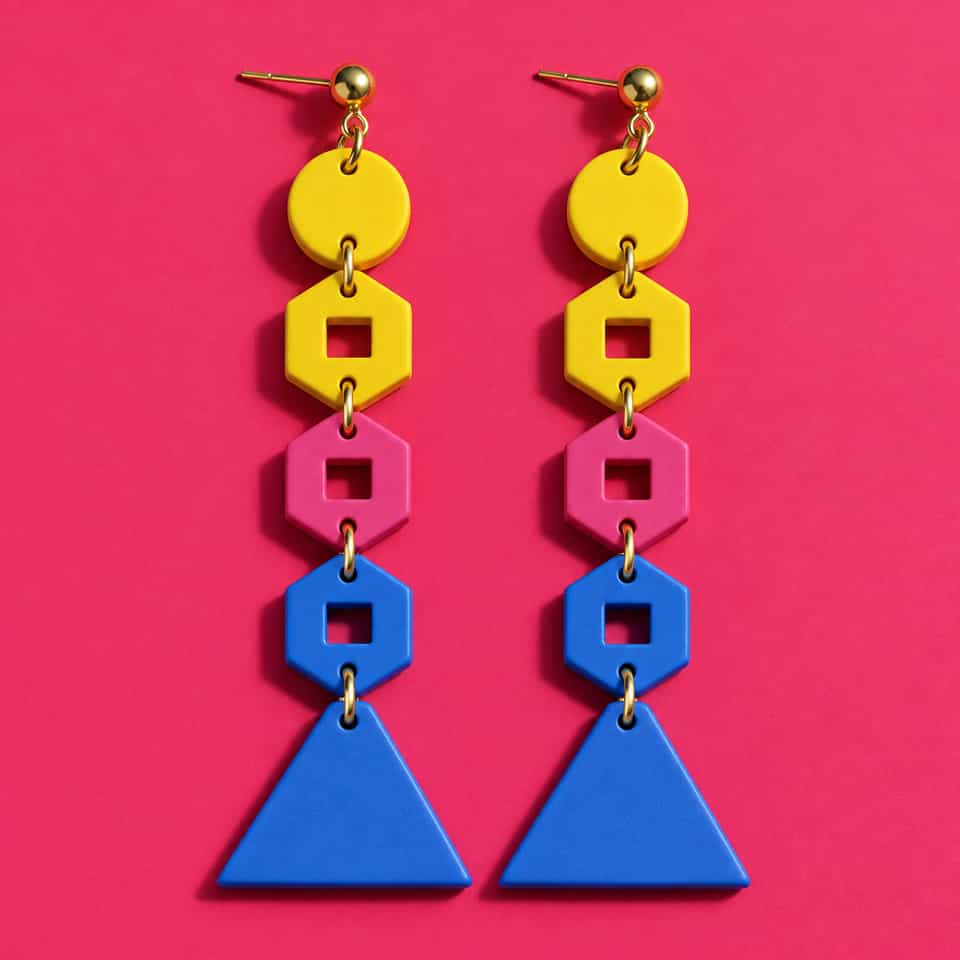
The pixel kits, the Faceted Gem earrings and the Boston Terrier wall mask are written for Sculpey Premo. The Go-Go shoulder duster is written for Sculpey Soufflé, because ten linked pieces hang from one stud and the lighter clay keeps the pair comfortable. The Blue Spotted Cat and the Fortune Cookie are written for FIMO Professional: the cat's nine small spot cutters and two inner ears lift cleanly from a firm block, and the cookie shell keeps a neat rim while it folds. Some guides also name an alternate line. The named line is the one the guide's handling notes were written for, and every guide bakes by that line's packet directions.
If you swap in another maker's clay, bake by that packet instead: Sculpey's lines bake at 275 F (130 C on the packet) and FIMO's at 110 C (230 F).
Sculpey Soufflé vs Premo: which should you start with?
Start with Premo for cutter pieces, colour blends and canes, and start with Soufflé when the finished pair has to be light or you want a matte suede surface straight from the oven. Both are Sculpey clays that bake at 275 F (130 C) for 30 minutes per 1/4 inch (6 mm), and Sculpey's FAQ calls them its two most durable oven-bake clays, flexible enough that thin areas are less likely to break. Neither is the fragile choice, so pick on raw feel, weight, finish and colour range. The descriptions below are Sculpey's own for Premo and for Soufflé.
| Property | Sculpey Premo | Sculpey Soufflé |
|---|---|---|
| Raw feel | Soft enough to blend easily and holds fine detail, in Sculpey's words. | Soft; Sculpey says its soft nature makes blending easy. One published maker review found it nearly as soft as Sculpey III. |
| Conditioning | Knead it by hand until smooth; one long-term maker calls it easy to condition. | Very little; it conditions easily in the hands. |
| Weight | 2 oz (57 g) bar; 8 oz and 1 lb bars for base colours. | 1.7 oz (48 g) bar of the same size, about 15 percent lighter. |
| Baked finish | Satin, in Sculpey's words; sands and buffs to a sheen. | Suede, matte; hides fingerprints and takes little sheen when buffed. |
| After baking | Strong and flexible. | Super flexible; can be cut or sewn after baking. First in Sculpey's own durability order, with Premo second. |
| Packet bake | 275 F (130 C), 30 minutes per 1/4 inch. | 275 F (130 C), 30 minutes per 1/4 inch. |
| Colours | More than 50, including translucent, metallic, pearl and glitter. | A smaller range of solid colours; no translucent, metallic or pearl. |
| Techniques Sculpey names | Caning, mokume gane, mica shift, Skinner blends. | Caning, bargello, mokume gane. |
The bake is the same for both. Sculpey's product pages and FAQ give 30 minutes per 1/4 inch for Premo and Soufflé alike; one line on Sculpey's Soufflé collection page says 15 minutes, so go by the packet: the number printed on the block you bought is the one to bake by.
Earrings. Either line bakes strong enough for a thin cutter earring. Premo is the usual start for studs, short drops and layered pieces, and most of the kit guides are written for it. Switch to Soufflé when the design is long, large or made of many linked pieces: Sculpey calls it an excellent jewellery clay because of its light weight, and that weight is why the Go-Go shoulder duster guide above is written for it. Its matte surface hides fingerprints. If you want to sand and buff a pair to a shine, choose Premo, because in one published maker's buffing test Soufflé took far less sheen than the other clays.
Canes and mica shift. Sculpey lists caning and mokume gane for both lines. Choose Premo when the cane or sheet needs translucent, metallic or pearl clay: Soufflé comes in none of those, and Sculpey says Premo's metallic and pearl colours carry a high concentration of mica particles for mica shift.
Blends. Sculpey says both blend easily and names Premo for Skinner blends. Soufflé needs the least kneading of the two, and one long-term maker suggests it for makers with weak or arthritic hands. Because the two lines share a packet bake, you can also combine them: a Premo base with a Soufflé layer bakes exactly as either would alone.
Which one for a first pair? Premo, unless weight is the problem you are solving. It mixes into new colours predictably, comes in more than 50 colours, and is the line most of the kit guides are written for. Pick Soufflé when the design is long or big enough that a Premo version would pull on the ear, or when you want the matte suede surface straight from the oven.
Sculpey Premo vs FIMO Soft: which should a beginner buy?
Buy Premo for cutter and layered pieces, and FIMO Soft if you want clay that shapes straight from the packet with almost no kneading. Both are soft clays sold in the same 57 g (2 oz) block size, and both bake flexible: one published maker strength test lists Premo and FIMO Soft among the clays that flex without breaking when properly baked. They differ in four ways.
- Conditioning. STAEDTLER says FIMO Soft does not need softening first. Sculpey tells you to knead Premo by hand to condition it, and one long-term maker calls it easy to condition.
- Detail and cut edges. Sculpey says Premo holds fine detail, while the same maker finds FIMO Soft can turn gummy for fine work (the next section has more). Chill either slab on its tile for a few minutes before cutting.
- Colours. Premo comes in more than 50 colours, including translucent, metallic, pearl and glitter. STAEDTLER lists 30 FIMO Soft colours plus six trend colours in 57 g blocks.
- Oven temperature. Premo bakes at 275 F (130 C) for 30 minutes per 1/4 inch and FIMO Soft at 110 C (230 F) for 30 minutes. A piece that combines them bakes at Premo's temperature under Sculpey's mixing rule, and light FIMO colours can darken at that heat; the mixing section below covers it.
For a first cutter pair, start with Premo: a chilled Premo slab cuts clean, and most kit guides give its bake. Start with FIMO Soft when you mostly shape by hand and want to begin without kneading. If you want a FIMO line for cutters, the next section explains why FIMO Professional is the one to pick.
FIMO Soft vs FIMO Professional
Both FIMO lines bake at 110 C (230 F) for 30 minutes, so the choice is the block in your hand. STAEDTLER makes FIMO Soft for adult beginners and amateur artists: it is soft and pliable and shapes without much kneading. FIMO Professional has, in STAEDTLER's words, a much firmer consistency and high dimensional stability, made for advanced users and intricate work. Its five True Colours are pure pigments made for mixing.
For cutter work, FIMO Professional is the FIMO line to buy. A firm slab holds the cut edge while you lift a small piece, which is why the Blue Spotted Cat guide is written for it. It takes longer to condition: one maker's published side-by-side clay tests, which this article quotes wherever the source is a maker and not a manufacturer, found that a slice of FIMO Professional crumbles at first in a pasta machine and needs slow, firm feeding before it comes together. FIMO Soft conditions in moments, but the same tests describe it as quite soft, sometimes gummy, and hard to sculpt fine detail in, so a thin colour layer cut from it is more likely to stretch on the blade. If you already own FIMO Soft, chill the rolled slab on its tile before cutting and it will get you through a first pair; buy Professional for the next block.
Do you need a firm clay for crisp cutter edges?
Not usually. A crisp edge comes from a slab that is cool and holds its shape at the moment the cutter goes in, and any of these lines gets there: roll the slab on a glossy tile, let it rest, or put the tile in the fridge for a few minutes until the clay is firm but not hard, then press straight down and lift straight up. The conditioning and slab guide covers resting and chilling.
Where a firm block helps is a design with many small cutters, or a rim that must hold its shape after cutting, which is why the Blue Spotted Cat and Fortune Cookie guides name FIMO Professional. Those tests put Kato and Pardo Professional Art Clay at the stiff end of the raw clays, FIMO Professional at just the right mix of stiff and soft, and Soufflé and Sculpey III at the soft end. Premo sits in the middle of that range. Kato is discontinued, so FIMO Professional and Pardo are the firm blocks you can buy.
Raw feel and baked strength are different properties. A soft block can bake into a very flexible piece: in the same maker tests Soufflé behaved exactly like Premo when flexed to the fold, and Premo, FIMO, Pardo, Cernit and Soufflé all held up as thin as 1/16 inch (1.5 mm) when baked properly. Pick the raw feel for the cuts you have to make; whether the earring survives comes down to baking it by the packet.
Will raw clay layers stick to each other?
Usually, when both layers are the same line and you press them together through parchment before baking. Not always, and the failure only shows after the oven. One published maker bond test pressed a circle of raw clay onto a raw tile of the same brand and baked them: Premo, Soufflé and Kato bonded poorly to themselves without a bonding agent, and the circle could be flicked off with a fingernail, while FIMO Professional and Cernit bonded well raw to raw. That was a light press, not a rolled and burnished stack, so run the offcut test below with your own clay.
Press two offcuts of your clay together through parchment the way you will press the layers, bake and cool them by the packet, then try to lift the top piece with a fingernail. If it stays, build the piece as the guide shows. If it peels, put a very thin smear of liquid polymer clay in the middle of each lower layer as you place it, kept back from the edges so none squeezes out. FIMO Liquid gave the strongest bond in that test, ahead of Sculpey Bake and Bond, and Sculpey Oven-Bake Clay Adhesive is the Sculpey option the kit pages name; both must be baked to set. Then place the layers as the pixel layering guide shows.
Can you mix clay brands or lines in one piece?
Yes. Sculpey's FAQ says all polymer clay brands can be mixed, as long as the clay is mixed very thoroughly, and a mixed piece bakes at the highest temperature and for the longest time on any of the packets. That rule is simple when the lines share a temperature: a Premo base with a Soufflé layer bakes at 275 F for 30 minutes per 1/4 inch and nothing changes. It gets awkward across makers, because FIMO's packet says 110 C and Sculpey's says 275 F (130 C), so a Premo base with a FIMO pink layer would bake at Sculpey's temperature. One long-term maker bakes mixed pieces at the highest temperature in the mix and reports no problems when the oven really is at that temperature, with one caution: light FIMO colours darken when baked hotter than their packet. STAEDTLER publishes no guidance on mixing with other brands.
If the lines share a packet temperature, mix freely. If they do not, bake at the higher one and check whether the light FIMO colours have darkened when the piece comes out, or keep that piece to one maker's lines so one packet temperature applies to every layer. Whatever you bake, put an oven thermometer beside the clay; the oven thermometer guide explains how to check the reading against the packet. Note that 275 F is printed as 130 C on Sculpey packets and rounded to 135 C by some makers: it is the same setting.
How much clay to buy for a first kit piece
One block per colour is enough for a first pair or brooch plus the offcuts for the bond test, so the shopping list is the colour count on the kit page. Block sizes by line: Premo 2 oz (57 g), with 8 oz and 1 lb bars for a base colour you use a lot; Soufflé 1.7 oz (48 g); FIMO Professional 85 g standard (some markets also sell 57 g) and 454 g; FIMO Soft 57 g; Cernit 56 g, 250 g and 500 g. A 1 oz sampler bar is half a standard block. You can swap the kit's pictured colours: the pixel flame is shown in yellow, white and magenta and the cat in cobalt, pink and yellow, and any colours cut the same.
For single colours, search Amazon for Sculpey Premo colours or search Amazon for FIMO Professional clay; those are search links, not selected products, so check the line name on the listing, because FIMO Soft and Professional sit side by side in the results. Once the clay is on the table, the beginner toolkit covers the roller, blade, tile and thermometer that go with it.
Cernit, Cosclay, Sculpey III and Kato: where they fit
Cernit Number One is the alternate clay the Blue Spotted Cat guide lists. Cernit gives a bake window of 110 to 130 C (230 to 266 F) for 30 minutes maximum and says the baked clay keeps some flexibility so it resists breaking. In the maker tests quoted above, with sticks flexed, balls hammered and strips pulled, it came out as strong as or stronger than every other brand tried, and it bonded well raw to raw in the bond test. The same tests note it conditions easily and responds to hand heat, so cold hands suit it and hot hands want a cooler room. Cernit describes Number One as completely opaque after baking; its translucent range is a separate line.
Cosclay is a hybrid plastic and rubber clay that stays flexible after baking. Cosclay's instructions say 275 F (135 C) for at least 30 minutes per 1/4 inch, and warn that a cool bake breaks instead of flexing. Cosclay's own pages are about puppets, posable figures and cosplay. For slab jewellery, the maker tests above rate it the least stiff clay for pieces that get flexed repeatedly.
Sculpey III is Sculpey's soft hobby line: 44 colours, a matte bisque-type finish, 275 F (130 C) for 15 minutes per 1/4 inch, and very little conditioning. Sculpey lists it last in its own durability order, and a guest post on Sculpey's blog says a very thin Sculpey III piece such as a cookie-cutter earring could snap. For thin cutter earrings, pick Premo or Soufflé, and keep Sculpey III for thicker pieces.
Kato Polyclay was the stiffest raw clay and the most rigid baked clay in those same maker comparisons, and it is gone: the line's founder announced on 29 September 2025 that Van Aken's new owner had discontinued it, and Van Aken now labels it a discontinued line. Older guides that say to use Kato for canes now mean FIMO Professional, or Pardo Professional Art Clay, a firm 56 g clay that Viva Decor bakes at 120 C (248 F) for 30 minutes. If a thin piece of any brand snaps, check the bake before blaming the clay: Sculpey and Cosclay both say an underbaked piece breaks instead of flexing, and the cracking guide walks through it.
In brief
Key takeaways
- Soufflé vs Premo: both are Sculpey clays that bake at 275 F (130 C) for 30 minutes per 1/4 inch and cure flexible. Start with Premo for cutter pieces, blends, canes and mica shift; pick Soufflé for long or large pairs that must stay light, or for a matte suede finish
- The kit guides are written for one line each: Premo for the pixel kits, gem and terrier, Soufflé for the Go-Go shoulder duster, FIMO Professional for the cat and cookie. Start with the line your kit names
- Mixing brands is fine, and Sculpey's own FAQ says so; bake a mixed piece at the highest packet temperature among them (Sculpey 275 F or 130 C, FIMO 110 C, Cernit 110 to 130 C), and check your own packet first
- Press two offcuts together through parchment and bake them before the first piece; if the top one peels off, add a thin smear of liquid clay under each layer
- For a design with many small cutters, buy FIMO Professional as the firm block; Kato Polyclay was discontinued in September 2025, so FIMO Professional or Pardo replaces it
The clay descriptions, block sizes and packet temperatures come from Sculpey, STAEDTLER, Cernit, Viva Decor and Cosclay; the firmness, bond and strength comparisons come from one maker's published side-by-side hand tests, attributed where they appear; the kit clay lines are the ones Clay Bake Studio wrote each kit guide for.
Supplies to compare
More guides in this path
Open these when the next decision is material choice, attachment, or finishing.
How to condition polymer clay and roll an even slab for cutters
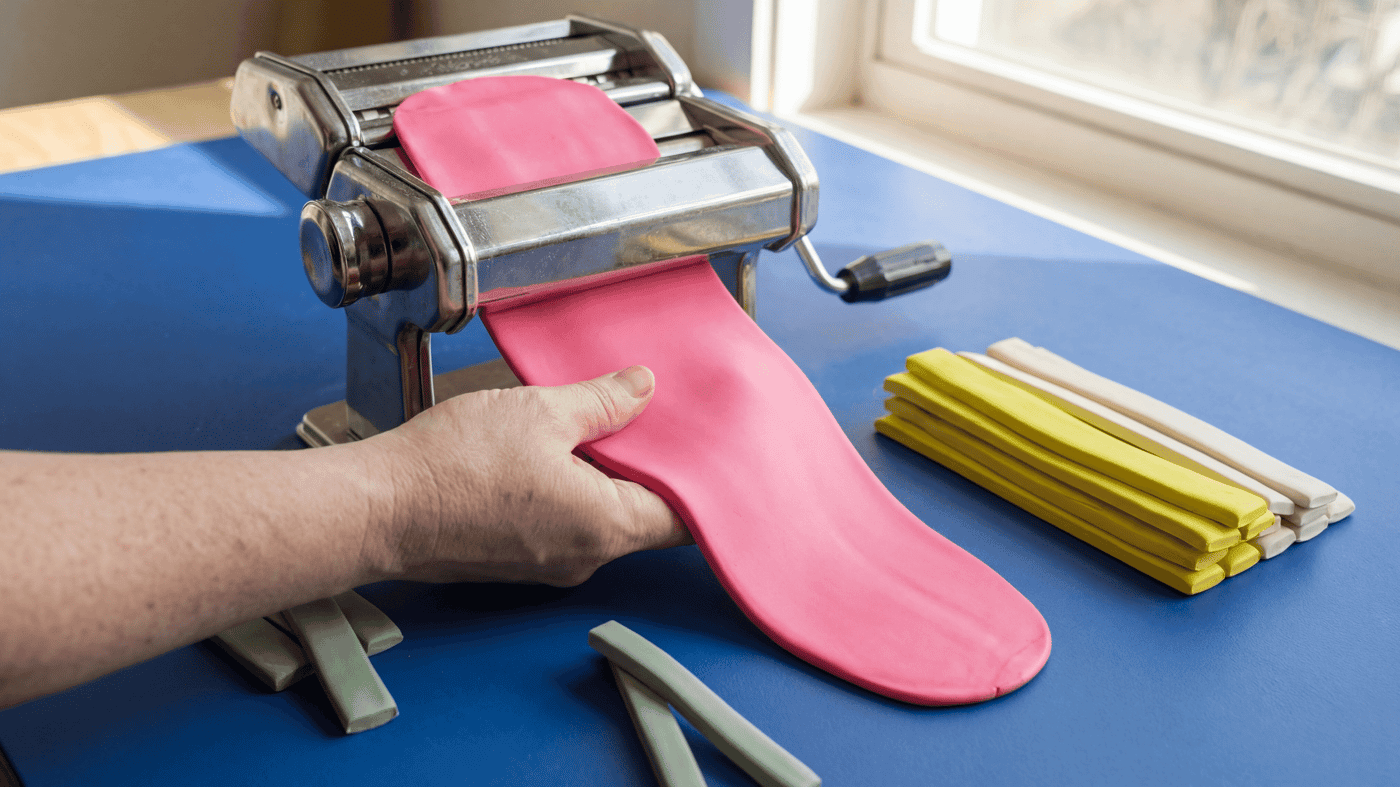
Get every clay colour to the same softness, roll each layer to its measured thickness on a tile, and let warm clay firm up before you cut.
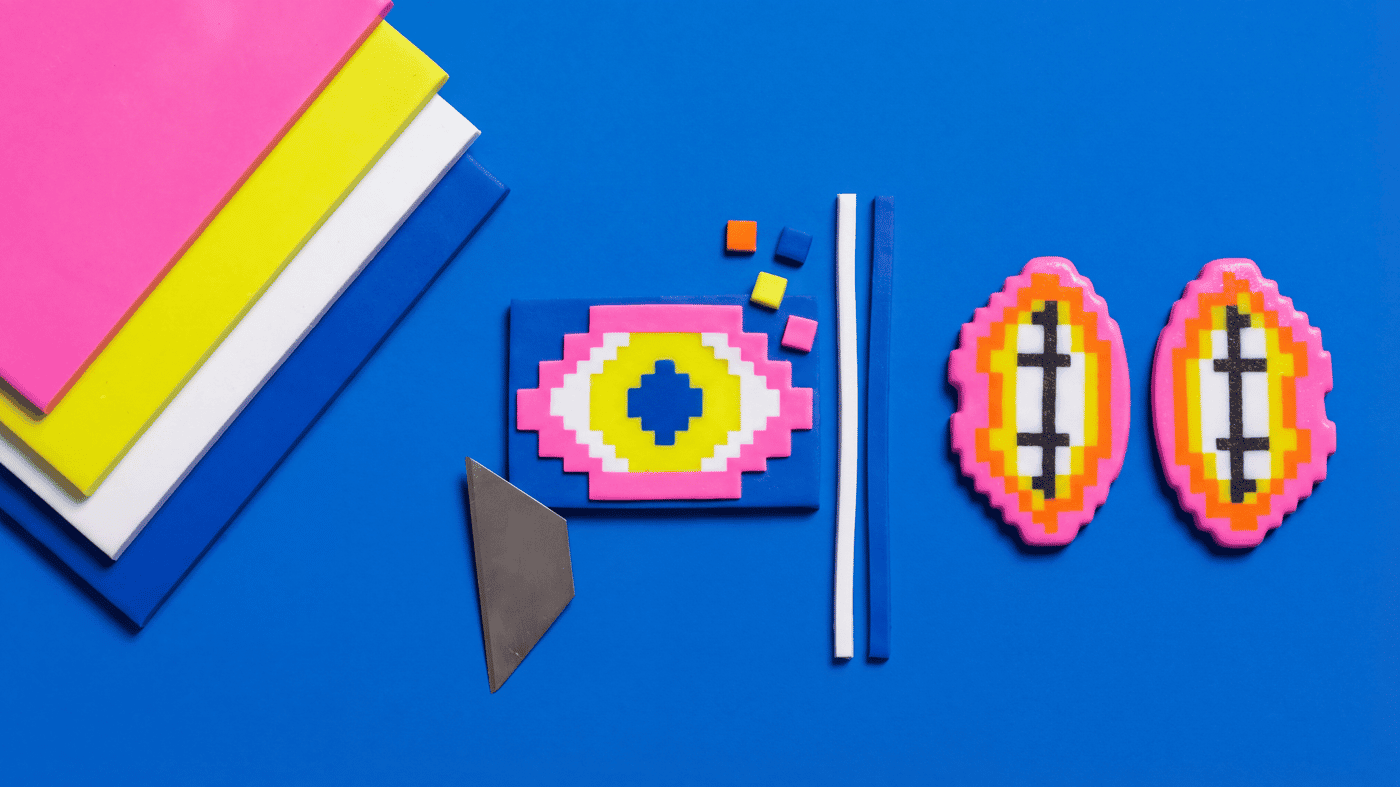
Layered pixel clay earrings: how to line up thin colour layers without stretching them
Your cutters shape each piece, but you place every colour layer by hand. Lift thin layers on a flat blade, line each one up before any pressure, then press the stack lightly through parchment.
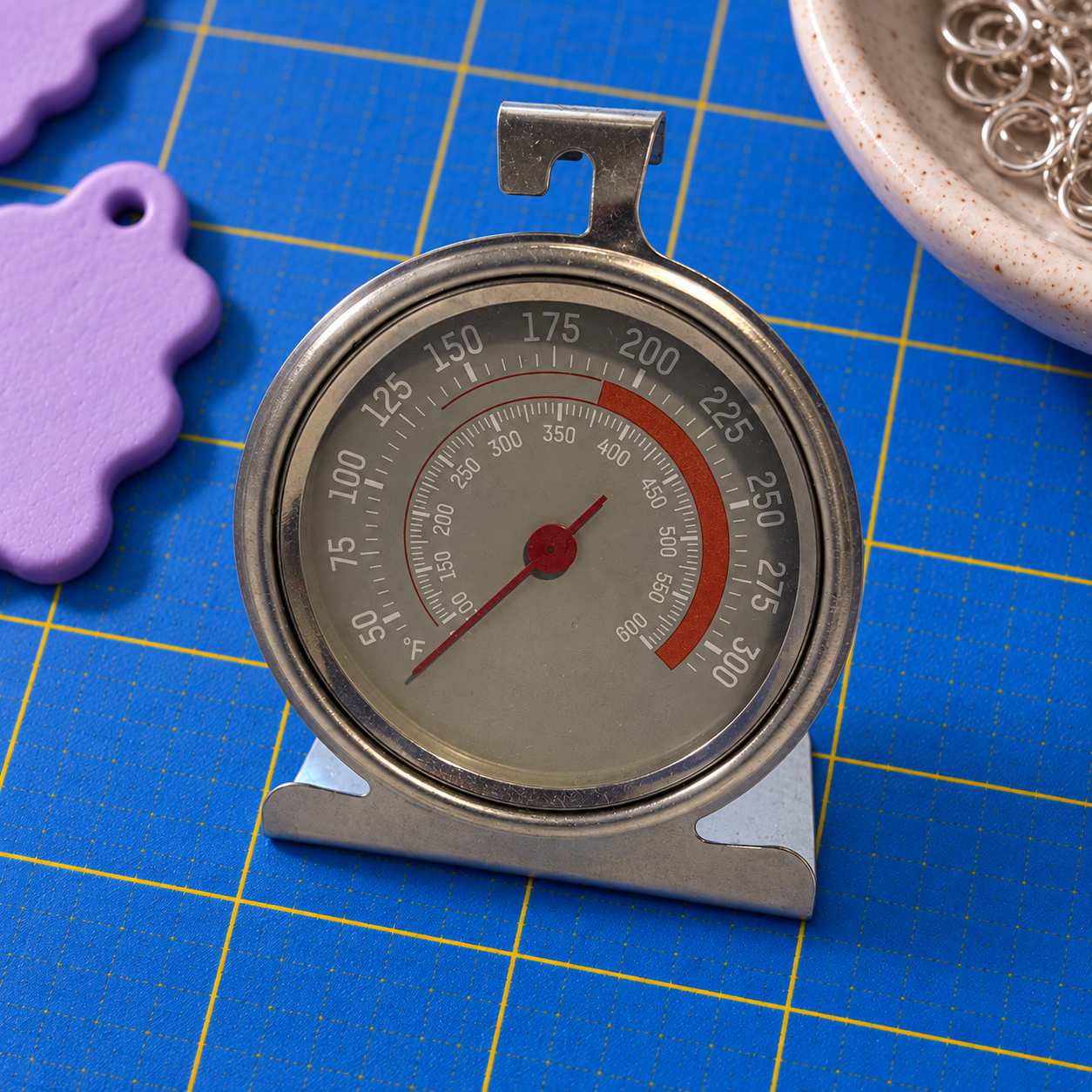
Best oven thermometer for polymer clay: what to buy and how to use it
Choose a dial you can read through the oven door, or an oven-rated air probe with an outside display. Then check the temperature beside your clay.
Finished examples with related clay decisions
Each piece shows how a material, attachment, or surface choice changes the final form.