Brooch backs for polymer clay: which pin to choose before you bake
Tie-tack, bar pin, locking clutch or magnet: which brooch back suits a flat clay piece, and what to leave on the back of the clay before it goes in the oven.
Some links on this page are affiliate links. If you buy through them, we may earn a commission at no extra cost to you. As an Amazon Associate I earn from qualifying purchases. Disclosures

Start here
What to choose and check first
For most flat polymer clay brooches, choose a flat-pad tie-tack with a clutch: its small pad fits a flat patch high on the back. Use a bar pin, or a second tie-tack at the same height, when a wide brooch turns on one post. Swap in a locking clutch for denim or leather. A two-part magnetic back suits delicate fabric, goes on after baking, and is not for anyone with a pacemaker or ICD.
Article contentsOpenClose
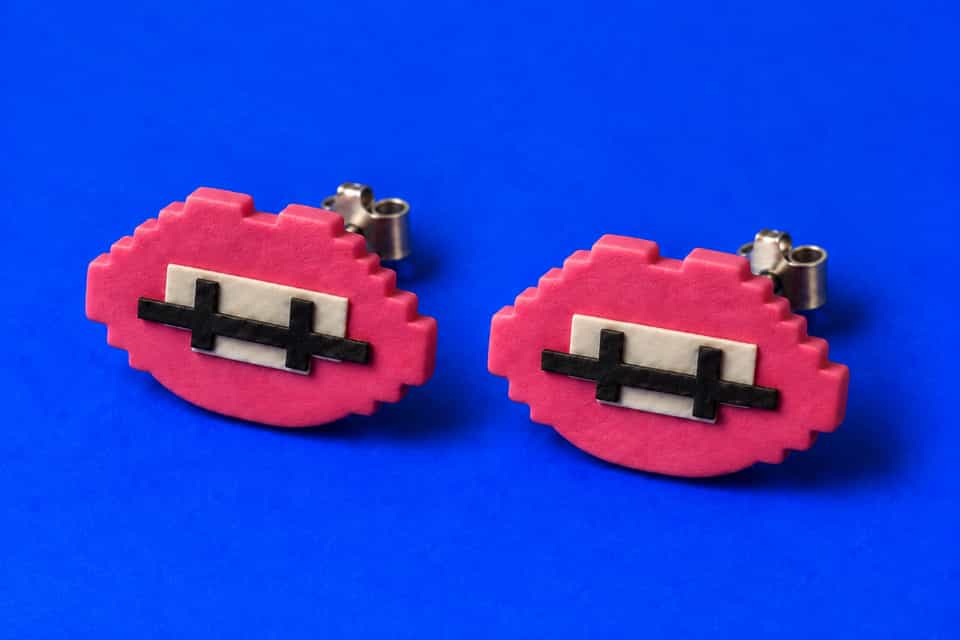
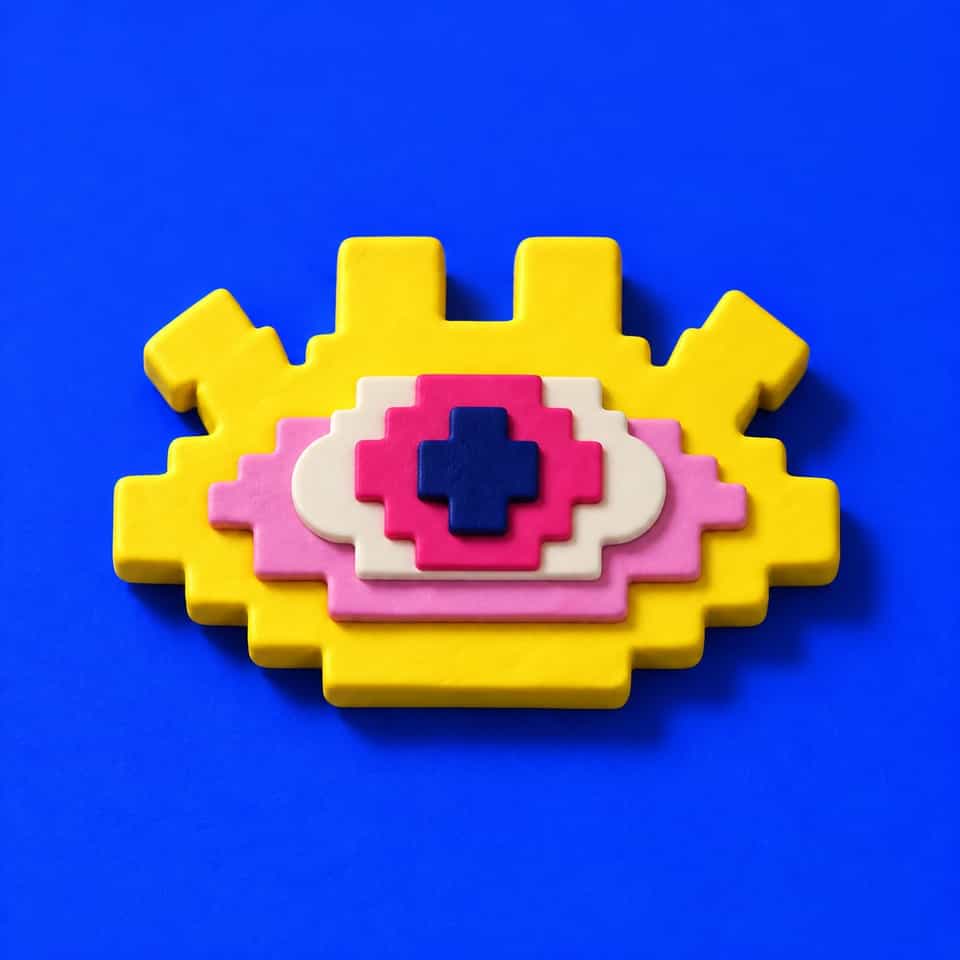
For most flat polymer clay brooches, choose a flat-pad tie-tack with a clutch: its small round pad fits a flat patch high on the back, and it is the pin the Clay Bake Studio Pixel Lips and Pixel Eye brooch kits are designed around. Choose it before you bake, so you can keep that patch smooth and bare, and switch to a bar pin, or a second tie-tack, when the brooch is wide enough to turn on one post.
The other backs solve narrower problems: a locking clutch for denim or leather, a two-part magnetic back for fabric you do not want to pierce, sewing holes for a piece that lives on one bag, and a loop pin for hanging charms. Once your brooch is baked and cool, how to attach a brooch pin to polymer clay takes you through placing the pin, gluing it and checking it on fabric.
Which brooch back should you choose?
Start from the back of your brooch and the fabric it will go on. Every back needs a flat area of clay to sit on, and clay will not stick to a metal pad by itself, even in the oven, so each one is either glued on after baking or held under a layer of clay.
| Back | What it is | Suits | Fabric | How it goes on |
|---|---|---|---|---|
| Tie-tack with a clutch | A flat round pad with a pointed post; a rubber or metal butterfly clutch grips the post inside the fabric | Most flat brooches; two at the same height for a wide piece | Shirts, jackets and knits | Glue the pad on after baking, or hold it under a thin slab of clay in a second bake |
| Bar pin | A flat bar with a pin stem hinged at one end and a catch at the other: an open catch, or a safety catch you turn closed over the stem tip | Wide brooches, and any brooch that turns on one post | Most fabrics; on soft fabric the stem can go through twice | Glue the flat underside on after baking, or hold it under a thin strip of clay in a second bake |
| Locking clutch | A spring-locked back that replaces the clutch on a tie-tack post | Tie-tack brooches worn on heavy fabric | Denim, leather and thick coats | The pad goes on like any tie-tack; only the back changes |
| Two-part magnetic back | A magnet on the brooch and a second magnet or plate behind the fabric, clamping the fabric between them | Light brooches; never for anyone with a pacemaker or ICD | Silk, chiffon and fine knits you do not want to pierce; weaker through thick fabric | Glue it on after the last bake, or clip a magnetic converter onto a glued bar pin |
| Sewn on | Sewing holes through the clay, as on a button, and no pin | A piece that stays on one bag, hat or jacket | Any fabric you can stitch through | Pierce the holes before baking and stitch the piece on afterwards |
| Loop pin (charm or kilt pin) | A safety-pin style pin with small loops along its bar | Small clay charms that hang, rather than one flat piece | Bags, scarves and jackets | Hang each charm from a loop on a jump ring through a hole baked in the charm |
Decide before you bake: a flat patch or a baked-in pin
Before the brooch goes in the oven, decide how the pin will hold, because the two routes need the back of the clay handled differently.
- A glued pin needs a flat, bare patch. Glue holds to whatever it touches, so a pad glued over paint, mica or glaze is only as strong as that coating. Keep a smooth, untextured patch in the top third of the back, centred left to right, big enough for the whole pad or bar to sit on flat clay inside the outline. Keep texture, paint and glaze off it; if the front is textured, let the texture stop at the edge of the patch. Build a flat brooch on a ceramic tile and bake and cool it there, so the back comes out flat.
- A baked-in pin goes under a layer of clay in a second bake. Makers who hold a pin with clay bake the front first, so it keeps its shape, then press a thin slab or strip of clay over the pin's pad or bar and bake again. Sculpey's FAQ explains why the cover is needed: clay cannot bond to metal, so wrap the clay around it. For this route, keep the back free of glue, paint and glaze until the second bake is done, since Sculpey advises rebaking only unpainted, unglazed pieces, and save some of the same clay for the cover. A bar pin suits this route: the strip goes over the bar, with a small hole for the hinge and the catch and a slit so the stem still opens and closes.
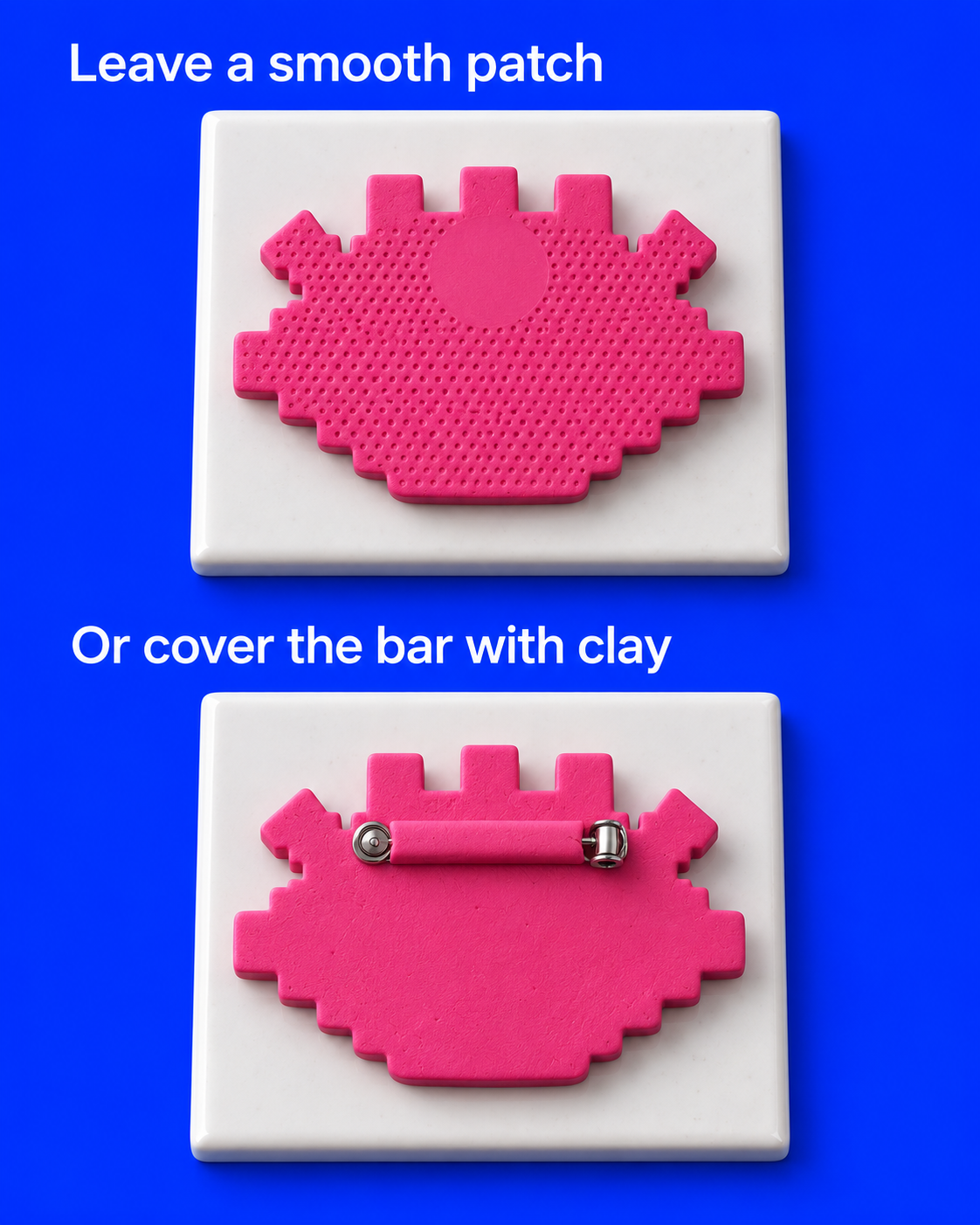
Of the hardware, only the metal pin goes in the oven. Take the rubber clutch off a tie-tack before either bake, and never bake a magnet or anything glued; the magnet section below explains why. The attach guide has the full steps for holding the pin under a layer of clay, and the baking support guide covers nesting a finished front face-down for that second bake.
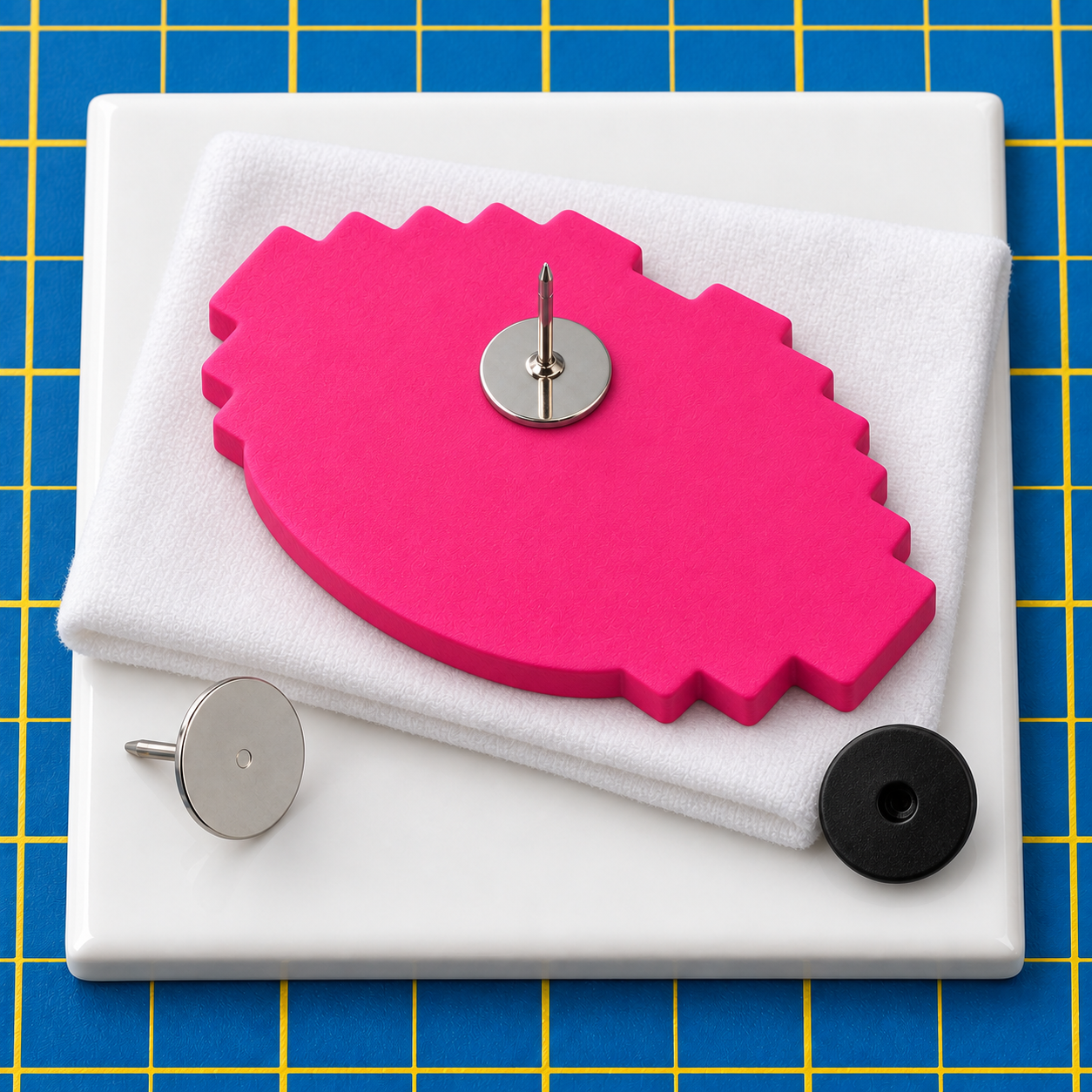
Tie-tack pins: pad size, clutches and when to use two
A tie-tack is a flat round pad with a pointed post, plus a separate clutch that pushes onto the post from inside the fabric. The pad is made to be glued to something flat, which is what the back of a flat clay brooch gives it.
- Pad size. Tie-tacks are sold by pad diameter. Choose the largest pad whose whole face sits on flat clay inside the outline, clear of thin edges, because a bigger pad gives the glue or covering clay more metal to hold. Set a pad on the baked back and look along it from the side at eye level: it should lie flat with no gap under it.
- Clutch. One pin-back supplier finds that rubber clutches and metal butterfly clutches hold about equally well. Rubber ones loosen with heat and age, so replace a clutch that slides on without resistance.
- One tie-tack or two. A single post lets a wide brooch turn. One pin maker explains that two posts set far enough apart stop the turning, and another puts two posts on any pin wider than about 4 cm (1.5 inches). Set the two at the same height, one either side of the centre line, or use a bar pin.
- Post length. Thick fabric uses up the post, and the clutch then grips only the tip. For a thick coat or denim, read the locking backs section below, or use a bar pin.
The Clay Bake Studio Pixel Lips Build Kit and Pixel Eye cutter set are both designed around one tie-tack high on the back, centred, with a bar pin as the alternative and a second tie-tack for the widest sizes. Both are digital downloads: you print the cutters on a 3D printer or through a print service, and your kit guide shows where the pin goes. For your own design, flat-pad tie-tack pins with clutches (search Amazon) come in several pad sizes.
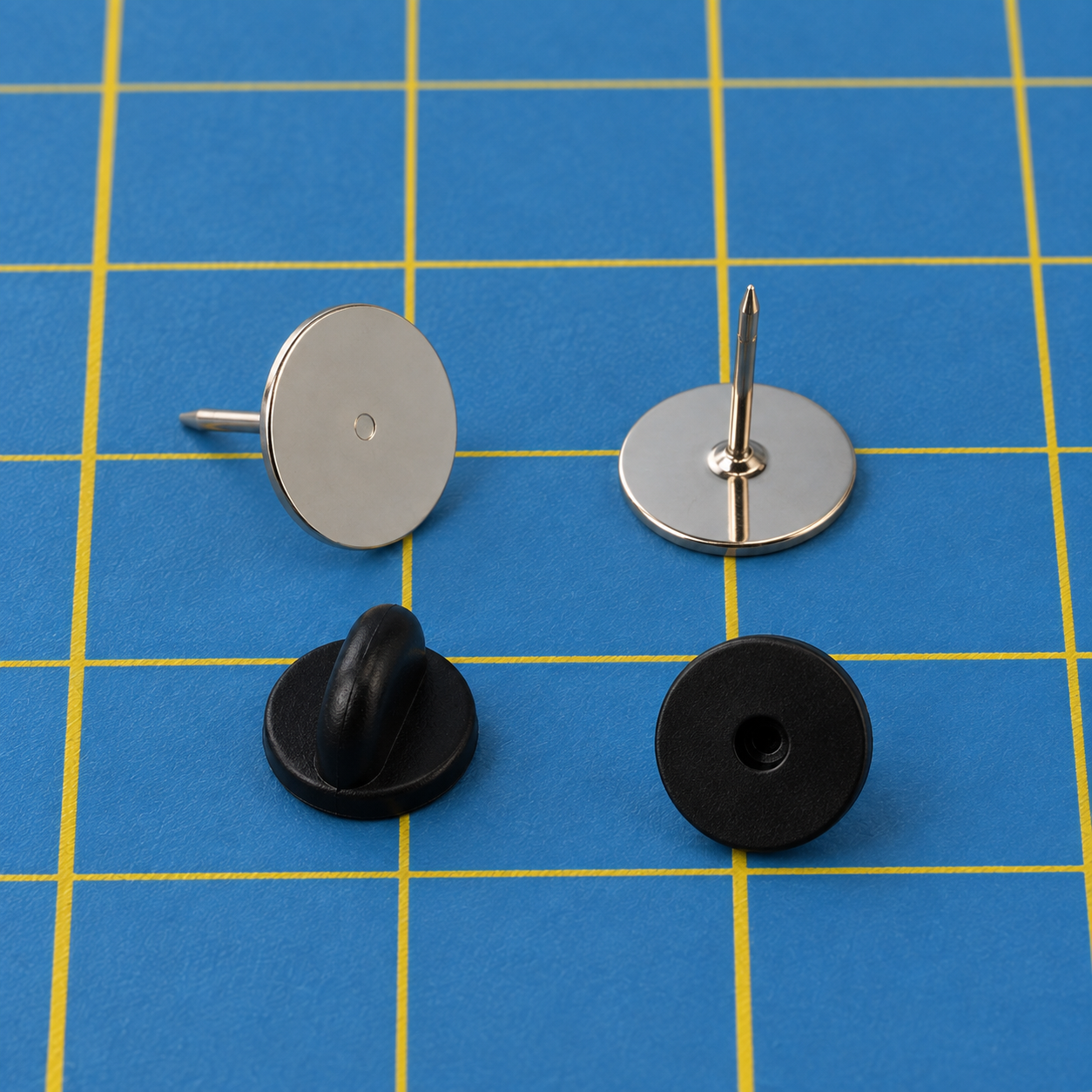
Bar pins: length, holes and the catch
A bar pin is a flat metal bar with a pin stem hinged at one end and a catch at the other. It spreads the hold across a wider part of the back than one tie-tack, which is why it stops a wide brooch turning.
- Length. Jewellers set the longest stem that fits at the highest position the shape allows. Lay bars across the top third of the back and keep the longest one that sits fully on flat clay, with no gap or overhang at either end. Glue-on bar pins in assorted lengths let you try several against the same brooch.
- Holes. Many bar pins have two or three holes along the bar and are sold to be sewn on or glued. On clay you glue the flat underside or cover the bar with clay; the attach guide shows how to keep glue from coming up through the holes into the hinge.
- Catch. A plain catch is an open hook the stem rests in. A safety catch, often sold as a rolling or locking catch, has a small collar you turn to close over the stem tip, so a loose stem cannot slip out. Whichever you choose, glue the bar with the opening of the catch facing the bottom edge of the brooch, so gravity keeps the stem resting in the catch if it works loose.
- Soft fabric. A bar pin's stem is long enough to pass through soft fabric twice, one of the fixes jewellery sellers give for a heavy brooch on silk or a fine knit. A tie-tack post is too short for this.
Locking backs for thick fabric
Two different parts are sold as locking, and they solve different problems.
- A locking clutch replaces the rubber or butterfly clutch on a tie-tack post. A spring inside it locks onto the post so it cannot be pulled off by accident. One pin-back supplier describes locking backs as bulky and best on thick fabric such as denim or leather. The pad on the clay stays the same; you only change the back. Choose locking pin backs sold for tie-tack or lapel pin posts (search Amazon).
- A locking catch is the safety catch on a bar pin, described above. You choose it when you buy the bar pin; it cannot be added to a tie-tack.
On a thick coat, push the post through the fabric and look at how much comes out the other side before you rely on any clutch. If only the tip shows, a clutch of any kind has little to grip, and a bar pin is the better back.
Magnetic brooch backs: light pieces, delicate fabric, never in the oven
A two-part magnetic back holds by clamping. One part goes on the brooch, the other goes behind the fabric, and their pull holds the fabric between them, so nothing pierces the cloth. That is the whole reason to choose one, and why they are sold for silk, chiffon, scarves and fine knits.
The pull falls as the gap between the two parts grows. One magnet supplier explains that the clamping strength depends on how far apart the magnets are, so a back that grips a thin blouse holds less through a thick coat. Before you glue one on, tape the magnet part to the back of the brooch, clamp it through the fabric you plan to wear it on and let it hang. If it slides down or tips, try a larger magnet part that still sits flat on the back, or use a pin.
There are two ways to put a magnetic back on a clay brooch:
- Glue the magnet part to the clay after the last bake, on the same kind of flat, bare patch a pin needs, with the glue kept off the face that meets the fabric. Leave the magnet's coating unsanded.
- Clip a magnetic converter onto a bar pin. Converters are sold for brooches that already have a pin: the stem passes through the outer part, and the inner part goes behind the fabric. Glue a bar pin on as usual, and the same brooch can then be pinned or clamped.
Compare two-part magnetic brooch backs and converters (search Amazon) by whether they glue to the brooch or clip onto a pin, and pick the one that matches your route.
Why magnets never go in the oven
Magnet makers rate standard neodymium magnets, the strong type used in small craft magnets, to about 80 °C (176 °F). Heated past that, they lose some of their strength for good. Sculpey lists 275 °F (130 °C) for its Original, Premo and Souffle clays, and STAEDTLER lists 110 °C for FIMO soft, so a magnet baked into the clay comes out weaker than it went in. Glue magnets on after the last bake.
Magnets, pacemakers and implanted defibrillators
A brooch is worn on the upper chest, and a pacemaker usually sits just under the skin near the collarbone, often on the left, as the NHS explains. In a clinical study of 70 people with pacemakers or implanted defibrillators (ICDs), small neodymium magnets, tested as two small spheres, a magnetic necklace and a magnetic name tag, caused interference in every patient at distances of up to 3 cm. The devices went back to normal once the magnets were taken away. A magnetic back worn over the device sits closer than that. The FDA's advice for the magnets in phones and smartwatches is to keep them 15 cm (6 inches) from an implanted device and never in a pocket over it, and one magnet supplier advises against magnetic brooches for anyone with an implanted device. Choose a pin for anyone with a pacemaker or ICD, and ask before you give a magnetic brooch as a gift.
Sewn-on pieces and loop pins
Some brooches need no pin back at all.
- Sewn on. For a piece that will stay on one bag, hat or denim jacket, pierce two or more sewing holes through the raw clay, as for a button, bake it and stitch it on. The buttons guide covers making the holes in raw clay and baking the piece flat.
- Loop pins. A loop pin, sold as a kilt pin or charm pin, is a safety-pin style pin with small loops along its bar, usually three to seven. Make small clay charms with a hole baked in, and hang each from a loop on a jump ring. The jump rings guide covers ring sizes and how to open and close a ring without distorting it.
How heavy is your brooch, and what does the weight change?
Weigh the baked brooch on a kitchen scale that reads in grams, with the pin you plan to use. Flat cut brooches are light: estimated from the cutter files rather than weighed, the Pixel Lips and Pixel Eye brooches come out at about 4.5 to 11 g across their sizes, pin included. A thicker, sculpted or domed piece weighs more, so weigh your own.
Weight shows up in the fabric. Jewellery sellers note that a heavy brooch pulls soft fabric such as silk down, while wool, denim and tweed carry it. Their fixes are to pin at a seam or lapel, take a bar pin's stem through the fabric twice, or wear the brooch on a heavier garment. With a magnetic back, the heavier the brooch, the more the clamp has to hold, so do the tape-and-hang check above on the real fabric.
Once the pin is on, pin the brooch to the garment and hold the garment up. If the top tips forward, the pin is too low. If the brooch turns, add a second tie-tack at the same height or use a bar pin. If it drags the fabric down, use the fixes above. The fabric check in the attach guide walks through each one.
Which glue goes with a glue-on back?
Glue-on backs and magnets go on after the last bake, with E6000 Jewelry & Bead (search Amazon), whose label names polymer clay and metals, or a gel super glue such as Loctite Super Glue Ultra Gel Control; Sculpey's FAQ says Loctite and Gorilla instant glues work well with polymer clay. E6000 Jewelry & Bead is also the glue the Pixel Lips and Pixel Eye kits name. The attach guide covers which glue to use and how to prepare both surfaces, the glue-up and the full cure.
In brief
Key takeaways
- Choose a flat-pad tie-tack with a clutch for most flat clay brooches, and a bar pin or a second tie-tack at the same height when a wide piece turns on one post
- Decide before you bake: leave a smooth, bare, flat patch in the top third of the back for a glued pin, or plan a second bake that holds the pin under a thin layer of clay
- For denim or leather, swap the tie-tack's rubber clutch for a locking clutch; a locking catch is a different part, the safety catch on a bar pin
- Glue magnets on after the last bake: standard neodymium magnets are rated to about 80 °C, and polymer clay bakes hotter
- Choose a pin, not a magnetic back, for anyone with a pacemaker or ICD, because a brooch sits over the usual implant site
Hardware descriptions come from jewellery supplier guides and listings, placement from jewellers' guidance and Sculpey's pin projects, oven and glue facts from Sculpey's FAQ and the adhesive labels, and the magnet facts from a clinical study, the NHS, the FDA and magnet makers' temperature ratings. The kit brooch weights are estimates from the cutter files. Clay Bake Studio has not run its own wear or bond tests.
Supplies to compare
More guides in this path
Open these when the next decision is material choice, attachment, or finishing.
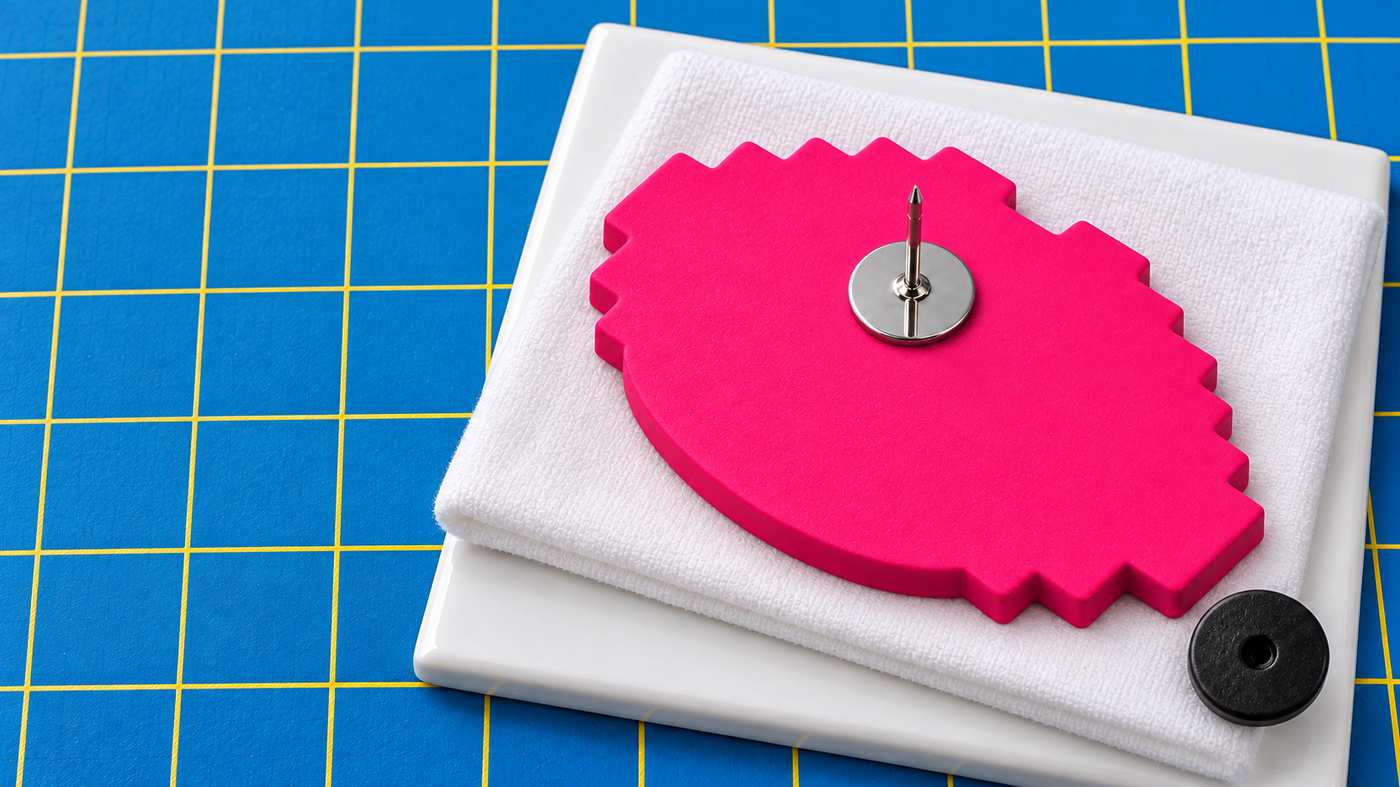
How to attach a brooch pin to polymer clay so it sits straight and stays on
A clay brooch that flops forward on a jacket, spins round, or loses its pin comes down to where the pin sits and how the pad is glued. The fabric check at the end shows if you got both right.
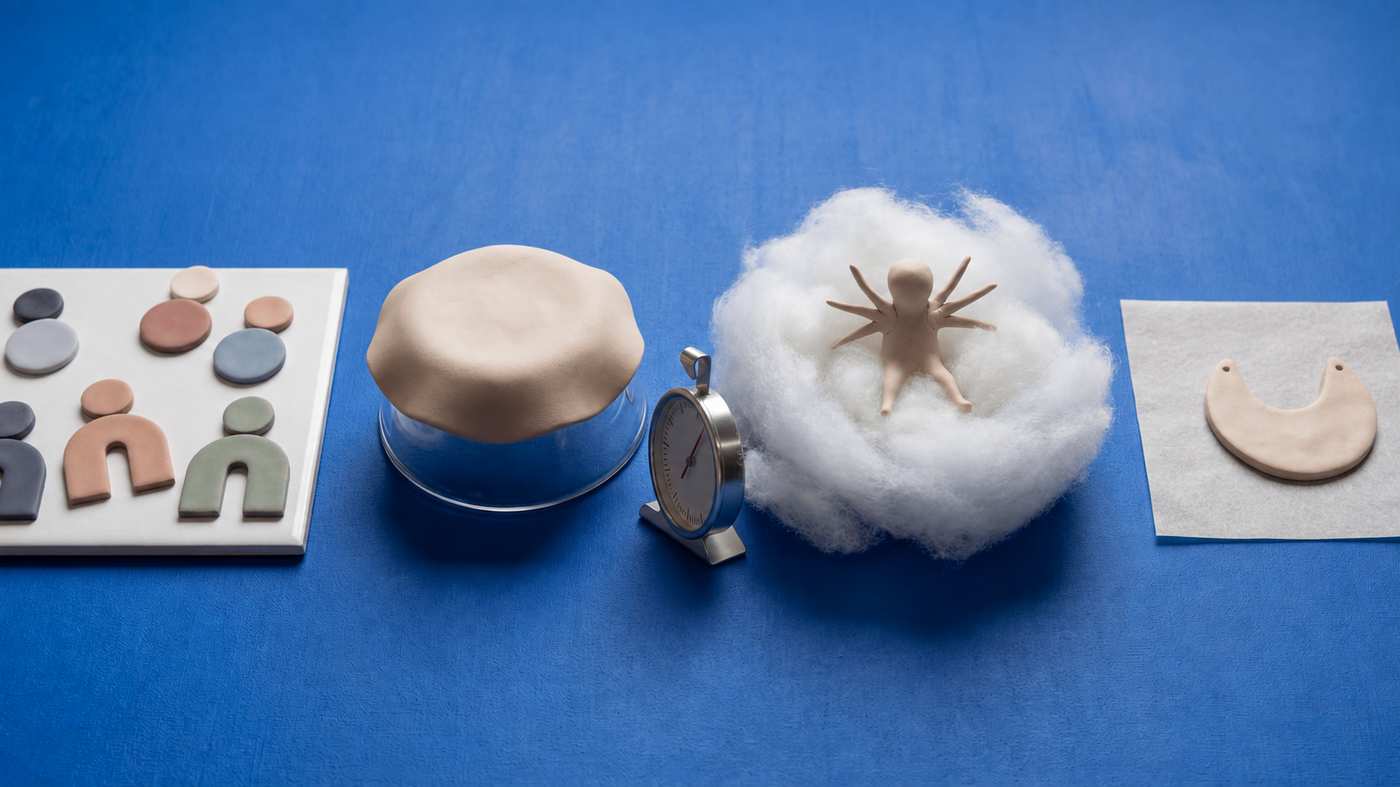
What to bake polymer clay on: tile, card and supports for flat, folded and large pieces
Bake flat pieces on a glossy tile and move them onto plain card only for a matte back. Hold curves, limbs and overhangs with fiberfill, crumpled foil or an oven-safe glass form, bake round beads on skewers, and leave everything on its support until it feels cool.
Painting baked polymer clay: which paint to use and whether to seal it
Painted details on a baked piece can smudge, rub off or leave a glaze sticky at the very last step. See which paint grips baked clay, how to brush small details cleanly, and when a coat is worth adding.
Finished examples with related clay decisions
Each piece shows how a material, attachment, or surface choice changes the final form.