In brief
Key takeaways
- Reach through the handle opening and gently ease trapped clay out of the cutting side. A fine point can reach tiny spaces, but it can also mark the visible face
- Brush a barely visible coat of cornstarch onto the cutter with a soft brush reserved for clay. Remove white pockets before cutting
- Keep the slab attached to clean glossy tile or glass, and cool it if it smears. Powder beneath the clay can make it lift with the cutter
- Cling wrap can round the top edge. Cut bare with light dusting for crisp lines, small openings and pieces that need to fit together
Article contentsOpenClose
To release stuck clay, hold the cutter close to your work surface with its cutting edge facing down. If a handle-side opening reaches the trapped clay, gently ease it towards the cutting edge with a blunt modelling tip or soft brush. Do not force a tool through a solid backing. If the clay is warm and smearing, cool it before trying. For the next cut, keep the slab attached to a clean, dry glossy tile or glass surface and brush an almost invisible dusting of cornstarch onto the cutter walls.
If you arrived from a build kit, keep the slab at the thickness it specifies. A thinner slab may release differently, but it can also change how fitted pieces meet or how a cutter's internal details reach the clay. Cling wrap can help with broad shapes when you want a rounded upper edge. For crisp outlines, fine frames and matching parts, start with bare clay and a lightly dusted cutter.
How do I get clay out of a stuck cutter?
Ease the clay towards the cutting opening with several small nudges, supporting it close to the work surface so it cannot fall far.
- Decide what needs saving. The earring or other wanted shape needs gentle handling. A small plug removed from an internal hole is waste. Clear that plug without trying to preserve its shape.
- Cool very soft clay first. If it is smearing against the walls or stretching as you touch it, pause and let it firm up before trying to release it.
- Check access with the cutting side down. Hold it just above a smooth tile or glass surface. Look for an opening on the handle side that reaches the wanted clay, rather than a separate waste plug. Some detailed cutters have a solid backing. Do not force a tool through it.
- Use the gentlest tip that fits the opening. A broad, soft modelling tip spreads the pressure where there is room. Use a small blunt tip for a tiny accessible opening. Make small, shallow nudges at several spots, near the sticking walls, so one point does not take all the pressure. Stop if the tip starts to dent the face. Do not stab into the clay or lever against the thin cutting blade.
- Stop when the clay drops free. Check the outline and face before moving it. If plain clay is badly distorted, reroll it and cut again. Set a damaged patterned or decorated piece aside and make the next cut from an undamaged area of the slab.
How do I make the next cut release cleanly?
Prepare the slab so it stays on the tile, then lightly dust the cutter so the walls can lift away from the clay.
Keep the slab attached to the work surface
Start with a clean, dry glossy tile or glass surface and leave the underside of the slab free of powder. Roll the clay directly onto it. If paper or a silicone mat rises with the cutter, move to a rigid glossy surface that lets the clay stay attached.
Condition the clay until it is smooth, then roll to the thickness in your kit instructions. The clay conditioning guide for clean slabs and canes covers that preparation. If rolling has left the clay warm enough to smear or stretch, leave it flat on its tile to cool, or place the slab and tile in the fridge briefly. Resume when the clay holds its shape without smearing.
Brush on cornstarch without leaving white clumps
Cornstarch is a dry release barrier: a trace on the cutter walls helps the clay let go as you lift. It is not an ingredient to knead into the clay or a coating for the whole slab. Sculpey recommends a light cutter dusting, with the excess tapped off.
Use a clean, dry, soft makeup or paintbrush dedicated to clay, and put a small pinch of cornstarch in a separate dish. Pick up a little powder, then tap the excess off the brush over the dish. Do not knock the cutter's thin blade against the dish.
Brush the inside and outside cutting walls, including tiny corners where clay collects. The dusting should be almost invisible. Look through the cutter and brush out any visible white deposits before it touches the slab. Dipping a cutter straight into powder and immediately cutting can leave pockets of cornstarch that get pressed into the clay and remain visible after baking.
Lift the cutter, then remove the surrounding clay
Place the cutter squarely on the slab, press straight down on its sturdy handle until the cutting edge reaches the tile, then lift vertically. Peel away the surrounding scrap and leave the cut shape flat on the tile.
If the shape is in its final position on an oven-safe ceramic tile, bake it there and let the clay and tile cool completely before lifting it. Keeping it in place protects the soft clay from stretching during another move. The baking surface guide explains cooling, blade release and the shiny back that contact with a glossy tile can leave.
Use a tissue blade before baking only when you need to move the shape, such as lifting a colour layer onto a base or changing the baking surface. Keep the blade flat against the tile and slide it beneath the clay, with fingers clear of the edge. Support the shape as you carry it; do not peel it up by a corner. A glass worktop saver or acrylic sheet is a work surface, not automatically an oven-safe baking surface.
For designs such as the faceted gem earrings, crisp lines are part of the result. Keep the kit thickness and use this bare-clay method before reaching for film.
When should I use cling wrap, and how?
Use cling wrap for a broad silhouette when a softly rounded upper edge suits the design. The film sits between the cutter and clay, and its stretched surface can round the top edge. It can also soften texture or recessed details and change the edges of fitted parts. Use the bare-clay method for fine pixel pieces, gem linework and narrow frames.
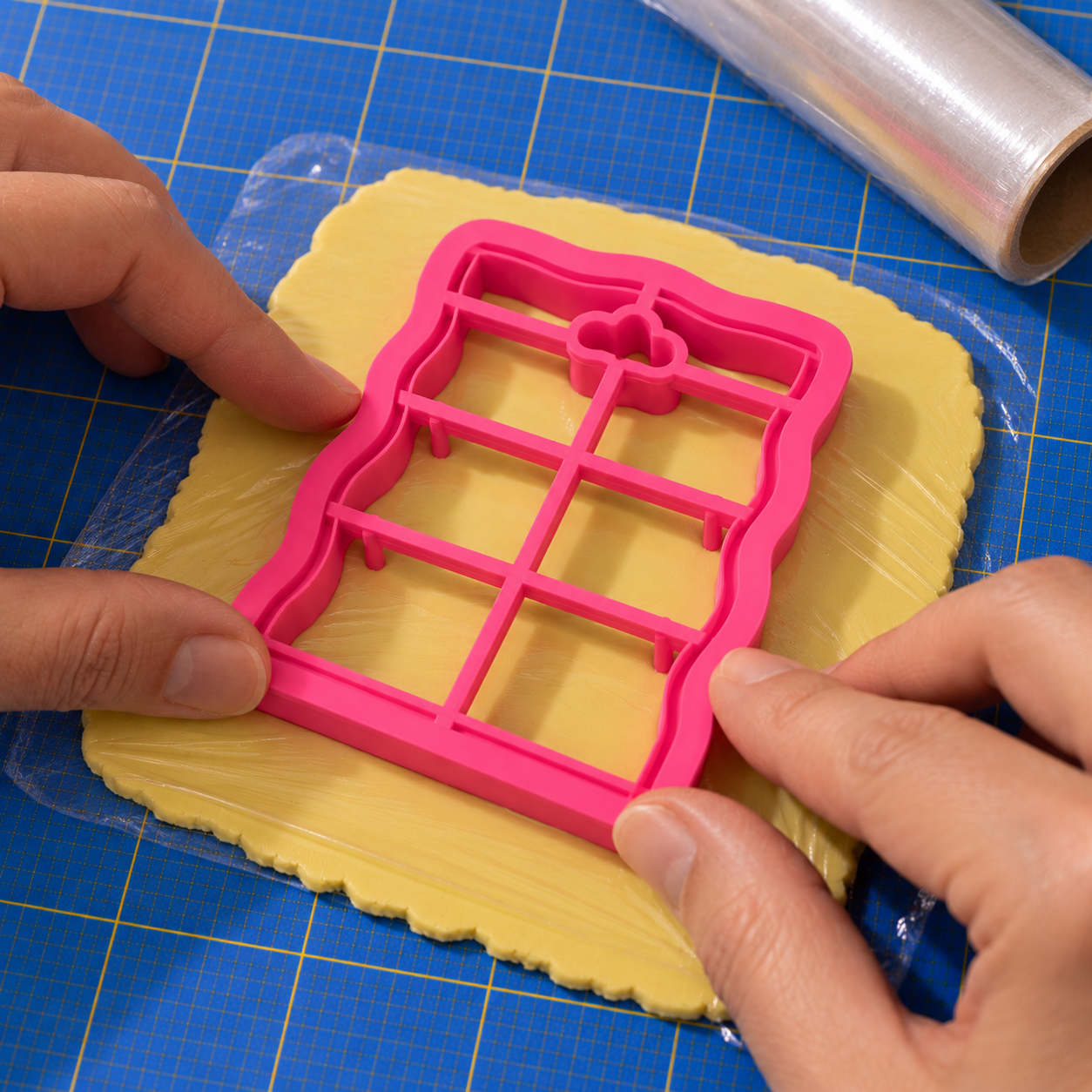
For the cutter shown, use the earring display-card cutter kit instructions for its marking and hole-making workflow.
- Cover the prepared slab. Following Sculpey's cling-wrap method, lay a single smooth sheet of plain film over the top only. Keep the clay attached to the tile underneath. Lift and relay the film if a crease crosses the area you will cut.
- Press evenly. Set the cutter on the film and press vertically on its sturdy handle until the edge reaches the tile. Do not rock it or force film that resists. Some thin-bladed cutters are unsuitable for film: they can tear it or be damaged by the force. Use bare clay and a light powder dusting if your cutter maker advises against film, or if the film resists the cut.
- Lift the cutter, then peel the film. Lift straight up and slowly peel the sheet away from the clay. Inspect the cut and every small opening, removing all torn film fragments.
- Remove the surrounding scrap. Leave the shape in place if it is ready to bake on an oven-safe tile. If you need to transfer it, slide a flat tissue blade underneath. Remove all film before baking and follow the clay package's baking instructions.
Why is the clay still sticking or coming out rough?
If the slab lifts, improve its grip on the tile before adding more powder. A damaged cutting edge needs attention separately.
| Symptom | Next fix |
|---|---|
| The whole slab lifts with the cutter | Use clean, dry glossy tile or glass. Remove powder beneath the slab and roll it onto the surface again. |
| The shape stretches during release | Let warm, very soft clay firm up. Lift the cutter vertically. Leave the shape on its baking tile; use a flat tissue blade only if you need to transfer it. |
| White pockets appear in the clay | Use a clean soft brush to remove loose powder from the clay before baking. Brush deposits out of the cutter too, and load less powder for the next cut. |
| Film creases mark the face | Use one smooth sheet with no wrinkles over the cut. For crisp detail, return to bare clay and a dusted cutter. |
| A tiny waste plug blocks an opening | If an opening reaches the waste plug, use a small blunt tip to gently push it out of the cutting side before cutting again. Keep tools off the blade and do not force them through a solid backing. |
| The same corner catches with a clean cutter, cool clay and light dusting | Inspect for clay residue, stray threads from printing or a broken edge. Follow the print maker's finishing instructions or reprint the cutter. Do not force the cut or sand a thin blade. |
If the clay stays excessively soft after cooling and preparation changes, the soft-clay leaching guide explains removing some plasticiser with absorbent paper. Keep leaching as a last resort: removing too much can leave the clay brittle, as Sculpey's stiffening guide cautions. For small edge remnants on a piece that is already baked and cooled, use the sanding and buffing guide.
A half-press for detailed cutters
For a detailed cutter, including one that presses recessed lines into the clay, a partial press lets you add powder to the fresh impressions before finishing the cut. Use this only when you can realign the cutter precisely.
Keep the slab at the kit's specified thickness. Lightly dust both the clay surface and cutter, press halfway into the slab, then lift vertically. Use a fingertip to gently work a little powder into the shallow impressions, then brush away visible deposits. Set the cutter back into exactly the same marks and finish the press straight down, then lift vertically again.
Skip this method if you cannot align the cutter confidently, especially on a patterned final slab where a second, offset impression would spoil the design.
Clean the cutter before the next session
Clear trapped clay between cuts so the next piece does not meet a blocked corner. After the session, gently clean the cutter with a soft brush and mild soapy lukewarm water, rinse it and let it dry thoroughly. Follow any material-specific care instructions supplied with your cutter. Keep thin printed cutters out of hot washes and solvent soaks unless their maker specifically instructs otherwise. Let the cutter and powder brush dry completely before using cornstarch again.
More guides in this path
Open these when the next decision is material choice, attachment, or finishing.
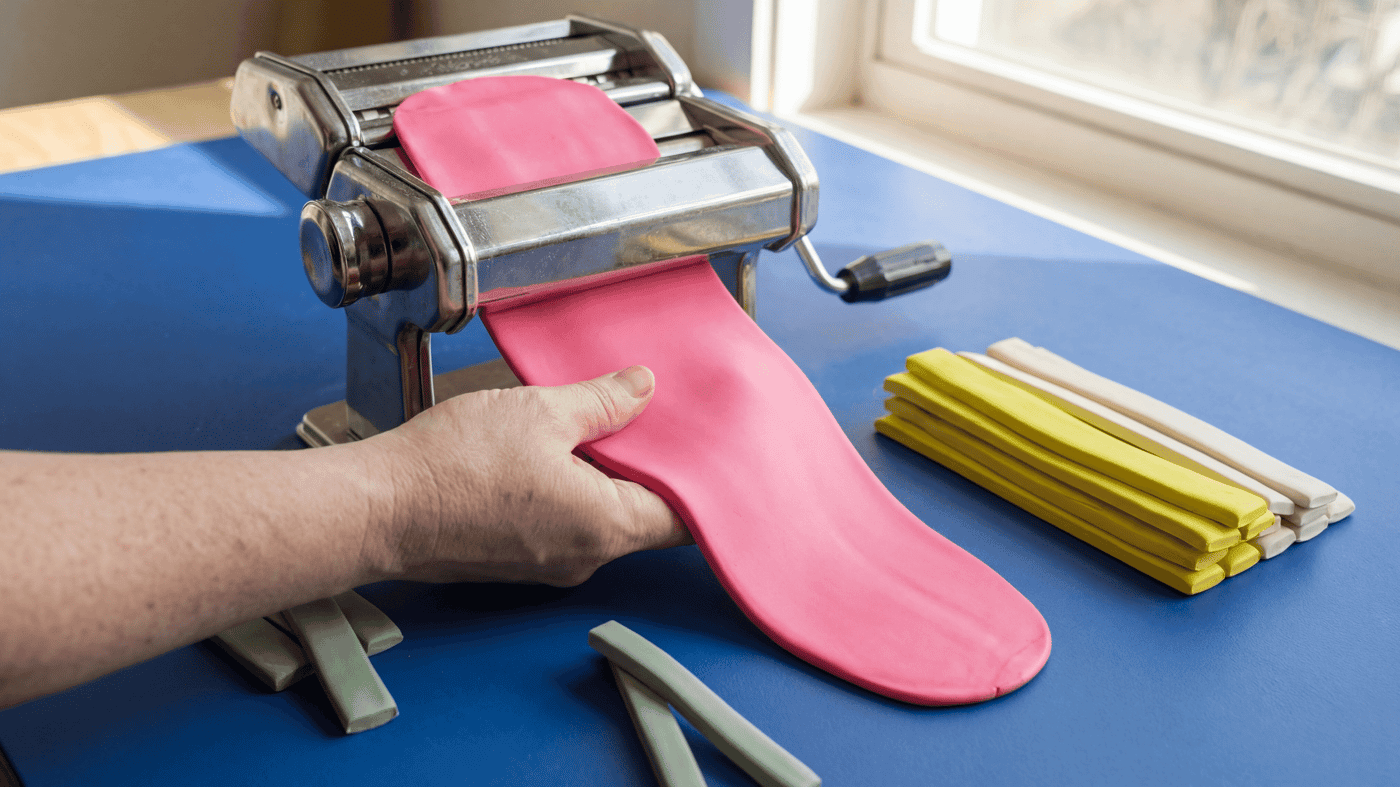
How to condition polymer clay and roll an even slab for cutters
Get every clay colour to the same softness, roll each layer to its measured thickness on a tile, and let warm clay firm up before you cut.
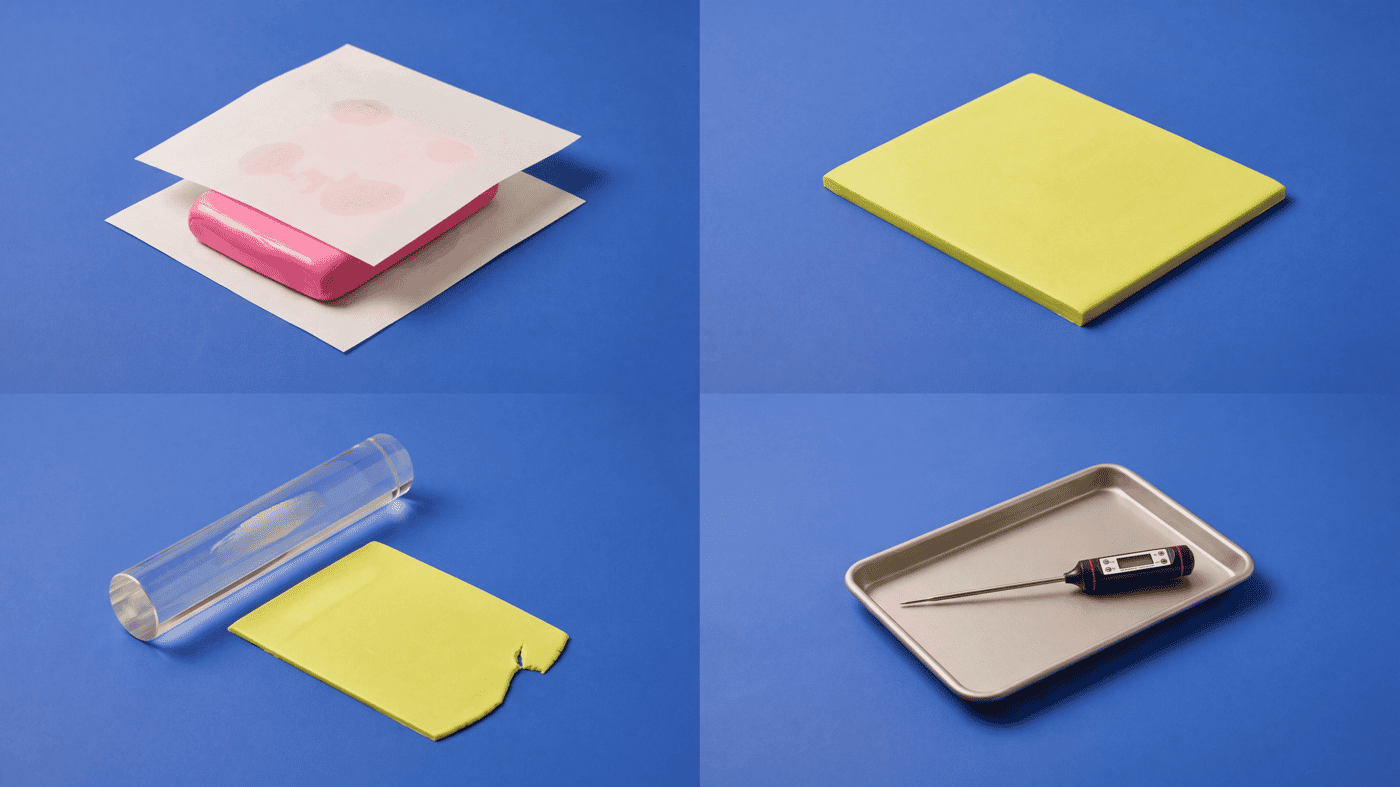
Polymer clay too soft or sticky? Chill it, then leach it, and know when to stop
Test whether the clay is warm or too soft, chill it on its tile, then leach it: let plain paper draw some of the plasticiser, the liquid that keeps clay workable, out of a thin sheet, and stop as soon as a cut piece lifts clean on a blade.

Sanding and Buffing Polymer Clay: Pressure and When to Stop
Smooth rough edges on baked clay with wet/dry paper and water. Support small details, remove the scratches from each grit, then hand-buff for a soft sheen.
Finished examples with related clay decisions
Each piece shows how a material, attachment, or surface choice changes the final form.