Polymer Clay Pendant Holes, Bails, and Jump Ring Placement
Choose a hole when the top has room for it, or a glue-on bail when you want an uninterrupted front. Position the attachment, leave clearance for the chain, and check which way the finished pendant faces.
Some links on this page are affiliate links. If you buy through them, we may earn a commission at no extra cost to you. As an Amazon Associate I earn from qualifying purchases. Disclosures

In brief
Key takeaways
- Choose pendant hardware against the front view of the finished piece. The shape of the top edge usually picks for you
- A hole through the face takes a jump ring. A glue-on bail needs a flat pad fully supported on the back, with its loop clear above the top edge
- Each linked ring turns the pendant a quarter turn, so a side-to-side hole through the top edge needs a second ring or a bail to face forward. Add rings beyond that only for clearance
- Hang the pendant on the actual chain you intend to ship before calling the hardware finished. Check that the front faces forward, the connectors move freely and the fully cured glue pad stays still
Article contentsOpenClose
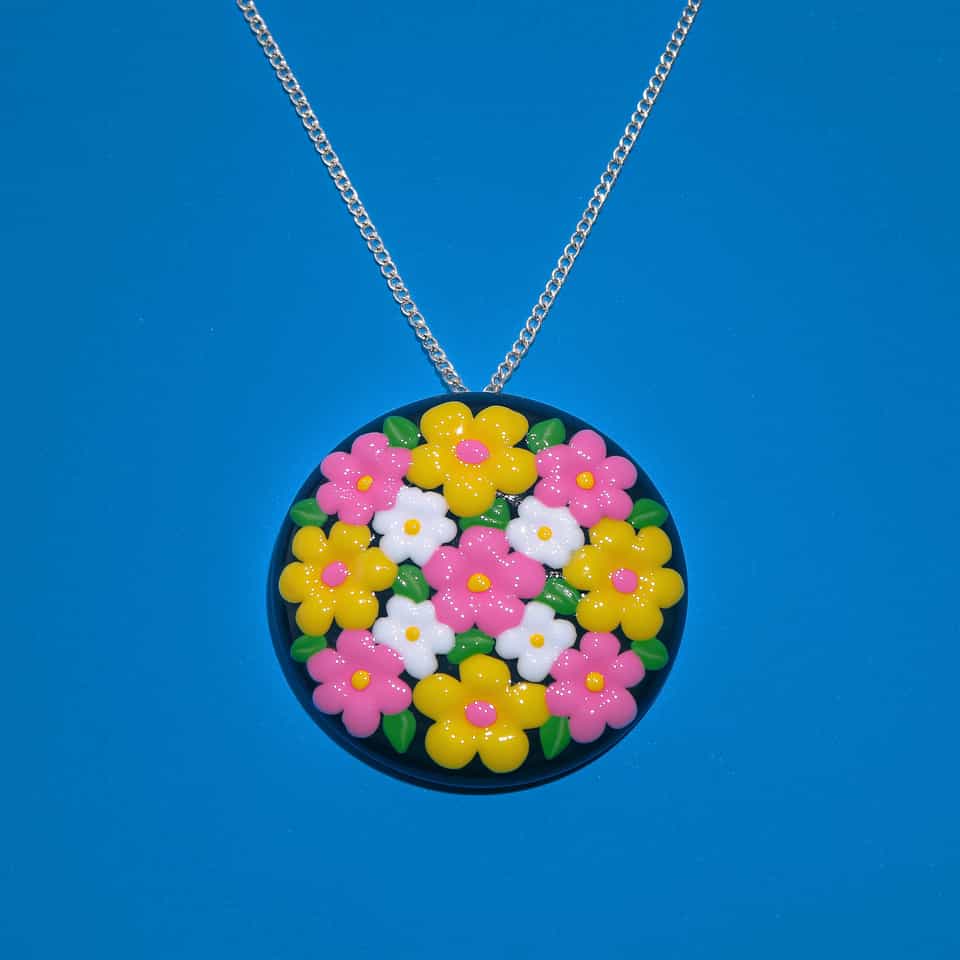
Choose how the pendant will hang before making the clay shape. A hole through the face takes a jump ring, the small open metal loop that connects it to a chain. A glue-on bail keeps the front uninterrupted: its flat pad attaches to the back, while its loop projects above the top edge.
Choose When To Make The Hole
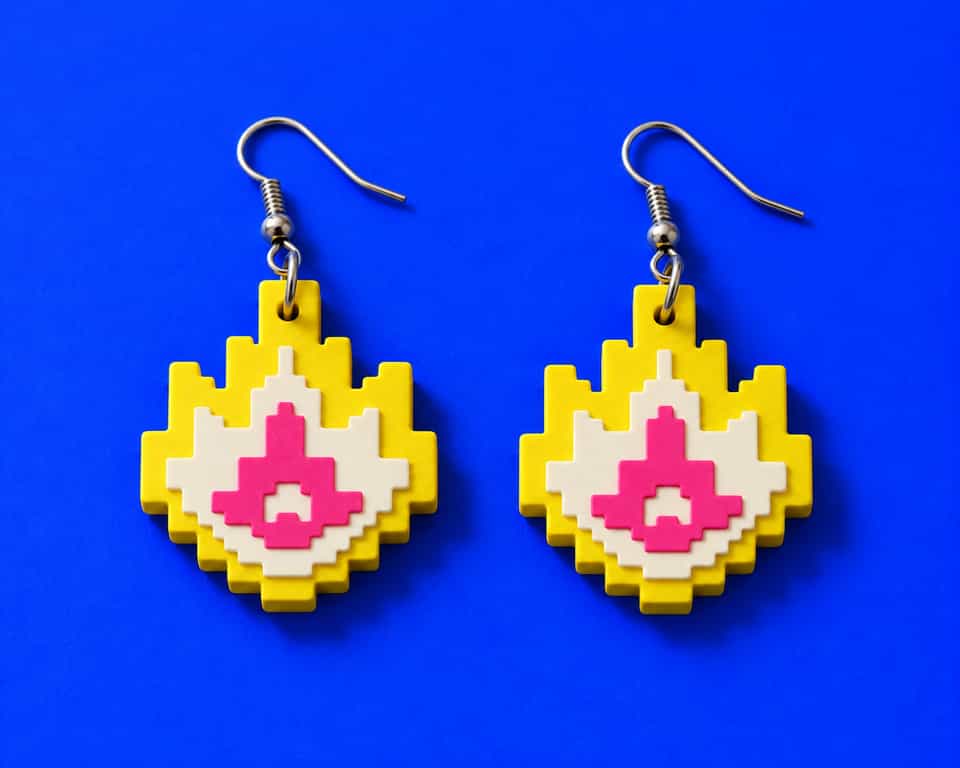
Follow your project's hole position and diameter when it provides them. For a layered Pixel Eye, bake and cool the eye before drilling. A simple slab can instead be pierced while raw and supported on its tile. The hole-making guide shows both methods, including supporting the clay and removing the rough rim left by drilling.
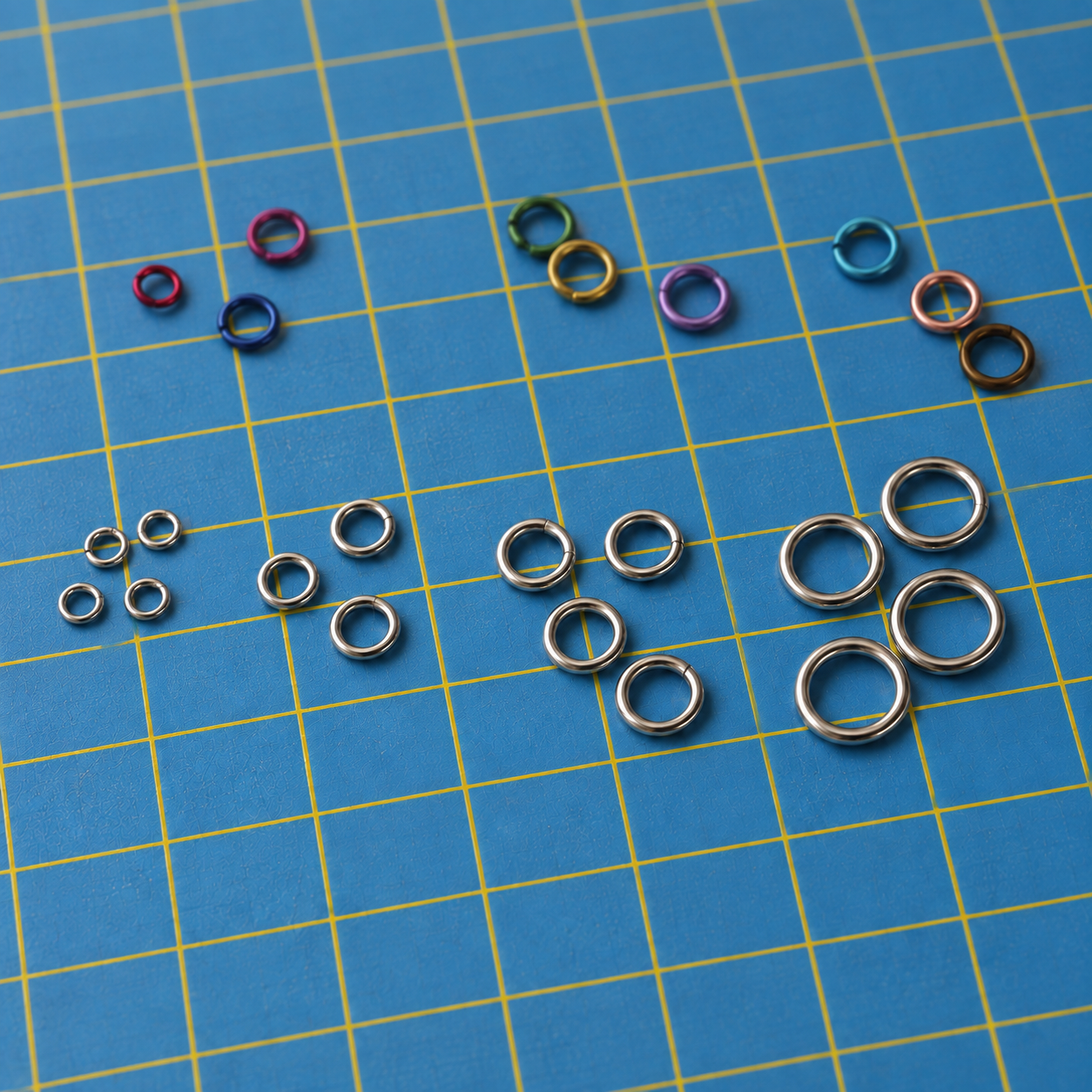
Plan enough room for the ring to pass through the hole and around the top edge without forcing it. The ring's wire diameter must fit through the hole; its inside diameter must also clear the clay's thickness and the distance to the edge. Use the kit's dimensions for a shaped or layered pendant.
Fit A Glue-On Bail
- Finish all baking and let the pendant cool. Complete sanding and any finish before gluing, while keeping the intended glue contact area bare if your adhesive requires it.
- Hold the bail in position without glue. Its whole pad should sit flat on the back, with the loop above the top edge. Thread the chain through the loop to check clearance, then remove it. Mark the pad position lightly.
- Prepare and glue the contact surfaces. Choose an adhesive whose instructions cover baked clay and the bail's metal or coating. Follow its preparation and application directions. Place adhesive on the pad's contact face and seat it on the mark, keeping the loop clear.
- Support it while the adhesive sets. Rest the pendant so the bail cannot slide and the raised front is not taking pressure. Leave it for the full cure time before threading the chain or wearing it.
A bail that rocks on the back leaves a gap under its pad. Choose a smaller pad that sits fully flat or change the attachment before applying glue. The clay-to-metal glue guide explains surface preparation and the difference between initial setting and full cure.
Connect The Jump Ring
Grip each side of the ring's split with smooth-jaw pliers. Move one end towards you and the other away, keeping the ring round. Pass it through the hole or bail loop and the chain as required, then reverse the twist until the ends meet with no gap or step. The jump-ring guide shows the movement and explains ring orientation.
Check The Finished Pendant
Hang the cooled pendant on its intended chain after any adhesive has fully cured. Check that the front faces forward and the connectors move without scraping or forcing the clay. If it faces sideways, check the ring orientation before adding another ring. A catching connector needs more clearance; a shifting glue pad needs repair before wear.
Supplies
Supplies mentioned here
Quick links to the materials and tools that fit this article. ClayBake tools stay on our own catalog.
Pendant bails and jump rings
Use when a pendant needs a cleaner hanging point than a direct hole. Check bail size, ring size, finish, and how the attachment meets the finished top edge.
Necklace chain for pendant tests
Use the same style and length of chain you plan to finish with so you can check balance and hang angle before final assembly.
Needle tool set
Good for marking the top hole while the clay is raw and checking the real centerline before baking.
More guides in this path
Open these when the next decision is material choice, attachment, or finishing.
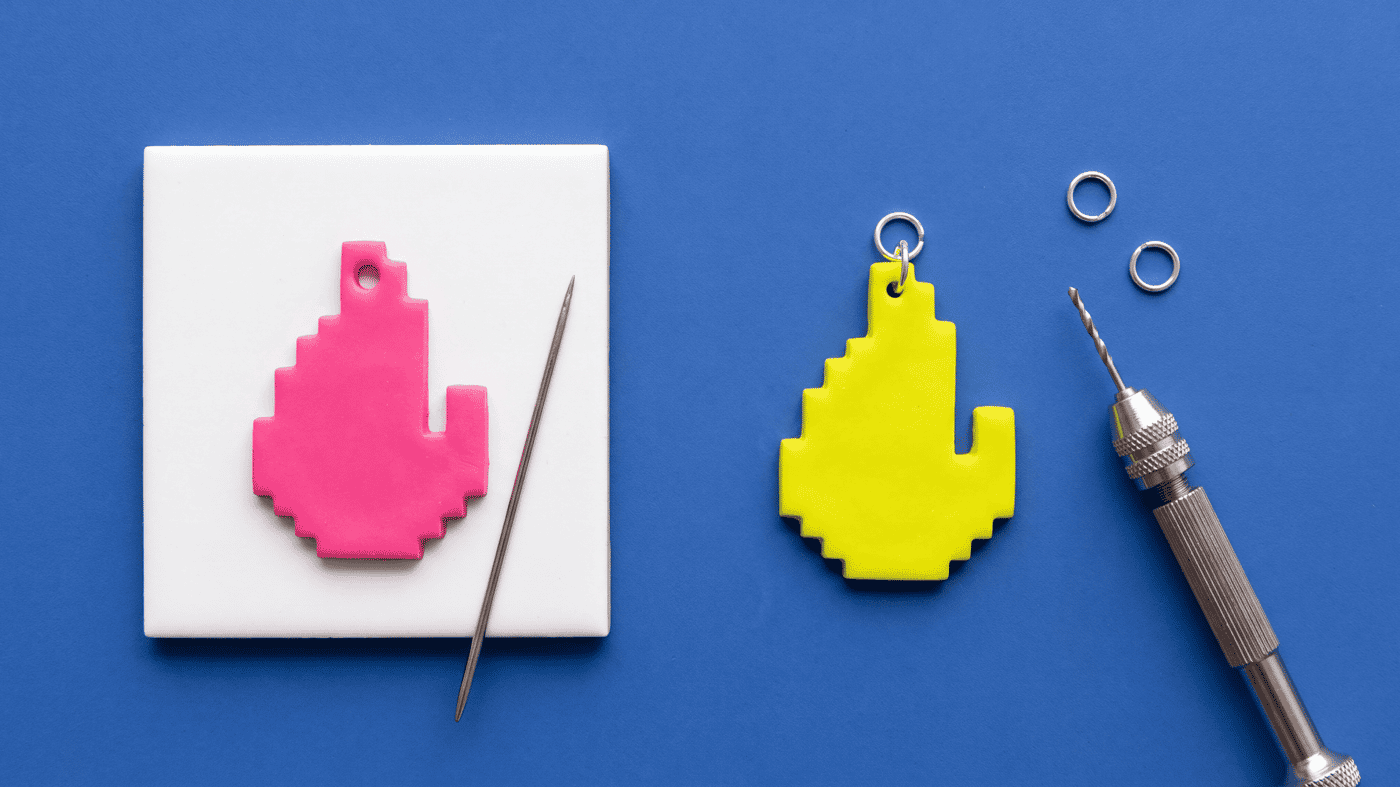
Jump ring holes in polymer clay: punch before baking or drill after?
Punch the hole in raw clay when the slab is thick, chilled and still on the tile. Drill after baking when the piece is a thin veneer, a layered stack, a pixel corner or a hole close to an edge. Fixed-hole cutters skip the marking step but carry the raw-hole caveats.
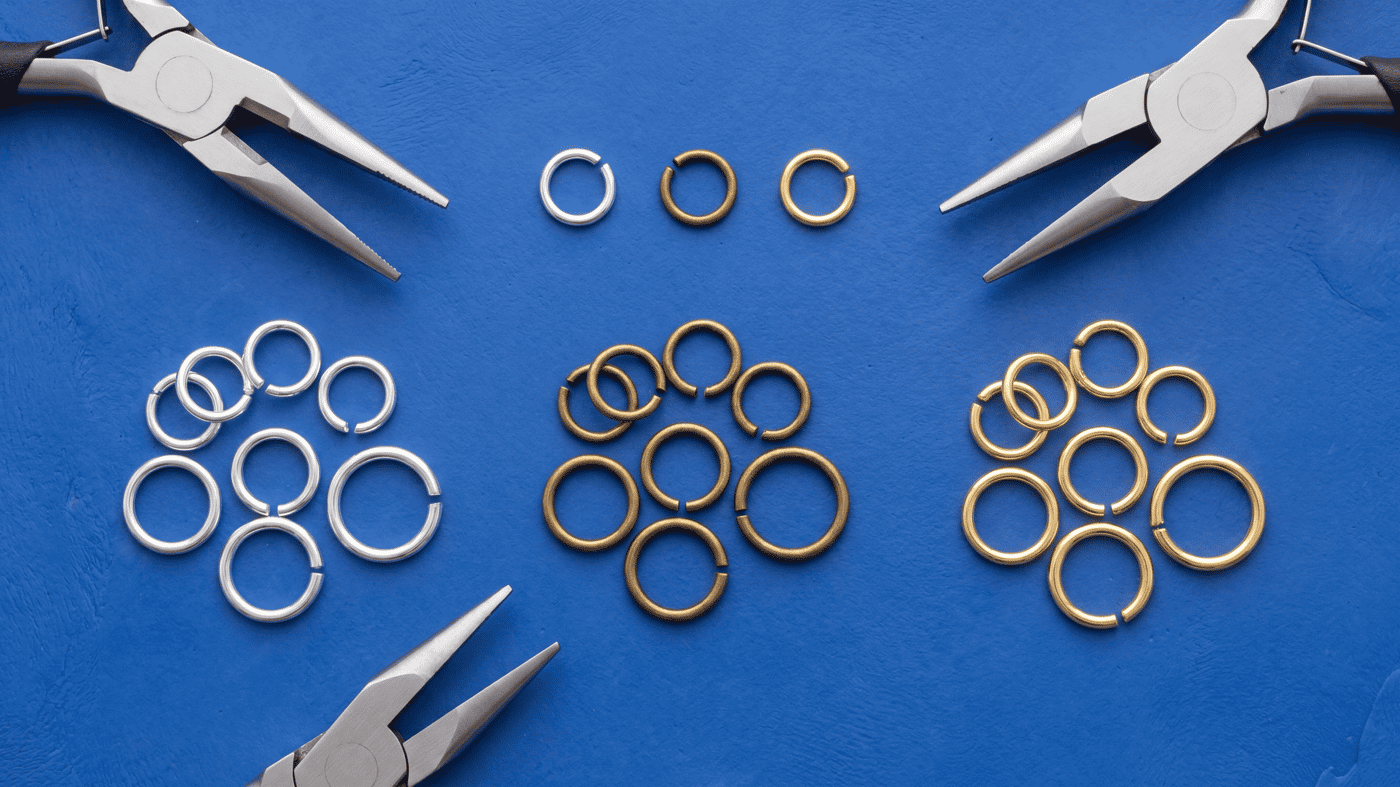
How to choose jump rings for polymer clay jewellery
Learn how to measure jump rings, choose a size that lets your clay earrings swing freely, and open and close the rings with pliers.
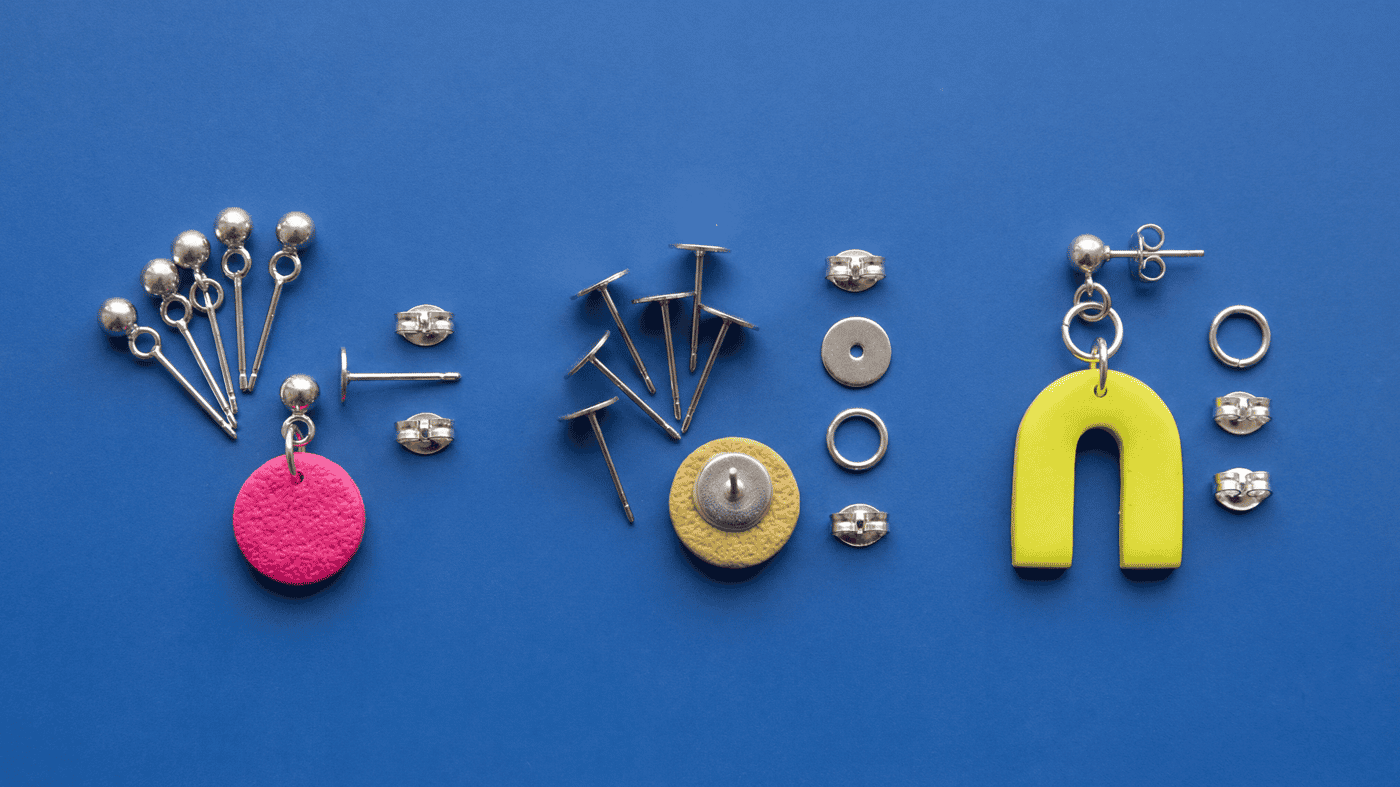
Polymer Clay Stud Toppers, Flat Pads, and Connector Rings
Choose the top connection from the front view first, then keep the attachment short and balanced. Compare visible loop-tops, flat pads, short ring paths, and balance-line marks on a sample before you make the final pair.
Finished examples with related clay decisions
Each piece shows how a material, attachment, or surface choice changes the final form.