What to bake polymer clay on: tile, card and supports for flat, folded and large pieces
Bake flat pieces on a glossy tile and move them onto plain card only for a matte back. Hold curves, limbs and overhangs with fiberfill, crumpled foil or an oven-safe glass form, bake round beads on skewers, and leave everything on its support until it feels cool.
Some links on this page are affiliate links. If you buy through them, we may earn a commission at no extra cost to you. As an Amazon Associate I earn from qualifying purchases. Disclosures

In brief
Key takeaways
- Bake flat pieces face up on the glazed tile you built them on. Slide a piece onto plain card or parchment just before baking only when the back must be matte and the piece fits across your blade's width; otherwise sand the shiny back after baking
- Hold anything that curves or sticks out until it cools: an oven-safe glass or ceramic form under a collar or dish, crumpled foil or fiberfill under arms, ears and caps, and a roll of card in any opening a 3D-printed former held
- Bake round beads on skewers or a bead rack so nothing flat touches them, and nest a piece that bakes face down in an even bed of fiberfill with its back level
- Bake for the full time on your clay packet at the packet temperature, starting the timer when the thermometer beside the tile reads that temperature. Sculpey and Cernit give that time as the limit
- Leave every piece on its support until the tile and the thickest part feel cool. If a plain flat piece comes out bowed, press it between parchment and a second tile while it is still hot
Article contentsOpenClose
Bake flat polymer clay pieces on a glossy ceramic tile, ideally the one you made them on, and slide them onto plain card or parchment just before baking only if the back needs to be matte. Anything that curves, sticks out or hangs over needs something oven-safe under it until it has cooled: crumpled foil or polyester fiberfill under raised parts, an oven-safe glass or ceramic form under a curve, and a roll of plain card in any opening a plastic former used to hold. Bake at the temperature and for the time on your clay packet, with an oven thermometer beside the piece, and leave every piece on its support until it feels cool.
Polymer clay is still soft when it comes out of the oven and only firms up as it cools, so whatever the piece rests on sets its shape. An unsupported part can sag during the bake, and a warm piece can bend if you move it. If you came from a Build Kit, your kit guide gives the sizes and thicknesses for your pieces, and the fortune cookie steps are below.
Which support does your piece need?
Find your piece in the first column. The second column is what it bakes on, and the link goes to the steps.
| Your piece | What it bakes on | Steps |
|---|---|---|
| Flat earrings, brooches, links and charms | The glazed tile you built it on, or plain card or parchment for a matte back | Tile or card |
| A large flat plaque or wall piece | Full contact with its tile, and a second tile on top only if the face is plain | Plaques |
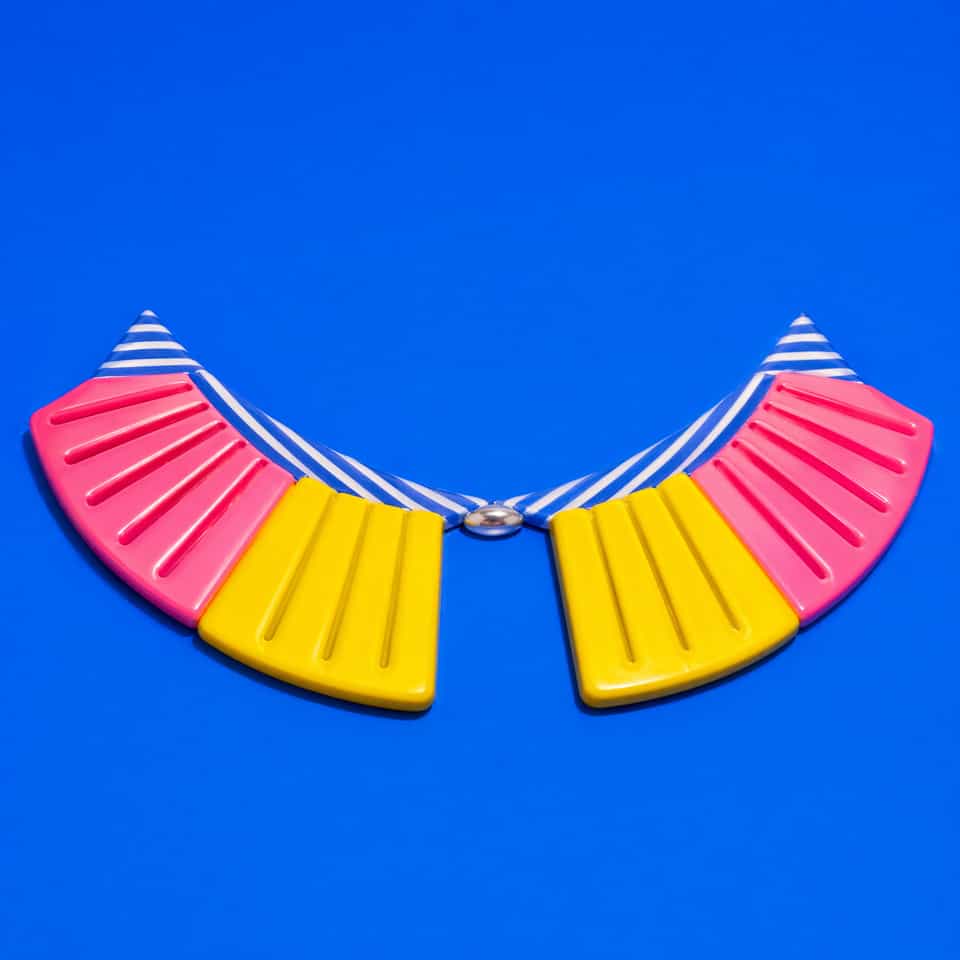
| A collar, cuff, bangle or dish | An oven-safe glass or ceramic form with the same curve | Curves |
| A fold shaped around a 3D-printed former | A roll of card in the opening, with fiberfill or foil under the rounded parts | Folds |
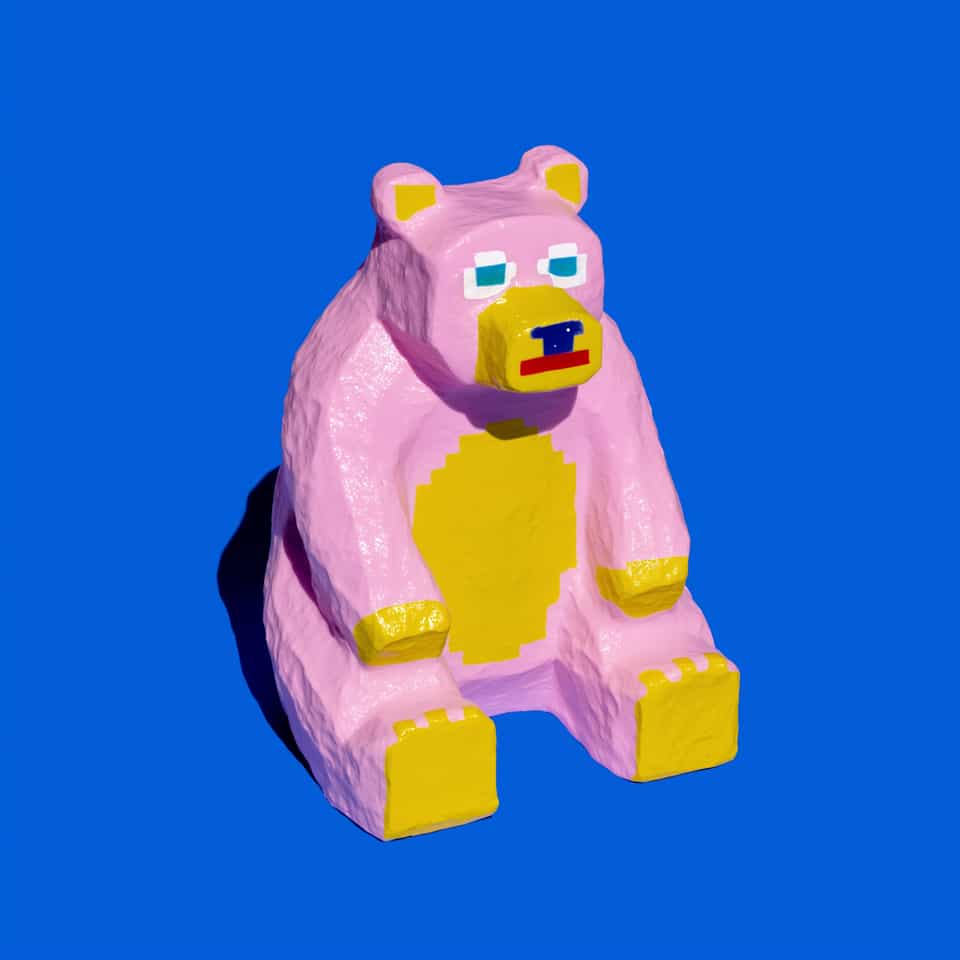
| A figure with arms, ears or a tail, or a cap that overhangs | Crumpled foil or a fiberfill nest under each part, or a bake in stages | Parts that stick out |
| Round beads | Skewers over a bead rack or baking dish, or a bed of batting or cornstarch | Beads |
| A brooch with the pin baked in, or any piece that bakes front down | An even bed of fiberfill or tissue paper | Face down |
Should I bake on the tile I built the piece on?
Yes, for most flat pieces on a glossy ceramic tile. The tile spreads the heat evenly as it warms, and leaving the piece where you made it means nothing has to lift the soft, thin layers. The cost is a shiny patch on the back wherever bare clay touched the glaze.
Roll the slab straight onto the clean glaze between a pair of thickness guides, such as ready-made metric thickness guides (search Amazon), then cut, peel away the waste and leave the shape where it is. The conditioning guide shows the roller-and-guides method, and the cutter release guide explains why no powder goes under the slab. For a layered design, move the upper layers onto the base with a tissue blade while they are raw, then carry the whole tile to the oven level, with a hand under each side.
Use a plain, glossy ceramic tile with a bare back. Sculpey's tile guidance says to use only unadorned, glossy tiles, the plain shiny kind used on kitchen and bathroom walls and floors, and that terracotta is not suitable. Leave out any tile with felt pads, cork or mesh glued to its back, so only ceramic goes in the oven. Pick one big enough for a blade to lie flat on bare glaze on every side of the piece. If you need some, glossy white ceramic tiles come in craft packs; a large plaque needs a tile bigger than the plaque.
Contact with the glaze leaves a shiny back. You can leave it, or wet-sand the cooled back matte with the sanding guide. For a matte back straight from the oven, the next section explains the one move onto card.
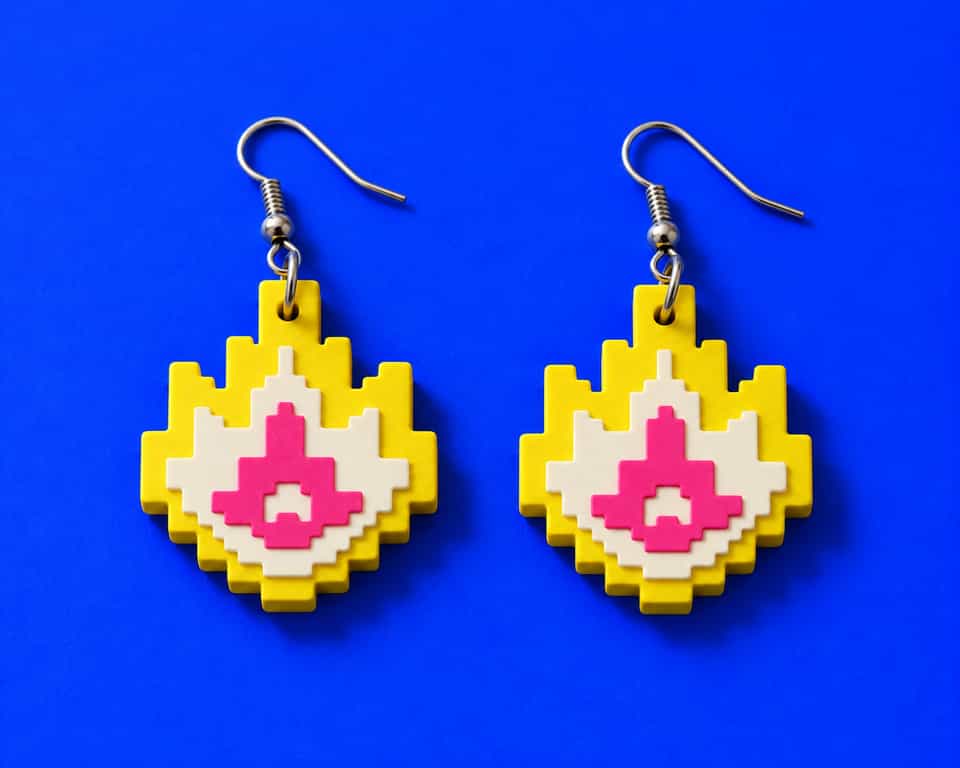
Bake layered and lettered pieces face up. Make any hanging hole now, in one of two ways: punch it through the raw clay for a simple hole in solid clay, or mark it with a needle tool and drill it after baking and cooling when it has to sit precisely or passes through a layered stack, a thin tip or close to an edge, as the Pixel Flame and Faceted Gem Build Kits do. The jump ring hole guide compares the two.
How do I move a piece onto card for a matte back?
Slide a tissue blade under the piece on its tile and lower it onto plain card or parchment, once, just before it goes in the oven. Do it only when the back will show and the piece fits across the width of your blade. Leave a piece with thin points or very thin layers on its build tile, and accept the shiny back or sand it once cool.
Use plain, unprinted paper or card: copy paper, an index card, card stock and baking parchment all give a matte back, while printed paper can transfer its ink. Plain white cardstock or baking parchment (search Amazon) both work. Make the move at the last minute: Sculpey warns that paper left on unbaked clay for long periods absorbs its oils and plasticiser, the softeners that keep clay workable, and can leave a brittle piece.
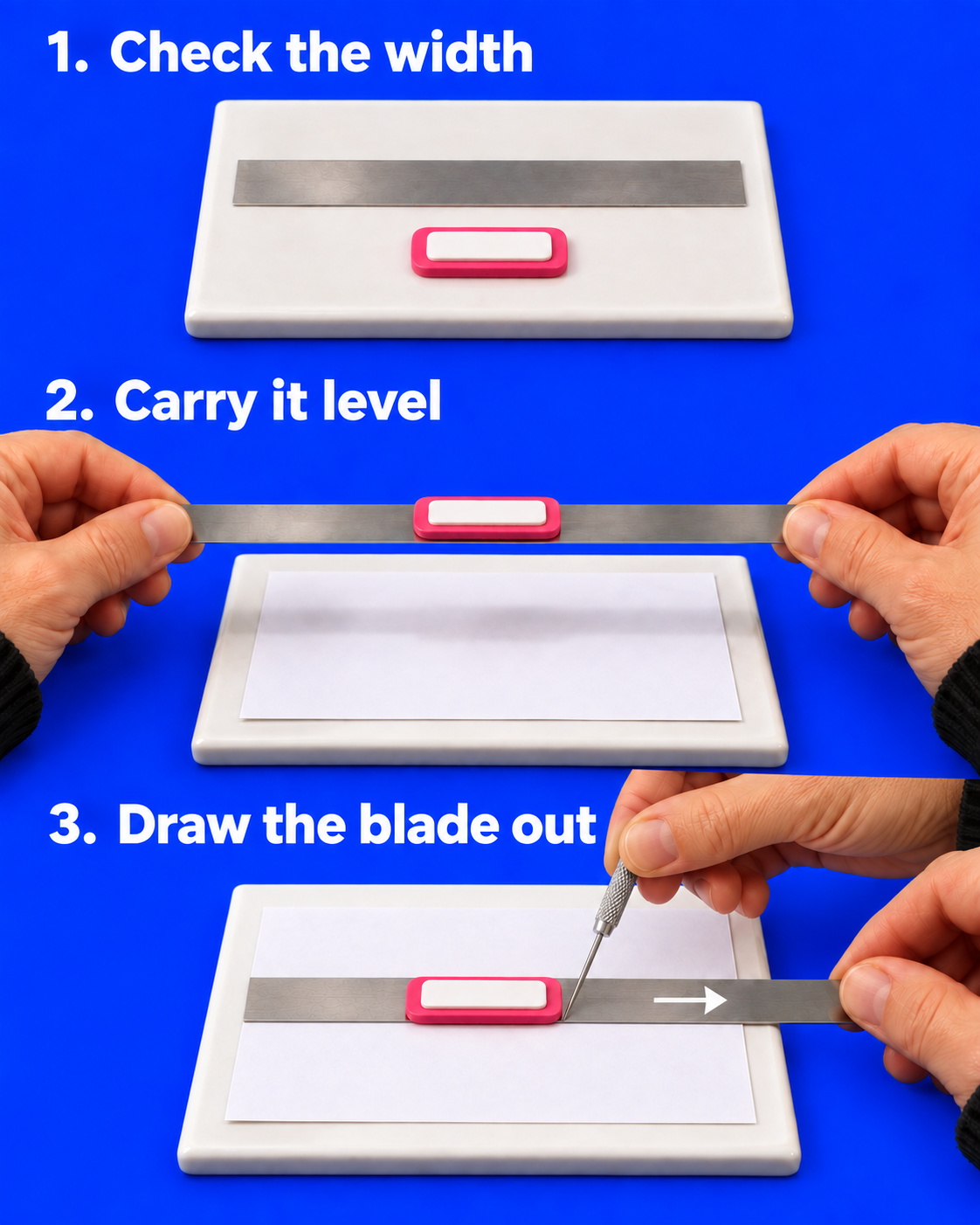
Check the width first. A tissue blade is a long, thin, flexible blade with one sharp edge, and it is narrow: usually about 12 to 19 mm (1/2 to 3/4 in) from the sharp edge to the back. The piece has to fit across that width with a little blade showing on the far side, so lay your blade beside the piece and compare it with the piece at its narrowest, which is the direction you will push. If the piece is wider, leave it on the tile, because the part hanging off the back of the blade drops and stretches as you lift. Bake it there and wet-sand the cooled back, the same route as for a large plaque.
- Set up the card. Lay the card or parchment flat on a second tile or a flat baking tray, right beside the build tile.
- Line up the blade. Hold the tissue blade by both ends, almost flat against the glaze, with the sharp edge touching the tile along one long side of the piece, so it will travel across the piece's narrowest width.
- Slide it under. Push the blade under the whole piece in one steady movement, keeping the sharp edge on the tile, until the edge shows past the far side.
- Carry it level. Lift the blade with the piece on it, keep it level, and lower it until the blade lies flat on the card.
- Draw the blade out. Hold the blade flat on the card by one end. Rest the tip of a needle tool against the edge of the base layer, the bottom slab the other layers sit on, on the side nearest the hand holding the blade. Slide the blade out along its length towards that hand; the needle stops the clay travelling with it.
- Check from above. Each layer should still line up with the one beneath it. If one has slid, nudge it back into line with the needle tool before baking.
No tile? What else can I bake on?
A glass baking dish, a metal baking tray or pan, or an oven-safe work mat, with plain card or parchment on top. Sculpey names glass, a metal pan or metal baking sheet, and its own Oven-Safe Work Mat as the best baking surfaces, and says card stock or parchment under a piece stops the bottom darkening; the paper also gives a matte back. If you want one mat to work and bake on, Sculpey oven-safe work mats (search Amazon) are made for both.
The acrylic sheet or plastic cutting mat you worked on is not bakeware: move the piece onto card on a baking tray with the blade method above. Never bake on wax paper; Sculpey says its waxy coating melts and smokes in the oven. Foil works as a liner if you lay it flat and smooth, because any crease prints into the soft underside.
How do I keep a large flat plaque from bowing?
Give the whole back full contact with the tile and no air underneath, then decide whether a second tile can go on top: yes for a plain flat face, never for a raised or layered one.
Air expands as it heats. Sculpey explains that air trapped inside clay causes bulges in the oven, and a pocket caught under the back can lift the clay off the tile in the same way. Before baking, bring your eye level with the tile and look along it from each side: the back should sit down with no gap under any edge and no lifted corner. Then look across the top at a low angle against the light for a raised blister.
If one edge of the base layer has lifted, lay parchment over that edge and press only that edge down with a fingertip. If a blister shows on a plain area, prick it at a shallow angle with a fine needle, press the air out towards the hole with a fingertip, and smooth the surface closed.
Plain flat face: bake it in a tile sandwich
A tile sandwich holds a plain, flat piece pressed flat between two tiles while it bakes and cools. Use it only on a face with nothing raised on it.
- Start on the tile. Leave the piece face up on its build tile, or on card if it fits across your blade and you want a matte back.
- Cover with parchment. Lay a sheet of parchment over the whole top face.
- Add the second tile. Lower a second tile, smooth side down, onto the parchment so it rests flat across the piece.
- Bake by the packet. Bake at the temperature and for the time on your clay packet, timed as the oven section below describes.
- Cool it closed. Leave the stack closed until the tiles feel cool, then lift off the top tile and the parchment.
Raised or layered face: no top tile
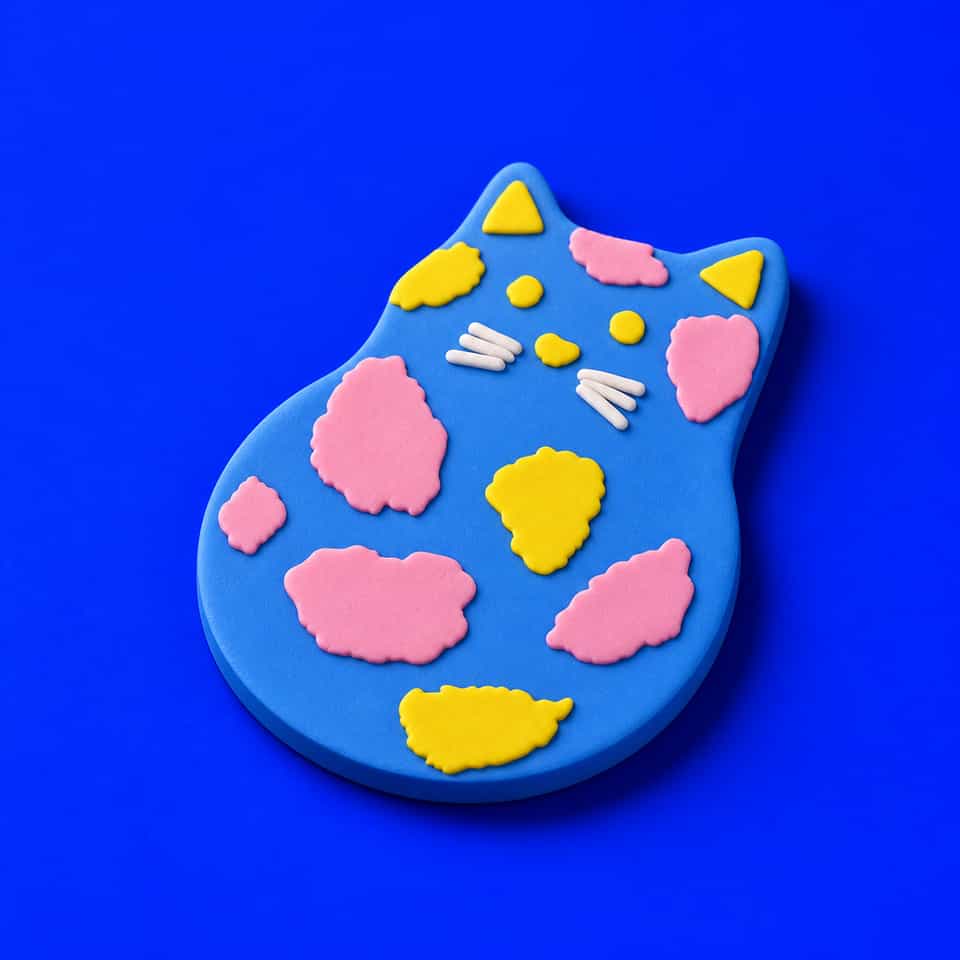
Never put a second tile on a raised or layered face, such as the Boston terrier display plaque, an appliqué plaque with raised spots or a pixel brooch: its weight would press the soft layers flat. Seat the whole back on the build tile, run the checks above, tent pale colours as the oven section describes, and let the plaque cool on the tile without lifting it.
How do I stop a curve from sagging in the oven?
Bake it on an oven-safe glass or ceramic form with the same curve, and leave it there until it has cooled. Sculpey warns that raised or extended parts can sag or crack without support, because the clay softens slightly in the oven before it hardens, and its baking FAQ lists a glass bowl for keeping a curve in place.
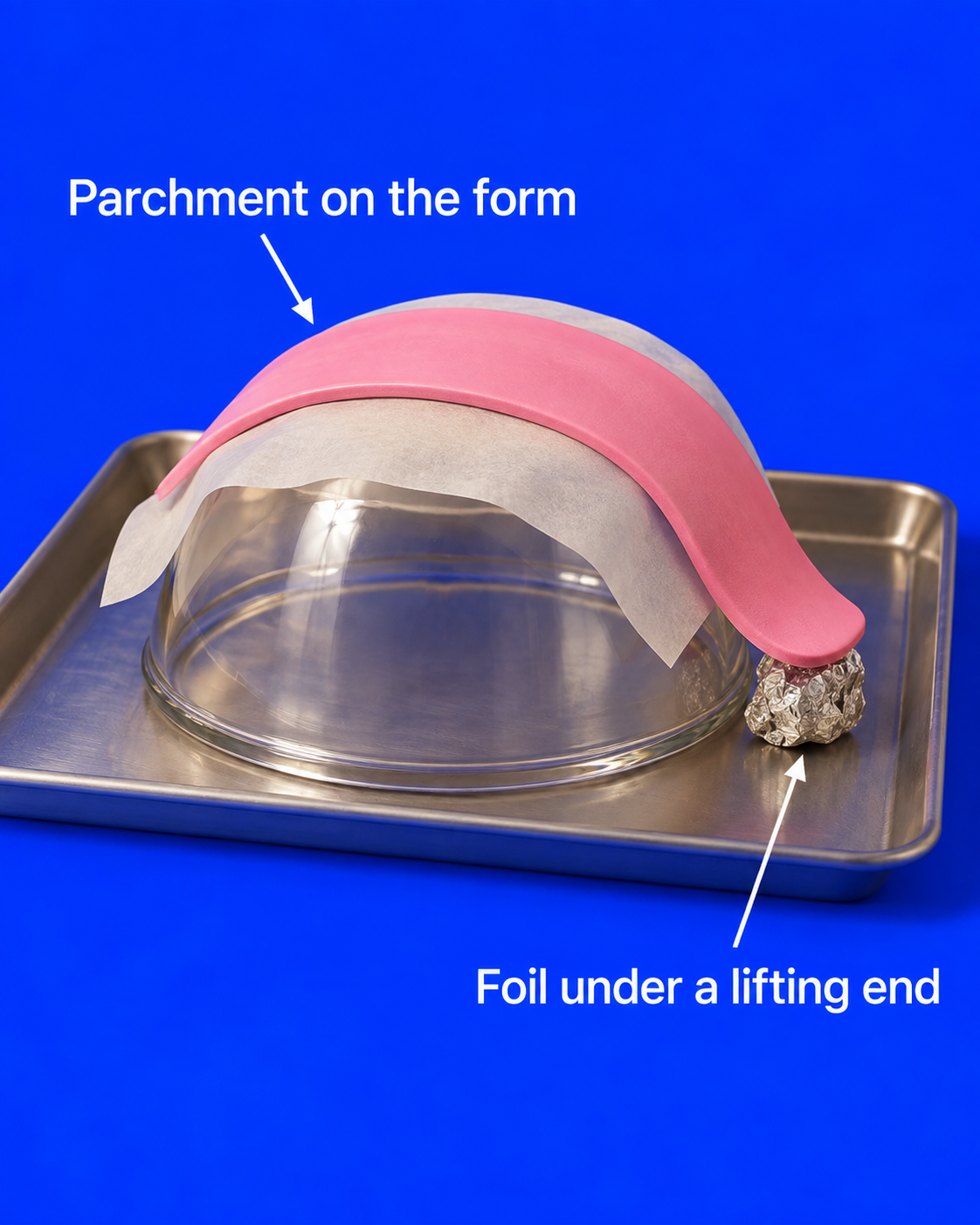
- Pick the form. Use glass or ceramic bakeware sold as oven-safe, such as a glass custard cup, a bowl or a pie dish, whose curve matches the one you want to keep.
- Line it where it shows. Clay comes out shiny where it touches glass, as it does on a tile, so lay parchment over the form wherever the inside of the finished piece will be seen.
- Drape the piece. Lay a collar or cuff over the outside of the upturned form, so the side that will sit against the body rests on it, or press a dish into or over its form as the trinket dish guide describes. Support the full span, so no part bridges a gap.
- Check the fit. From each side at eye level, the clay should rest on the form along the whole curve. Tuck a small roll of crumpled foil under any end that lifts away.
- Bake and cool on the form. Stand the form on a baking tray on the middle shelf, bake by the packet with a tent over pale colours, and leave the piece on the form until both feel cool. Warm clay still moves, so a curve lifted early can open out.
The collar and cuff guide covers planning the curve, and the bangle guide covers coils that bake on a form.
How do I hold a fold open once the 3D-printed former is out?
Fill the space the former held with a roll of plain card, and cradle the rounded parts with fiberfill or crumpled foil. The former itself stays out of the oven: Bambu Lab lists a glass transition temperature of 60°C for its PLA Basic filament, where the stiff plastic turns rubbery, and clay bakes much hotter.
The Fortune Cookie Build Kit folds the raw clay around a Fold Bar, a 3D-printed bar that shapes both folds at room temperature; the kit is a digital download, so you print the bar and cutters on a 3D printer or through a print service. The steps use the cookie as the example and hold any fold shaped around a plastic former. Start with the folded cookie on its tile, straight after sliding the Fold Bar out.
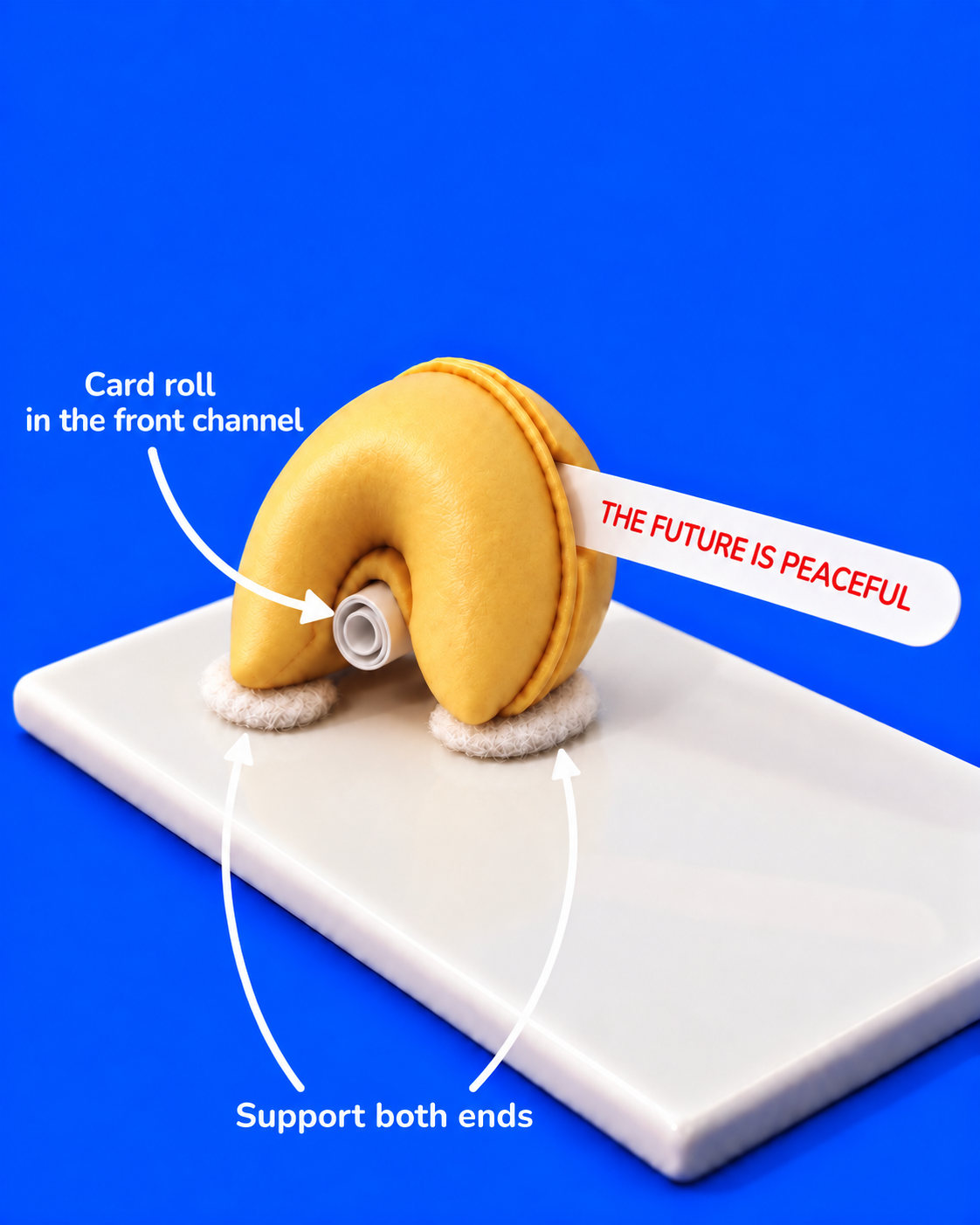
- Size a card roll. Wrap a strip of plain card around the Fold Bar you just removed so the roll matches its thickness, then slide the roll off and set the bar down away from the oven.
- Hold the opening. Slip the roll into the channel the bar left. If it starts to uncurl and push the clay outwards, take it out and roll it a little tighter.
- Cradle the ends. Tuck a small nest of polyester fiberfill (fibrefill) or a ring of crumpled foil under each rounded end so it cannot drop.
- Keep the message clear. Keep the roll and supports off the lettered part of the message strip, and against faces that will not show. The strip should still leave the opening with its lettered face up and nothing pressing on it.
- Compare. From every side, the opening and the rounded ends should match how they looked with the Fold Bar in. If an end has dropped or the opening has narrowed, add fiberfill under that end or re-roll the card, then check again.
The message strip was lettered and baked flat before the cookie was folded, and it bakes again inside the cookie; dry water-based acrylic lettering can go back in the oven, as the FAQ below explains. Raw clay does not fuse to baked clay by itself, so the fold is what holds the strip. Check it is still seated once the cookie has cooled.
How do I hold up arms, ears, caps and other parts that stick out?
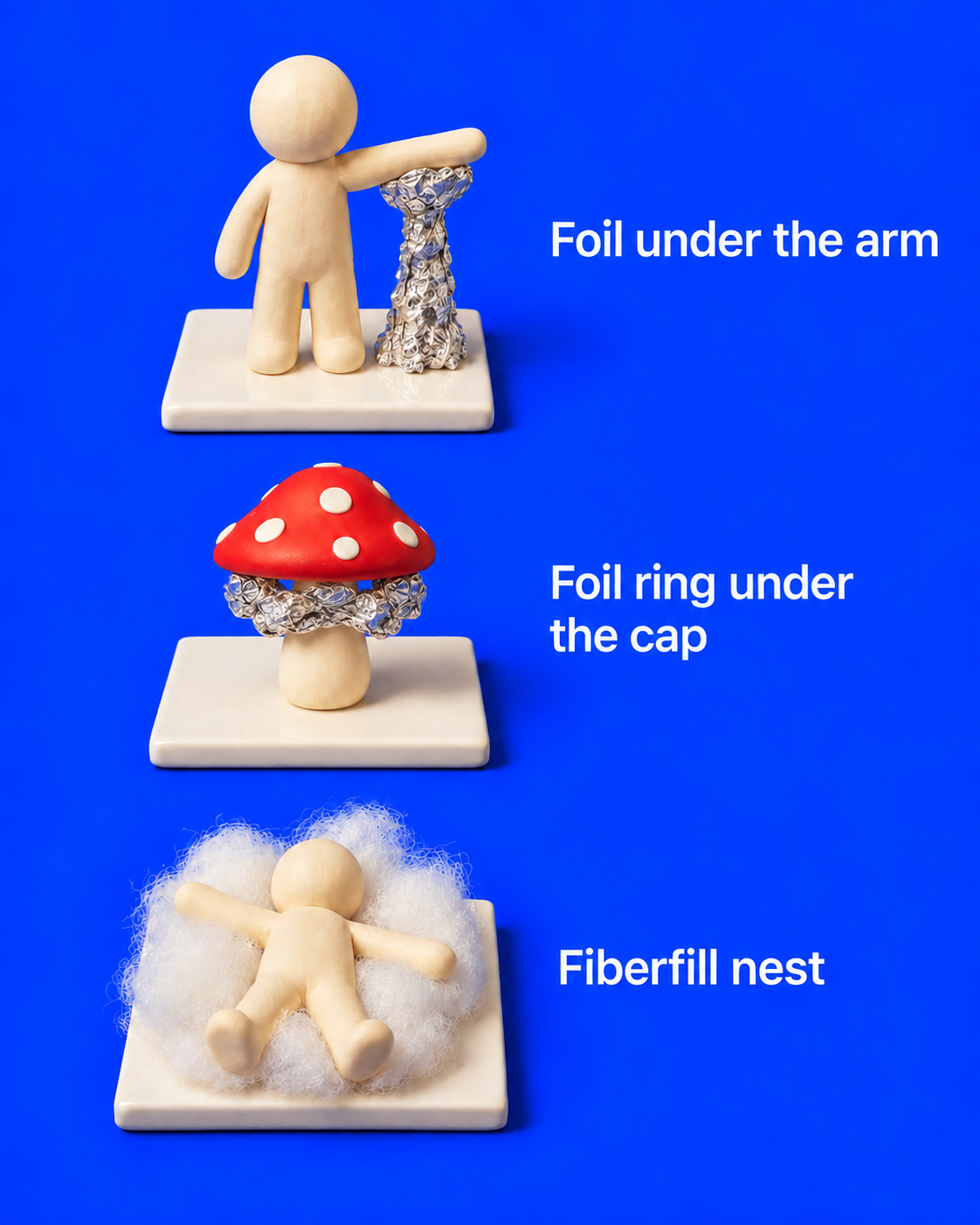
Put a support under each part that sticks out, touching its underside, before the piece goes in: crumpled foil where the part has to stay at a set height, and a nest of polyester fiberfill where it needs a soft cradle. Sculpey lists both, along with crumpled paper towel or tissue, as supports that go under the clay.
- Find the overhangs. Look at the piece from each side at eye level and note every part with air under it: arms, ears, a raised tail, the rim of a mushroom cap, a chin.
- Prop each one. Squeeze a small piece of crumpled foil into a ball or roll the height of the gap and slide it under the part so it touches along the underside without pushing it up. A figure lying on its back or side can instead settle into a loose nest of fiberfill, with every limb resting on fibre.
- Keep supports on hidden faces. A hard surface can leave a smooth, shiny spot, foil can print its creases, and stray fibres can stick to soft clay, so put props under undersides and backs.
- Check, then bake. From each side, every part should sit where you shaped it, neither drooping nor lifted by a prop that is too tall. Tent pale colours and bake by the packet.
- Cool, then unpack. Leave the piece on its supports until it is cool all through, then pull the foil away and lift the piece out of the fiberfill.
A long, thin part, or a cap that overhangs its stem, is easier to hold if you bake in stages, which Sculpey does for complicated pieces. Bake the body or stem first and let it cool. Raw clay does not fuse to baked clay on its own, so brush a thin smear of liquid clay or bakeable clay adhesive (search Amazon) where the new part meets it; Sculpey says its adhesive bonds raw clay to baked clay once baked. Press the raw part on, wrapping a little of it around the baked part as Sculpey does, prop it and bake again.
Sculpey also bakes rounded and irregular pieces partly buried in cornstarch (cornflour), which holds them from every side. Put the piece in the oven as soon as it is in the bed, because Sculpey warns the powder pulls plasticiser and colour out of raw clay if it sits, and brush the cooled piece clean with a soft toothbrush. Baking soda (bicarbonate of soda) works the same way and rinses off, but Sculpey notes its coarser grains leave divots and discoloured patches more often.
A tall or heavy figure needs structure inside as well as support underneath. The figurine guide covers foil cores and armatures, and the mushroom guide covers caps and stems.
How do I bake round beads without flat spots?
Hold each bead so nothing flat touches it. Sculpey gives three ways: thread the beads on the skewers of a bead baking rack, bake them on a bed of quilting batting, or sit them in the folds of an index card folded like an accordion. A cornstarch bed, as above, keeps beads round too.
- Skewer the beads. Push a metal or bamboo skewer through the centre of each raw bead with a gentle twist, holding the bead lightly so it keeps its shape. Leave a gap between beads so they cannot touch and bake together.
- Hang them over air. Rest the skewer ends across the rims of a small baking dish or loaf tin, or on the rack, so every bead hangs clear of the bottom.
- Bake and cool on the skewers. Bake by the packet with a tent over pale colours, and let the beads cool on the skewers before you twist them off.
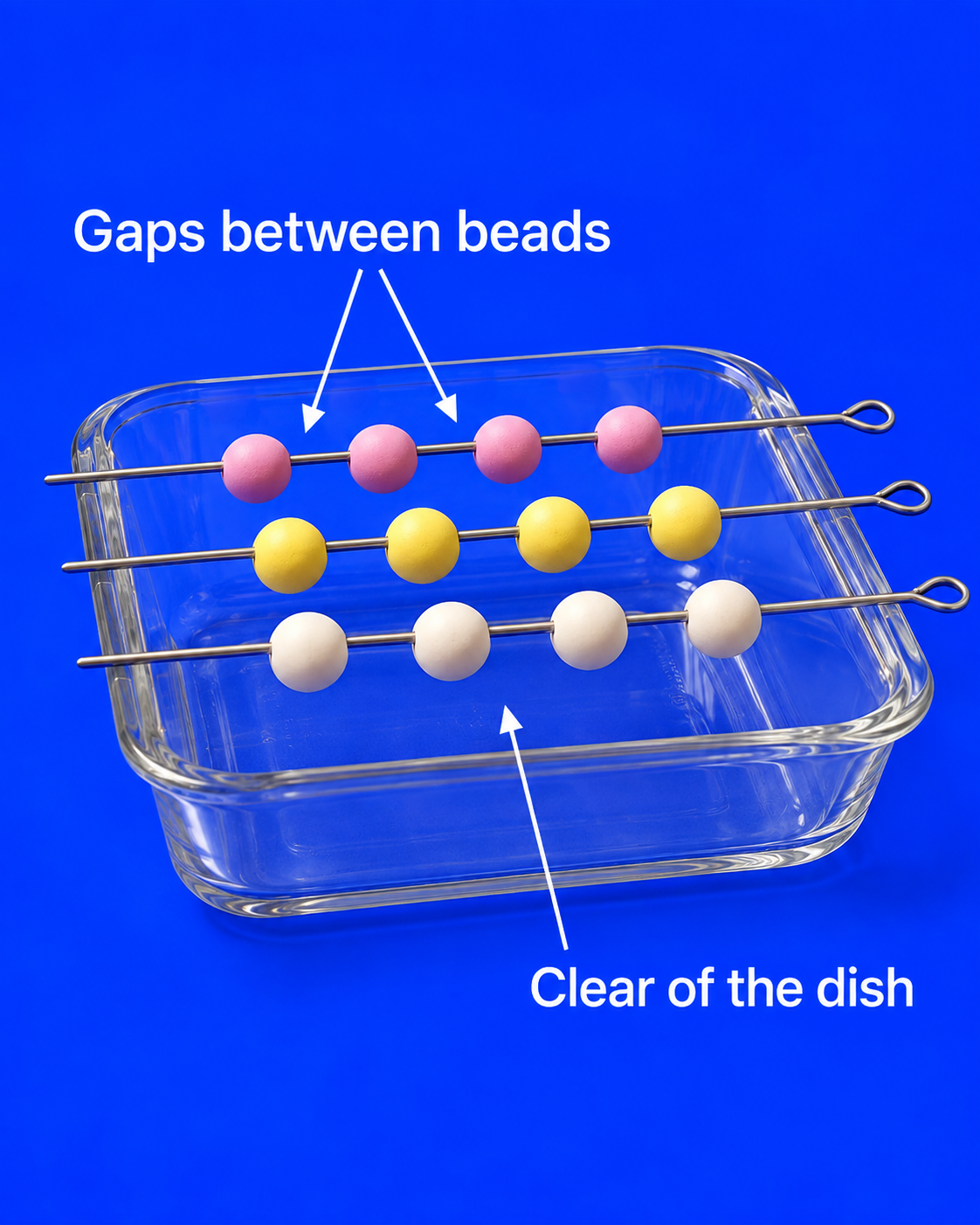
Beads you would rather drill than pierce raw can bake on batting or in cornstarch and be drilled once cool.
What if a piece has to bake face down?
Spread polyester fiberfill or tissue paper into an even bed on the tile and nest the front in it, so the back sits level and faces up with nothing touching it. A brooch with its pin baked in under a clay cover goes in the oven this way, as the brooch back guide describes.
- Make the bed. Pull the fiberfill apart into an even layer, deep enough that the raised parts of the front sink in without reaching the tile.
- Lower the piece. Turn it front down and settle it into the bed with a light, even touch on the back.
- Level the back. Look along the back at eye level from two sides. Add fibre under a low side, or pull some from under a high side, until the back is level and any pin points straight up. Nothing should touch the back or a fresh clay cover over the pin.
- Bake and cool in the nest. Bake by the packet, away from the heating element, and let the piece cool completely in the nest without lifting it. Then check the back is still flat.
Where should the piece sit in the oven, and how do I keep foil off it?
On the middle shelf of a fully preheated oven, with a thermometer beside the tile and any foil or card tent standing clear of the clay. An adult should be in charge of the baking, and Sculpey suggests ventilating the room while you bake, for example with a window open or the fan above the stove on.
Stand a dial oven thermometer on the middle shelf where the tile will sit, and let the oven preheat completely. Sculpey notes that an oven can be off by up to 25°F, or even 50°F (about 14°C or 28°C), from its dial, so read the thermometer before the tile goes in: turn the dial down a little if it reads higher than your packet temperature, up if lower, and read it again once the needle settles. The oven thermometer guide covers choosing and reading one.
Set the tile beside the thermometer with space all round it, clear of the oven walls and heating elements. Sculpey notes that paper and card will not catch fire at clay baking temperatures, but paper that touches a heating element can.
A tent is a cover that stands over the piece without touching it, to stop brown spots from oven temperature spikes and keep the highest points from scorching. Pale colours such as white show browning most. To make a foil tent, fold a sheet of foil in half, open it into a roof taller than the piece and stand its long edges on the tile either side of the piece, or turn a foil pan bigger than the tile upside down over the whole tile, checking first that the pan is deeper than the piece is tall. Look from the side for a clear gap above the highest point: foil that touches the clay can leave a shiny or scorched mark.
A folded card tent does the same job without marking. Fold plain card in half, stand it over the piece like a roof, and check the top of the card sits well below the top heating element. In a small oven where it cannot, use foil.
How long should it bake?
For the full time on your clay packet, at the packet temperature, timed from when the thermometer beside the tile reads that temperature after you close the door. Packets give one time, not a range, and where the time goes by thickness, measure the thickest part. Sculpey's chart gives 30 minutes per 6 mm (1/4 in) at 130°C (275°F) for Premo and Souffle, and 15 minutes per 6 mm for Original Sculpey and Sculpey III, and Sculpey adds that clay needs at least 15 minutes to cure properly. STAEDTLER gives 30 minutes at 110°C for FIMO soft, and Cernit gives 30 minutes as its maximum, counted from when the oven has reached temperature.
Never cut the time short: Sculpey says underbaked clay is softer and more fragile. A tile does not change the number either. It warms slowly, which is why some makers add time when they bake on one, but no clay maker gives a tile allowance and Sculpey's FAQ says not to exceed the packet time. Timing from the thermometer reading, rather than from when the tile goes in, allows for part of that warm-up.
Sculpey's own blog notes that many experienced makers recommend baking for at least an hour, and long-running maker sources report that extra time at the correct temperature strengthens clay rather than burning it, though white, translucent and bright colours can darken. Sculpey's baking guide warns that clay left in too long can overheat and crack. So bake for the packet time; if you choose to go longer, the thermometer and a tent are what protect the piece.
When can I lift the piece, and what if it has already warped?
Once the tile and the thickest part of the piece both feel cool to the touch.
With oven gloves on, lift off any tent, take the tile out level and set it on a heatproof mat, board or cooling rack, away from printed tools and plastic mats. Leave the piece on it, with any card roll and supports still in place, to cool at room temperature; Sculpey warns against putting hot clay in the fridge or freezer, because the sudden change can crack it. When you can hold your hand just above the tile and feel no warmth, touch the edge of the tile, then the thickest part of the piece.
To release a cooled piece from the glaze, keep a tissue blade flat against the tile and gently slide it under the back, with your fingers clear of the sharp edge. Do not tilt the blade upwards or pull on a thin point. For a folded piece, draw the card roll out and lift away the fiberfill or foil. The piece is then ready for drilling or attaching a brooch pin.
If a flat piece comes out bowed
Press a plain flat piece flat while it is still hot. As soon as the tile comes out and you see a bow or a bubble, lay parchment over the piece, set a second tile or another flat, heatproof surface on top, press down gently and evenly with oven gloves on, and leave the weight in place until the stack is cool. One long-running maker tutorial fixes bubbled flat pieces this way; a bubble may flatten or only become less noticeable. Do this only on a plain face, because it would press a raised or layered face flat too. If the piece has already cooled, close it in a tile sandwich, bake it again by the packet and let it cool closed. A glazed piece stays out of the oven.
A layered or raised piece cannot be pressed flat. If it only rocks slightly, find the high spot on the back by pressing each corner in turn on a flat tile, then rub that spot gently on wet-and-dry sandpaper of about 400 grit laid flat with a few drops of water, with no pressure on the front. If an edge has curled, make the piece again and let the new one cool on its build tile.
Bake support problems and how to fix them
Each fix is the change to make on this piece or the next one.
| Symptom | Fix |
|---|---|
| Shiny patch on the back | Bare clay touched the glaze. Leave a hidden back, or wet-sand it matte. Next time, move the piece onto card or parchment just before baking. |
| A bulge or bubble in a flat piece | Air was trapped in or under the clay. On a plain face, press it hot between parchment and a second tile, or rebake it closed in a tile sandwich. Next time, check for blisters before baking. |
| Edges lifted or the piece bowed | Plain face: press it flat while hot, or rebake it in a tile sandwich. Raised face: sand a slight rock or remake a curled piece, and next time seat the whole back and cool it on the tile. |
| The plaque rocks when set down | Sand the small high spot on the back; the sanding guide covers wet sanding. |
| The fold sagged or a curve flattened | Nothing held it once the former was out, or it left its form while warm. Next time, fill the opening, rest the whole curve on its form and let it cool there. |
| An arm, ear or cap drooped | The prop was missing, too low, or beside the part instead of under it. Prop the underside at the height of the gap, or bake the part in a second stage. |
| A flat spot on a round bead | It rested on something hard and flat. Bake beads on skewers, on batting or in cornstarch. |
| Divots or pale patches after a powder bed | The powder sat on the raw clay, or its grains pressed in. Brush or rinse it off and lightly sand a discoloured patch. Next time, bake straight after bedding, in cornstarch rather than baking soda. |
| Creases or fibres on a visible face | A support touched that face. Sand light marks off the cured piece; next time, keep supports under backs and undersides and lay foil flat. |
| The piece bent as you lifted it | It was still warm. Wait until the tile and the thickest part feel cool. |
| High points turned brown | Tent pale colours, and check the thermometer reading beside the tile. |
| Shiny or scorched mark on the top | Foil touched the clay. Raise the tent or use a card tent. |
| Message strip loose after cooling | Raw clay does not fuse to baked clay. Work a little bakeable clay adhesive into the fold around the tucked end and bake the cookie again. On the next one, brush a thin smear on the blank tucked end before folding; Sculpey's adhesive only bonds once baked. |
| A layer lifted off after baking | The layers did not bond, and pressing will not rejoin baked clay. Brush liquid clay or bakeable clay adhesive under the loose layer, press it back and bake again. Next time, brush a very thin smear of liquid clay under each layer; the layering guide covers stacking. |
If the piece cracked, the cracking guide covers the causes and fixes.
Supplies
Supplies mentioned here
Quick links to the materials and tools that fit this article. ClayBake tools stay on our own catalog.
Glossy ceramic tiles
A smooth, glossy tile to build flat pieces on and bake them on without lifting the layers; a second one makes a tile sandwich. Choose plain glazed tiles with no printed decoration and a bare ceramic back.
Plain white cardstock
Gives a matte back under a flat piece; plain copy paper or an index card does the same job. Cardstock is sturdier for rolling a strip to hold a fold open. Use it unprinted, because ink can transfer to the clay.
Polyester fiberfill
Pull it into a soft nest under arms, ears, rounded ends and face-down pieces so they hold their shape until the clay cools. Crumpled kitchen foil does the same job where a part has to stay at a set height.
Oven thermometer
Stand it on the middle shelf where the tile will sit and read it before the tile goes in, so you bake at the temperature on your clay packet and know when to start timing.
More guides in this path
Open these when the next decision is material choice, attachment, or finishing.
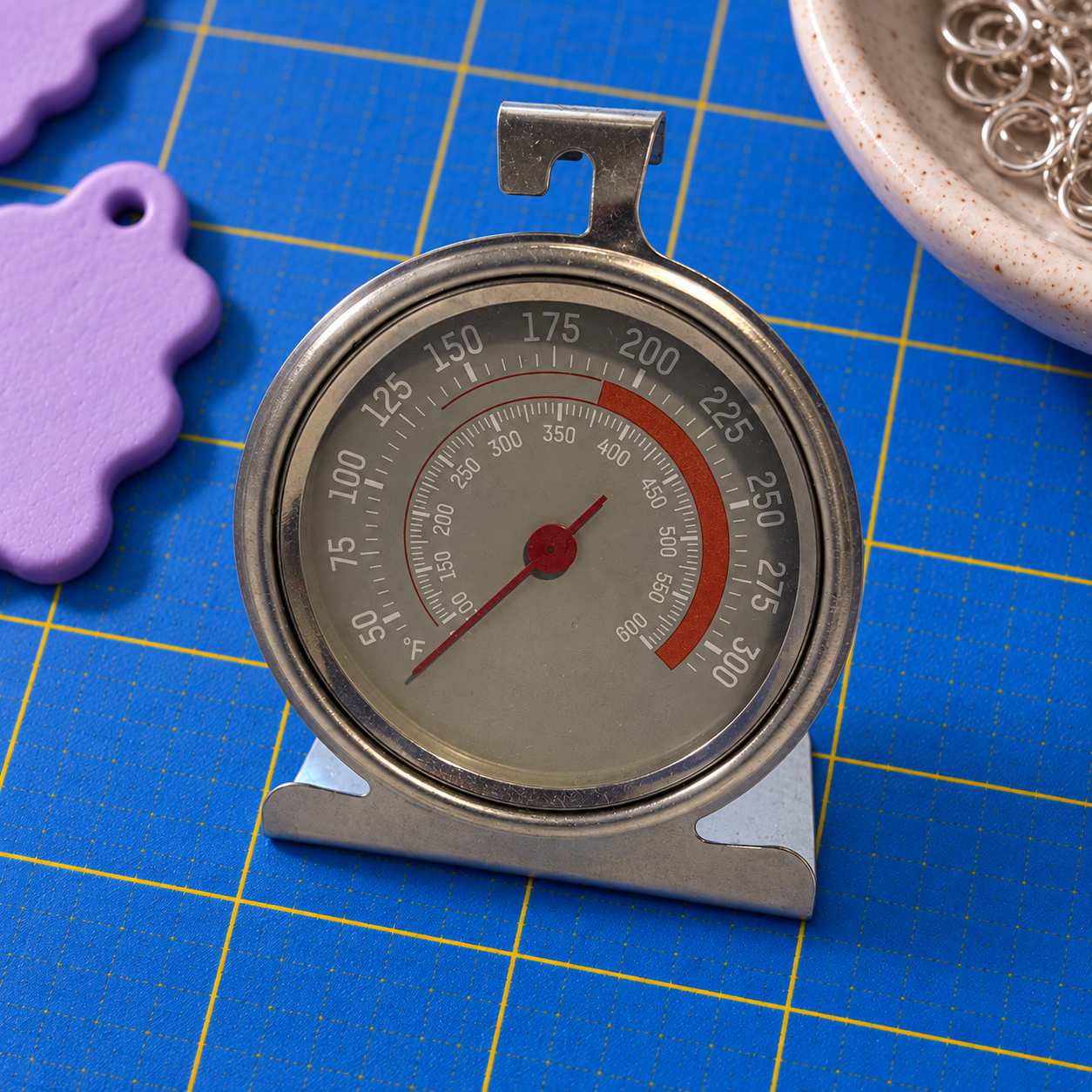
Best oven thermometer for polymer clay: what to buy and how to use it
Choose a dial you can read through the oven door, or an oven-rated air probe with an outside display. Then check the temperature beside your clay.
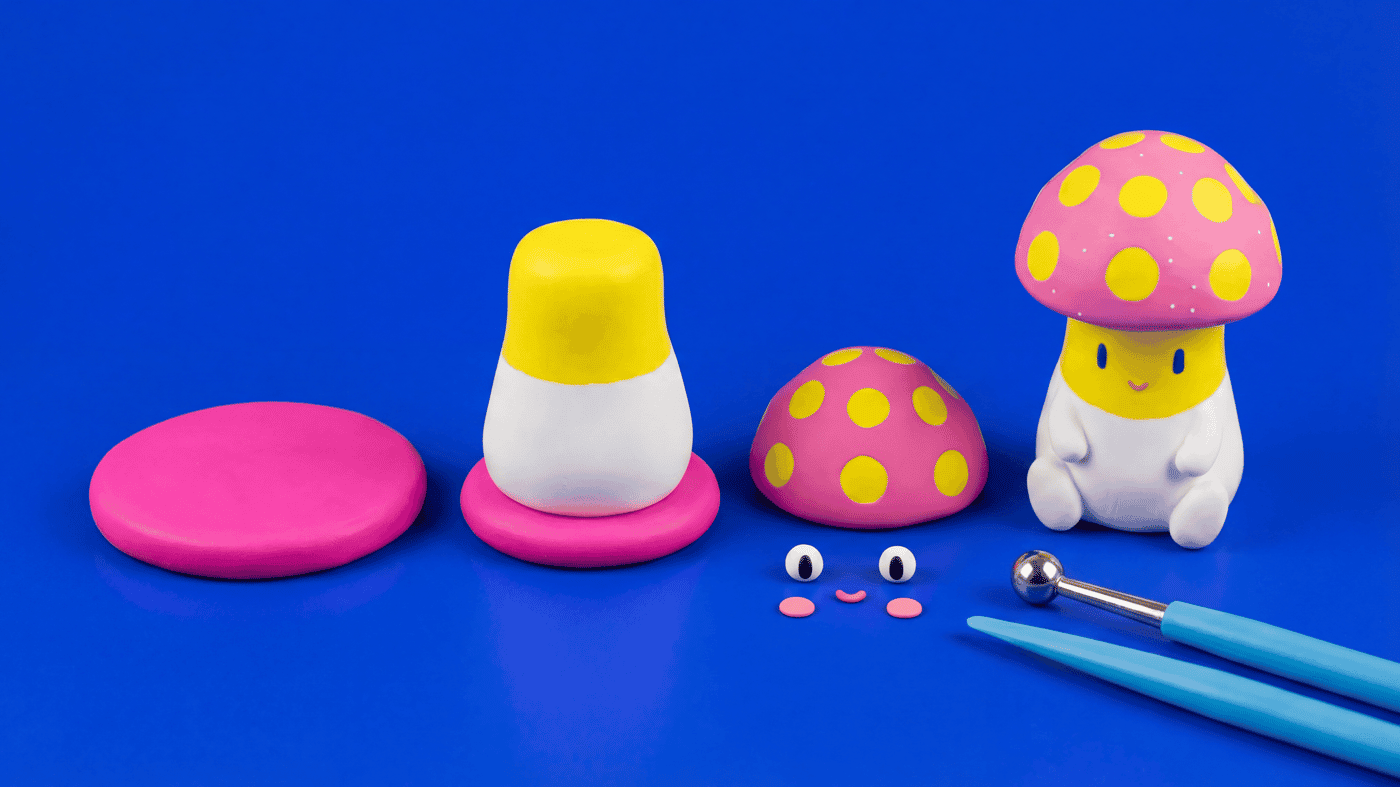
Polymer Clay Figurines: Stable Bases and Clean Features
Small figurines look simple until the base wobbles, the cap droops, or the face gets smudged while you are still shaping the body. This guide covers the order of operations that keeps polymer clay characters stable with cleaner features.
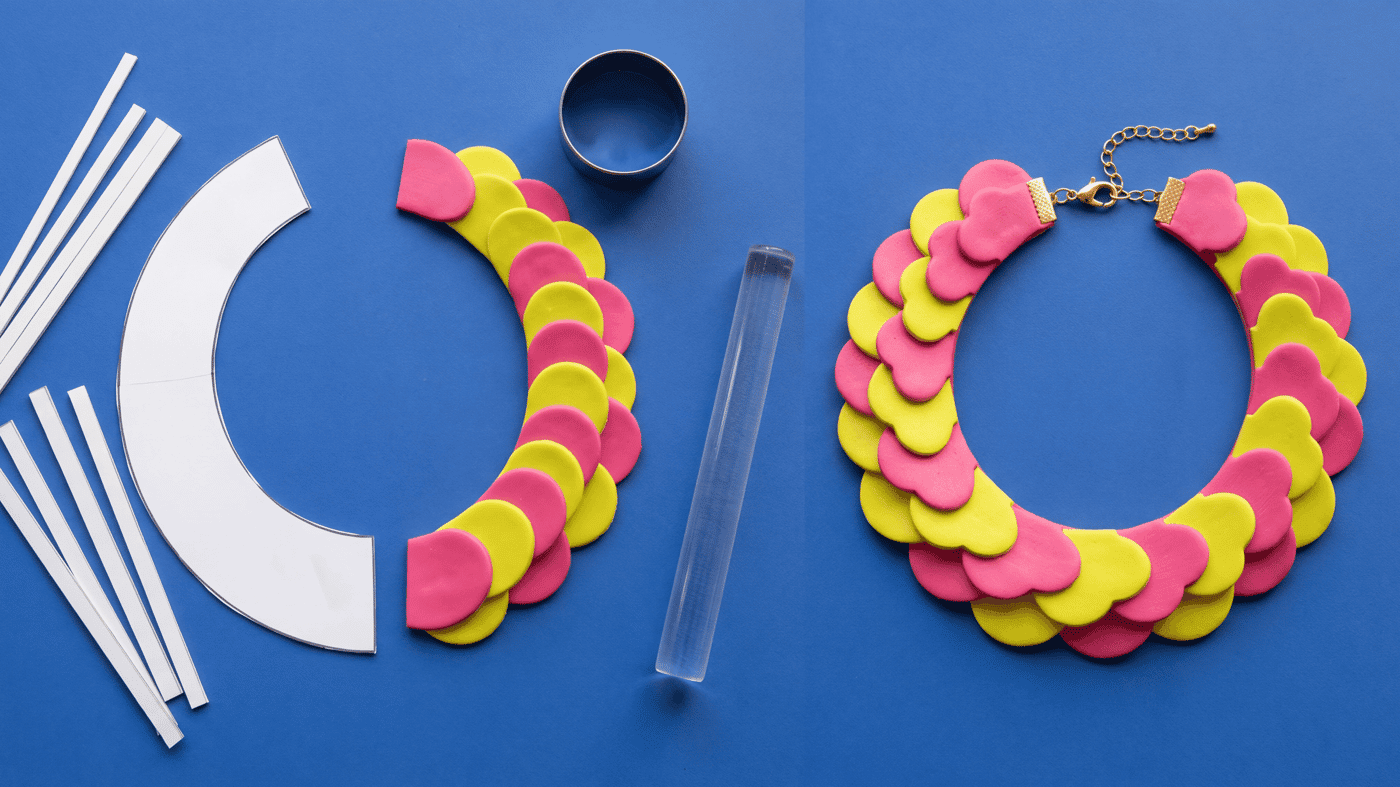
Polymer Clay Collar Necklaces, Bibs, and Curved Bases
Statement collars go wrong when you guess the neckline arc too late, build the front pieces as loose pendants, or let the collar flatten or relax in the oven. This guide gives the curved-base build order for rigid collar necklaces and layered bibs.
Finished examples with related clay decisions
Each piece shows how a material, attachment, or surface choice changes the final form.