Polymer Clay Collar Necklaces, Bibs, and Curved Bases
Statement collars go wrong when you guess the neckline arc too late, build the front pieces as loose pendants, or let the collar flatten or relax in the oven. This guide gives the curved-base build order for rigid collar necklaces and layered bibs.
Some links on this page are affiliate links. If you buy through them, we may earn a commission at no extra cost to you. As an Amazon Associate I earn from qualifying purchases. Disclosures

In brief
Key takeaways
- Solve the neckline arc on a curved form before cutting the full set of front scallops or bib pieces. The arc is what makes the collar sit instead of gap
- Decide early whether the front is one rigid collar base or a set of loose hanging parts. The two builds want different connection plans
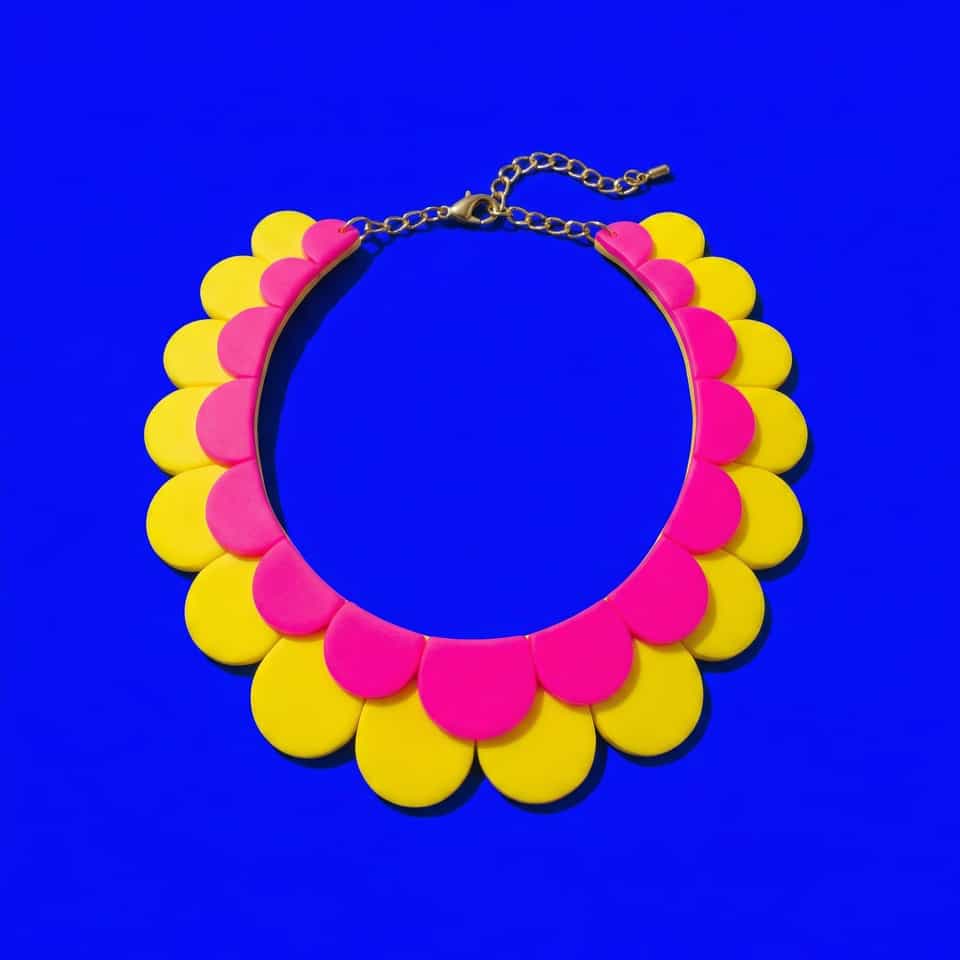
- Build layered fronts from the lower row upward so each row's reveal stays even across the neckline
- Choose the hardware path before baking. Add a clasp or jump ring after cooling only when the exact finding and attachment instructions support that sequence
Article contentsOpenClose
Set the intended curve before you add decoration. Use a paper or scrap-clay layout, choose an oven-safe support that fits the form, and follow the exact clay package for cure.
Plan The Curve First
Trace the intended neckline, cuff or front arc and place the main shapes on that guide. Check where the ends and joins will sit before shaping the clay; check the finished weight and fit again after baking and assembly.
Support The Form During Cure
Choose a support that matches the actual curve and is suitable for the package temperature. Verify the baking area with an oven thermometer, then follow the clay maker's time, temperature, thickness, and support directions.
Choose Hardware From Exact Specifications
Choose clasps, rings, chains and bails by the supplier's dimensions and material descriptions. Check the adhesive label for compatible surfaces, preparation and full-cure time. Ask the supplier for any load rating or skin-contact information you need before choosing the hardware.
Check One Cooled Assembly
Assemble one sample and check the movement, curve, closure, edge comfort, and intended wear position before repeating it. The result belongs to that recorded clay, form, support, and hardware combination.
Supplies
Supplies mentioned here
Quick links to the materials and tools that fit this article. ClayBake tools stay on our own catalog.
ClayBake cutter pack
Good when the front depends on repeated scallops or discs that need to stay consistent across the neckline. ClayBake makes matched cutter packs sized to the build.
ClayBake slab height guides
Good for keeping the collar base and layered front pieces consistent enough to test against the intended neckline curve.
Lobster clasp and extender chain set
Good when the front arc is rigid but the back still needs an adjustable closure after the front arc has been checked.
More guides in this path
Open these when the next decision is material choice, attachment, or finishing.
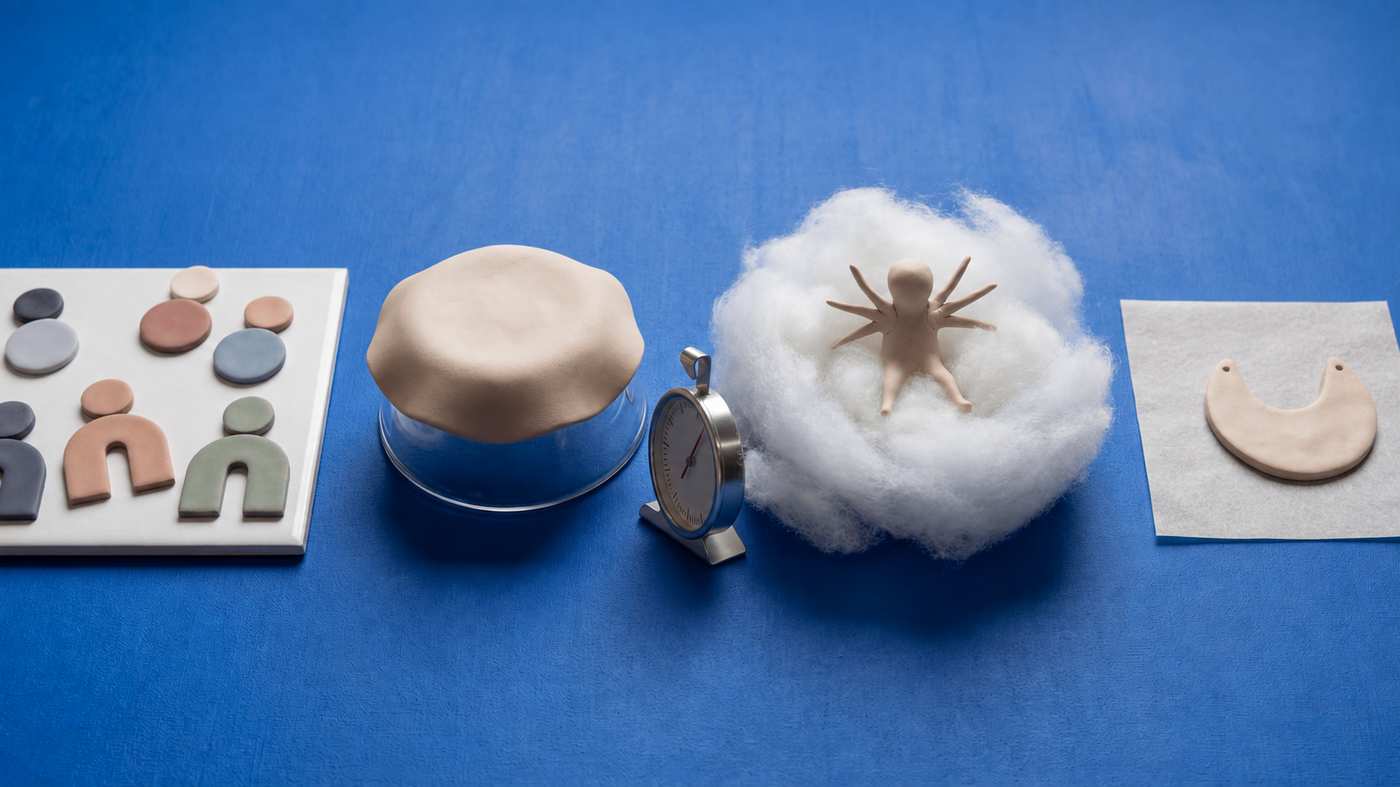
What to bake polymer clay on: tile, card and supports for flat, folded and large pieces
Bake flat pieces on a glossy tile and move them onto plain card only for a matte back. Hold curves, limbs and overhangs with fiberfill, crumpled foil or an oven-safe glass form, bake round beads on skewers, and leave everything on its support until it feels cool.
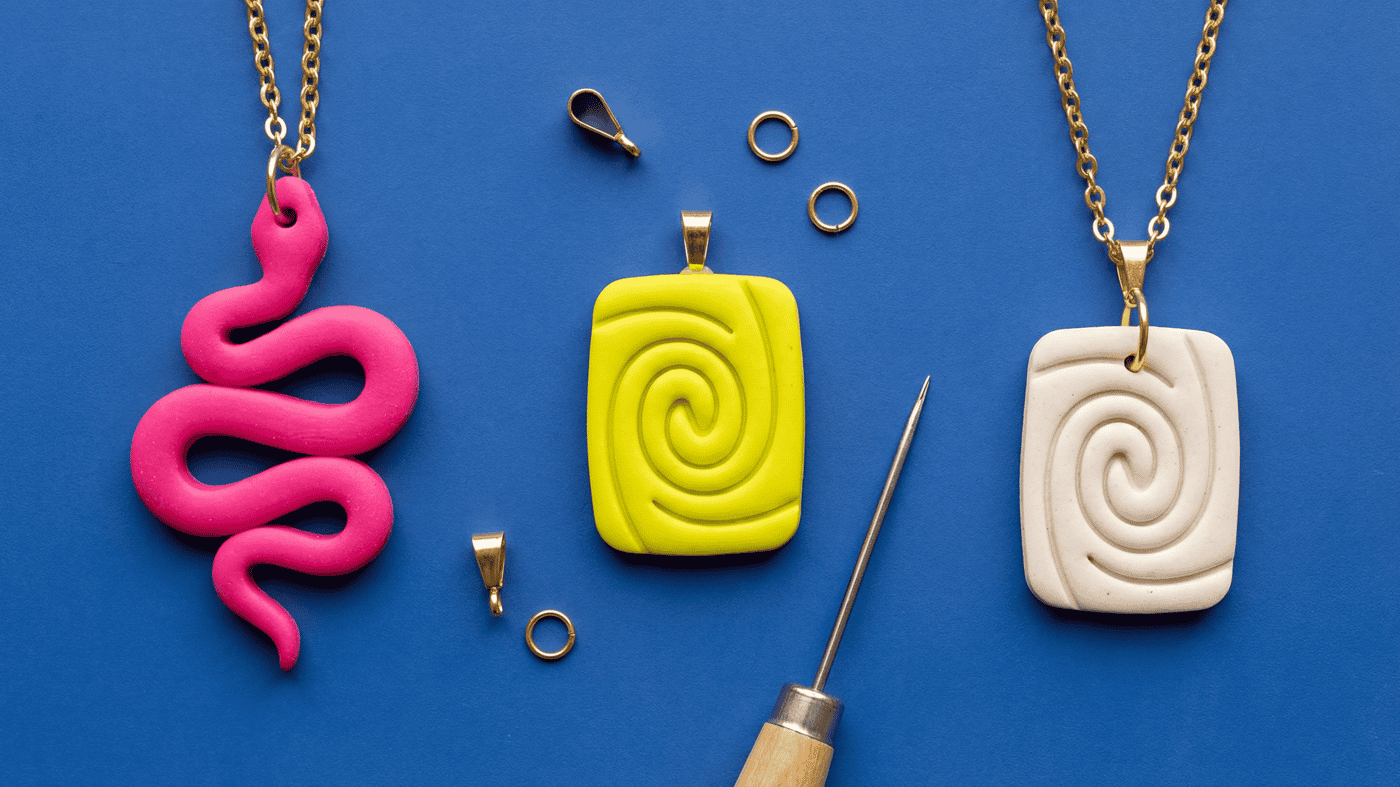
Polymer Clay Pendant Holes, Bails, and Jump Ring Placement
Choose a hole when the top has room for it, or a glue-on bail when you want an uninterrupted front. Position the attachment, leave clearance for the chain, and check which way the finished pendant faces.
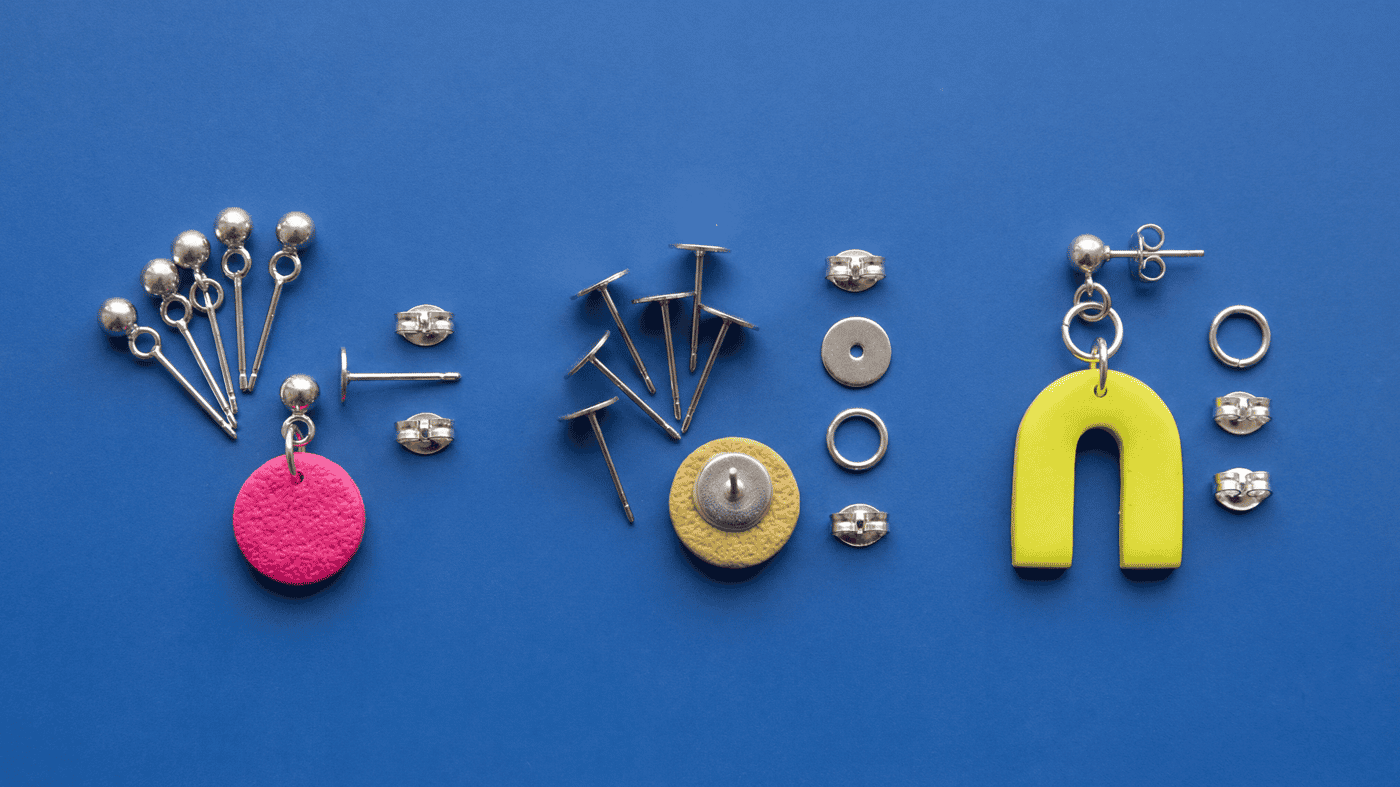
Polymer Clay Stud Toppers, Flat Pads, and Connector Rings
Choose the top connection from the front view first, then keep the attachment short and balanced. Compare visible loop-tops, flat pads, short ring paths, and balance-line marks on a sample before you make the final pair.
Finished examples with related clay decisions
Each piece shows how a material, attachment, or surface choice changes the final form.