Polymer clay too soft or sticky? Chill it, then leach it, and know when to stop
Test whether the clay is warm or too soft, chill it on its tile, then leach it: let plain paper draw some of the plasticiser, the liquid that keeps clay workable, out of a thin sheet, and stop as soon as a cut piece lifts clean on a blade.
Some links on this page are affiliate links. If you buy through them, we may earn a commission at no extra cost to you. As an Amazon Associate I earn from qualifying purchases. Disclosures

In brief
Key takeaways
- Slide a flexible blade under a cut piece: if it stretches, sags or stays stuck to the tile, the clay is too soft. Warm clay firms after two to five minutes in the fridge on its tile; fresh clay, still full of plasticiser (the liquid that keeps clay workable), is tacky again after a minute in your hands
- Leach half the clay: roll a thin sheet on plain unprinted paper, cover and weight it, check after 15 to 30 minutes, then knead, chill and test a cut. Stop as soon as a piece lifts clean and a folded strip does not crack; knead unleached clay back in if you went too far
- Keep cut shapes off paper for more than a few minutes (a leaching sheet is kneaded afterwards, a cut shape is not), wrap conditioned colours in plastic, and store below 77 F (25 C) in polypropylene marked with recycling code 5
Article contentsOpenClose
If a cut piece stretches when you lift it, smears when you touch it or stays inside the cutter, the clay is too soft for that step. Put the slab, still on its tile, in the fridge for two to five minutes first. If it is tacky again after a minute in your hands, or was sticky straight from the packet, leach it: let plain paper draw some of the plasticiser, the liquid that keeps clay workable, out of a thin sheet, then knead the sheet and test a cut. Stop as soon as a cut piece lifts clean on a blade. Too much leaching can leave the clay brittle; kneading unleached clay back in undoes an overshoot.
If you came here from a Clay Bake Studio build kit, the layer giving you trouble is probably one of the thin colour sheets, or an outline layer where thin lines join up so the whole shape lifts as one piece. Your kit guide already tells you to chill the slab and to cut a stretched piece again instead of pulling it back into shape. When chilling is not enough, the next step is leaching.
Is the clay too soft, or just warm?
Slide a flexible clay blade under a cut piece and lift. Clay that is firm enough comes up in one flat piece and keeps its outline. Clay that is too soft stretches, sags over the blade or stays stuck to the tile while the edge tears. The quickest check: if you cannot lift a piece with a blade, the clay is too soft, and sticky clay is too soft by definition. A tissue blade set gives you a flexible blade for the lift and a rigid one for slicing blocks.
Softness has two causes, and they need different fixes. Polymer clay is a putty of PVC particles held in plasticiser, the liquid that keeps it workable. Warmth thins that mix: your hands, a sunny table, a lamp or a warm room all soften clay while you work, and it firms again as it cools. Fresh clay is different. Straight from the factory it holds the most plasticiser it ever will, so a new block can be soft and sticky at room temperature and stays that way after cooling. Sculpey's own troubleshooting names the same two causes: warm hands and hot work areas, and fresh clay with excess plasticiser.
Tell them apart with the fridge. Chill the slab on its tile for two to five minutes and cut again. Warm clay lifts clean and stays workable for several minutes of handling. Clay with too much plasticiser is tacky again after a minute in your hands, and the next cut drags like the first. If yours stays workable, it was warm: chill it properly and carry on. If it goes sticky again that fast, it is fresh-soft: leach it, or knead firmer clay into it.
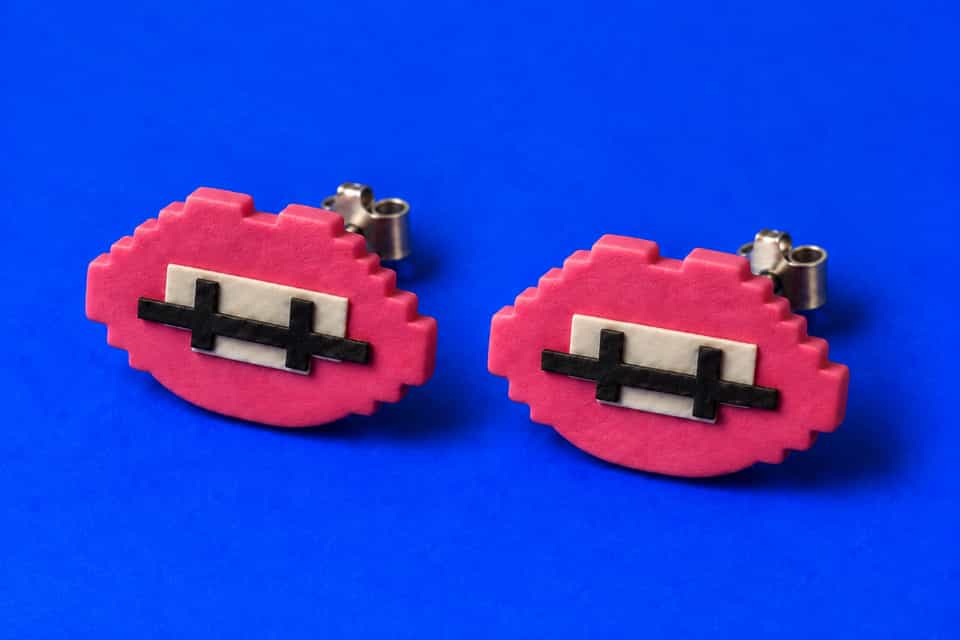
The same softness is behind shapes that stay in the cutter, layers that distort as you move them, pitted backs on pieces left on paper, and bubbles in a slab that looked smooth. The thin colour sheets in the pixel lips brooch show it fastest: a sheet that thin stretches on the lift long before a thick base does.
Warm clay: chill it on its tile for two to five minutes
Put the slab in the fridge on the tile you rolled it on, in a lidded box or bag and away from food, for two to five minutes, then cut and lift while it is cool. A cold metal tray, or a spare tile kept in the fridge, does the same job on the worktable, and a frozen gel pack under the tile keeps a slab cool through a long session. Cool hands help too: rinse them in cold water and dry them before you handle thin layers.
Aim for firm, not hard. Clay chilled until it is stiff can crack when you bend it, and a fine outline snaps rather than lifts, so if a piece feels rigid, give it a minute before you lift. When the slab warms and starts to drag again, put it back for another few minutes. If a shape is already stuck inside the cutter, free it first with the cutter release guide, then cool the slab before the next cut.
Sculpey offers the freezer too: several minutes, or approximately ten. Keep that for a block you have not rolled yet. Thin sheets you still have to lift go rigid fast in a freezer, and freezing attracts moisture, so let a frozen block dry before you condition it. Whatever you chill with, cold is temporary. If the clay softens again as soon as you work it, move on to leaching.
Fresh, sticky clay: how to leach polymer clay
Leaching means letting paper absorb some of the plasticiser out of raw clay, which leaves the clay firmer. Sculpey and Cernit both describe it for fresh clay that is too soft, and it is permanent: what the paper takes does not come back. Leach the block before you build with it, not a slab you have already layered, marbled or patterned, because the sheet has to be kneaded back together afterwards. If the slab in front of you is already built and still too soft, skip to the bake-first route in the cutting and lifting section.
- Set aside twice the clay the layer needs. Leach half of it and leave the other half untouched. If the leached half goes too far, you knead the two together and they balance out.
- Roll it thin on plain paper. Use plain, unprinted copy or printer paper; ordinary office paper is fine. Toner and inkjet print bond to raw clay, so no printed side may touch it. Roll the clay with your acrylic roller into an even sheet about 1 to 2 mm thick, thinner than your base slab, on one or two sheets of paper. The more clay surface touches paper, the faster it leaches.
- Cover and weight it. Lay more paper on top and set something flat on it that is heavy enough to press the paper against the whole sheet, a book or a spare tile.
- Check at 15 to 30 minutes. Sculpey's conditioning guide gives 30 minutes between absorbent paper. Check then, or as early as 15 minutes for a thin sheet, because a thin sheet leaches faster. Peel the paper off and you will see translucent, oily patches where plasticiser has soaked in. Fold the sheet and knead it until it is one even colour and texture.
- Cool it, test it, then repeat with fresh paper if needed. Kneading warms the clay, so rest the sheet on its tile in the fridge for two minutes before you test, or a warm sheet will fail the test and you will leach further than you need. Roll it flat, cut a small shape and slide the flexible blade under it. If it lifts flat and keeps its outline, stop. If it still stretches, roll thin again onto fresh paper and give it another 15 to 30 minutes. Timing varies by line: one maker's published timings run from about three minutes for Cernit Pearl to overnight under a weight for other brands, and Sculpey says clay left that way should be firm by the next day.
Two things do not leach clay. A dusting of cornflour or cornstarch on a cutter helps it release, but it does not pull plasticiser out of the clay body. Air alone is slow: Sculpey says clay left out for a few days releases some plasticiser, so paper and a weight are the faster route and the one you can check.
When to stop leaching, and how to undo an overshoot
Stop as soon as a cut piece lifts clean on the blade and a thin strip still passes the conditioning test: folded in half, with no cracks across the fold. Do not keep going until the clay feels firm in your hand: firm clay is harder to condition, and you are cutting thin sheets, not carving blocks. Sculpey's caution is the reason to stop early: too much leaching can cause the clay to become brittle. Treat a brittle sheet as something to rebalance before you bake, not after.
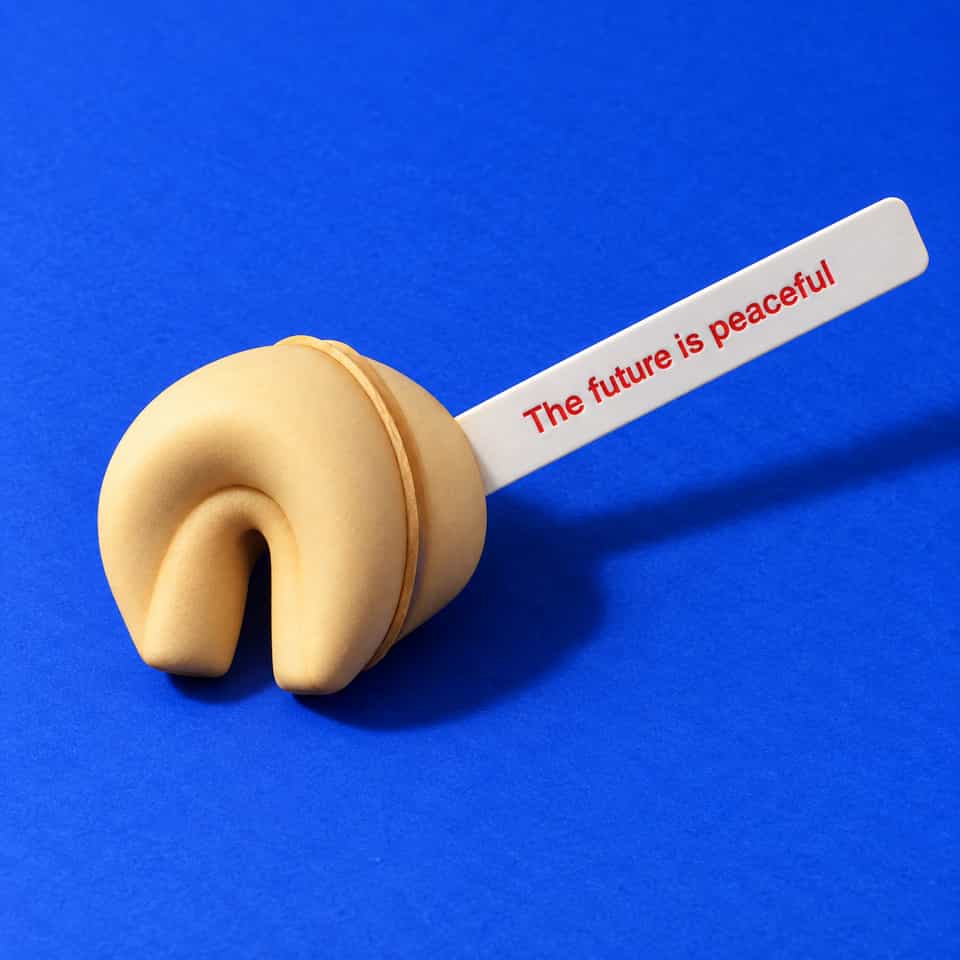
Signs you went too far: the sheet feels dry, its edges crumble instead of cutting, and a folded strip cracks. Fix it by kneading in some of the unleached clay you set aside until the colour and texture are even, then chill and test again. A piece you have to bend after cutting should still be slightly soft, so stop leaching it sooner than you would a flat piece. The fortune cookie shell is the clearest case: it folds over a bar while it is raw, so it is better slightly soft than slightly brittle.
A piece that cracked after baking has more than one possible cause. The cracking guide works through thickness, oven temperature and conditioning before you blame the leach.
Firmer clay: knead in older clay, or use a firmer line
Leaching is not the only way to firm clay. Sculpey's other suggestion for a fresh sticky block is to knead in a section of older clay of the same line, which spreads the excess plasticiser through more clay. Older clay is firmer because the PVC keeps absorbing plasticiser over time, so an opened packet from a while back is a useful partner for a new one.
For an outline layer where thin lines join up, such as the line layer on the faceted gem earrings, a firmer block holds a crisp edge with less chilling. STAEDTLER describes FIMO Professional as having a much firmer consistency than FIMO soft, and says pieces made from it hold their shape, which is what a thin cut layer needs. For easier kneading, STAEDTLER sells its FIMO mix quick softener to work into the firmer block. Search Amazon for FIMO Professional clay if you want to make the whole piece from a firmer clay.
Sculpey describes Premo as soft enough to blend easily, sells Sculpey III as soft and easy to use, and Souffle as light and flexible, so a soft feel from those blocks is normal. Chilling or a short leach is the answer, not a fault in the clay. Keep one clay line for the whole piece when you can, so one packet temperature and time applies to every layer. Sculpey's FAQ says all polymer clay brands can be mixed together, and that a mix must be kneaded very thoroughly so it does not separate or layer when curing. The clay brands guide compares the current lines, and explains which packet temperature a mixed piece bakes at, if you are choosing clay for a whole kit.
Cutting and lifting thin layers once the clay is firm
Cut the thin layer where it lies on the tile: press the cutter straight down and lift it straight up. Peel the surrounding waste away before you lift the shape itself, then slide the flexible blade under the shape in one pass and lift it flat. Peeling a corner up with your fingers is what stretches a thin layer. If a shape has stretched, roll and cut it again; a pulled-back shape never sits flat on the base.
Cut pieces can wait on baking parchment while you cut the next colour, and a sheet of parchment or deli paper keeps dust off them. Minutes are fine; hours are not. Paper, including parchment, can leach plasticiser out of raw clay on long contact, which is why Sculpey warns about it: a piece left on paper while it waits to bake comes out with a pitted underside. Leaching uses that same effect on purpose, on a sheet you knead again afterwards. A finished cut shape cannot be kneaded, so it does not sit on paper.
If a layer keeps stretching however cool and firm the clay is, or the slab was already built when it went soft, there is another route. Bake that layer flat on its tile first and let it cool. Then set the baked layer on the raw base with a thin smear of liquid polymer clay and bake the piece again; Sculpey's baking tips confirm that raw clay can be attached to baked clay and baked again. STAEDTLER sells FIMO liquid decorating gel for bonding hardened FIMO with unhardened FIMO, and it gave the best raw-to-baked bond in one published maker test. Bake with an adult present and the room ventilated, at the temperature and time on the clay packet and the liquid clay bottle.
Once every layer lifts clean, the pixel slab layering guide covers placing the colours on the base and keeping the pixel steps in line.
Storing and working so the clay stays firm
- Cool the setup. Work away from a sunny window, a lamp and the oven, and keep the tile cool. Cernit's first answer for soft clay is simply a cooler room.
- Store it cool and wrapped. Sculpey says not to store clay above 77 F (25 C), to keep it in a cool, dark, dry place, and that refrigeration extends its shelf life. Wrap conditioned colours in plastic. Sculpey says to use only cling wrap made from LDPE (low-density polyethylene), because it stays intact against clay, and calls plastic deli sheets good for prolonged contact, while paper deli sheets and parchment can leach. Sculpey recommends polypropylene containers or bags, marked with recycling code 5.
- Label leached clay. A leached block and a fresh block of the same colour look identical. Mark the wrap so the firmer clay goes to the thin layers next time.
- Expect fresh blocks to settle. Clay firms on its own over time as the PVC absorbs plasticiser, so an opened block often needs less leaching later. Sculpey gives correctly stored clay a shelf life of a few years.
Fast fixes by symptom
Match the fix to what the clay is doing.
| What you see | Likely cause | First change |
|---|---|---|
| A cut piece stretches or sags on the lift | Too soft: warm from handling, or a fresh block | Chill on the tile two to five minutes. If it is tacky again after a minute in your hands, leach half the clay. |
| The shape stays inside the cutter | Soft clay grips the cutter walls | Cool the slab before the next cut and lift the cutter straight up. Push the stuck shape out from the top of the cutter, where the handle is, with something blunt. |
| The surface smears when you rub it smooth | Warm surface | Re-chill before pressing, and press lightly through parchment. |
| Sticky straight from the packet | Fresh, plasticiser-rich block, or a line sold soft such as Sculpey III | Leach half, or knead in older clay of the same line. |
| Sticky after adding softener or liquid clay | Too much added | Knead in plain clay of the same line; leach if it stays sticky. |
| Pitted underside | Left on paper too long | Assemble on the tile; paper for minutes only. |
| Crumbly, cracks when folded | The opposite problem: old, heat-exposed or over-leached clay | Knead in softer clay of the same line, the unleached half if you leached it, or a few drops of the maker's softener at a time. |
| Blisters after baking | Soft clay traps air when folded and rolled | Firm the clay first, then fold and roll with the fold entering the rollers first. |
For crumbly clay, a few drops of the clay maker's own softener, such as Sculpey's oven-bake clay softener, kneaded in a little at a time is the usual fix; Sculpey notes it will not restore clay that has gone very hard. For specks in light colours, matching the softness of several colours and rolling thin sheets between measured spacers, the conditioning and rolling guide has the full method.
More guides in this path
Open these when the next decision is material choice, attachment, or finishing.
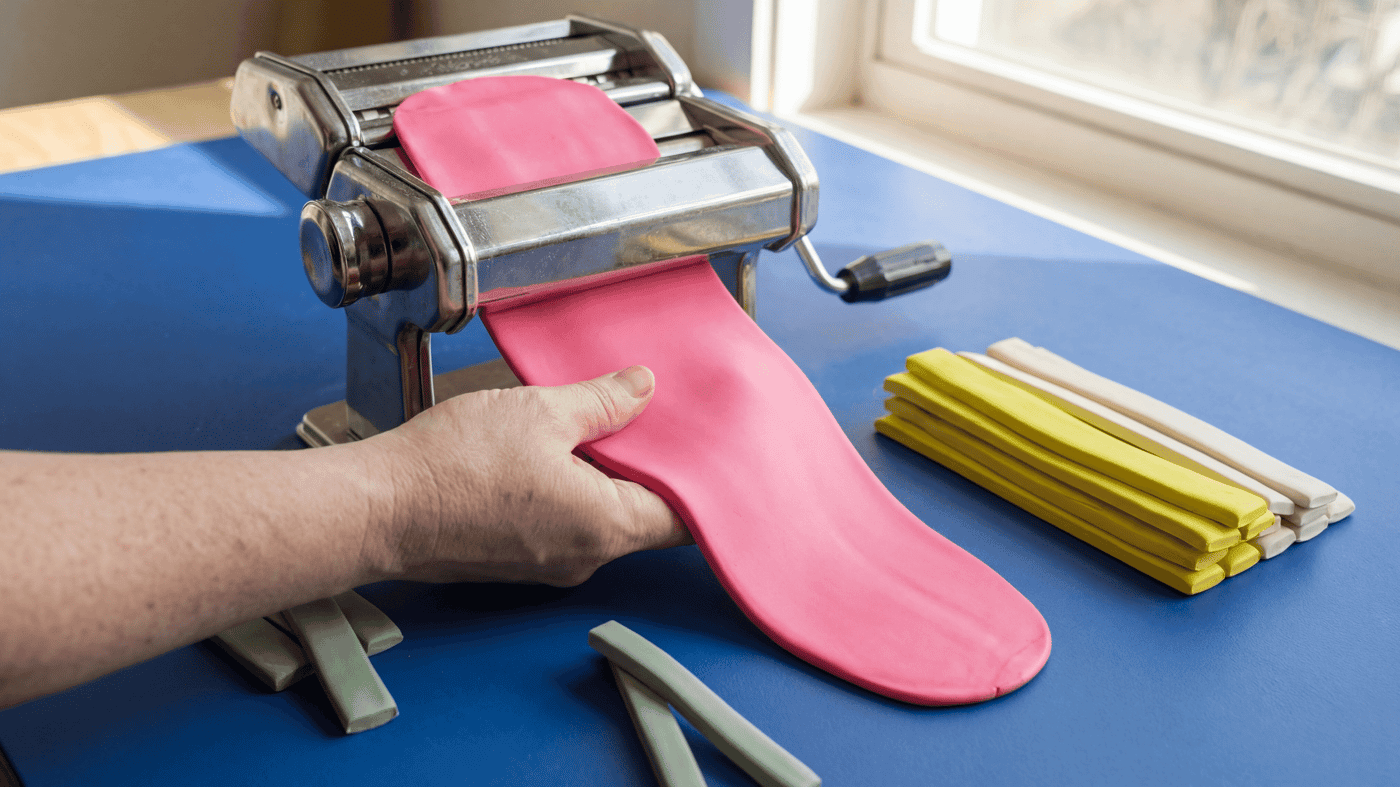
How to condition polymer clay and roll an even slab for cutters
Get every clay colour to the same softness, roll each layer to its measured thickness on a tile, and let warm clay firm up before you cut.
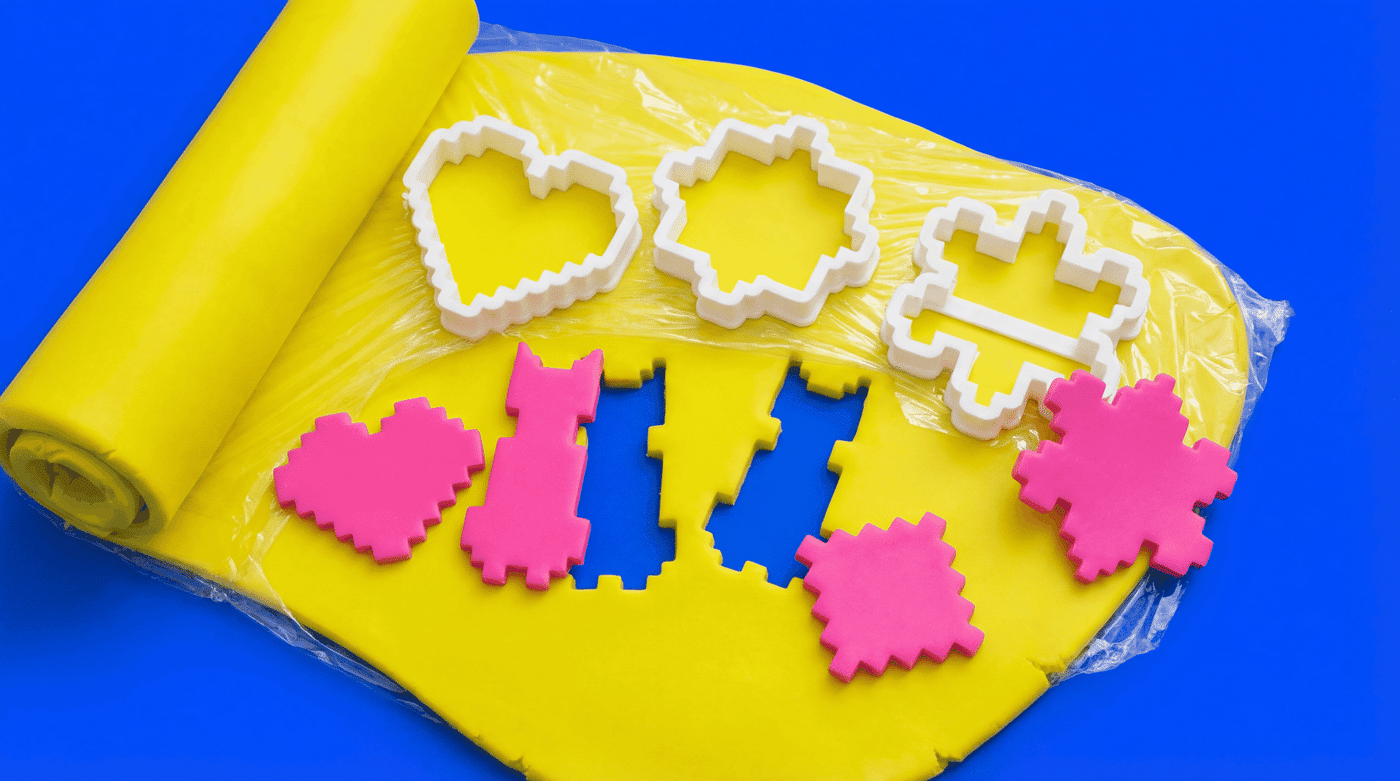
Polymer clay stuck in your cutter? How to release it and stop it sticking
Free a trapped shape, dust the cutter without leaving white clumps, and set up the slab for the next clean release. Includes the cling-wrap method for softer edges.
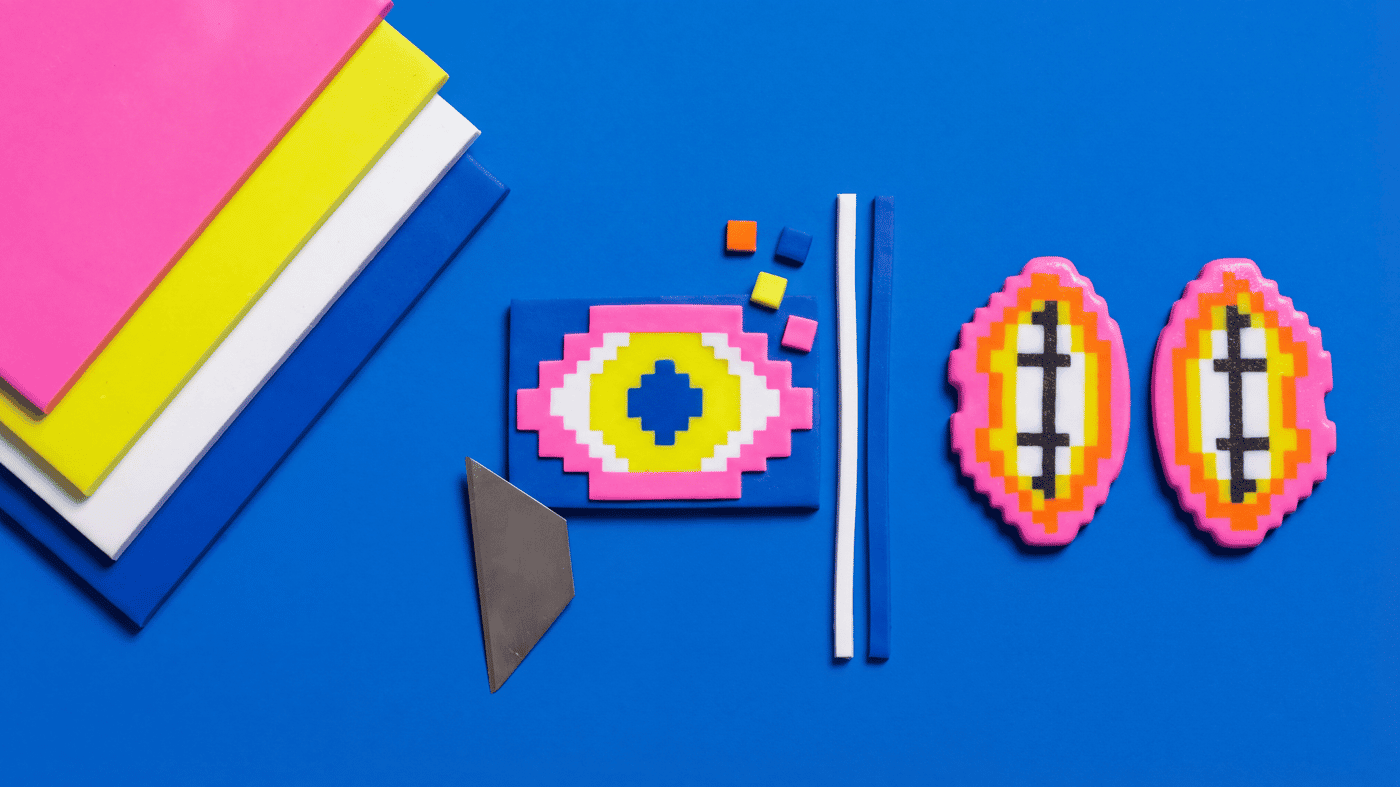
Layered pixel clay earrings: how to line up thin colour layers without stretching them
Your cutters shape each piece, but you place every colour layer by hand. Lift thin layers on a flat blade, line each one up before any pressure, then press the stack lightly through parchment.
Finished examples with related clay decisions
Each piece shows how a material, attachment, or surface choice changes the final form.