In brief
Key takeaways
- 1Pick one mid-tone, one accent, and one light or pearl so the marble lines stay distinct instead of collapsing to a muddy gray
- 2Twist into a rope first, then fold across the long axis and roll perpendicular to the fold so the marble spreads without smearing into stripes
- 3Stop folding at two or three passes. Hold the slab at arm's length: when the lines just start to soften, stop
- 4Roll to 2 mm for earring slabs and 3 mm for buttons or pendants, then rest the slab 5 minutes before cutting so it does not drag under the cutter
- 5Bake flat on a tile per the package directions, check tray-height temperature with a thermometer, and only wet sand once the piece is baked and cooled if the marble still reads dull
Marbling is one of the fastest ways to make a polymer clay slab feel intentional before you buy more tools. One conditioned color block plus two minutes of folding gives you a custom palette that cutters love. The catch is that most first attempts come out muddy gray instead of cleanly veined, and the fix has nothing to do with talent.
The fix is mechanical: how many times you fold, which direction you roll, and how you pair your colors. Those three choices give a beginner a much better shot at a clean three-color marble on the first try.
Use Marbling To Turn A Few Colors Into A Custom Slab
Marbling turns a single color block into a custom palette in under five minutes, with no extra tools beyond a roller and a blade.
The technique is forgiving for beginners because the first fold already looks like progress. You do not need a steady hand, a precise cutter set, or a finishing rig. You need three conditioned logs, a controlled twist, and the discipline to stop folding before the colors blend into one. That last part is what trips most people up.
A clean marble slab also gives you a useful studio record before you cut into it. Photograph it on a tile, then compare the photo with the finished earrings so you can learn which sections made the clearest pair.
What You Need Before You Start
A practical first marbling kit is three colors of polymer clay, a tissue blade, an acrylic roller, a smooth work surface, and an oven thermometer. Everything else is optional.
Color choice matters more than tool choice. Pick one mid-tone, one accent, and one light or pearl. Two saturated colors of similar value read as one new color rather than as marble, so pair a light value against a darker one. A blush pink, a warm terracotta, and a cream or pearl is a reliable starter palette. A thin thread of metallic like Premo 18K Gold can add a bakery-window glow without muddying the mix.
Materials And Tools
- Polymer clay, three colors. Good defaults are Sculpey Premo Blush, Premo Pomegranate, and Premo Pearl, or a FIMO Soft trio of Flesh Light, Indian Red, and White, or a Sculpey Souffle set in Cinnamon, Cherry Pie, and Igloo. Premo and Souffle are common beginner picks because both can keep marble lines distinct when the colors are conditioned to a similar softness.
- An optional metallic accent for thread effects. A small amount of Premo White Pearl or Premo 18K Gold twisted in late gives the slab depth without changing the base palette.
- A long flat blade. A tissue blade or thin flexible clay blade slices the rolled slab cleanly without dragging the marble lines.
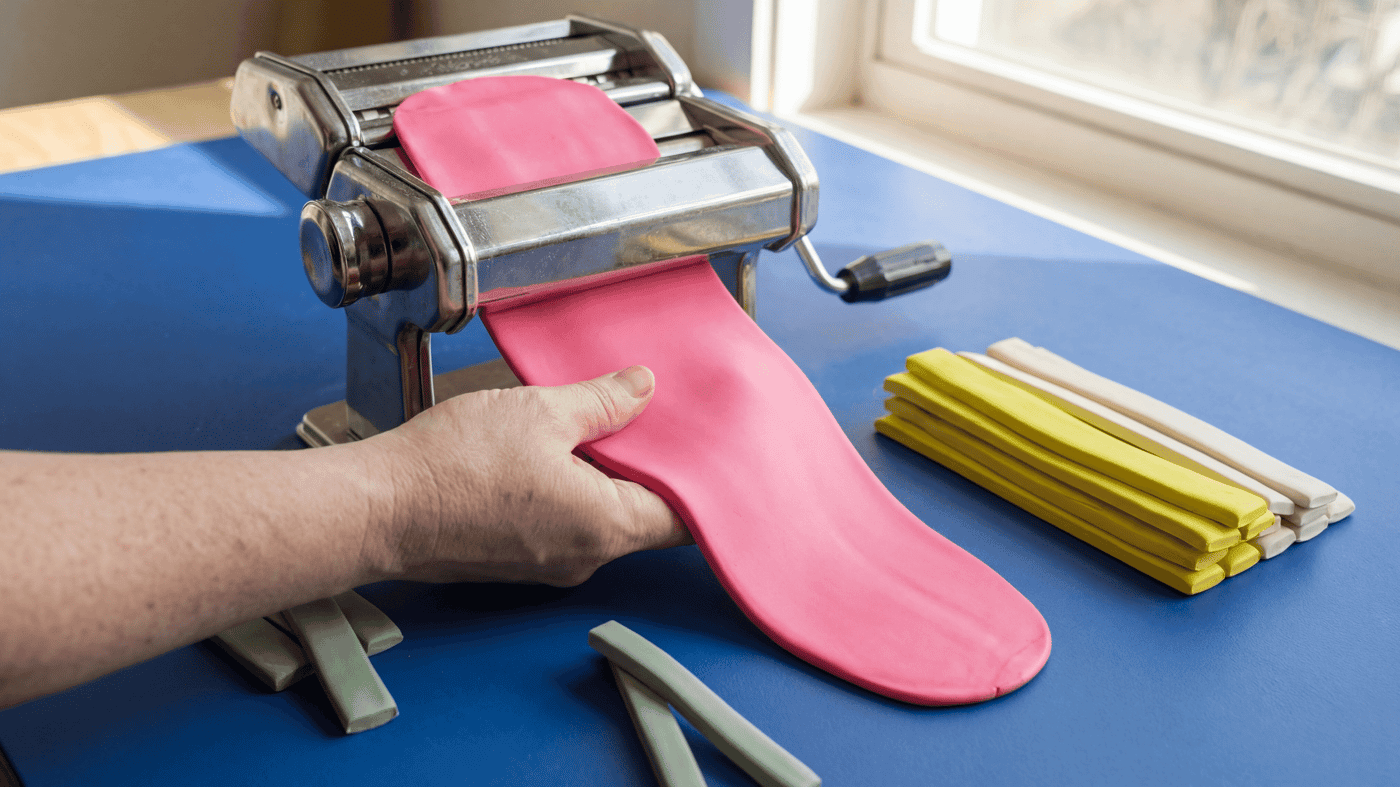
- An acrylic roller or pasta machine. A clear acrylic roller is enough for a first slab. A pasta machine speeds slab evenness on later batches but is not required to start.
- A smooth work surface that can also bake flat pieces. A clay-dedicated, oven-safe 6x6 inch ceramic tile is useful because the marbled blanks can stay put from raw cutting to cure.
- An oven thermometer. Oven dials drift. Verify with a separate oven thermometer before trusting the dial. The oven thermometer guide goes deeper on placement.
- Optional finishing kit. 400 to 2000 grit wet/dry sandpaper, a soft buffing cloth, and a water-based satin sealant if the marble looks dull after cure.
- Optional clay cutters. Simple shapes first. The beginner clay cutters guide covers what to buy if you do not already have a set.
For the conditioning step that comes before any of this, see the conditioning polymer clay guide. Under-conditioned clay is the single most common reason a first marble fails, and it is worth the extra five minutes.
Step By Step: A Clean Three-Color Marble
Six steps from raw block to baked blank, with a check-yourself cue at each stage.
Read all six steps before you start. Each one has a maker action, a why-it-matters note, and a check that tells you whether to keep going or move on. The check is more important than the count.
Step 1: Condition Each Color Separately
Action. Warm and fold each color in your hands until it bends without cracking. Roll each color into a thin log about 1 cm thick and 6 cm long. Keep the logs separate.
Why it matters. Under-conditioned clay tears at the edges during the twist. Tears create muddy fold lines because air gets pulled into the marble. Conditioning each color to a similar softness also keeps the marble lines balanced; if one color is soft and one is stiff, the soft color overruns the stiff one and the marble looks lopsided.
Check yourself. Bend each log into a U shape. The surface should stay smooth, with no cracks. If you see cracks, condition that color longer before moving on.
Step 2: Stack And Twist Into A Single Rope
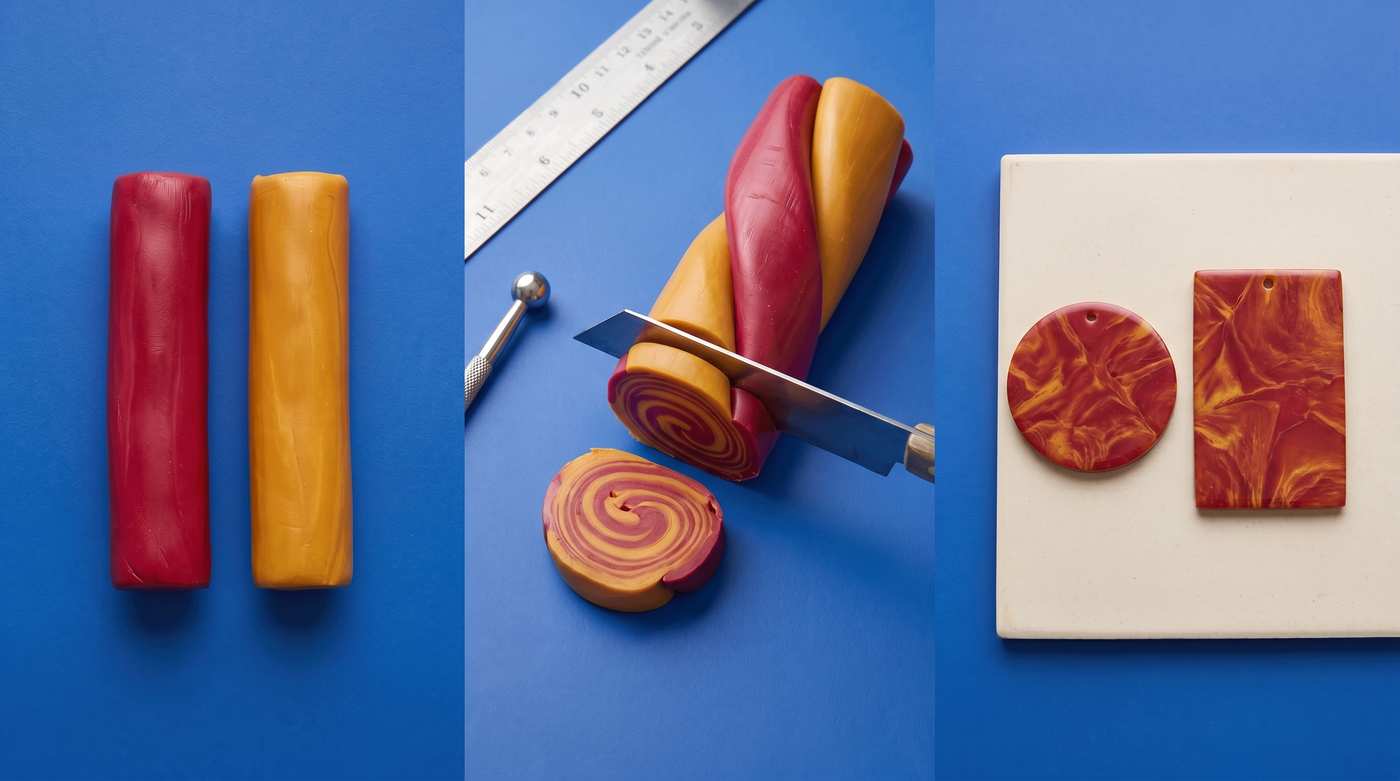
Action. Place the three logs side by side. Press lightly so they stick to each other along their length. Now lift the combined log, hold one end in each hand, and rotate one hand forward while the other stays still. Roll the twisted log gently on the tile to seal the seams.
Why it matters. The twist sets the directional grain. Without a twist, the colors stay in stripes and the marble looks like a flag. With a twist, the colors spiral around the rope, which is what gives the slab its veined look after rolling.
Check yourself. The rope should look ropy from every angle, with all three colors visible. If one color disappeared during the twist, the logs were not pressed together evenly. Unroll, restack, and retwist.
Step 3: Fold Once, Then Roll Across The Fold
Action. Fold the rope in half, end to end. Press the two halves together gently. Then lay the rope on the tile and roll it lightly across the long axis with an acrylic roller. The slab should flatten into an oval roughly the size of your palm.
Why it matters. Rolling perpendicular to the fold spreads the marble lines outward without homogenizing them. Rolling along the fold smears the colors into stripes. This is the move that separates a clean marble from a striped slab.
Check yourself. Look at the slab from above. You should see veined lines that curve and cross, not parallel stripes. If you see stripes, your roll direction was wrong. Lift the slab, rotate it 90 degrees, and roll again.
Step 4: Fold Again, Then Stop At Fold Two Or Three
Action. Fold the slab in half, twist it once, and roll across the new fold. Most makers stop at fold two or three for a bold marble. Fold four is the muddy zone where the colors collapse into one new gray-pink-brown.
Why it matters. This is the single biggest beginner mistake. Most first attempts go muddy because the maker assumed more folds would mean more pattern. The opposite is true. Each fold halves the spacing of the marble lines. After three or four folds the lines are spaced too tightly to read as marble; they read as a new solid color.
Check yourself. Hold the slab at arm's length after fold two. If the colors are still blocky, make one more fold. If they have become veined and you can still identify the separate colors, stop. If the slab has become one blended color, you went too far. Trust this visual check more than any fixed fold count.
Step 5: Roll A Sample Slab And Rest It
Action. Roll the slab to the feel you want for the piece, then let it rest on the tile until the surface is no longer warm and draggy under the cutter.
Thickness Range Test
Make a few labeled test strips before you commit to a marbled slab: one thin, one medium, and one a little heavier. Cut the same shape, mark the same hole, bake by the clay package, and cool fully. Keep the thickness that handles cutting, hole drilling or piercing, light flex, and wear handling without warping or feeling heavy. The ruler matters less than the finished behavior in your exact shape.
Why it matters. Warm clay tears under sharp cutters. A short rest lets the slab firm up so it cuts cleanly without dragging the marble lines. Rest is also when the slab loses any tension from the rolling, which means it stays flatter through cure.
Check yourself. Press a fingertip lightly into a corner. The slab should feel firm but not cool to the touch. If it feels warm and soft, give it another 5 minutes. If you are working in a hot kitchen, slide the tile into the fridge for 3 to 5 minutes instead.
Step 6: Cut Shapes, Smooth Edges, And Bake
Action. Press a clay cutter straight down without rocking. Lift the cutter and peel away the surrounding scrap. Smooth any raw edges with a soft fingertip or with a piece of cling wrap stretched over the cutter rim. The cling wrap technique guide covers that move in detail. Transfer each blank to the ceramic tile.
Why it matters. Rocking the cutter drags the marble lines and crushes the edge profile. A straight press gives a clean cut that reads sharp at any size. Cling wrap over the cutter softens the cut edge slightly without smearing the surface, which is useful for earrings that will sit close to skin.
Bake. Cure at the manufacturer's temperature on the tile. Sculpey Premo cures at around 130 C for 30 minutes per 6 mm of thickness, but every line is different. Verify the real tray temperature with an oven thermometer before baking a full batch. If the blanks need any support to keep their curve, see the bake support guide. A baked slab cannot be re-rolled, so cut and inspect first.
Check yourself. After cure and full cooling, the marble lines should still be crisp under raking light. If they look dull, the bake was likely too hot or the colors were too close in value. The light wet sanding step in the next section often brings them back.
Common Mistakes And Specific Fixes
Most marbling problems are mechanical, not artistic. Walk through these before you give up on a slab.
If your first slab did not turn out, work through this list before throwing the clay back into the scrap jar. Most fixes are one variable away from a clean result.
The slab looks muddy and gray
You probably folded too many times. Each fold halves the spacing of the marble lines, so by fold four the lines are sitting so close together that they read as one new color rather than as a pattern. Start over with fresh logs and stop at fold two or three. The arm's length test is your stop signal, not a fixed count.
The marble lines look like wide stripes
You rolled along the fold instead of across it, and the colors got smeared into long parallel bands. Lift the slab, rotate it 90 degrees, and roll again. That next pass pulls the marble out across the long axis rather than down its length, and stripes turn back into veining within a roll or two.
The slab tears at the edges when cut
Three things commonly cause this, and they often overlap: the clay is still too warm, the cutter is dull, or you rocked the cutter as you pressed down. Rest the slab for 5 minutes, or chill the tile for 3 minutes if your kitchen is hot, then dust the cutter with a tiny amount of cornstarch and press straight down. If the edges still tear, the cutter itself is probably the problem; switch to a sharper thin-walled one.
The colors blend too quickly
If the marble disappears within two folds, your colors are too close in value, or you over-conditioned the clay before stacking. Pick three colors with stronger value contrast next time, one light, one mid-tone, one dark, and condition each log just enough that it bends without cracking. Soft over-conditioned clay blends faster under the twist than firmer clay does.
The marble looks dull after baking
Cured polymer clay reads matte straight out of the oven, especially on Souffle. The marble lines have not gone anywhere; the surface just is not catching light. Light wet sanding from 400 to 1500 grit, a soft cloth buff, and an optional thin satin sealant brings the lines back. The finishing techniques guide covers the full path, and the finish compatibility guide covers which sealants pair with which clay lines.
The back of the earring shows seam lines that ruin the front
The slab is thinner than it looks, and the fold seam is showing through to the front. You have two ways out. Trim the back layer with a tissue blade so the seam comes off, or laminate a thin solid backing slab onto the marbled slab before cutting. The backing slab also gives you a clean spot for an earring post or jump ring.
Three Marble Variations: Stacked, Pulled, And Tile-Cut
Once you have one clean marble slab, three small changes give you three distinct looks. Each one uses the same fold logic but produces a different surface.
Variation 1: Stacked Marble
Instead of twisting the rope, stack thin sheets of each color in alternating order: blush, cream, terracotta, cream, blush. Press the stack lightly so it sticks. Fold once, then roll across the fold. Skip the twist entirely.
The result is bold horizontal banding that reads almost agate-like. This variation is best for trinket dishes, larger pendants, and anywhere you want the bands themselves to be the design feature. Cut the dish or pendant from the slab so the banding sweeps across the front.
Variation 2: Pulled Marble
Roll a thin marbled slab using the standard six-step method, but stop at fold two for a looser pattern. Then drag a needle tool through the surface in long curves, pulling the marble lines into hooked motifs. Vary the curve direction so the slab does not look like one repeated pattern.
The result reads as deliberate brushwork rather than as a folded marble. This variation is best for statement earrings, pendants, and brooches where you want the marble to look painted. Cut the final shape after the pulls are done so the curves center on the visible face.
Variation 3: Tile-Cut Marble
Cut the finished marble slab into 1 cm tiles using a tissue blade. Reassemble the tiles onto a thin backing slab in a mosaic pattern, rotating each tile so the edge-on stripes face different directions. Press the tiles flush, smooth the seams with a fingertip, and cut the final shape.
The edge-on stripes become the hero. This variation is best for bold collar pieces, brooches, and statement earrings where you want the marble to read as a graphic mosaic rather than as a flowing slab. The collar necklaces guide covers the assembly side of larger flat pieces.
How To Use Marbled Slabs Without Wasting Them
One marbled slab can produce a full earring set, a brooch, and a pile of scrap that becomes the next slab. The trick is in how you cut.
Pair marbled slabs with simple cutters first. Arches, hoops, rectangles, and circles let the marble itself do the visual work. Stick to simple cutters for the first three slabs. Intricate cutters fight the marble lines, and the result reads cluttered, so let arches, hoops, rectangles, and circles do the work while you learn the pattern.
Save your scrap pieces in a sealed jar. A jar of marble scrap consolidates into a future slab when you knead it together. Scrap-blend slabs often look the most interesting because they carry every color you have ever marbled, in unpredictable combinations.
Photograph the slab before you cut into it. The slab itself is a reusable asset for social and Pinterest content, and once you cut, the photograph is the only record. Lay the slab on a tile near a window, photograph from directly above, and crop tight. Two minutes of staging gives you Pinterest pin material before you ever assemble a finished piece.
What To Practice Next
The next two techniques build directly on the marbling skills you just practiced.
Read the Skinner blends, gradients, and ombre slabs guide next. Skinner blends use the same fold logic as marbling, but they aim for a smooth gradient rather than veined lines. Once you understand both, you can pair gradient slabs with marbled accent strips for layered earring builds that read more deliberate than either technique alone.
Then read the faux bakelite swirl guide. Faux bakelite is a sister technique that uses similar fold logic but targets a translucent vintage look. The fold count and slicing direction differ from marbling in interesting ways, and the side-by-side comparison sharpens your sense of when to fold and when to twist.
More guides in this path
Open these when the next decision is material choice, attachment, or finishing.
Polymer Clay Surface Effects: Cane, Inlay, Texture, or Print
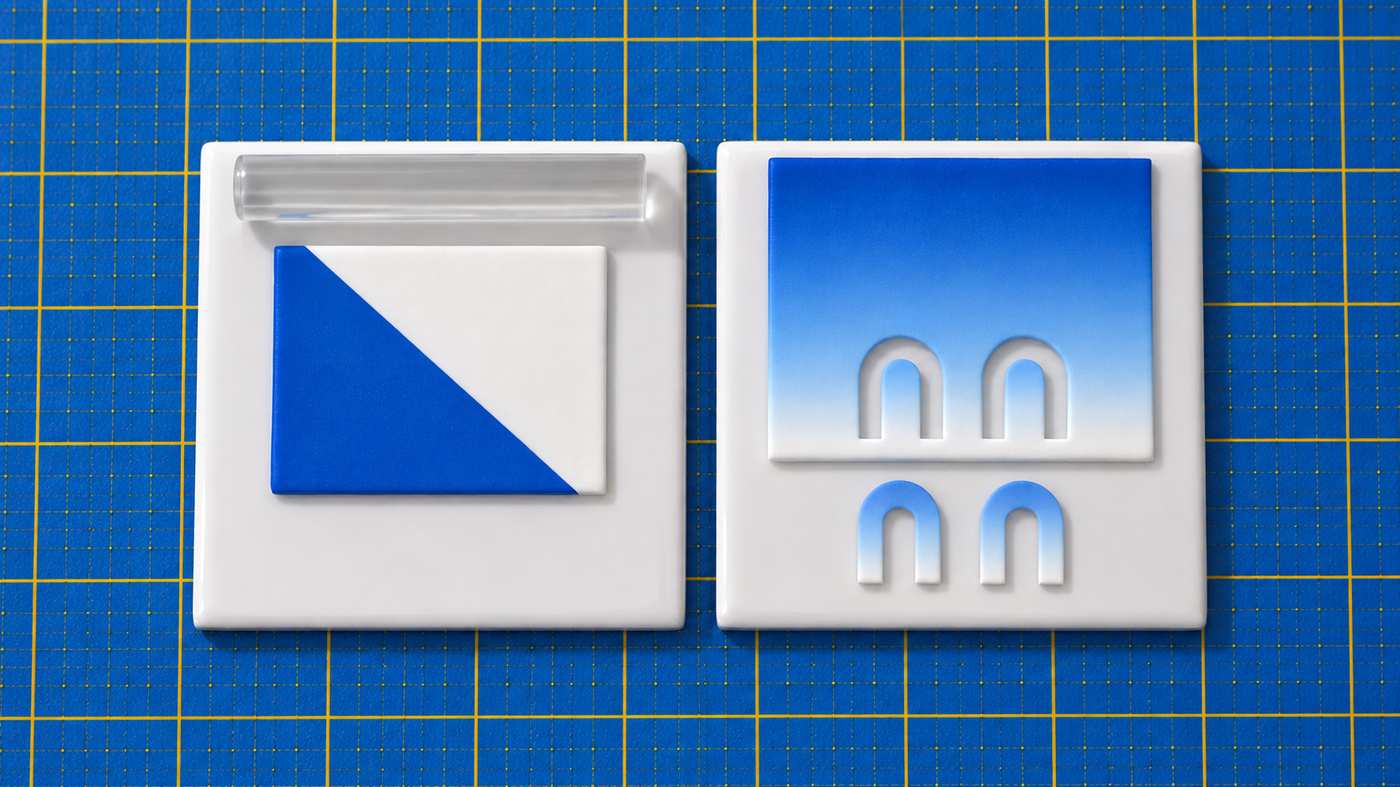
You added inlay or a cane slice and the surface cracked or the pattern dragged because you chose the wrong technique for the shape. Match the effect to the result you need: repeating pattern (cane), precise placement (inlay), raised detail (applique), or loose texture (marbling/print). Then go to the right deeper guide.

Polymer Clay Skinner Blends, Gradients, and Ombre Slabs
Skinner blends turn muddy when the two colors are different softness, the slab keeps getting re-rolled after the fade looks good, or the final shape is cut too early. The fix is matched conditioning and stopping at the right moment.

How to Make Faux Bakelite in Polymer Clay (Cherry-Amber Swirl Tutorial)
The cherry-amber faux bakelite look depends on a twisted swirl, not an over-blended marble. This guide covers the color mix, how to stop before the vein muddies, and how to slice the cane so the pattern stays distinct on buttons or drops.
Finished examples with related clay decisions
Each piece shows how a material, attachment, or surface choice changes the final form.