Polymer Clay Stud Toppers, Flat Pads, and Connector Rings
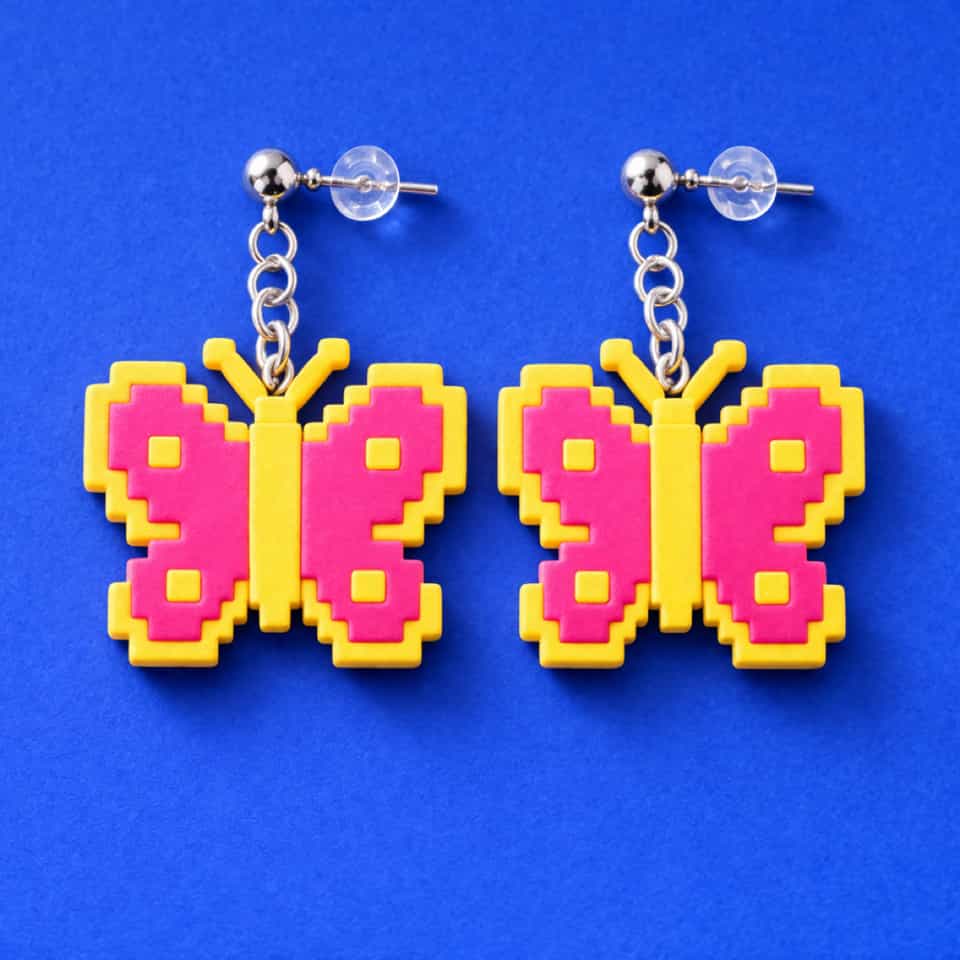
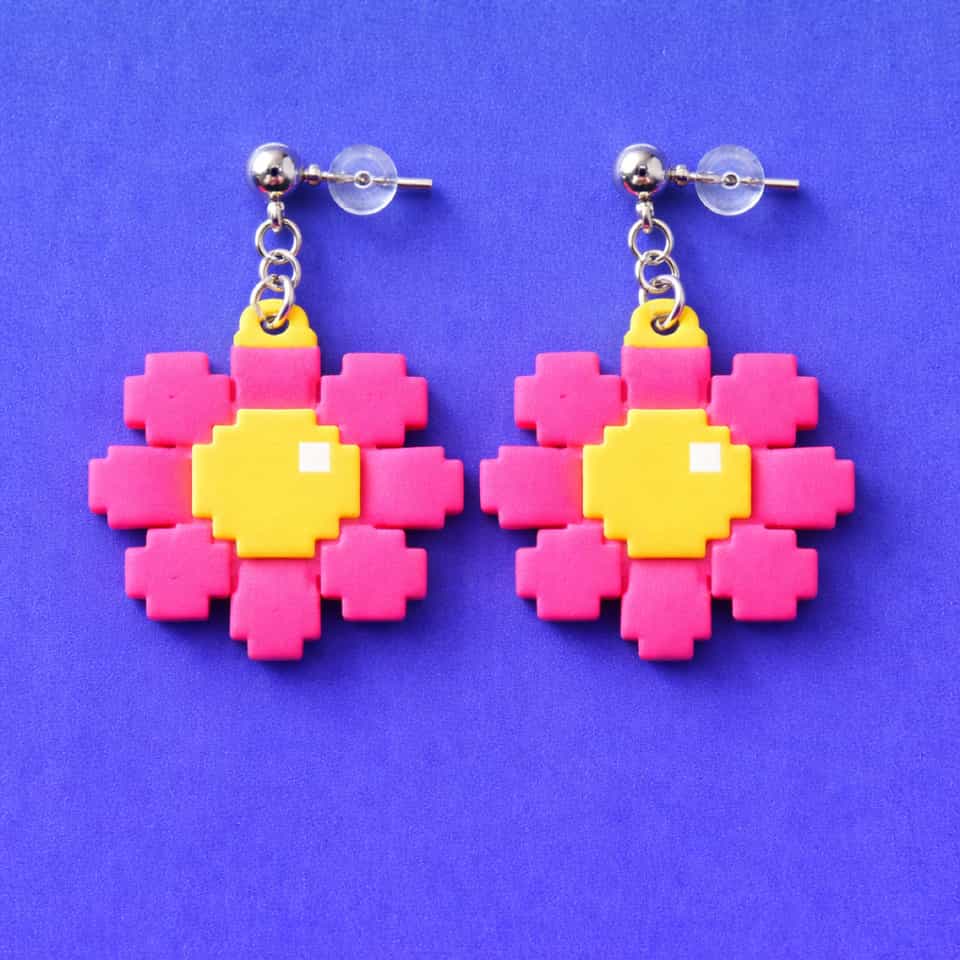
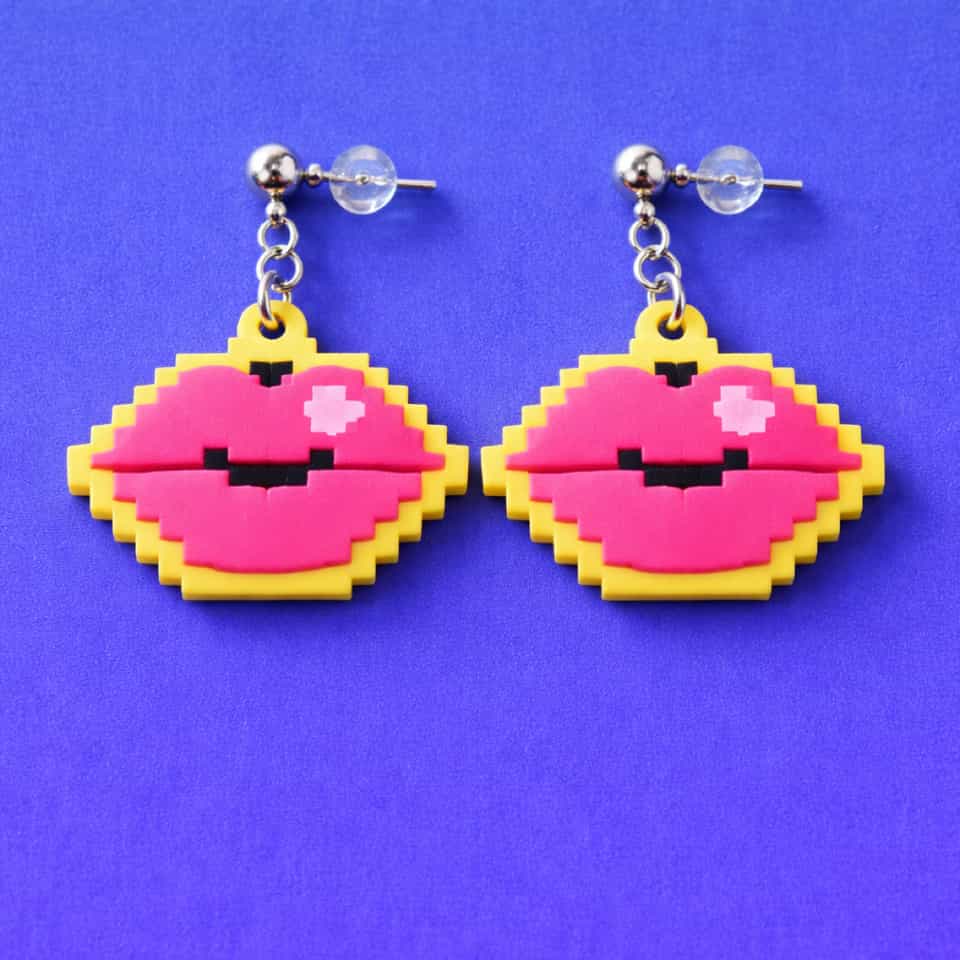
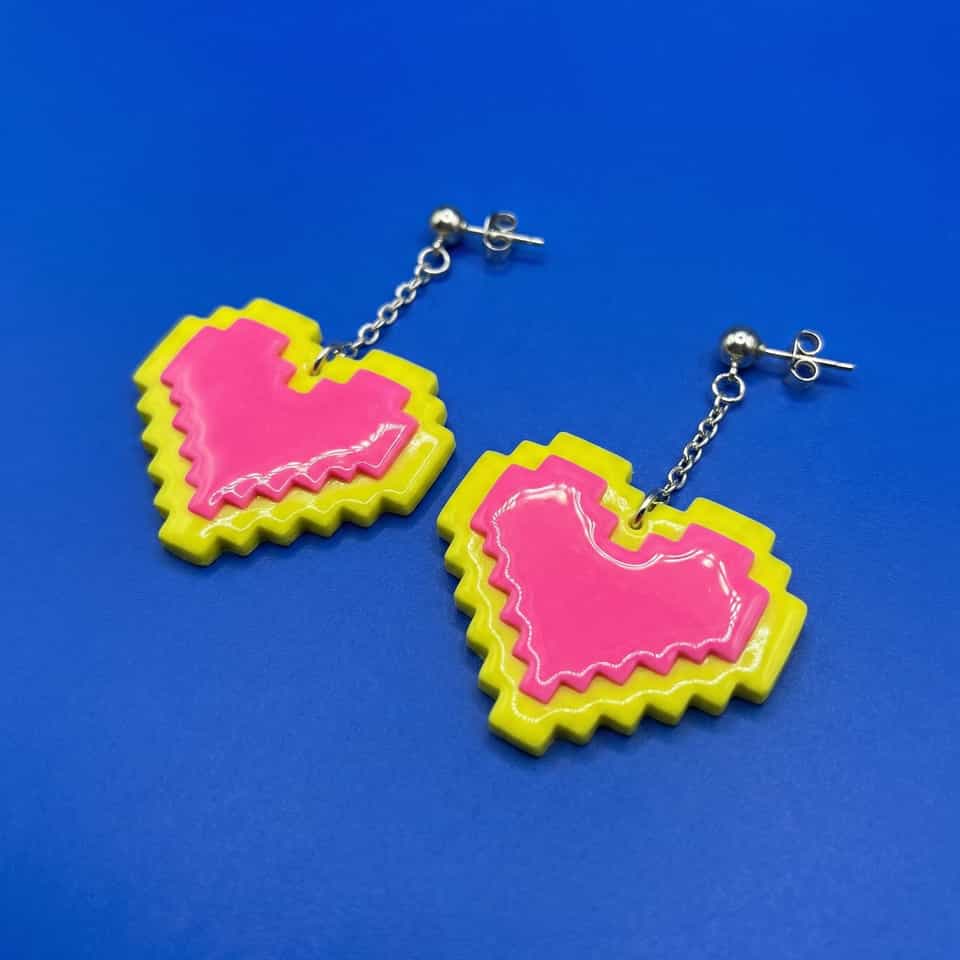
Choose the top connection from the front view first, then keep the attachment short and balanced. Compare visible loop-tops, flat pads, short ring paths, and balance-line marks on a sample before you make the final pair.
Some links on this page are affiliate links. If you buy through them, we may earn a commission at no extra cost to you. As an Amazon Associate I earn from qualifying purchases. Disclosures

In brief
Key takeaways
- Pick the top attachment by looking at the front of the design, not by habit. The same shape may want a loop-top in one palette and a flat pad in another
- Loop-top studs work well when the topper is meant to read visible. Flat pads only work when the cured back has enough clean, flat contact area
- Keep the connector run as short as the design allows. Each extra link adds twist and lets the drop misalign on the ear
- Test stud, jump ring, and drop together as a sample pair before any final glue-up or fully closed ring
Article contentsOpenClose
Treat posts, pads, and rings as exact hardware products, not as a universal attachment taxonomy. Record the listing specifications and test one complete pair.
Verify The Exact Listing
Record the post, pad, loop, and ring materials, finishes, dimensions, included backs, and intended uses. If the listing does not identify a needed specification, leave that claim out.
Loop-top posts provide a loop for a hanging connection. Flat-pad posts need a flat area on the clay back that fits the whole pad. Choose jump rings by wire thickness and inside diameter so they pass through the connection and clear the clay edge.
Compare With The Cured Piece
Measure the baked and cooled back and the hole or connection area. Dry-fit the hardware: check that the pad sits flat, the ring clears the clay edge and the drop faces forward when held by the post. Choose the attachment method after these parts fit.
Keep Bake And Adhesive Instructions Separate
Follow the exact clay package. Sculpey documents an earring project that attaches findings after baking, but that example does not prove every adhesive or hardware combination. Use an adhesive only when its current label supports the cured clay, exact hardware, and any finish.
Make One Complete Pair
Record the clay line, package bake, finish, hardware, dimensions, adhesive, preparation, and full cure. Inspect one pair before repeating it. Do not turn the result into a universal hang, balance, wear-life, skin-safety, or attachment-reliability claim.
Supplies
Supplies mentioned here
Quick links to the materials and tools that fit this article. ClayBake tools stay on our own catalog.
Silver ball-stud earring posts with loop
Use when the topper is part of the design and the drop needs one short ring below it. Check loop direction, loop size, what the post and loop are made from, finish, and finished weight.
Craftdady stainless flat-pad earring posts
Use when the clay front has no separate topper and the back has enough flat contact area for the pad. Check pad width, what the post and pad are made from, finish, and included backs.
Silver jump rings for jewelry
Good for testing one-ring versus short-run connections without forcing every drop into the same hardware size.
More guides in this path
Open these when the next decision is material choice, attachment, or finishing.
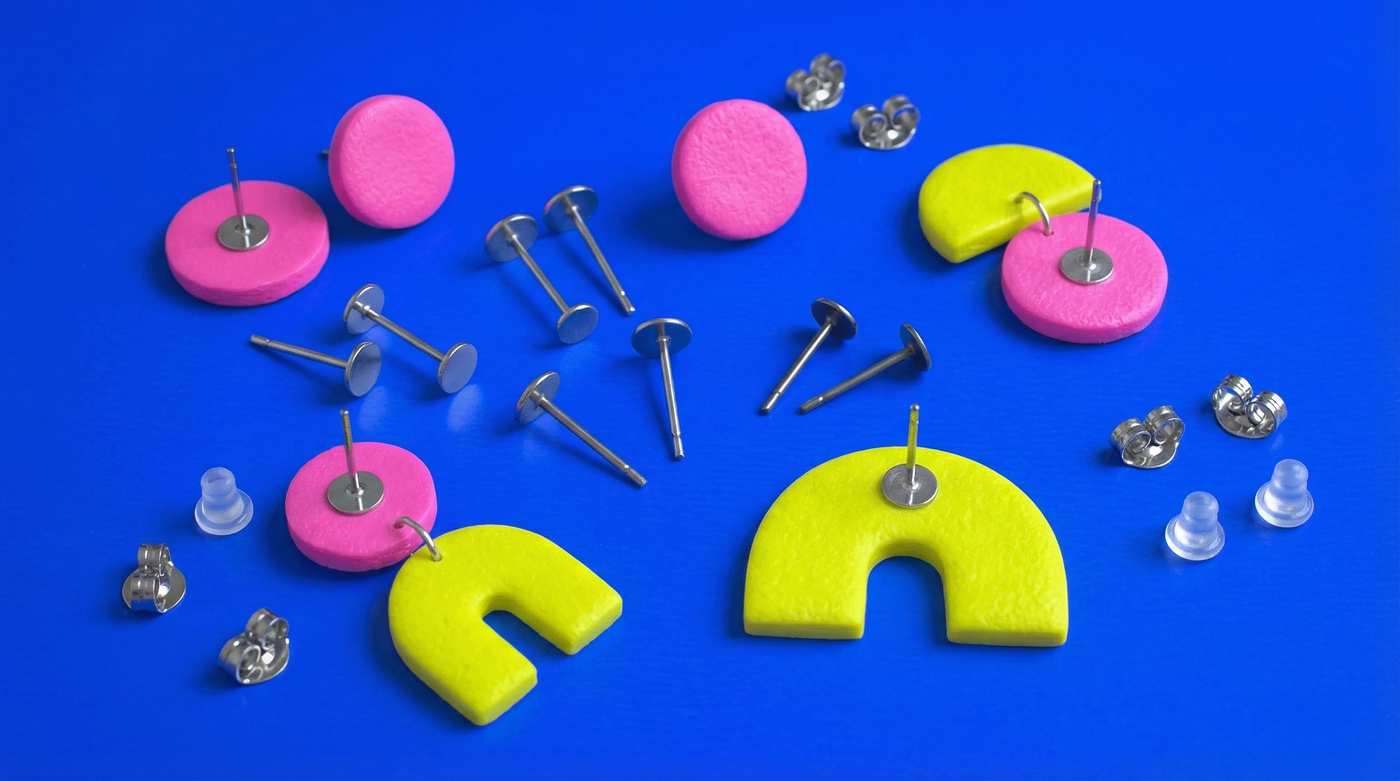
Best earring posts for polymer clay studs: pad size, backs and metal
Buy flat-pad posts, set the post a little above the middle of the stud, pick a pad that lies flat on the stud's back, and check which metal the listing names for the post itself.
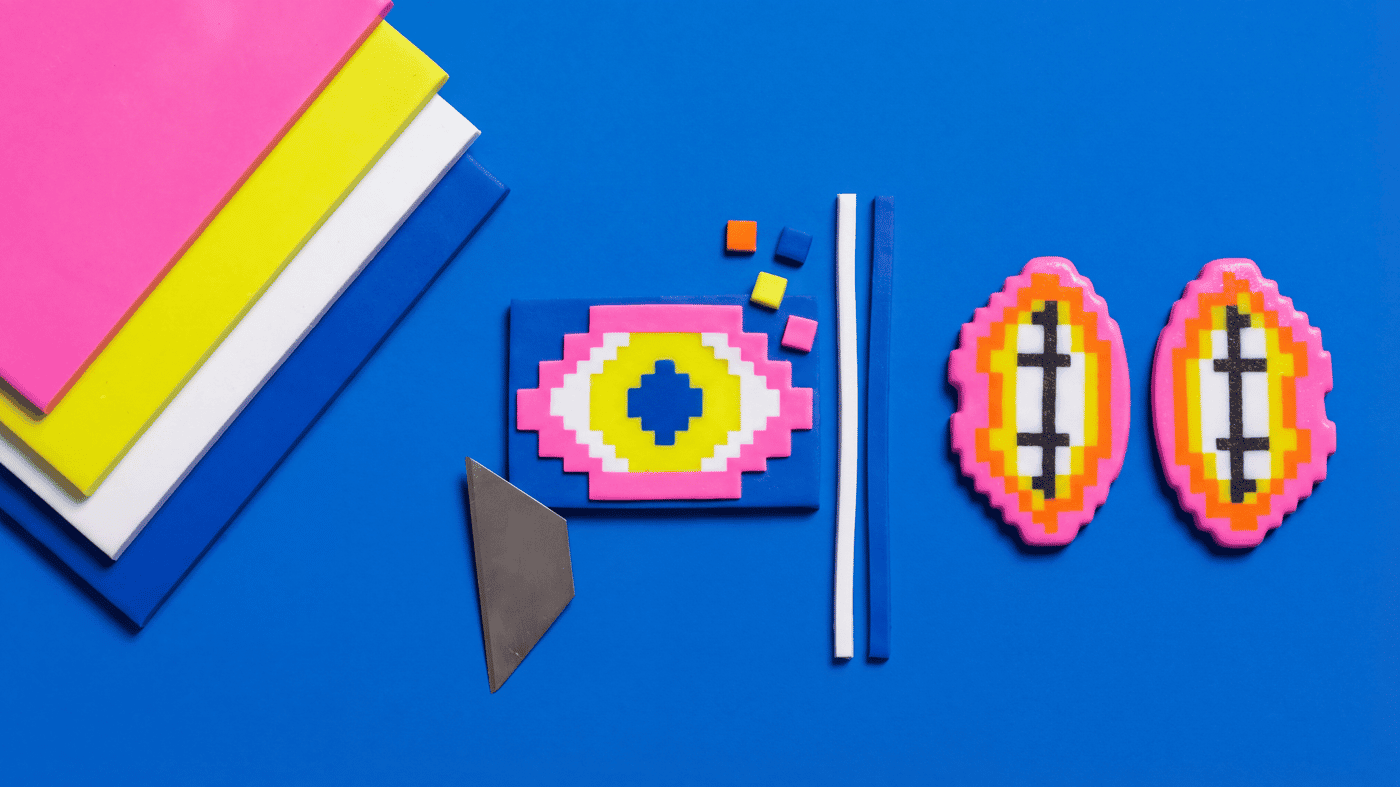
Layered pixel clay earrings: how to line up thin colour layers without stretching them
Your cutters shape each piece, but you place every colour layer by hand. Lift thin layers on a flat blade, line each one up before any pressure, then press the stack lightly through parchment.
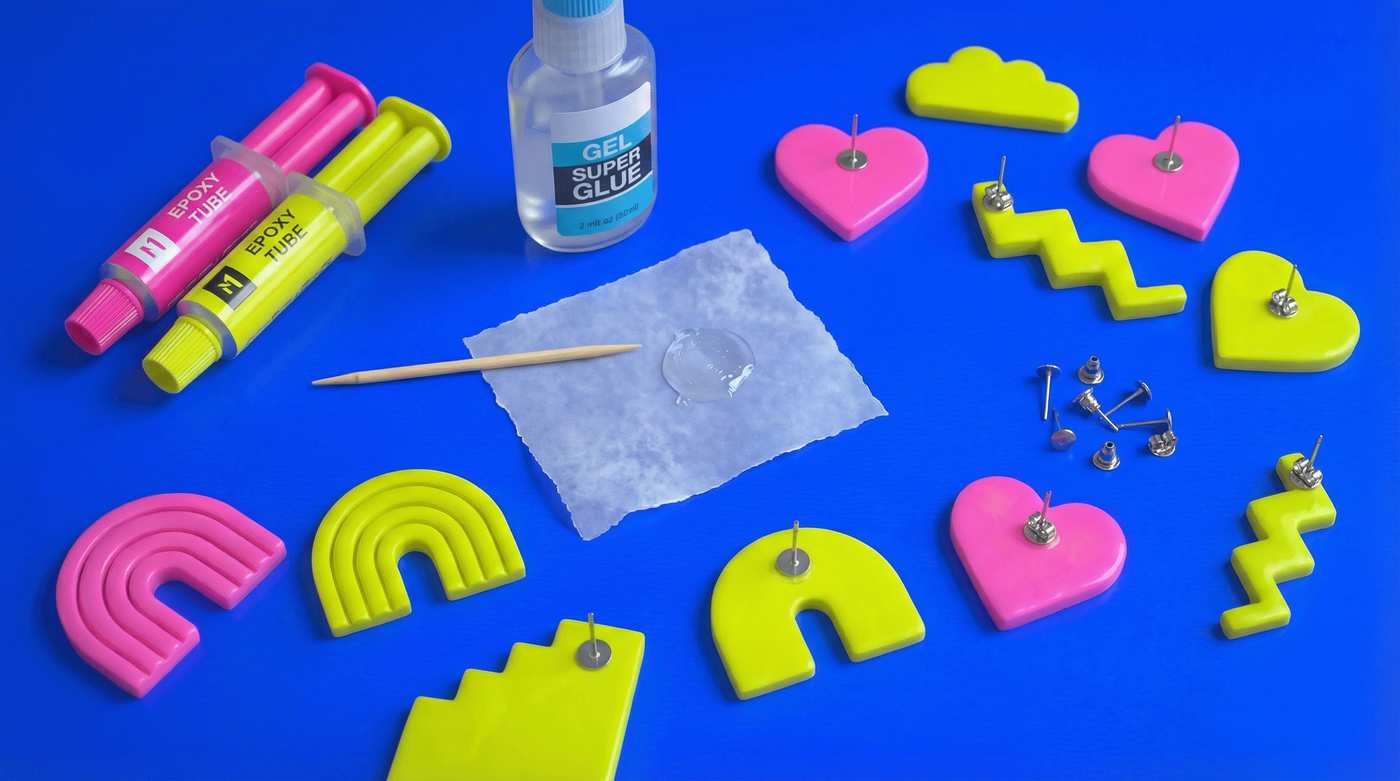
Best glue for polymer clay earring posts: what makers use
Two published maker sources name gel super glues such as Loctite's Gel Control and Gorilla Super Glue Gel for posts. Sand the spot to bare clay, use a small dot and wait 24 hours before wearing.
Finished examples with related clay decisions
Each piece shows how a material, attachment, or surface choice changes the final form.