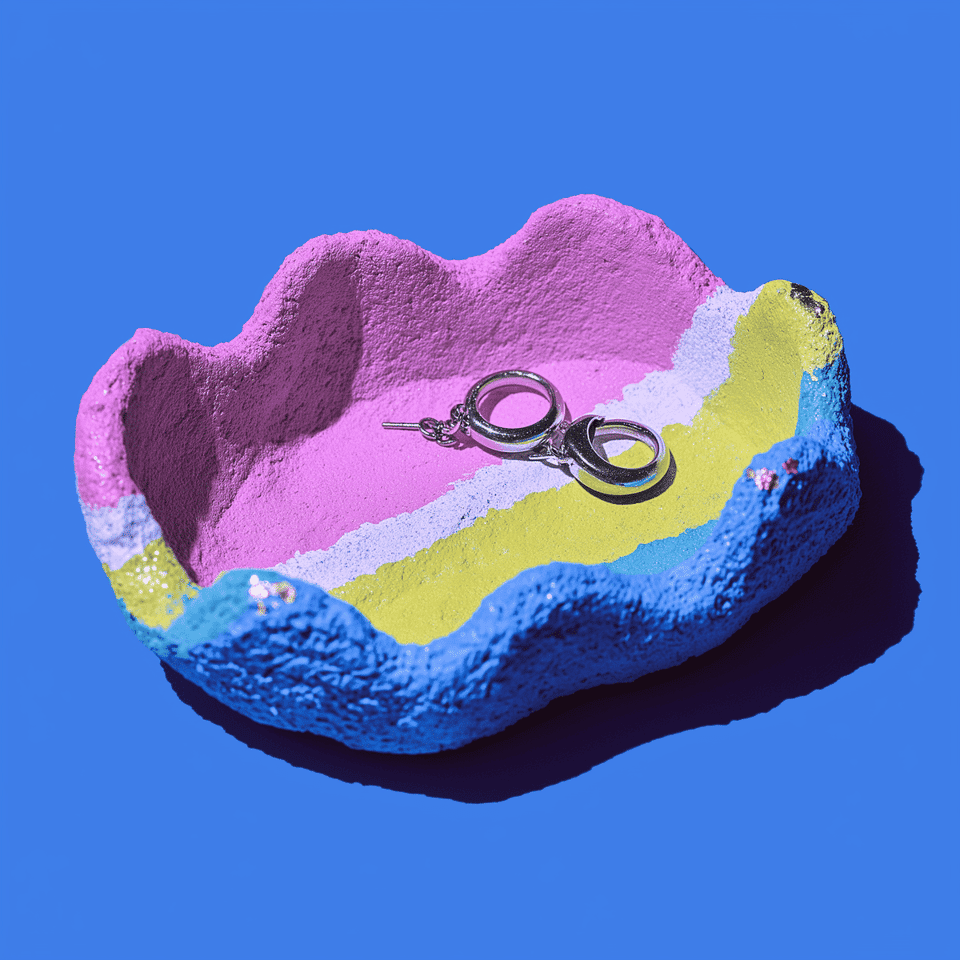
In brief
Key takeaways
- 1Assembly is the order you put the clay parts together so the cured piece holds its shape. Build large to small, settle the structure before the decoration, and plan the bake before the build
- 2Stability is mostly geometry, not glue. Even thickness, a footprint wider than the weight on it, joins pressed firmly enough to bond, and a bake support that matches the shape are what carry pieces through cure intact
- 3The assembly cluster covers how the clay parts go together. The findings-hardware cluster covers how cured clay attaches to metal. They are sequential, so settle the clay shape first and pick hardware to suit the cured back
- 4Most assembly failures point at one upstream choice. A tilt is footprint, a sag is unsupported span, a delamination is press pressure, and a crooked topper is a back that was not flat enough before bake
- 5Mixed-media works when each material is added at the step its own chemistry expects: wire into raw clay, metal findings onto the cured back, resin domes onto the finished surface last
Assembly is the difference between a figurine that stands and one that tips, between a dish that holds its rim and one that warps, between a layered charm that reads clean and one that delaminates under fingernail pressure. The decisions all happen before the bake: build order, mass distribution, support, and how the joins are pressed. (We use "cured" below as shorthand for baked and cooled clay.)
This hub is the entry point to ClayBake's assembly cluster. The leaves below settle one decision each: how to build a figurine that does not tip, how to layer a relief face that stays clean, how to seat a stud topper on a flat back, how to align a miniature food charm. Use the Hub Map to jump to the leaf that matches the piece in front of you.
Hub Map: Pick Your Assembly Decision
Each row picks one common build problem and points at the deeper guide that walks through the build order, the join geometry, and the support plan. The cluster is intentionally narrow so the leaves can stay specific to a piece type.
| If you are building... | Use this guide |
|---|---|
| A stud topper that seats cleanly on a flat back | Polymer Clay Stud Toppers, Flat Pads, and Connector Rings |
| A miniature food charm with bowls, fish, or tiny toppings | Polymer Clay Miniature Food Charms: Bowls, Fish, and Tiny Toppings |
| A relief face, portrait plaque, or cameo topper | Polymer Clay Relief Faces, Portrait Plaques, and Stud Toppers |
| A figurine that needs a stable base and clean features | Polymer Clay Figurines: Stable Bases and Clean Features |
| A trinket dish or shallow form with an even rim | Polymer Clay Trinket Dishes, Forms, and Rims |
| A collar necklace, bib, cuff, or curved-base front piece | Polymer Clay Collar Necklaces, Bibs, Cuffs, and Curved Bases |
| A snake bangle, coiled bracelet, or scale-textured wrist piece | Polymer Clay Snake Bangles, Coiled Bracelets, and Scale Texture |
| A cutout arch earring or hoop drop with consistent walls | Polymer Clay Cutout Arch Earrings and Hoop Drops |
| A pixel slab earring or brooch built from stacked layers in a mirrored pair | Polymer Clay Pixel Slabs, Stepped Layers, and Mirrored Pairs |
| A button blank with consistent thickness, hole spacing, and a flat bake | Polymer Clay Buttons: Hole Placement, Flat Baking, and Consistent Thickness |
| A striped, chevron, or drum-style patterned button | Polymer Clay Striped Buttons: Chevron Wraps and Drum Blanks |
| A bead-grid piece where matched beads sit in aligned rows on a base | Polymer Clay Bead Grid Tutorial: Cross-Stitch Pixel Patterns |
| A miniature broth and noodle charm built as layered components | How to Make Polymer Clay Ramen Charms (Broth and Noodle Tutorial) |
| A piece that needs the right oven support to keep its shape | Support Polymer Clay During Bake |
| A piece where cured clay needs to attach to metal hardware | Earring Findings for Polymer Clay (Findings Hub) |
| A cured surface that needs a resin dome over the assembly | Polymer Clay UV and Epoxy Resin Doming |
Assembly vs Findings: Two Different Decision Layers
The assembly cluster covers how the clay parts go together. The findings cluster covers how the cured clay attaches to metal hardware.
It helps to keep the two layers separate while you build. The assembly decisions are about the clay piece on its own: build order, footprint, mass balance, joins, support during bake. Those decisions get the cured shape right. The findings decisions pick up afterward: which post or hook fits the back, which adhesive or wrap holds the metal, how a jump ring run hangs straight. The findings hub walks through that second layer in detail.
The reason this split matters is that a lot of "the post fell off" failures are actually upstream assembly failures. A back that is curved, tiny, or texture-heavy never had enough flat contact area for the chosen pad, regardless of glue choice. Settle the clay shape first, then the hardware suits the cured back instead of fighting it.
The Three Universal Assembly Rules
1. Build large to small
Set the major masses first, then the medium structural features, then the small details. A figurine wants the body and footprint settled before the cap, ears, or eyes go on. A dish wants the slab and rim settled before the surface decoration. A relief face wants the plaque and the brow line settled before the small features.
The reason is mechanical. Small features added before the body is stable get crushed, knocked off, or distorted while you are still adjusting the major mass. Working large to small also makes the proportion easier to read at each step, so a feature that looks wrong gets caught before it is buried under the next layer.
2. Solve the structural problem before the decorative one
Every piece has a structural problem (will it stand, will it hold, will it survive the bake) and a decorative problem (does the surface read the way it should). Solve the structural one first.
For a collar necklace, that means the neckline arc is set on a curved support before any scallops or surface texture go on. For a figurine, that means the base footprint is wider than the body weight before the face is detailed. For a trinket dish, that means the rim is settled and the wall thickness is even before any inlay or pattern is pressed in. Decoration on an unsolved structure tends to need redoing once the structure is fixed.
3. Plan the bake before the build
Every piece in the assembly cluster has to survive a flat-on-tile bake. If your build will not fit flat, you need a support strategy (foil nest, fiberfill, or curved support) or the design needs to change. The bake support guide covers picking support by shape.
The cleanest workflow is to think about the bake while the piece is still raw. Will the cap overhang? Then it needs a foil ring under it. Will the figure stand? Then it needs a flat zone to rest on, or a fiberfill nest to hold the pose. Will the dish rim sag? Then it needs a curved support sized to the curve. Solving the bake plan in raw clay is much easier than trying to rescue a sagged piece after cure.
Build Order by Project Type
Figurines and small sculptures
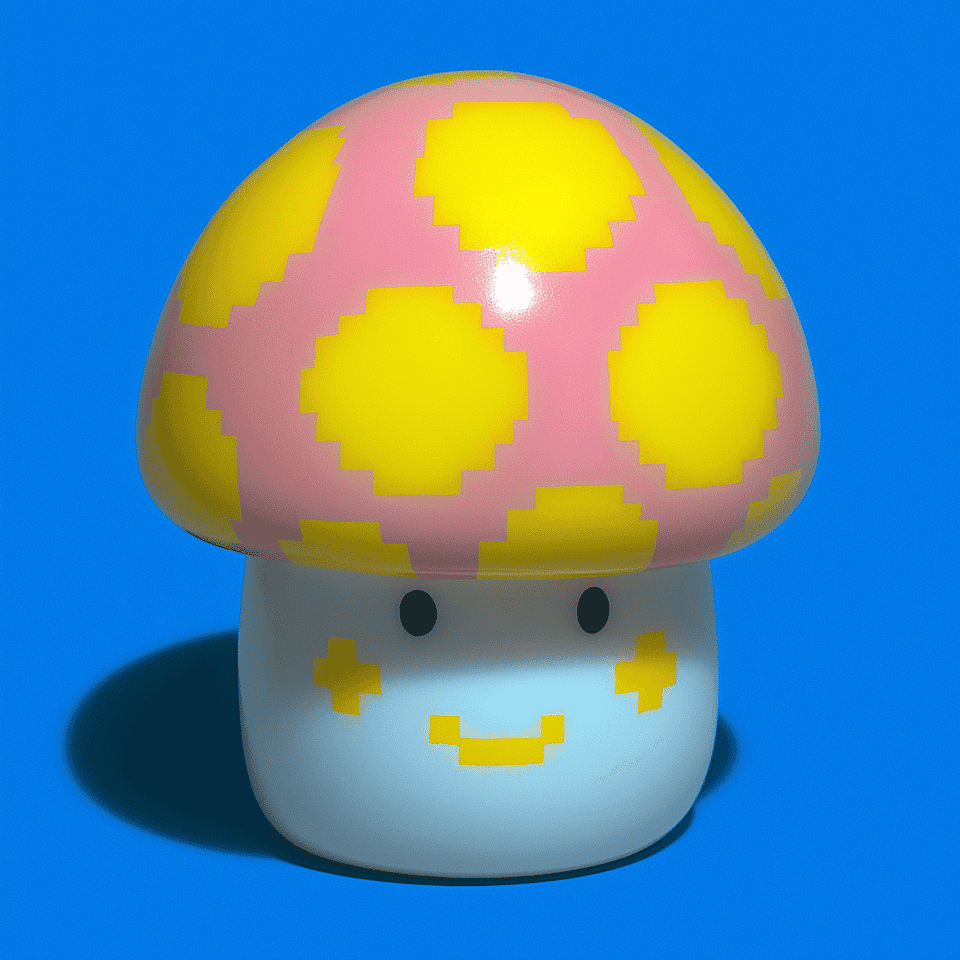
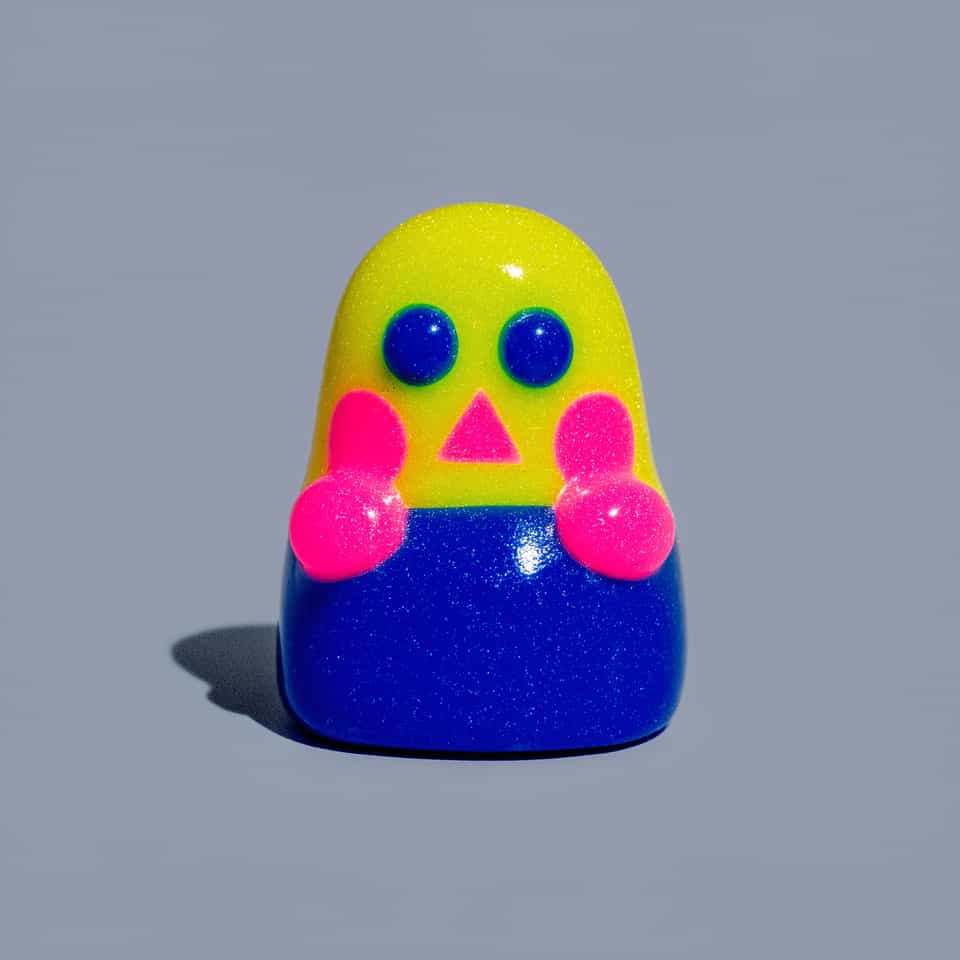
Start with the body mass and the footprint. Press the base flat on the tile so the foot spreads slightly wider than the body, which is what stops a tipping figure. Add medium features (caps, ears, limbs) once the body is stable, then small surface features last. Bake on a flat tile, with fiberfill or a foil nest for any projecting feature that wants to lean during cure.
Trinket dishes and bowls
Roll one even slab to the thickness the rim and curve span want. Drape over a form (a small bowl, a half-sphere, a draping mould) and settle the rim with even thumb pressure all the way around. Decorate within the bounds of the rim, not over it. Support the curve during bake so the rim does not sag.
Collar necklaces and curved pieces
Set the neckline arc first on a curved support so the inner curve fits the wearer's neck before any front shapes go on. Add the front silhouette next, then the scallops or surface decoration. Bake supported so the curve holds.
Layered slab earrings (cutout, arch, pixel)
Roll one even slab so the layers all share the same thickness. Cut every blank for the pair (or the batch) in one session before the clay warms, because warm clay drags under the cutter and pieces drift. Plan hardware holes before bake. Bake flat on a tile.
Buttons
Roll one even sheet to the thickness the button calls for. Cut all blanks before the clay warms. Pierce holes raw with a needle tool, sized for the thread you intend to use. Bake flat on a tile.
Miniature food charms
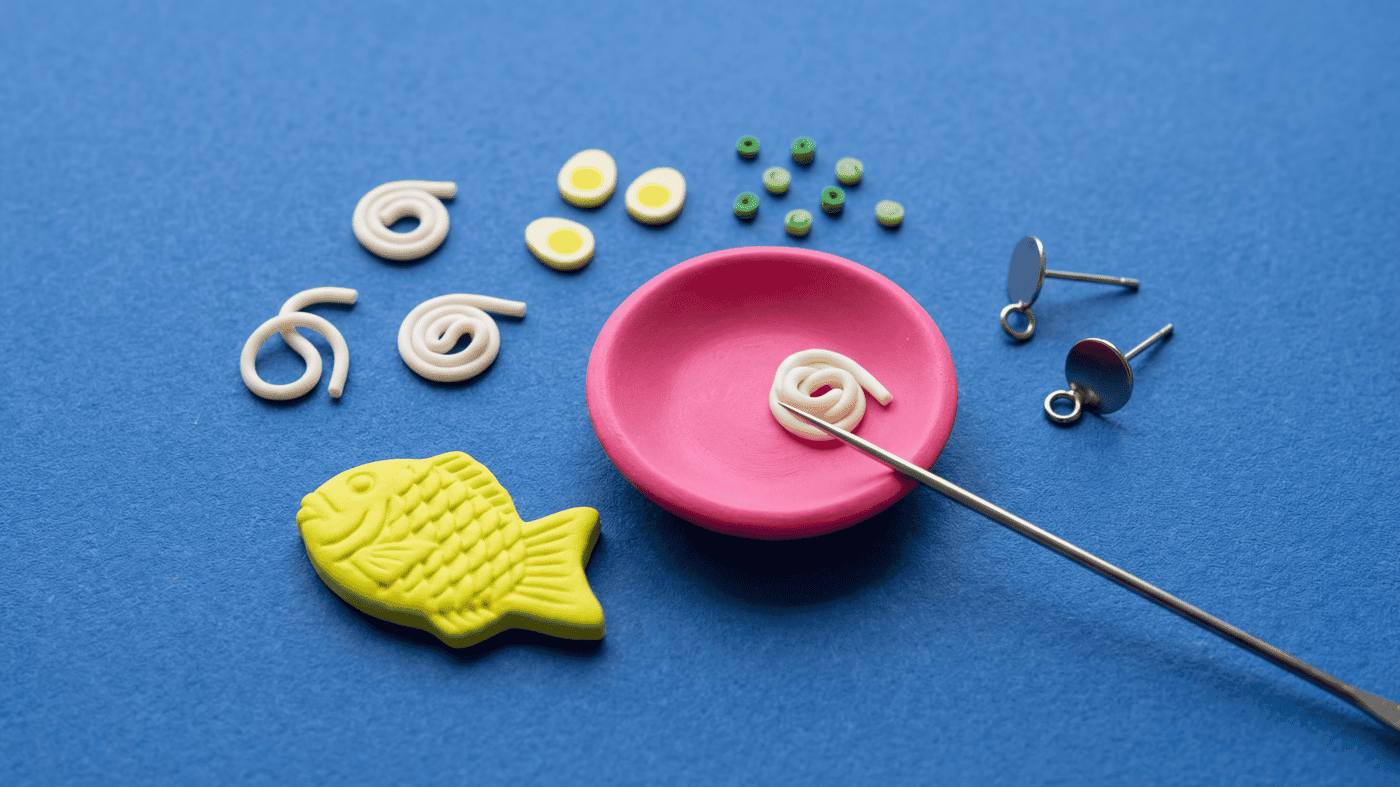
Set the base mass first (a bowl, a plate, a tray), then medium components (broth disc, base toppings, fish body), then the smallest details last (noodle squiggles, sesame, garnish). Match clay temperature across components so a warmer color does not blur into a cooler one when you press them together. The miniature food charms guide walks through the layering.
Relief faces and stud toppers
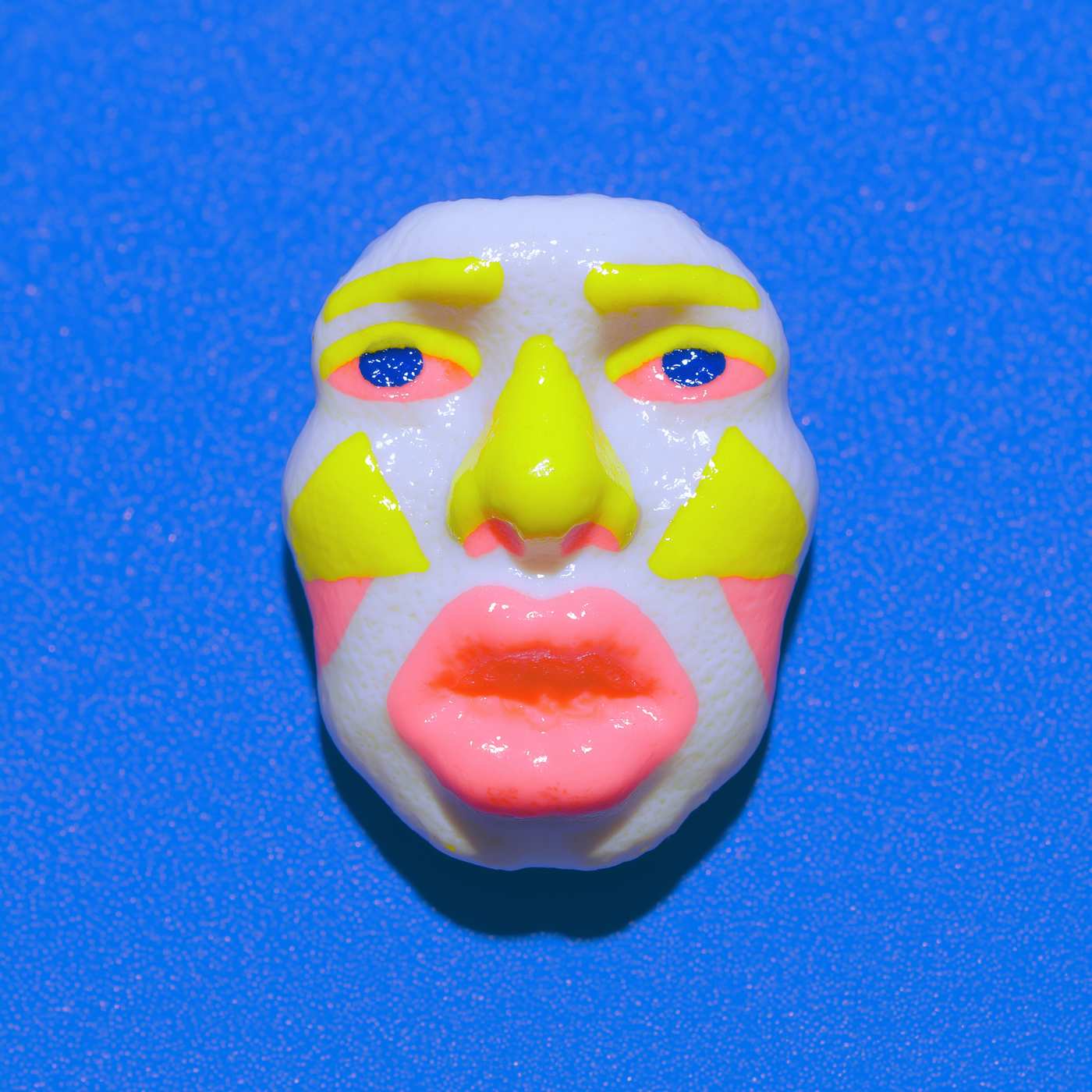
Build the plaque or topper base first to even thickness. Set the brow and centerline before any features. Add medium features (nose, mouth, eyes) once the brow line locks in proportion. Add small surface features last. The relief face guide covers the order in detail.
When Assembly Fails: How to Diagnose
Most assembly failures point at one specific upstream choice. Read the failure point and trace it back rather than re-gluing the symptom.
- Figurine tilts after bake -> base footprint is too narrow for the body weight balanced on it. Widen the footprint, or support the figure during bake so it cures upright.
- Dish rim sags or warps during bake -> wall thickness is too thin for the unsupported curve span, or the support under the curve was not sized to the shape. Thicker walls or a better-sized curved support solves it.
- Earring pair does not match -> the blanks were not cut in the same session, or the clay warmed between cuts. Cut the full pair (or batch) in one cool session.
- Layered piece comes apart after bake -> layers were placed but not pressed firmly enough into each other, or the layers were at different temperatures. Press to bond, and let all parts equalise to room temperature before stacking.
- Stud topper sits crooked on the back -> the back was not flat enough, or the topper is fighting a curved zone. Settle the back before bake and fit the topper to the cured contact area.
- Charm topping falls off during cure -> the topping was placed but not pressed into the base mass below it. Topping needs to be seated firmly into the base, not just resting on it.
For crack-specific failures (which run on a different decision tree around bake temperature, conditioning, and stress at thin edges) the cracking guide walks through diagnosis by crack location.
Mixed-Media Assembly Considerations
Mixed-media polymer clay pieces work when each material is added at the step its own chemistry expects. The order is roughly: wire armatures into raw clay before bake, metal findings onto the cured back after bake, and resin domes onto the finished surface last.
- Wire armatures embedded in raw clay work because the clay can wrap and trap the metal during bake. Test the bend and the bake compatibility on a scrap before committing to a real piece. Heavy wire conducts heat differently and can over-cure the clay around it.
- Cured clay attached to metal findings is the second layer. The findings hub covers selecting the post, hook, or back to suit the cured contact area, and which adhesive or wrap traps the metal reliably.
- Resin domes over the cured surface go on last, after any sanding, buffing, or sealing the design wants. The resin doming guide walks through working time, dome height, and bubble release.
The fastest way to make a mixed-media piece fail is to skip a cure step in between. Resin on raw clay, glue on un-prepped backs, or wire pressed into half-baked clay all collapse later. Sequence the materials by their cure step, not by what is closest to your hand on the workbench.
Choose Your Next Read
This hub stays high-level on purpose so the cluster leaves can settle one decision each. Pick the deeper guide that matches what is blocking the build in front of you:
- Polymer Clay Stud Toppers, Flat Pads, and Connector Rings when the front of the piece is a topper and you need to decide between a visible loop, a hidden flat pad, or a short connector ring run.
- Polymer Clay Miniature Food Charms when the build is a bowl, fish, or tiny topping arrangement and you need the layering order from base mass to garnish.
- Polymer Clay Relief Faces, Portrait Plaques, and Stud Toppers when the piece is a face or portrait and you need the brow-first build order that keeps the proportion legible.
- Polymer Clay Figurines: Stable Bases and Clean Features when the piece is a small character and you need the body-first order that keeps it from tipping after bake.
- Polymer Clay Trinket Dishes, Forms, and Rims when the piece is a shallow dish and you need the slab, drape, and rim sequence that keeps the curve even.
- Polymer Clay Collar Necklaces, Bibs, Cuffs, and Curved Bases when the piece is a curved-base front and you need the neckline-first build order.
- Polymer Clay Snake Bangles, Coiled Bracelets, and Scale Texture when the piece is a wrist coil and you need the size-the-circle-before-detailing order.
- Polymer Clay Cutout Arch Earrings and Hoop Drops when the piece is an open-center arch and you need consistent wall thickness and matched pair geometry.
- Polymer Clay Pixel Slabs, Stepped Layers, and Mirrored Pairs when the piece is a layered pixel slab and you need a stack-and-mirror order that keeps the pair matched.
- Polymer Clay Buttons: Hole Placement, Flat Baking, and Consistent Thickness when the build is a button blank set and you need the slab-cut-pierce-bake sequence that keeps the batch consistent.
- Polymer Clay Striped Buttons: Chevron Wraps and Drum Blanks when the piece is a patterned button and you need the blank-first order before adding the wrap or drum side.
- Polymer Clay Bead Grid Tutorial: Cross-Stitch Pixel Patterns when the build is a bead grid and you need matched bead diameters and aligned rows seated in a base slab.
- How to Make Polymer Clay Ramen Charms (Broth and Noodle Tutorial) when the piece is a layered charm and you need the bowl-broth-noodle layering order.
- Support Polymer Clay During Bake when the build will not fit flat on a tile and you need a support plan keyed to the shape.
- Earring Findings for Polymer Clay when the clay is settled and the next decision is which finding suits the cured back and how to attach it.
- Polymer Clay UV and Epoxy Resin Doming when the cured assembly wants a resin dome on top to lock the surface read.
More guides in this path
Open these when the next decision is material choice, attachment, or finishing.
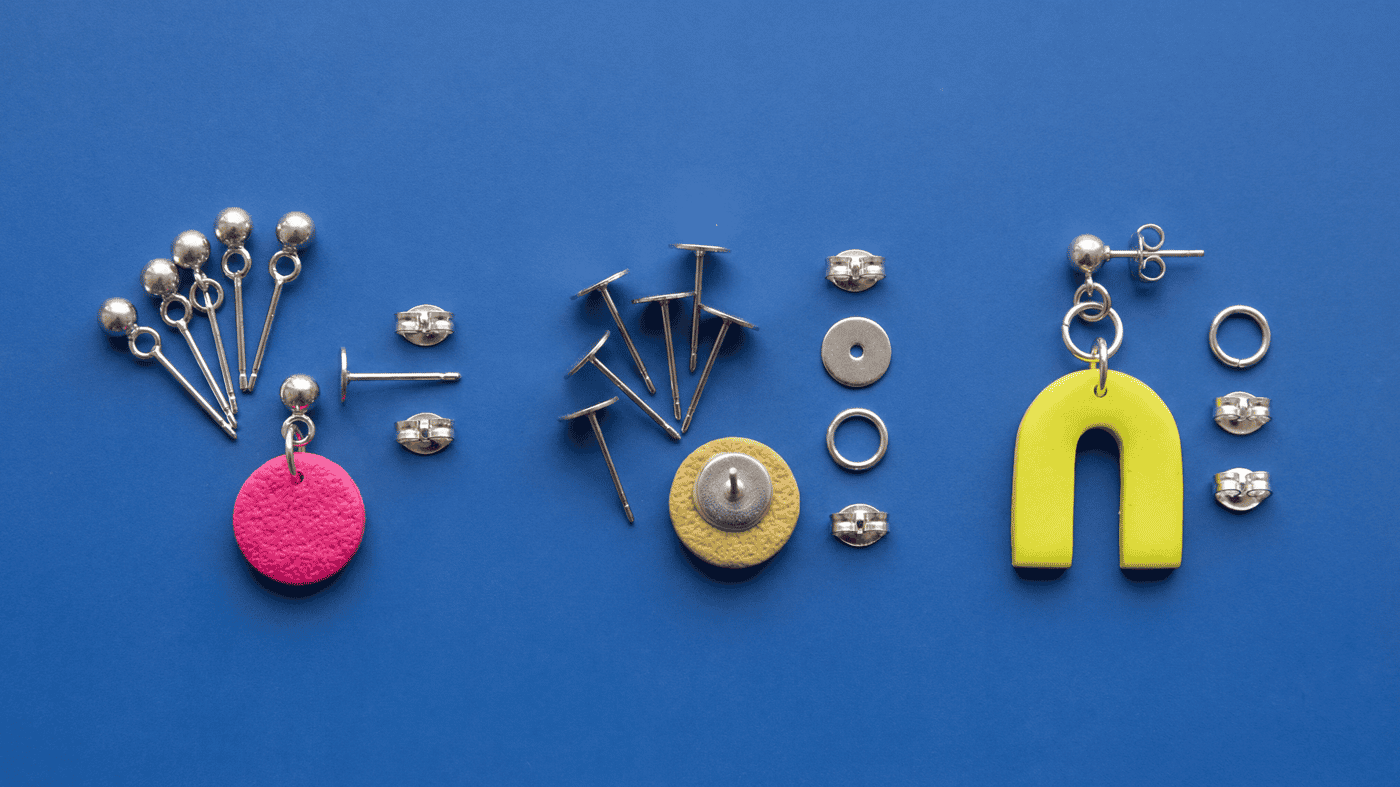
Polymer Clay Stud Toppers, Flat Pads, and Connector Rings
Use visible toppers, flat pads, or short connector rings according to the top shape and back area.

Polymer Clay Miniature Food Charms: Bowls, Fish, and Tiny Toppings
Miniature food pieces usually read more clearly when the base shape, topping scale, and hardware choice are planned before the details go on. This guide covers shallow bowls, flat fish charms, noodle coils, egg slices, and how to keep small food builds lighter and clearer.

Polymer Clay Relief Faces, Portrait Plaques, and Stud Toppers
Face plaques, cameo-style shapes, and portrait drops stay cleaner when the silhouette is solved first, the facial planes stay low relief, and the topper or brooch hardware is planned as part of the front design rather than as an afterthought.
Lookbook pieces with similar build choices
Each piece shows how the same material or attachment decision shapes a finished object.