Make a Miniature Cupcake Charm in Polymer Clay
Make one miniature cupcake charm with a grooved wrapper, textured dome and bent eye-pin anchor. For noodle bowls, follow the separate bowl guide.
Some links on this page are affiliate links. If you buy through them, we may earn a commission at no extra cost to you. As an Amazon Associate I earn from qualifying purchases. Disclosures

In brief
Key takeaways
- A miniature cupcake reads from its wrapper, domed top and texture before it needs a face or frosting. Make that basic shape first, with the hanging anchor already planned. The eye pin needs a bend buried in the clay; a straight pin pushed into the top leaves the attachment depending on a smooth shaft.
- Bend the buried end before insertion. The bent lower end follows the manufacturer charm method and gives the clay a shaped anchor to surround.
- The wrapper, dome and texture are enough for the basic cupcake.
- This is a decorative charm with small parts. A miniature food shape can be mistaken for food and its findings are small parts.
Article contentsOpenClose
Making a bowl of noodles instead? Follow the miniature noodle-bowl method for the hollow well, broth and toppings.
This worked miniature-food example makes a cupcake from its wrapper, domed top and texture before adding a face or frosting. Make that basic shape first, with the hanging anchor already planned. The eye pin needs a bend buried in the clay; a straight pin pushed into the top leaves the attachment depending on a smooth shaft.
Choose the charm and its connection
Use two colours of Sculpey Premo for a wrapper and cake top, plus Translucent Liquid Sculpey for the join. This is a simplified version of Sculpey's cupcake construction, with the optional face and piped frosting left out. Tiny yellow and white clay sprinkles are an optional decoration using the same Premo line. Check that the solid and liquid clay packages have a compatible baking schedule before starting. Clear and Translucent are different products; use the named liquid for this method.
Set out a clay blade, needle tool, a clean stiff-bristled brush reserved for clay, an eye pin, pliers, a jump ring and your final hook or chain. An eye pin is a wire with a closed-looking loop at one end. The loop remains visible above the cake; the bent lower end sits inside it. Choose the metal and finish for the intended wearer through the findings guide.
Shape the wrapper and cake top
Condition the colours separately. For a pair, roll the wrapper clay into an even short log and cut two equal portions before shaping either one. Roll each portion into a ball, then press it into a short tapered cylinder: a narrower flat bottom and a wider flat top. Stand it on its bottom on your baking surface.
Hold the needle along the wrapper side and press shallow upright grooves, rotating the surface between marks. Stop below the top face so that face remains available for the join. The marks suggest paper folds; they should not slice the wrapper into sections.
Portion the cake colour in the same way. Roll each into a ball, then flatten one side against the work surface. Round the upper edge with small fingertip strokes, leaving a dome with a flat underside slightly wider than its wrapper. Put the two domes beside each other at eye level to compare their height before texturing.
Seat the top without flattening its texture
Apply a small amount of Translucent Liquid Sculpey to the wrapper's flat top, following its directions. Lower the dome onto that face. Press through the broad centre until the two surfaces meet, without crushing the overhanging edge. Wipe away squeezed-out liquid before decorating.
Touch the brush bristles lightly against the cake's exposed upper surface to make a porous cake texture. Work around the dome, leaving its underside and the wrapper alone. Deep holes turn the surface into a spiky mass; small scattered impressions keep the rounded cake shape readable.
Anchor the eye pin before baking
Trim the eye-pin shank to fit within the cupcake, then bend its lower end with pliers as in Sculpey's charm method. The bent section must fit inside the clay rather than protrude through the wrapper or poke out of the dome.
Insert it from the top, leaving the loop exposed. Bring displaced clay back around the entry with a shaper. If the pin tears a slit open, withdraw it, close the slit and reinsert through sound clay. Keep the top loop accessible to the intended connector; frosting should not bury it.
Optional clay sprinkles
For a more decorated cupcake, roll tiny pinches of yellow and white Premo into fine threads on the tile, then cut a few short pieces with the blade. Lift each piece with the needle tool. Put a trace of the same Translucent Liquid Sculpey under it and press it gently onto the raw dome so its underside has contact, without flattening the cake texture. Leave pink visible between the sprinkles and keep the metal eye-pin loop clear. Add these clay pieces before the package-directed bake; use clay rather than edible sprinkles.
Bake, cool and add the finding
Place the cupcake upright on a clay-dedicated oven-safe surface. Preheat and verify the baking area with an oven thermometer, then follow the exact solid and liquid package directions for the assembled thickness. Let it cool completely before gripping its loop or fitting hardware.
With two smooth-jaw pliers, grip opposite sides of a jump ring's split. Twist one end towards you and the other away, pass the ring through the eye pin and hook or chain, then reverse the twist until its ends meet without a gap. Hold the charm by the final finding to check its facing. The jump-ring guide explains clearance and an extra connector when the loop planes leave the cupcake sideways.
Adapt the food shape without losing its structure
Change wrapper and cake colours, or add a small cherry-shaped ball before baking. Seat that ball onto the dome with a broad contact, keeping the eye-pin loop free. Add one detail at a time; the wrapper and top should still read clearly.
A bowl of noodles is a different construction, with a hollow well and toppings spanning its floor. Use the miniature noodle-bowl guide for that method. A round cutter can make a disc or bowl base, but it does not make a fish outline.
Supplies
Supplies mentioned here
Quick links to the materials and tools that fit this article. ClayBake tools stay on our own catalog.
Search Amazon for Sculpey Premo clay colours
Compare the wrapper and cake colours within the same clay line.
Search Amazon for clay needle tools
Compare a fine needle tool for wrapper grooves and tiny topping placement.
Search Amazon for fish-hook ear wires
For an earring version, compare the hook material and loop fit with the eye pin and connector.
Search Amazon for Translucent Liquid Sculpey
Use the Translucent product specified for the cupcake join; reconcile its label with the solid clay package.
Search Amazon for jewellery eye pins
Compare the wire length and diameter with the whole charm before trimming and bending its buried anchor.
More guides in this path
Open these when the next decision is material choice, attachment, or finishing.
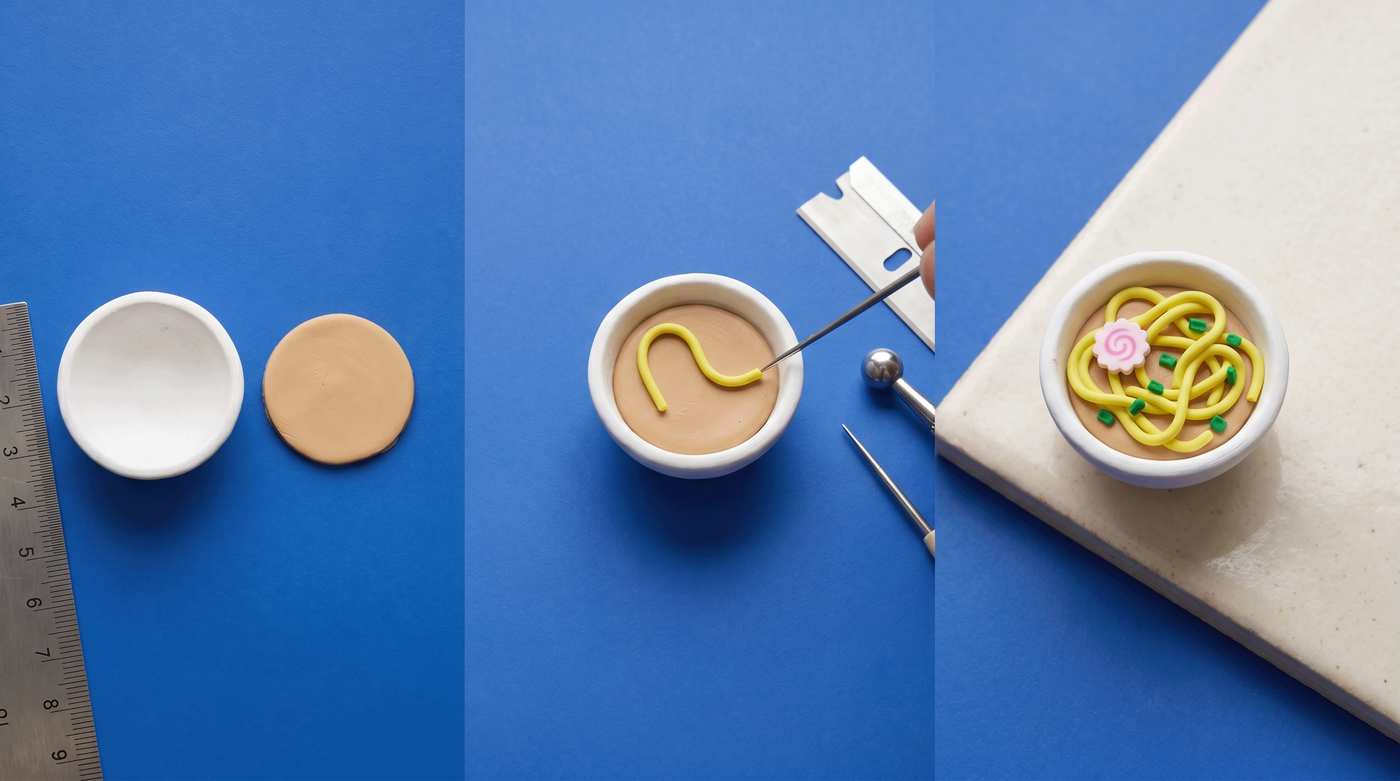
How to Make Polymer Clay Ramen Charms (Broth and Noodle Build)
Shape a shallow bowl, seat solid-clay broth and arrange short noodle curls. Learn the topping order and hanging-tab construction without a poured-liquid recipe.
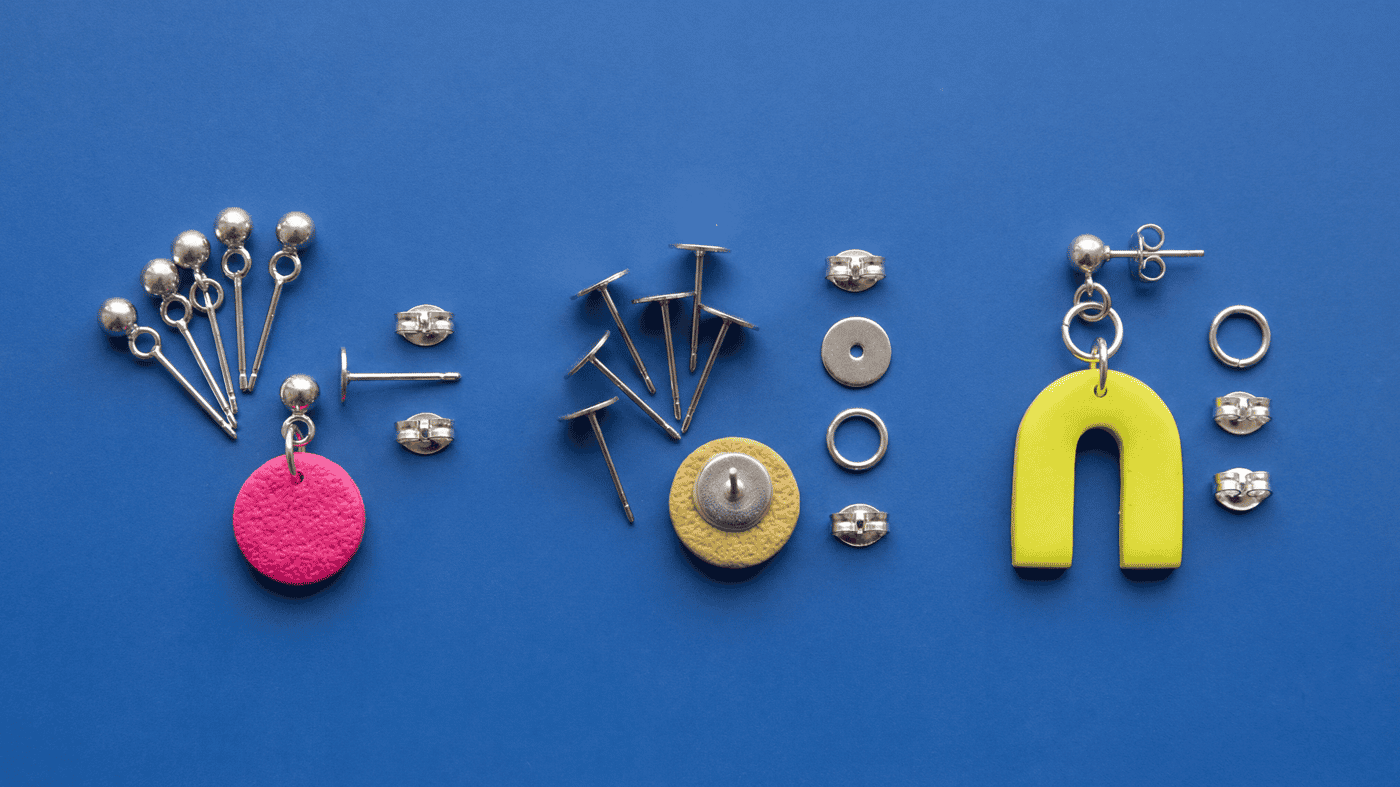
Choose a Clay Stud Topper or Metal Loop Post
Choose a clay topper with a hidden pad post or a metal loop post for a clay drop. Plan the holes, ring path, clearance and facing.
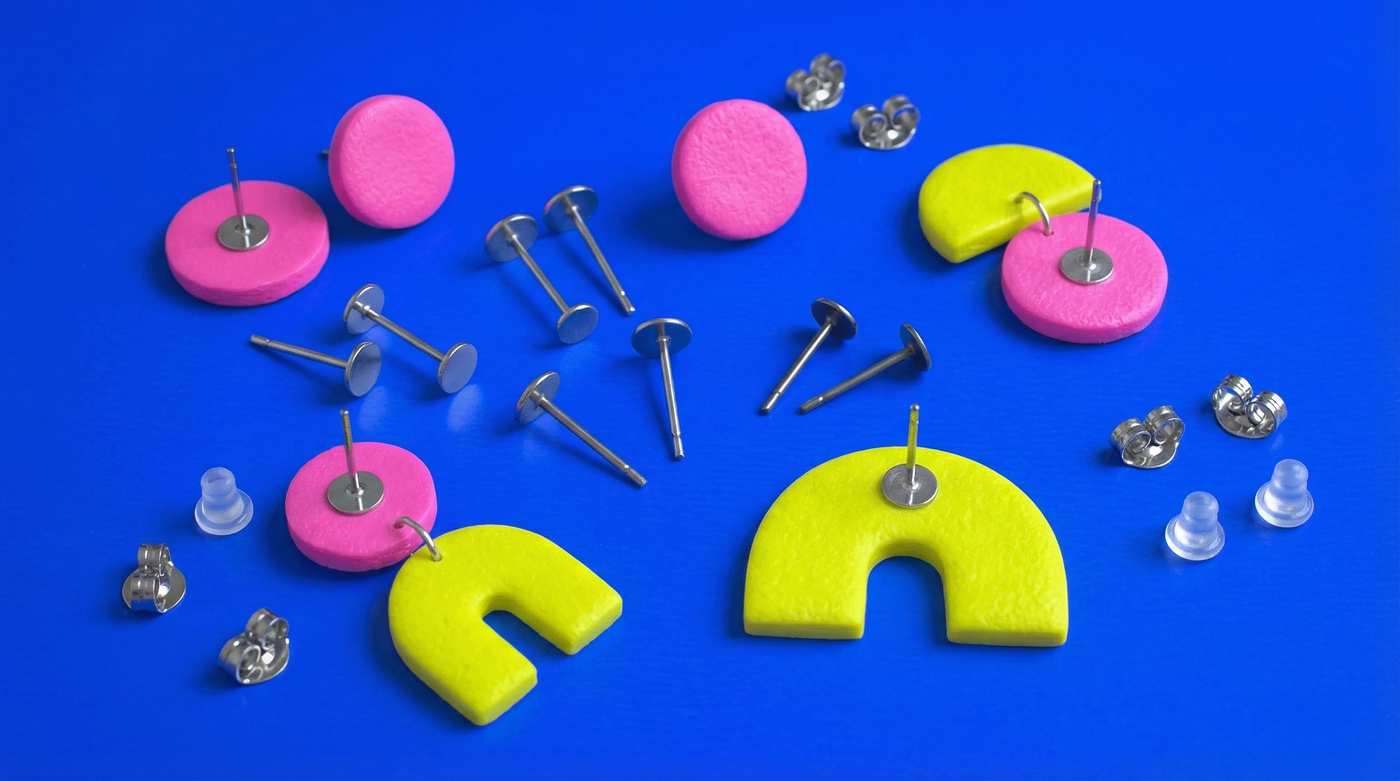
Best earring posts for polymer clay studs: pad size, backs and metal
Buy flat-pad posts, set the post a little above the middle of the stud, pick a pad that lies flat on the stud's back, and check which metal the listing names for the post itself.
Finished examples with related clay decisions
Each piece shows how a material, attachment, or surface choice changes the final form.