Why Is My Polymer Clay Cracking? Causes and Checks
When polymer clay cracks, check the package bake, measured oven temperature, conditioning, thickness, and support before assigning one cause.
Some links on this page are affiliate links. If you buy through them, we may earn a commission at no extra cost to you. As an Amazon Associate I earn from qualifying purchases. Disclosures

In brief
Key takeaways
- Compare the bake time and oven thermometer reading with the clay wrapper first, then inspect conditioning, uneven thickness and unsupported parts
- Let raised or extended pieces cool on their bake support before handling them
- Do not press plain raw clay into a cured crack and rebake it. Sculpey says that patch may widen
- For a cured crack, Sculpey documents matching baked-clay dust with two-part epoxy, or plumber's putty when the repair will be painted. Follow the repair product's safety and cure instructions
- Treat a filled crack as a surface repair, not proof that the original strength has been restored
Article contentsOpenClose
A crack is a reason to check the cure and construction, not proof of one cause. Start with the clay package, measured oven temperature, conditioning, thickness, and support for raised areas. For an existing cured crack, use the documented repair rather than pressing plain raw clay into the gap.
Check The Bake First
If the piece feels brittle after cooling, check underbaking first. Follow the time and temperature on the clay's package and verify the baking area with an oven thermometer.
Do not apply one line's thickness rule to another. Premo publishes 30 minutes per 1/4 inch. Cernit publishes 110 to 130 C for a maximum of 30 minutes. The package in hand remains the authority.
Check Conditioning Before The Next Test
Thorough conditioning belongs in the crack-prevention checklist. Follow the conditioning directions for the exact line and prepare a small sample before rebuilding the full piece.
If the thermometer reading was below the package temperature, correct the oven setting and bake a new piece of the same clay and thickness. Label it with the measured temperature and time so you can compare it with the earlier piece after cooling.
Keep Thickness Consistent
Keep the clay layer even. For larger forms, bulk the inside with crushed aluminum foil or use Super Sculpey UltraLight as an armature so you are not baking a huge solid clay mass while the visible shell stays more consistent.
There is no one maximum thickness that fits every form. Keep the clay layer even, and follow the product instructions for the exact core and outer clay when you use foil or UltraLight.
Support Raised Or Extended Areas
Extended or raised portions can sag or crack when heated. Supports such as crumpled foil and polyester fiberfill keep those areas in place through the package-directed bake. Choose a support that matches the shape and leave it there until the bake is done.
Use the support-during-bake guide for the documented support options. Crack location is a clue for where to look next, not proof that one unsupported part caused it.
Let The Piece Cool On Its Support
Polymer clay stays soft just out of the oven and hardens as it cools. Let the piece cool on its bake support before handling, and keep baked pieces away from significant temperature changes.
Skip cold-draft, water-rinse, or refrigerator stories as named diagnoses here. Cool fully on the support first, then decide what to change on the next sample.
Do Not Use Plain Raw Clay As Crack Filler
Do not press plain raw clay into a cured crack and rebake it. Sculpey says that patch may widen. This warning is about the crack patch, not every package-directed rebake or every documented raw-to-baked method.
For a visible cured crack, Sculpey's repair uses matching baked-clay dust mixed with two-part epoxy. It lists plumber's putty when the repaired area will be painted. Follow the exact repair-product instructions for preparation, application, safety, and cure.
Treat a filled crack as a surface repair, not proof that the original strength has been restored. Remake or physically test any repaired part that carries hardware, weight, or repeated movement.
Handle A Brittle Result As A Bake Check
If the piece feels brittle after cooling, compare the package time, package temperature, and measured oven temperature before repeating the test. Thoroughly condition the raw clay for the next sample.
Do not rely on a universal bend test, a claimed failure frequency, or a coating to prove that a structurally weak piece is fixed.
Keep Finishing Separate From Crack Diagnosis
Wet sand cured clay with water and wet/dry paper, then buff when sheen is wanted. Follow the tool instructions and use a cured scrap before finishing a repaired or thin piece.
Leave high-speed drilling, rotary heat, and pressure thresholds outside this diagnosis. Fix bake, conditioning, thickness, and support first.
A Narrow Retest Checklist
- use the exact clay package time and temperature
- verify the baking area with an oven thermometer
- condition the clay by the line's guidance
- keep the clay layer consistent
- support raised or extended areas
- let the piece cool before handling
- do not use plain raw clay as filler for an existing cured crack
Use the checks in this order: confirm the package bake and measured temperature, then inspect the clay's thickness and support. That gives you a specific correction to try on the next piece.
More guides in this path
Open these when the next decision is material choice, attachment, or finishing.

What’s in my polymer clay kit? 10 things I’d buy first
The ten things I would replace first, from the pasta machine that saves my hands to the small tools, work surfaces, cutters, and clay I would choose again.
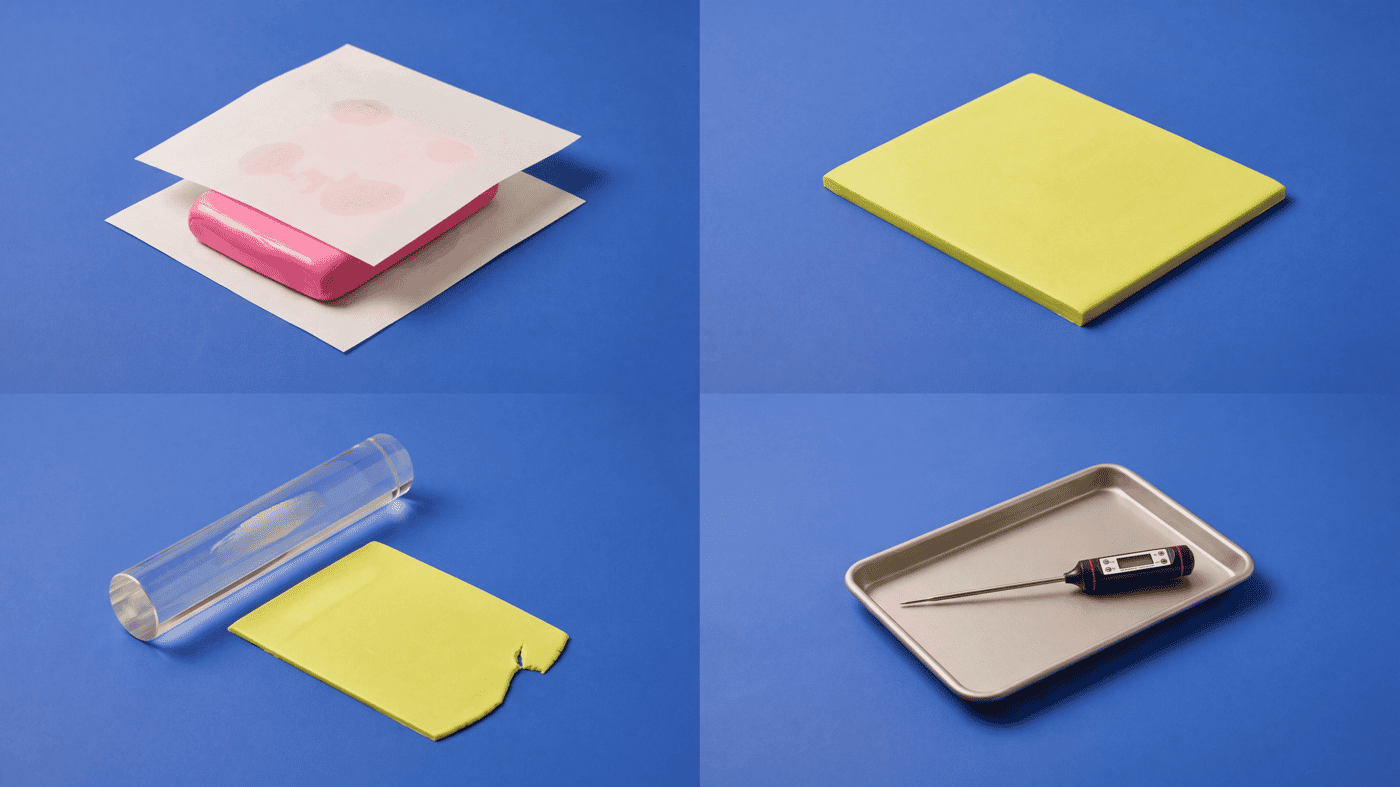
Polymer clay too soft or sticky? Chill it, then leach it, and know when to stop
Test whether the clay is warm or too soft, chill it on its tile, then leach it: let plain paper draw some of the plasticiser, the liquid that keeps clay workable, out of a thin sheet, and stop as soon as a cut piece lifts clean on a blade.
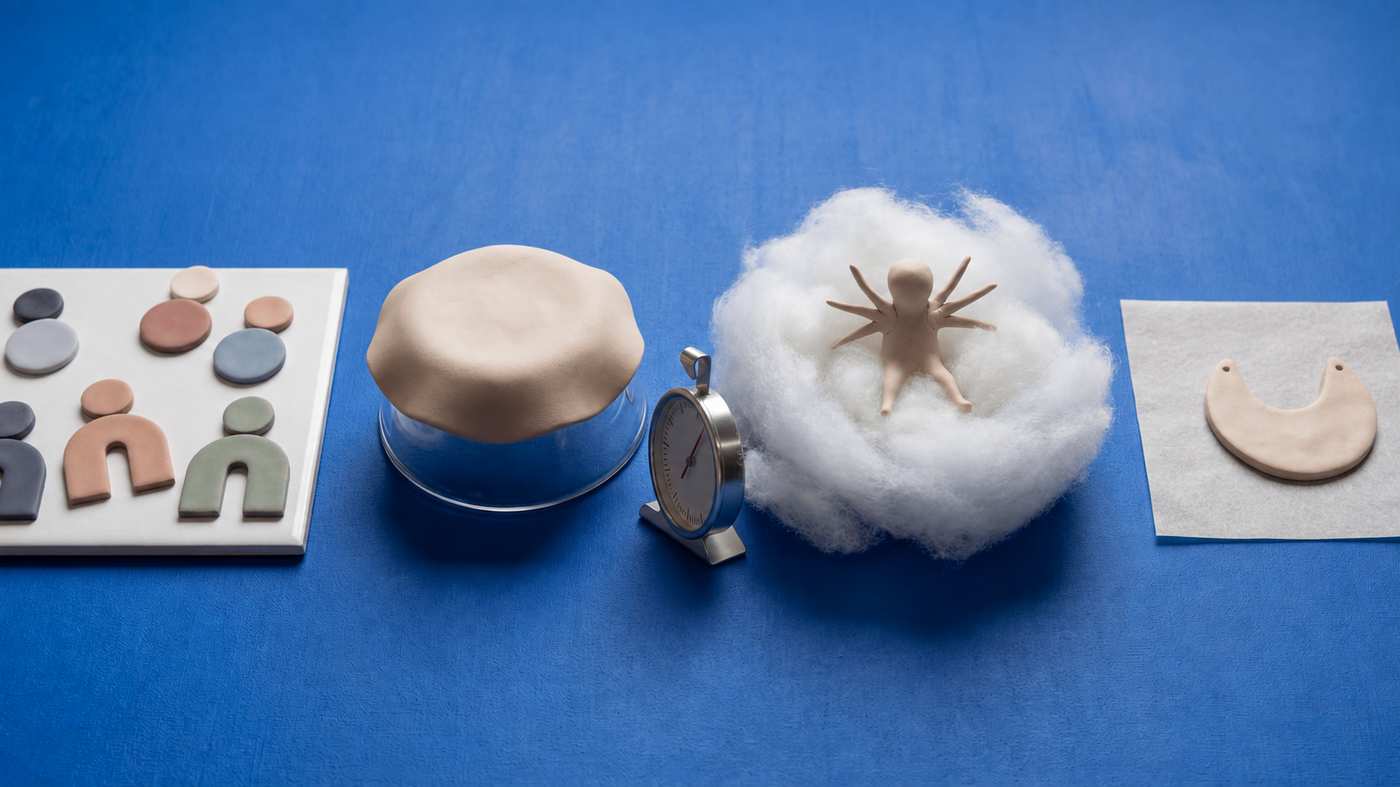
What to bake polymer clay on: tile, card and supports for flat, folded and large pieces
Bake flat pieces on a glossy tile and move them onto plain card only for a matte back. Hold curves, limbs and overhangs with fiberfill, crumpled foil or an oven-safe glass form, bake round beads on skewers, and leave everything on its support until it feels cool.
Finished examples with related clay decisions
Each piece shows how a material, attachment, or surface choice changes the final form.