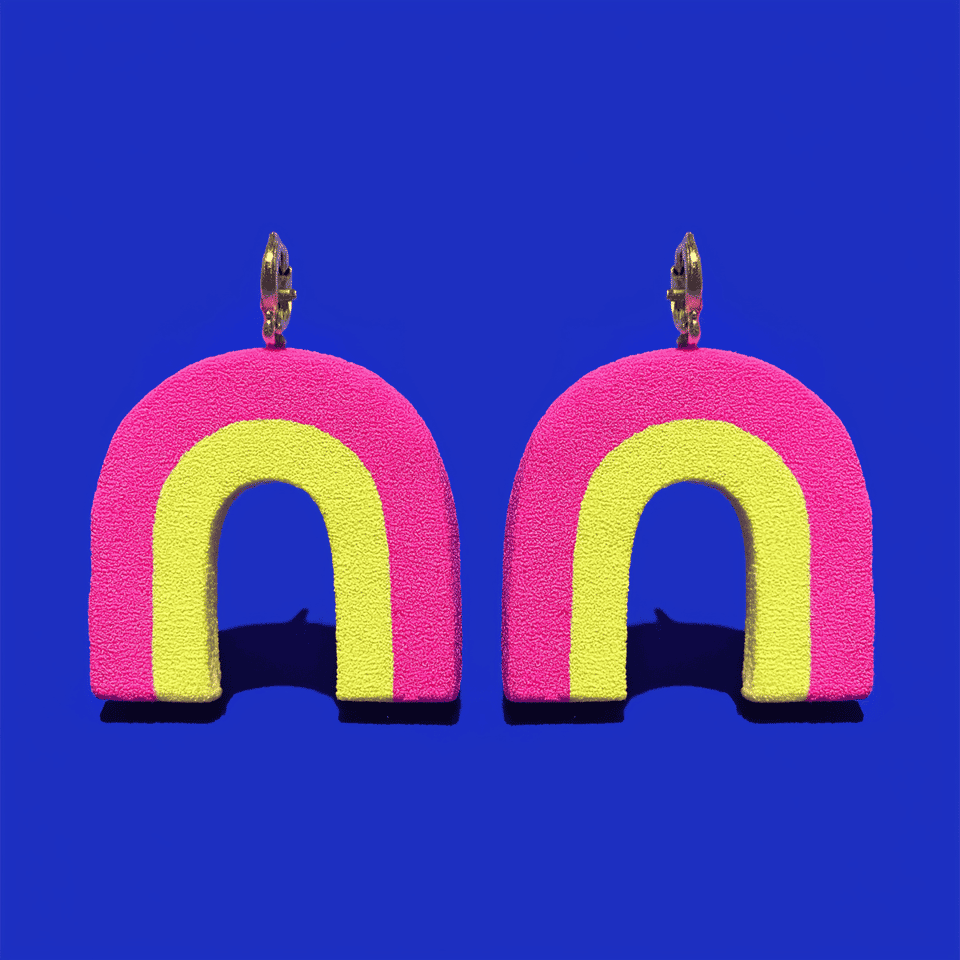
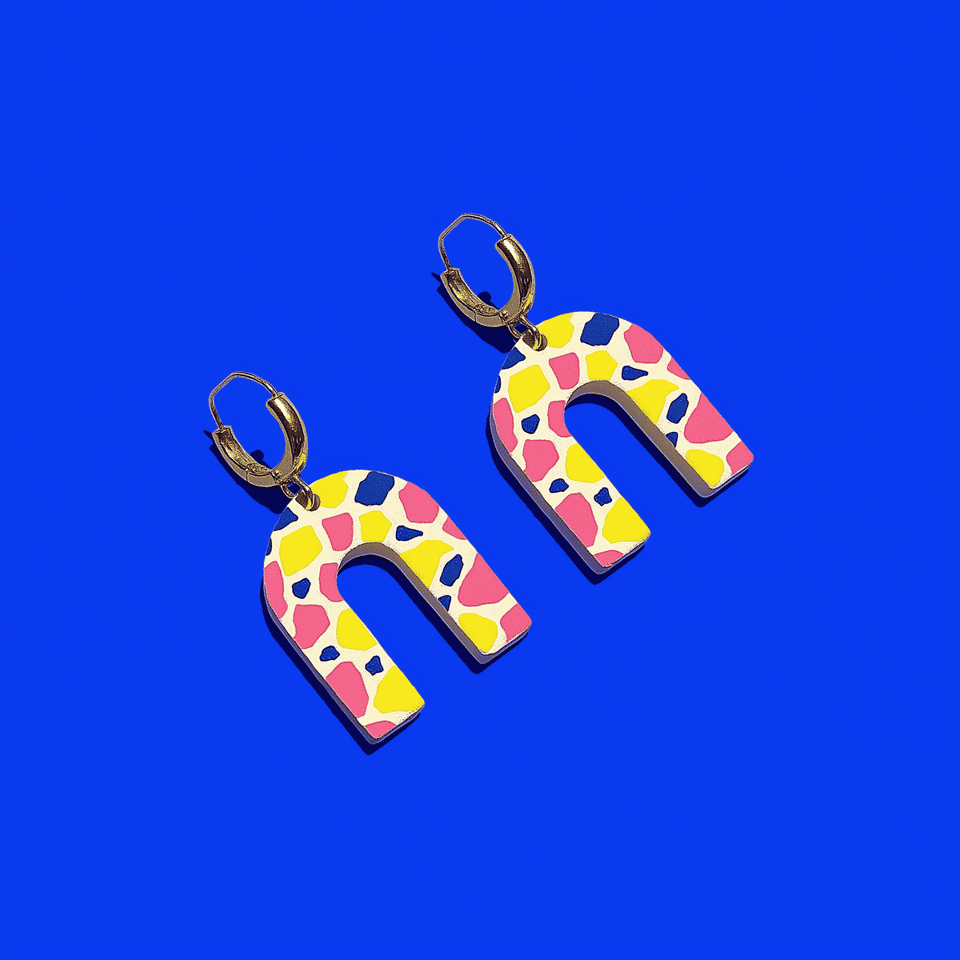
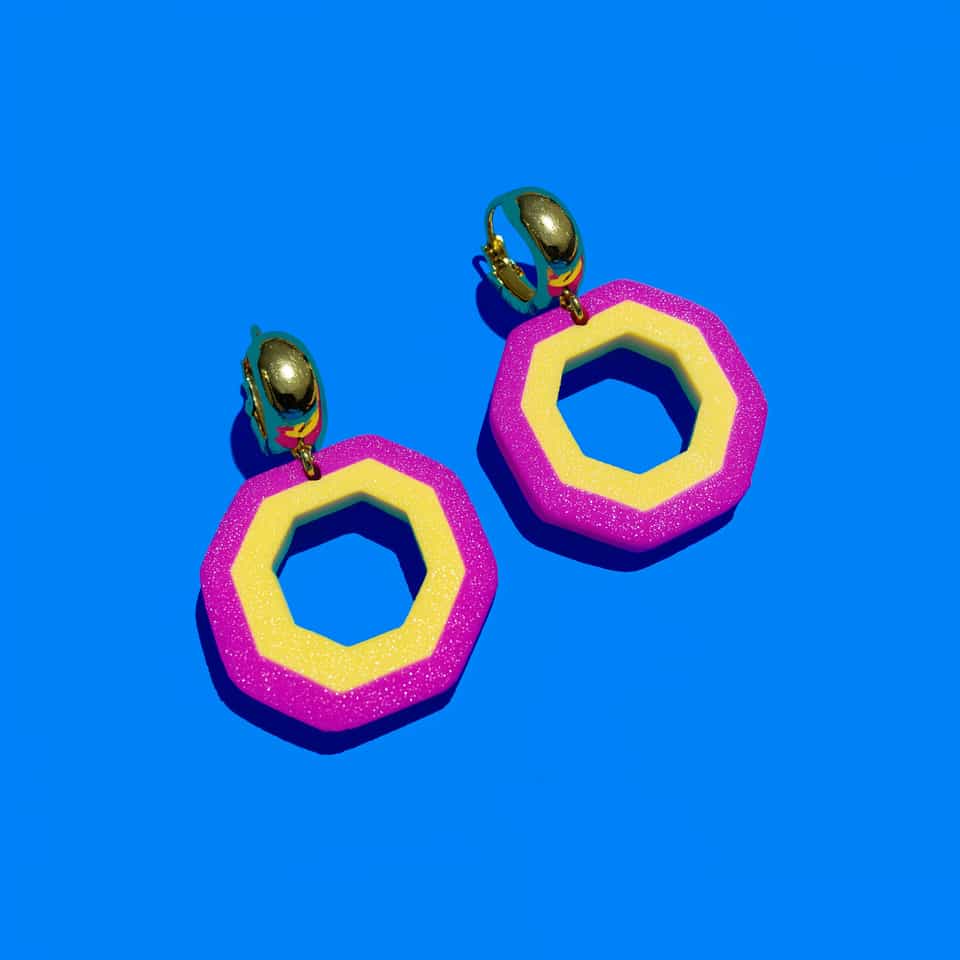
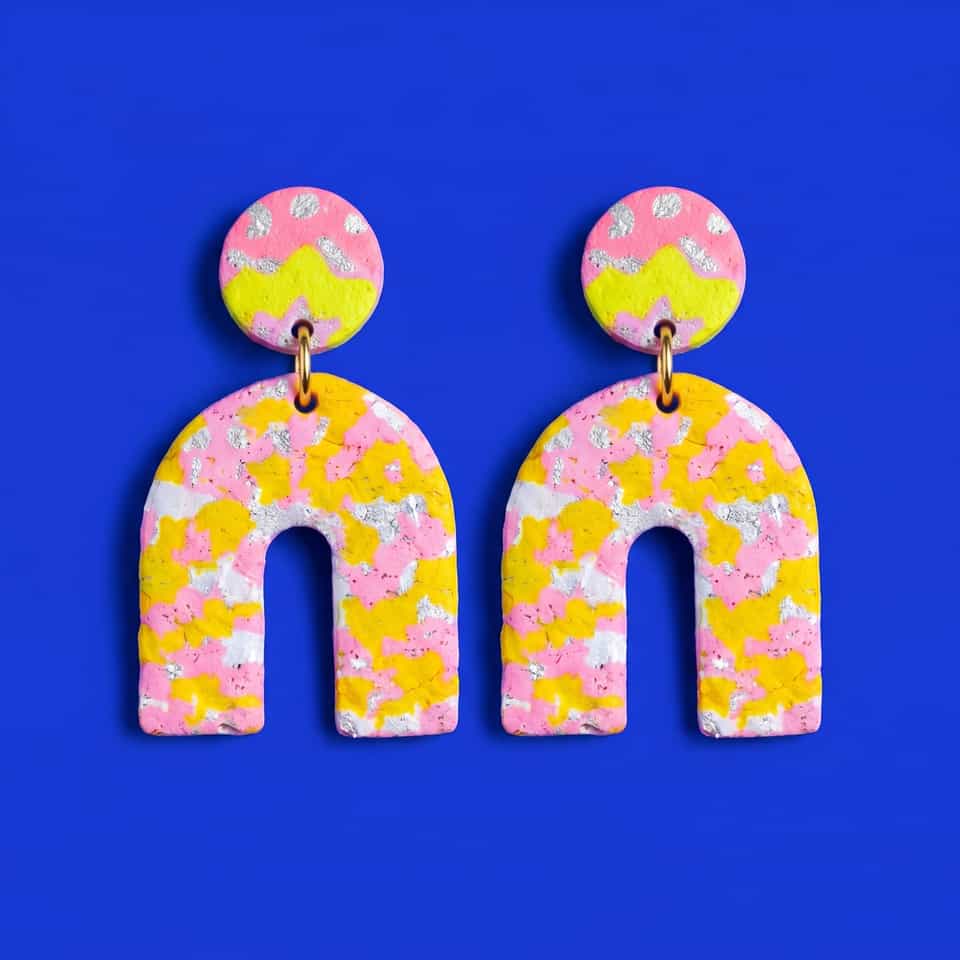
Polymer Clay Cutout Arch Earrings and Hoop Drops
Cutout arches and hoops work best when the wall width is even, the inner opening matches the outer curve, and the hardware choice is made from the finished front view.
Some links on this page are affiliate links. If you buy through them, we may earn a commission at no extra cost to you. As an Amazon Associate I earn from qualifying purchases. Disclosures

In brief
Key takeaways
- Cut the outer arch and the inner opening in the same session while the slab is still plain. Decoration first, holes second is what makes mirrored pairs disagree
- Keep wall thickness even all the way around the opening. An uneven ring reads as wonky rather than intentional, even at small scales
- Choose between stud toppers and huggies based on the front view of the design, not by default habit
- Place the top hole near the intended balance line and hang-test on a real ear wire before locking the hardware setup
Article contentsOpenClose
Make one cutout sample, mark or pierce its hanging point while raw, and bake it flat by the exact clay package. Choose the finding only after the piece has cooled.
Set The Opening Before Surface Detail
Compare the outer arch and inner opening while the slab is still plain. Wall width and visual balance are choices for this design, not universal strength settings.
Mark The Hanging Point While Raw
Place the hole for the intended design and make one test blank before committing to a pair. The Sculpey earring method forms the hanging hole before baking, but the finished finding still has to fit the cooled piece.
Bake On A Listed Flat Surface
Use a suitable flat surface such as ceramic tile, glass, or a metal tray. Verify the baking area with an oven thermometer and follow the exact package time, temperature, thickness, and support directions.
Fit The Hardware After Cooling
Choose the post, hoop, huggie, or jump ring from current supplier dimensions and instructions. Test the assembled hang and movement on one sample. Keep loop direction, ring technique, and strength claims specific to that tested combination.
Supplies
Supplies mentioned here
Quick links to the materials and tools that fit this article. ClayBake tools stay on our own catalog.
Arch clay cutters
Good for keeping the outer arch and the center opening from drifting out of sync.
Polymer clay thickness guide strips
Use beside your roller so the arch walls stay even all the way around the opening.
Small huggie hoops for clay drops
Good to try when the reference pair hangs directly from a hoop. Check loop direction, inner diameter, and what the hoop is made from before buying.
More guides in this path
Open these when the next decision is material choice, attachment, or finishing.
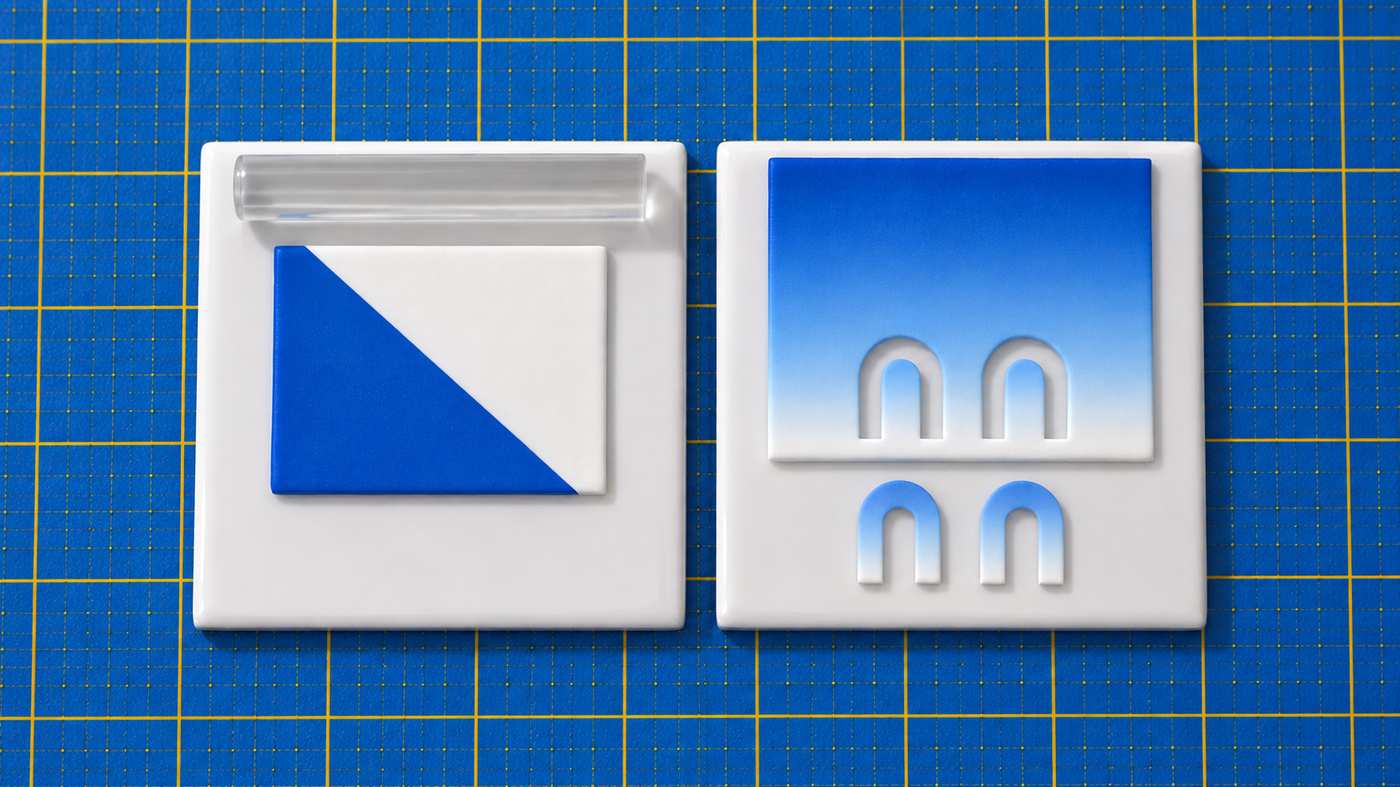
How to make a Skinner blend with polymer clay
Make polymer clay fade from one colour into another: the offset layout, the fold rule, how many passes, the no-machine method, cutting an ombre pair, cane plugs and rainbow blends.
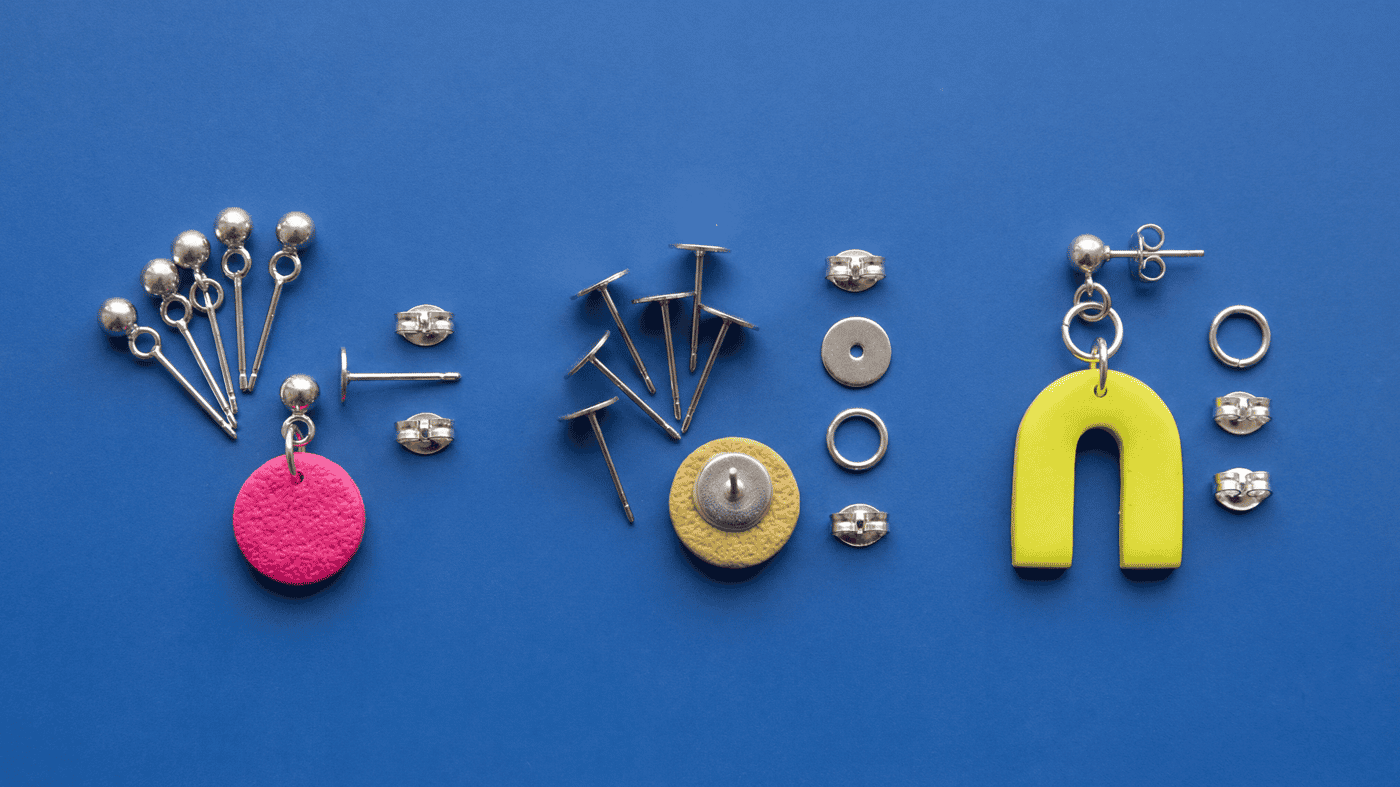
Polymer Clay Stud Toppers, Flat Pads, and Connector Rings
Choose the top connection from the front view first, then keep the attachment short and balanced. Compare visible loop-tops, flat pads, short ring paths, and balance-line marks on a sample before you make the final pair.
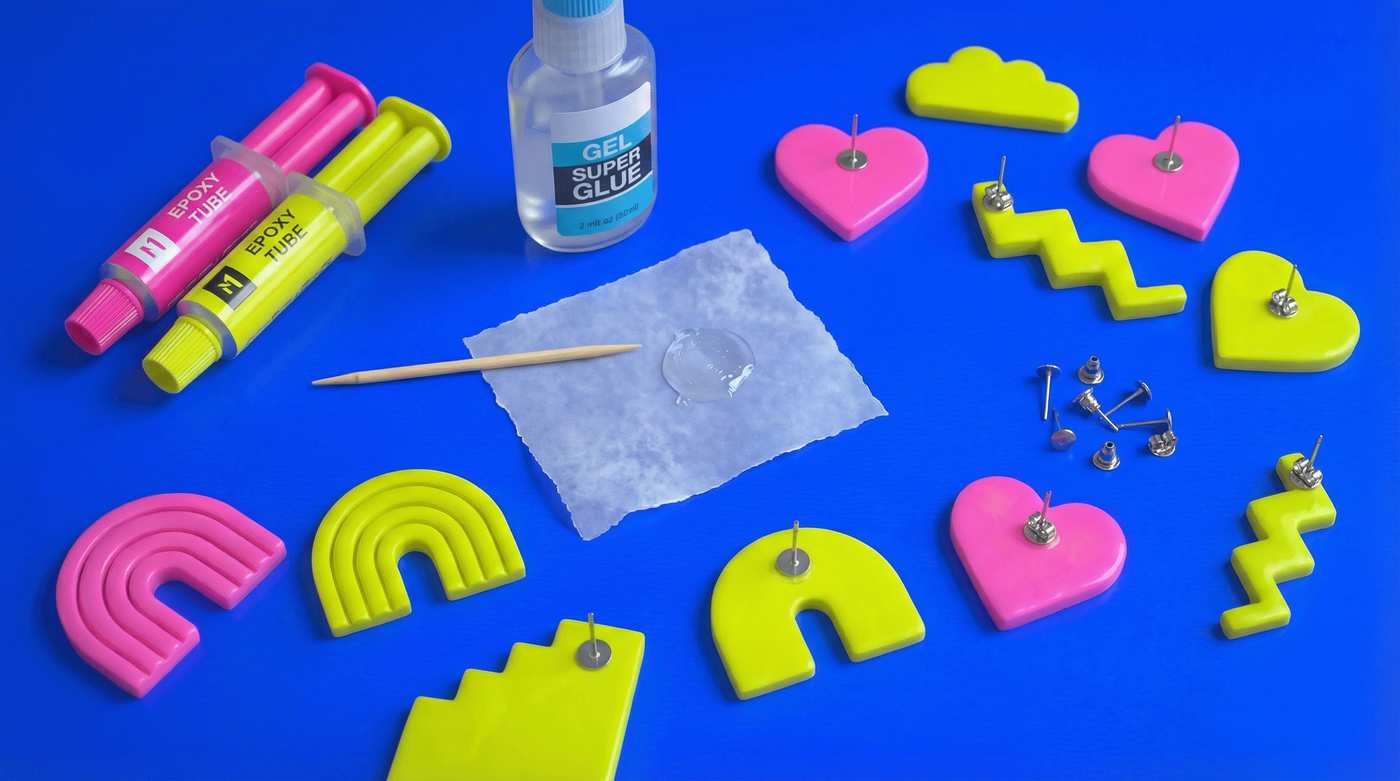
Best glue for polymer clay earring posts: what makers use
Two published maker sources name gel super glues such as Loctite's Gel Control and Gorilla Super Glue Gel for posts. Sand the spot to bare clay, use a small dot and wait 24 hours before wearing.
Finished examples with related clay decisions
Each piece shows how a material, attachment, or surface choice changes the final form.