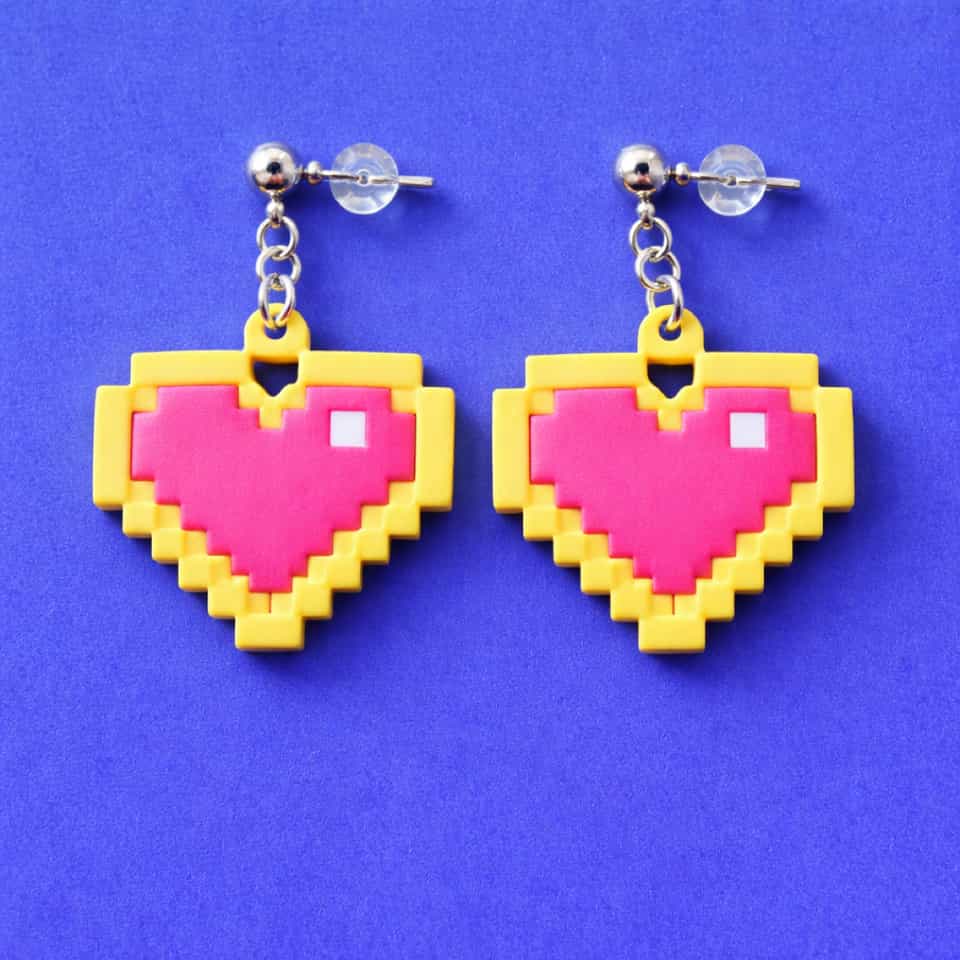
What’s in my polymer clay kit? 10 things I’d buy first
The ten things I would replace first, from the pasta machine that saves my hands to the small tools, work surfaces, cutters, and clay I would choose again.
Some links on this page are affiliate links. If you buy through them, we may earn a commission at no extra cost to you. As an Amazon Associate I earn from qualifying purchases. Disclosures

See all 10 kit itemsOpenClose
If I were rebuilding my polymer clay kit today, the pasta machine would be the first thing I bought. Conditioning hard clay by hand tires my hands before I get to shaping and detail work, and the machine also helps me roll even slabs for jewellery.
This is my rebuild list, not the minimum every beginner needs for a first project. The machine and acrylic roller do different things, as do the hard surface and flexible mat. These are the ten I would put back together before adding anything more specialised.
1. Pasta machine: easier conditioning and even slabs
The pasta machine handles most of the repeated rolling and folding that I used to do by hand. I can condition hard clay without using up my hands before I start shaping it.
For jewellery, it also gives me even slabs. Once I find a thickness that suits the piece, I can use the same setting on that machine for the next sheet instead of matching it by eye. The number is only a note for that machine. Another model can roll differently at the same number.
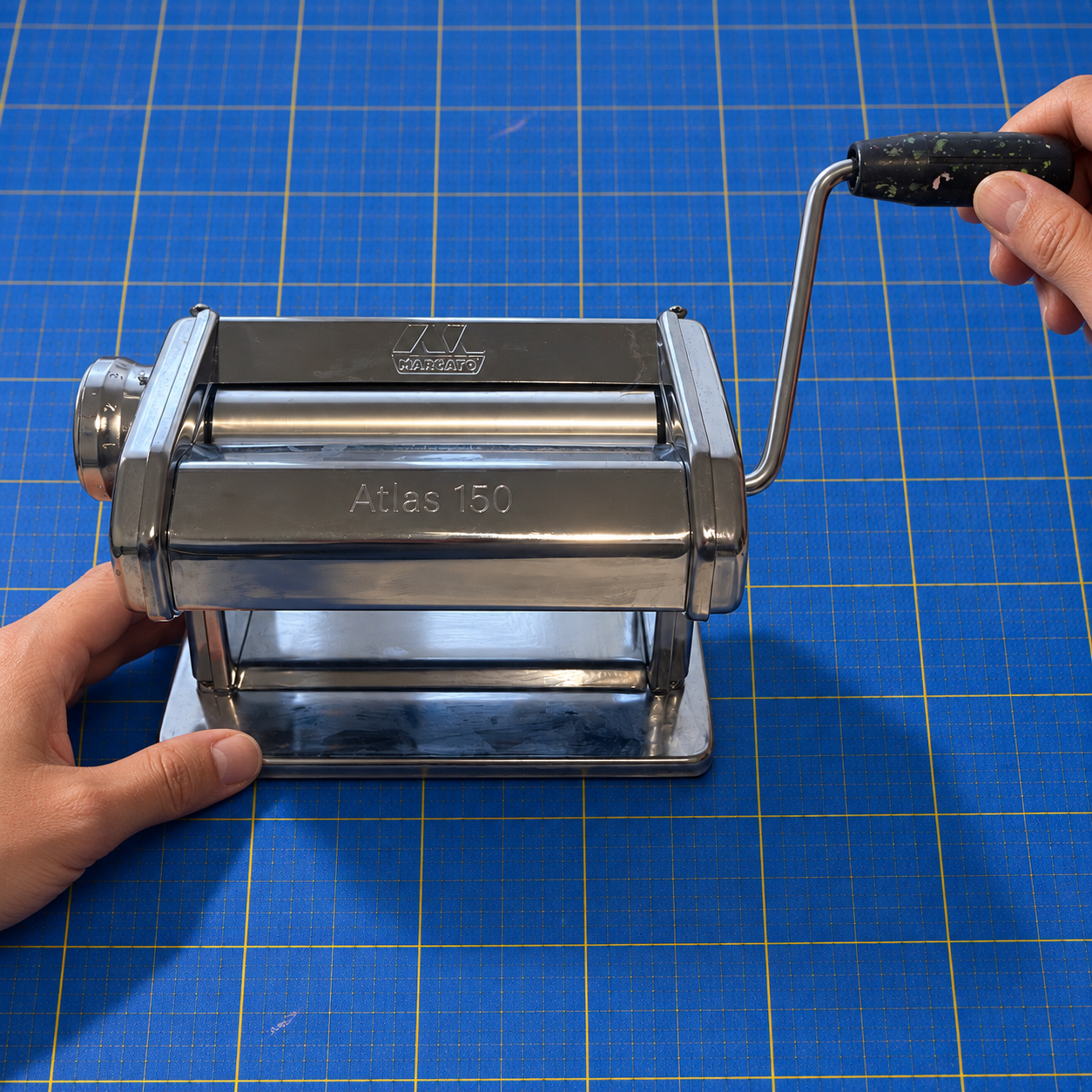
Once a machine has touched polymer clay, keep it for clay only. If you are choosing one, the pasta machine comparison covers roller width, clamp fit, and settings.
2. Acrylic roller: hand rolling, joins, and pressed patterns
Even with a pasta machine, I use the acrylic roller for small pieces, pressing two slabs together, and working a pattern into one area. I can turn the clay and change the pressure under my hands instead of feeding the whole slab through the machine again.
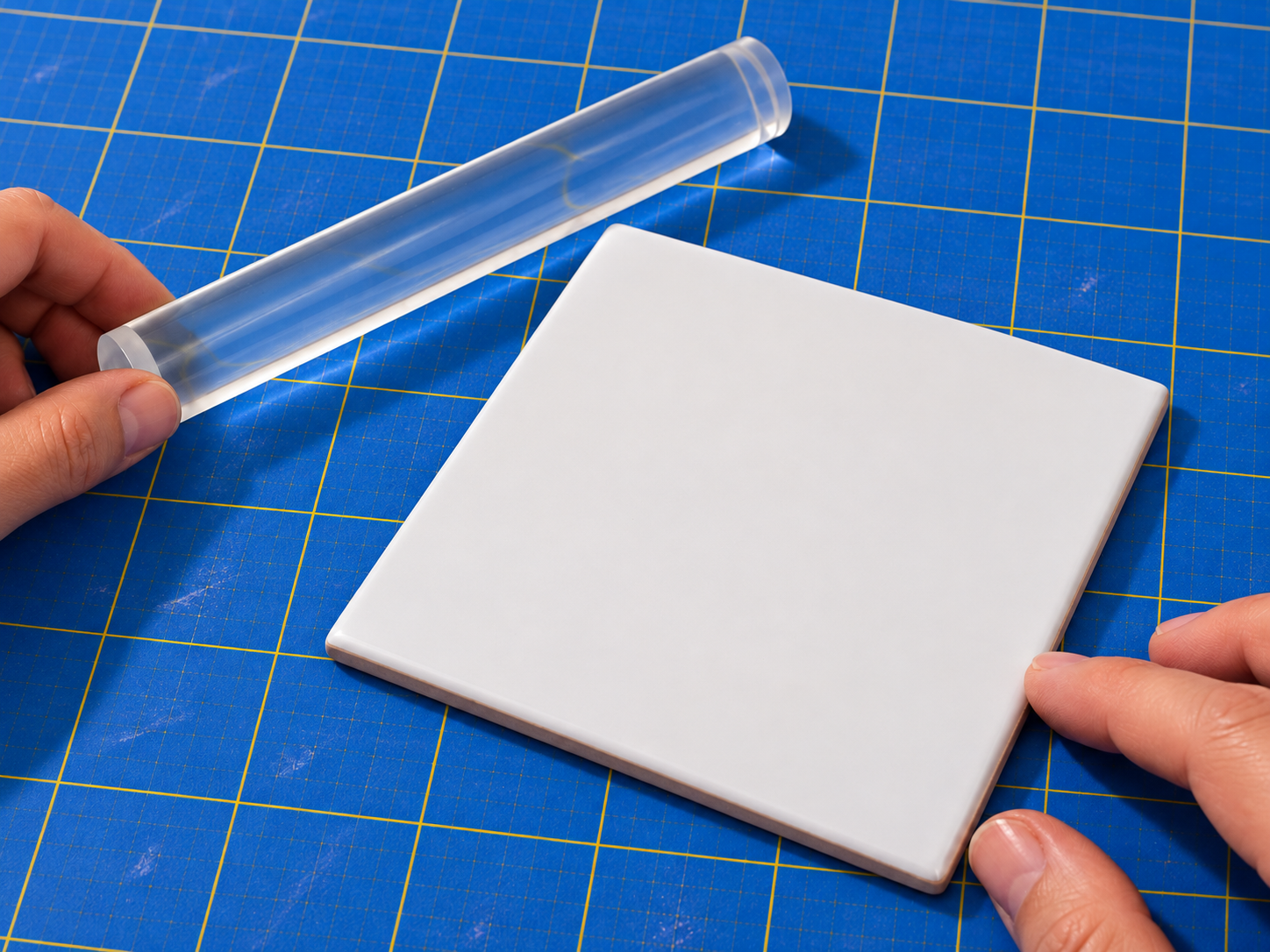
This smooth acrylic roller is the type I mean. Check that its length suits the slabs you actually make.
For small shaping tools, I want enough weight in the handle that the tip feels controlled. I would start with a point, a few clearly different ball sizes, and one firm wedge or chisel tip. The shaft should not wobble in the handle or bend under light pressure.
3. Point tool: tiny marks and awkward corners
I prefer a point tool with a substantial handle. The point is for the smallest moves: marking a position, lifting the edge of a small applique, nudging a thin line, or teasing clay out of a corner.
If you are making an earring hole, check the opening against the actual connector before you repeat it on the second piece. Cover the point before putting it away.
4. Ball tools: curves, hollows, and rounded indents
A few ball sizes are more useful than one. A larger ball opens a broad hollow; a smaller one makes a dimple or a fine rounded indent.
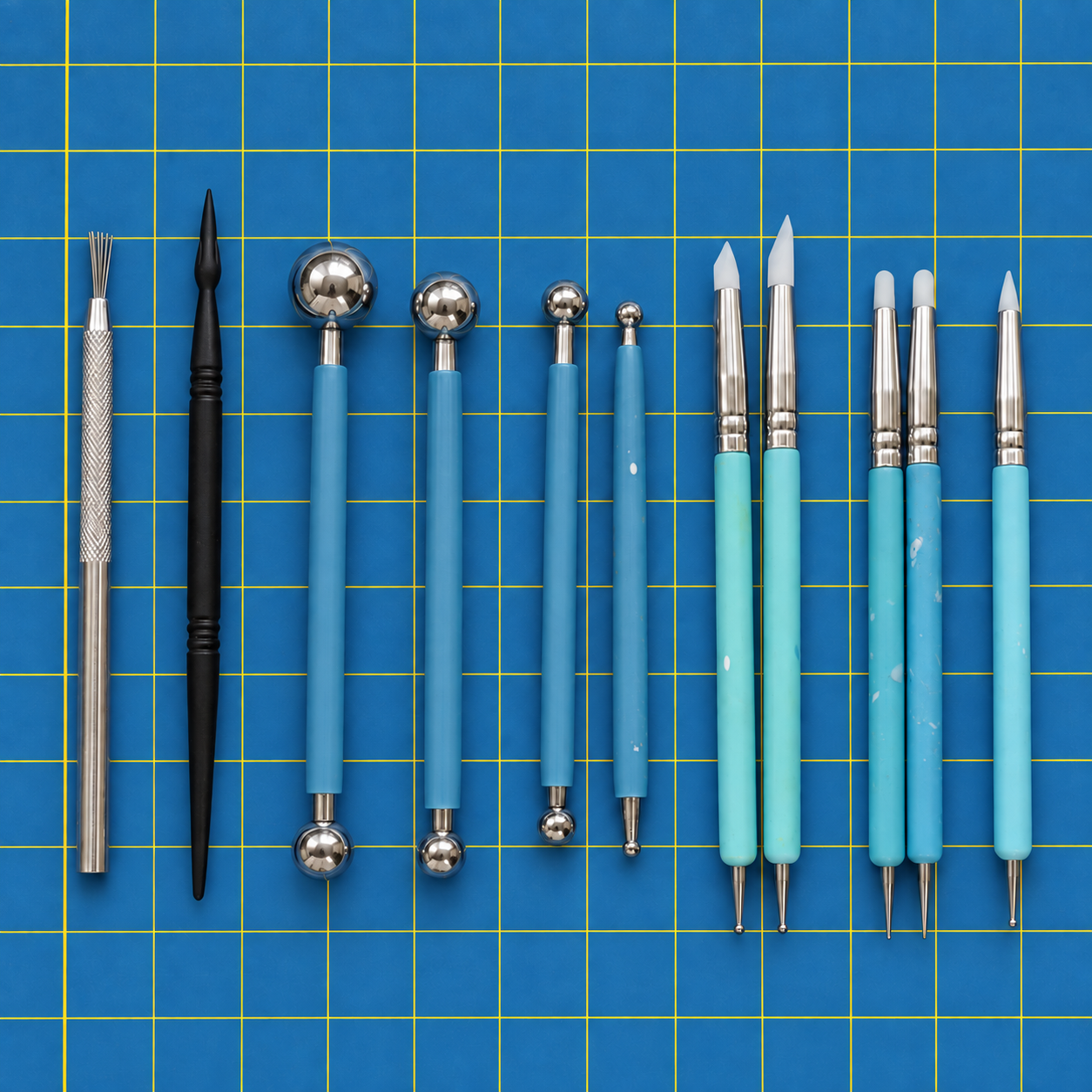
Start with the larger ball and light pressure when you want a gentle curve. A tiny ball pushed hard is more likely to dig one deep hole. Look for smooth metal ends that are firmly fixed and different enough in size to leave visibly different marks.
5. Firm wedge or chisel-tip shaper: corners and seams
A small flat edge can sharpen a corner, smooth a joined seam, or press clay into a narrow gap without leaving the round dent of a ball tool.
Set names vary, so compare the tip itself. Look for a firm wedge or chisel profile with a shaft that stays steady in the handle. Do not assume a cone, knife, or angle tip is the same shape.
6. Tissue blades: lifting a slab without dragging it out of shape
I use a tissue blade to get worked clay off a hard surface. Lay the blade almost flat and ease it underneath the slab instead of trying to lift one edge with a craft-knife tip.
The broad blade gets under more of the slab at once, and the straight edge is also useful for long cuts through layered clay. Keep both uses on the tile or acrylic sheet, not on the flexible mat.
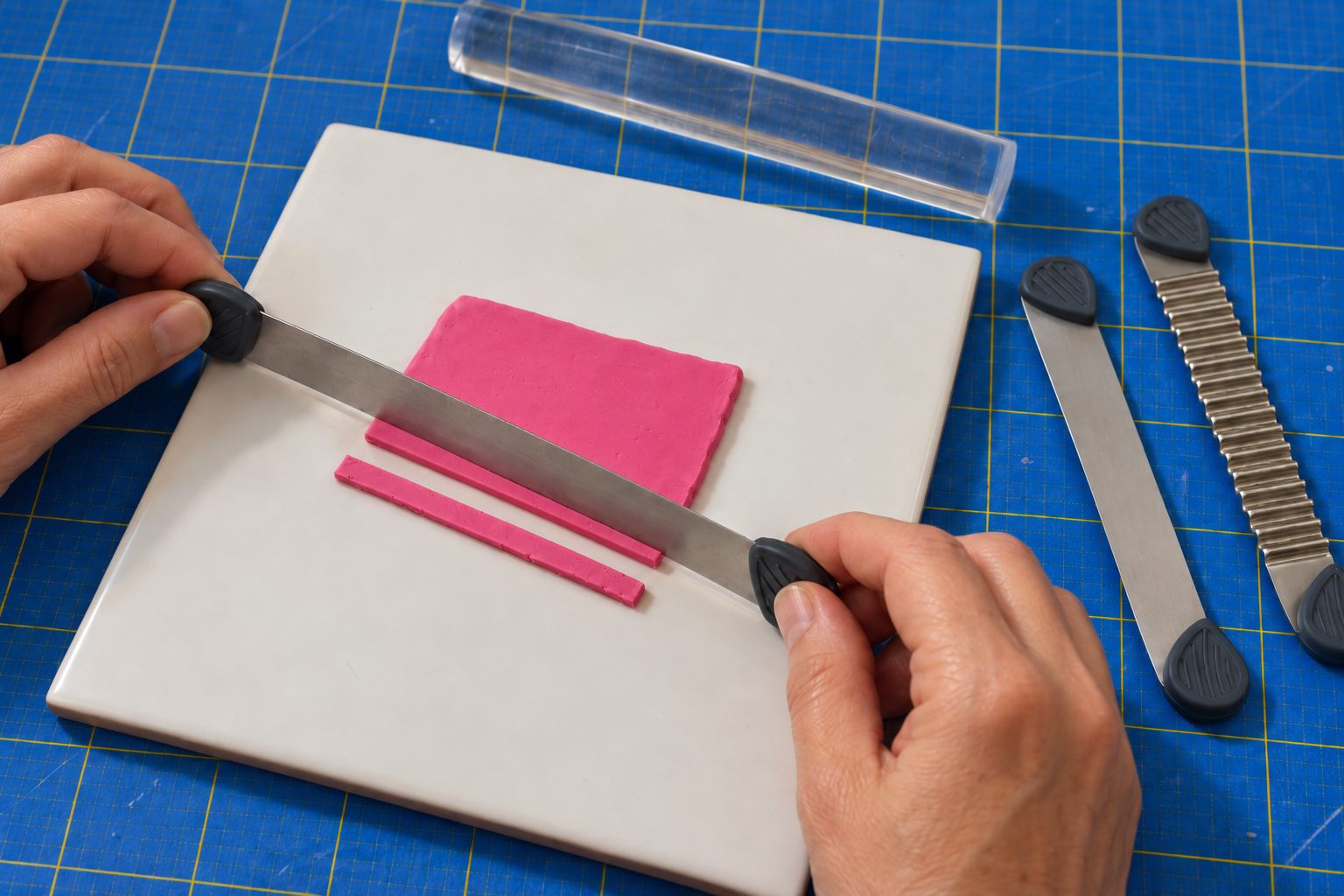
This tissue blade set shows the broad blade shape I mean. Check how each blade is meant to be held, keep your fingers behind the cutting edge, and cover every edge before putting the blades away.
The hard surface and flexible mat do different things. The tile or acrylic sheet stays firm under the roller and blade. The flexible mat can move with the clay still supported.
The one-tray workspace setup shows how to arrange the active surface and current tools when the table needs to pack away.
7. Acrylic sheet or glazed tile: a flat, hard base
Roll, shape, and lift clay on something flat and hard. The roller gets a level base, and the tissue blade has a firm surface to skim across as it slides under the slab.
Choose a flat, nonporous acrylic sheet or glazed tile with no texture to print into the clay. Keep acrylic out of the oven. Only bake on the tile if its own instructions say it can take the temperature printed on the clay package.
8. Flexible work mat: moving clay without peeling it up
A flexible mat lets you move the clay with its support instead of peeling it away from a rigid tile first.
Read the mat label before baking on it. Its instructions need to allow the temperature printed on the clay package. If they do not, use it for clay work only.
Keep the blade on the tile or acrylic sheet so you do not score the mat.
9. Clay cutters: getting the second shape to match the first
I use cutters when I want a shape I can repeat. For jewellery, that might be the other half of an earring pair or several pieces for a small batch.
A cutter only repeats the outline. It cannot fix an uneven slab or clay that is too soft to lift cleanly. Check that the cutter wall does not flex, the cutting edge is clean, and there is enough room to release the clay without squeezing it.
Start with a small set of shapes you know you will use. Hand-cut the one-off shapes, then add a cutter when you find yourself tracing the same outline again.
10. Sculpey Premo multipack: the clay I’d start with
The clay is number ten. If I were starting again, I would choose a Sculpey Premo multicolor pack.
A mixed pack gives you several colours for small slabs, simple mixes, and practice pieces before you buy larger blocks. The linked Premo 24-color pack is one current example. Check the colours and block sizes in the current listing, and keep the package for its baking directions.
The beginner clay brand guide compares other common options if you want a different starting clay.
Before anything goes in the oven
These ten cover conditioning, shaping, and cutting. Baking is a separate setup: follow the current time and temperature on the package for the exact clay in front of you, and use a separate oven thermometer in the baking area.
If I were rebuilding today, that is where I would begin. Your list may be different. If conditioning hard clay leaves your hands tired, start with the machine. If a slab stretches when you lift it, sort out the hard surface and blade. If you keep tracing the same earring, add the cutter. Build the rest from there.
What to read after setting up your kit
Start with the clay guide, then compare pasta machines or set up the oven check before your first bake.
Polymer Clay for Beginners: Clay, Tools, and a First Test Piece
Choose one clay line, use three basic tools, and make a small package-directed test piece before adding more supplies.
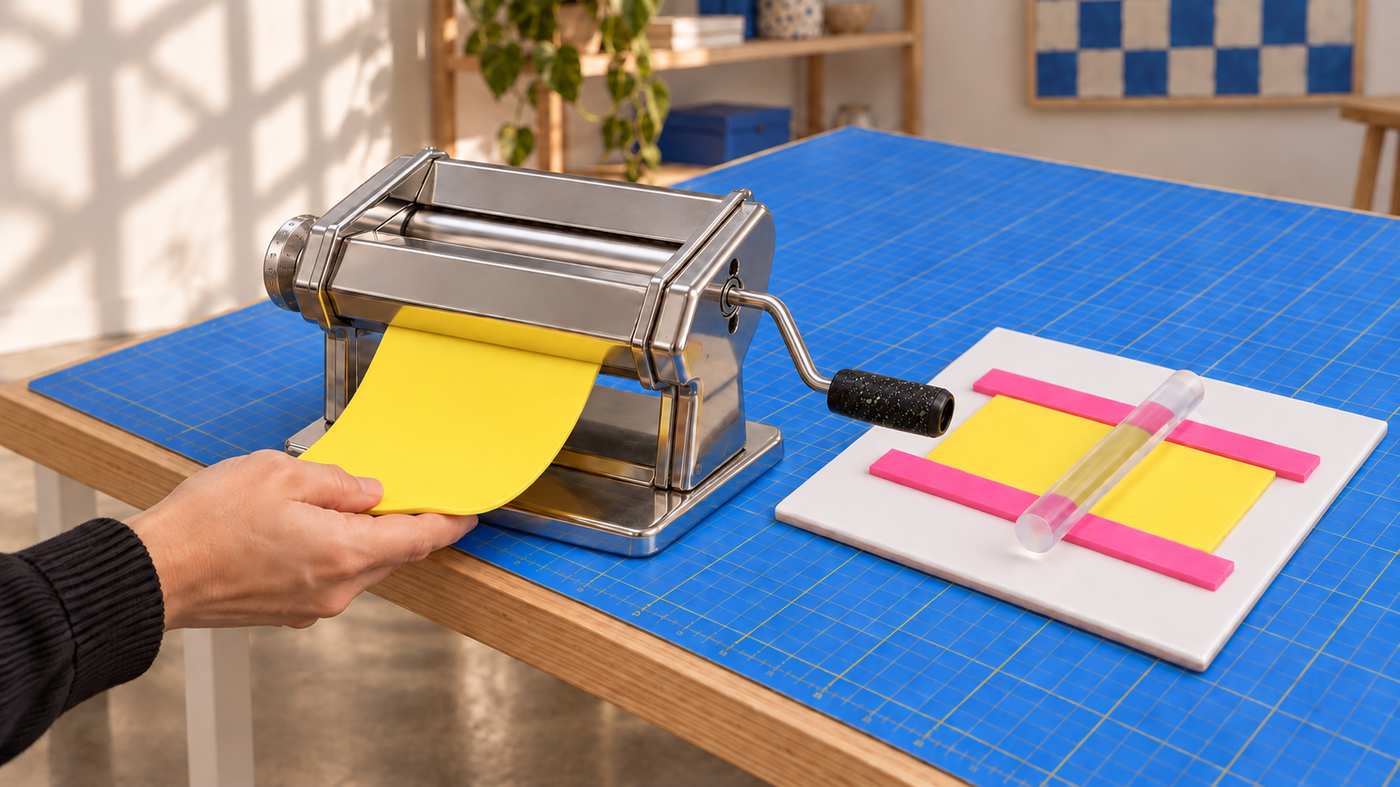
Best pasta machine for polymer clay: Atlas, Sculpey, Makin's or a roller
Buy the Marcato Atlas 150 for earring slabs and blends, or the Atlas 180 for slabs over 14 cm wide. Measured widths, thickest settings and lower-cost machines, compared.
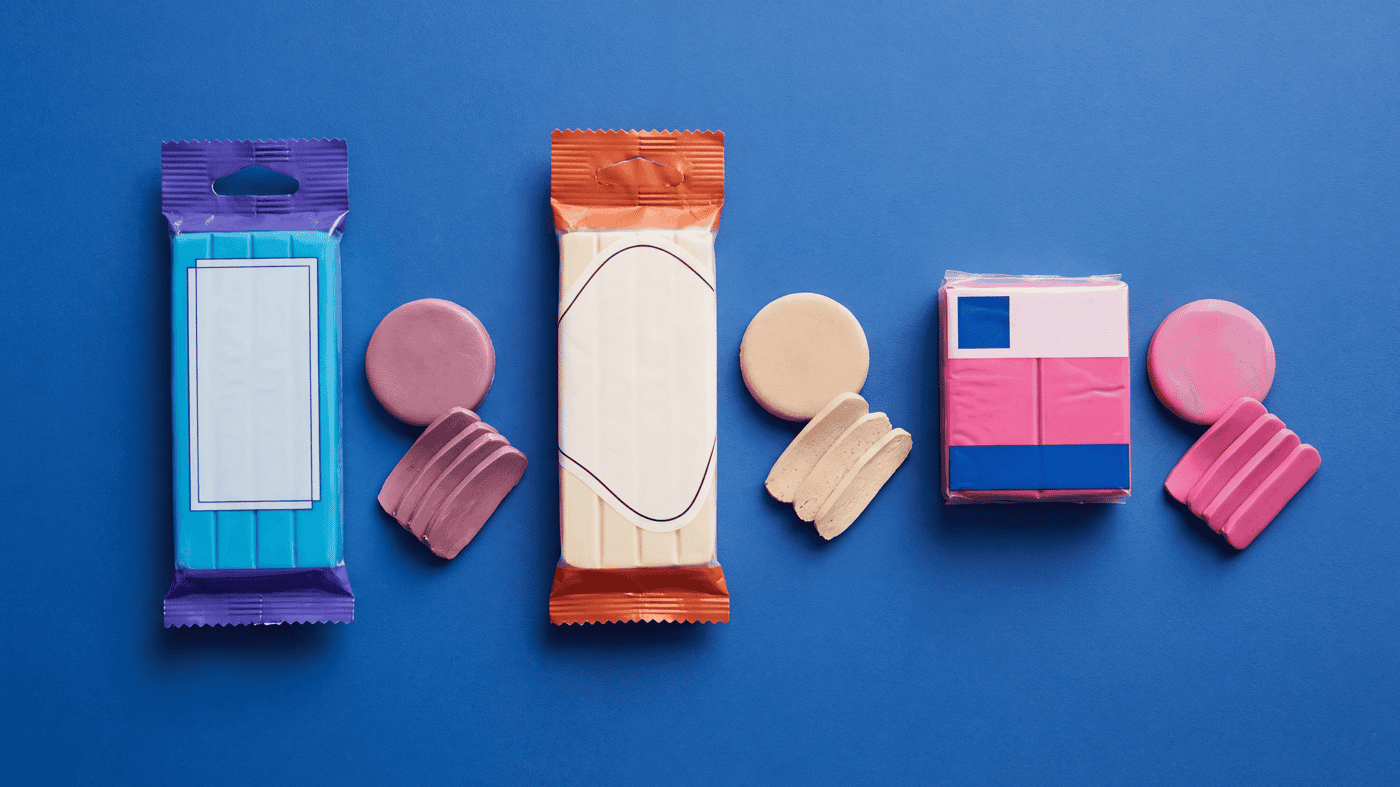
Premo vs Soufflé vs FIMO: which polymer clay to buy for cutter and layered pieces
Buy Sculpey Premo first for cutter and layered pieces, Soufflé when the pair must stay light, and FIMO Professional when a design cuts many small pieces from one slab.
See these tools in finished pieces
See how even slabs, repeatable cuts, and fine shaping show up in finished earrings and small sculpted pieces.