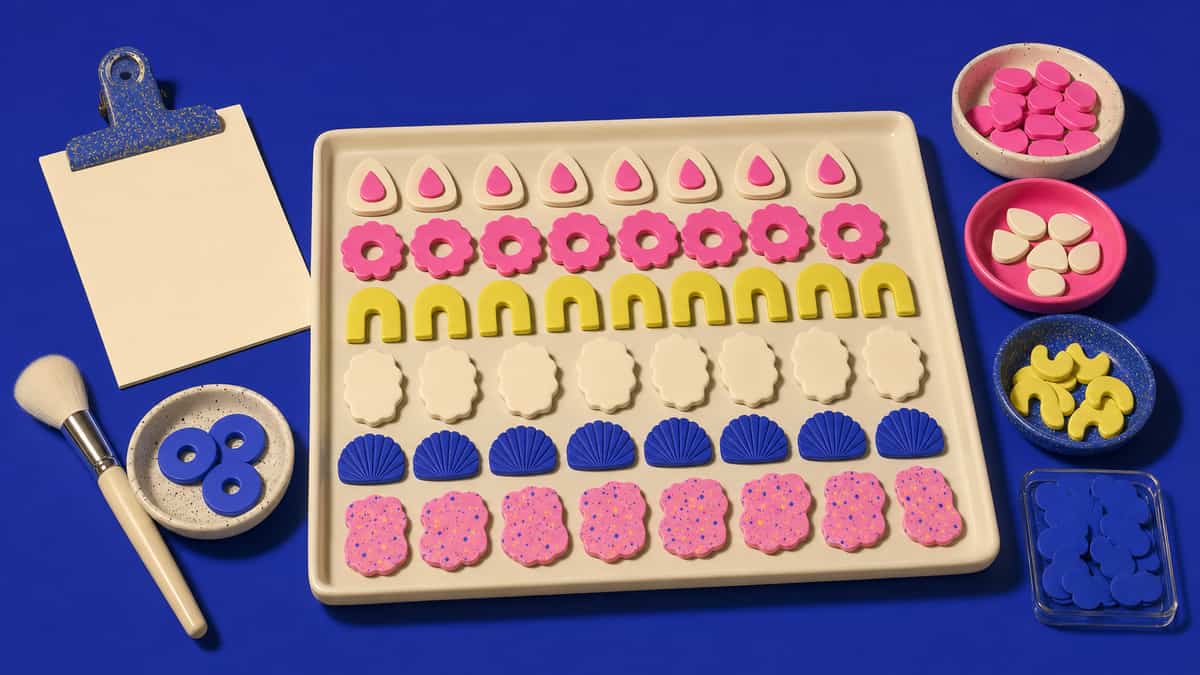
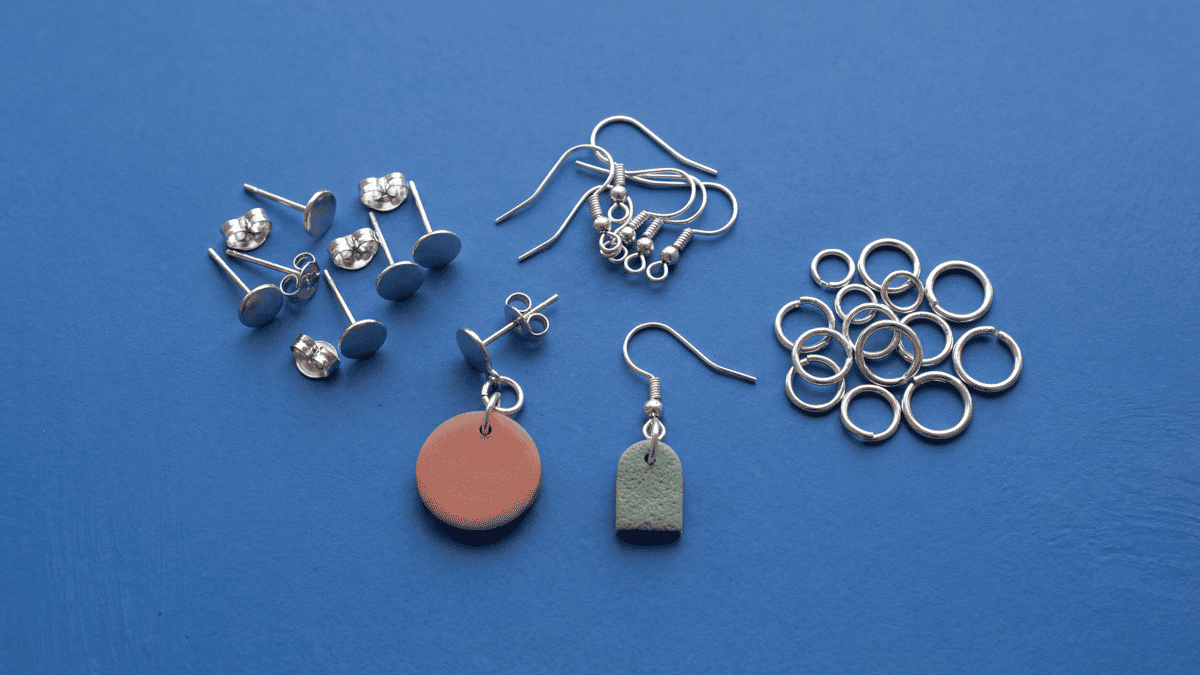
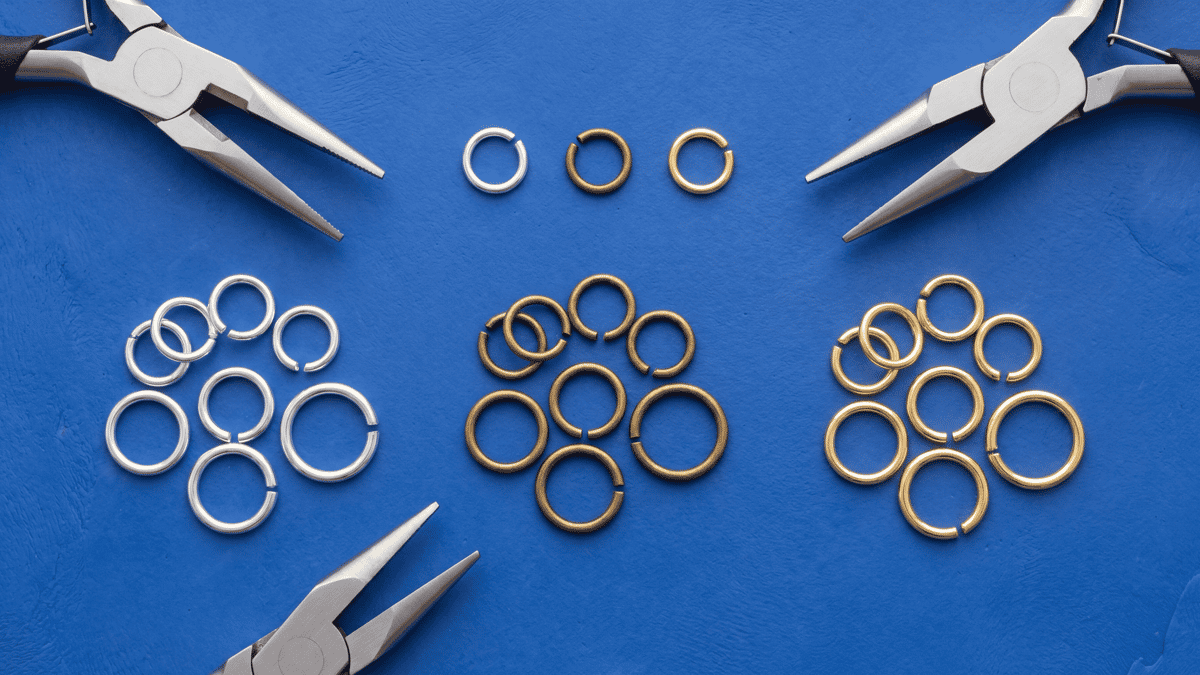
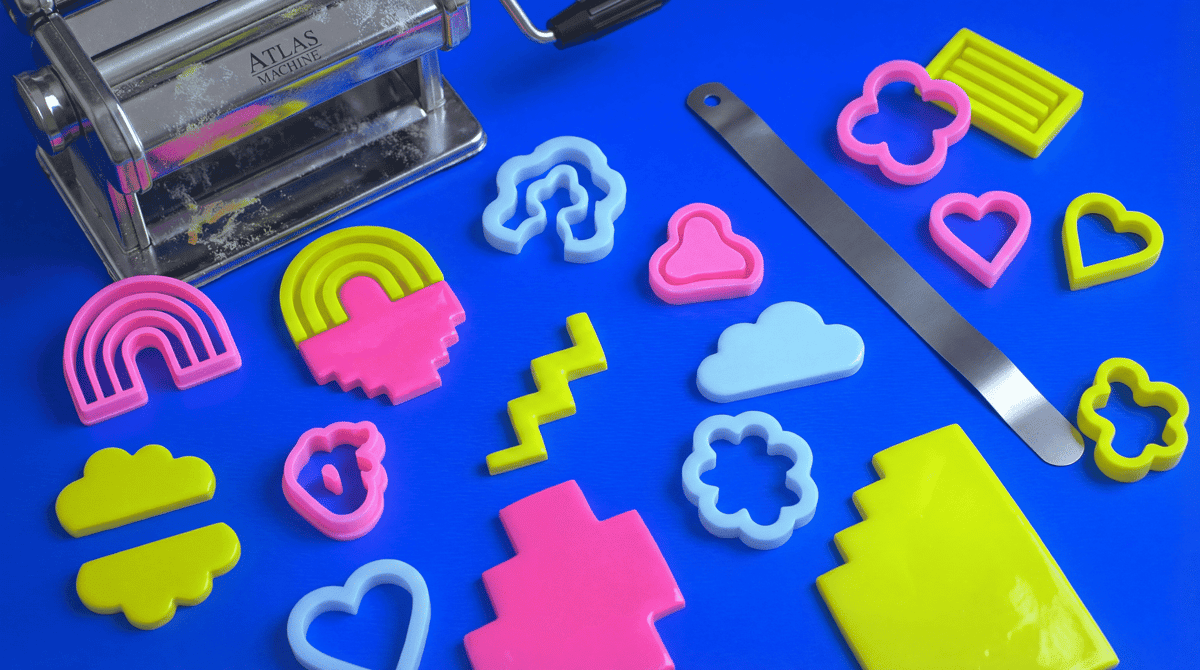
Plan a small collection around repeatable designs. Include clay, findings, finishing time, packaging, and photography when working out your cost per pair.
Going from hobby maker to seller starts with checks you can run today: batch production that repeats, pricing math from a real test batch, hardware you have actually worn, and listings that say what the piece is.
Build designs that are easy to repeat
01
Before listing a new design, verify you can replicate it. Write down your custom color recipes (e.g., '3 parts Premo Cobalt + 1 part Premo White'), note your pasta machine settings, and keep a guide log so your batch colors match.
Bake a test batch of ten pairs before you price the design, not a single perfect pair. Track how many warp, bubble, or have post attachment issues, and use that yield to calculate your true material and labor cost per finished pair.
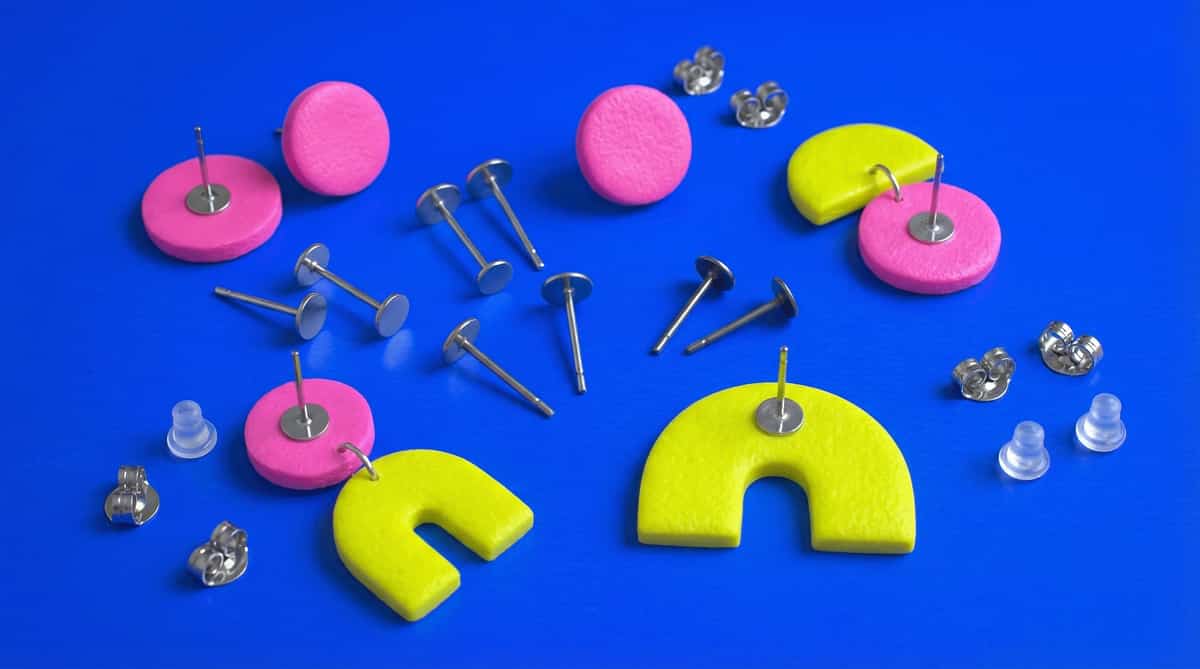
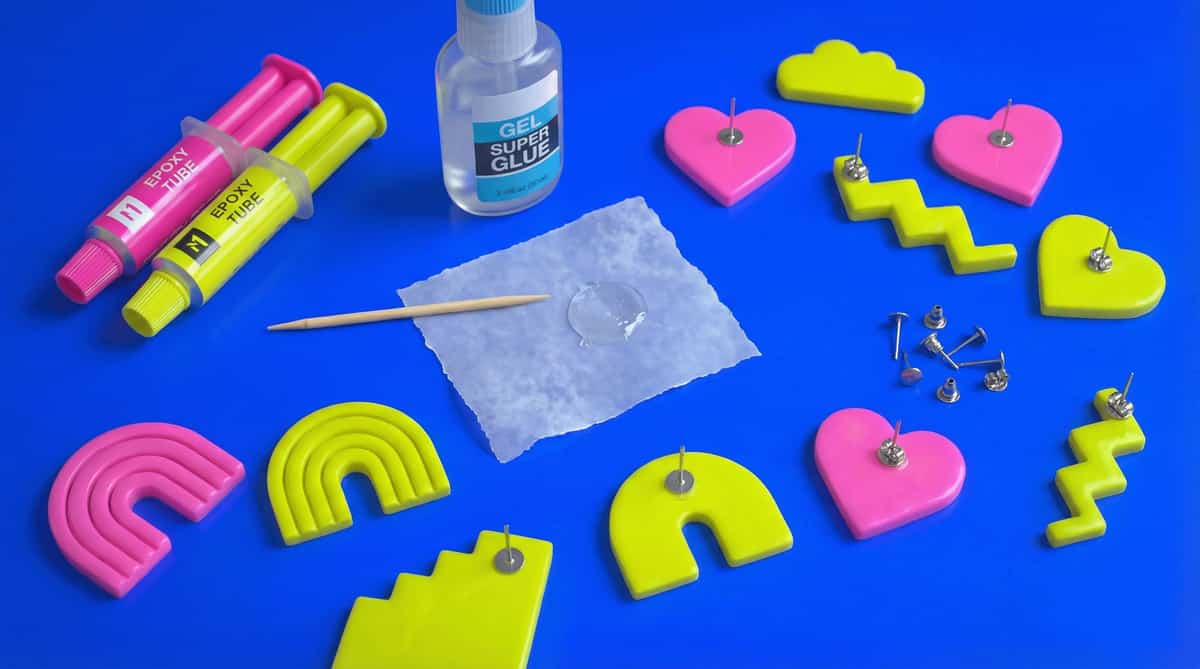
Before selling a design, wear a test pair for a full day. Check if the glue bond holds up to pulling, if the post stem rotates on the pad, or if the jump rings stretch. If a post lifts or pops off under pressure, switch from simple gluing to embedding the post in clay or using a specialty jewelry adhesive.
Buyers cannot pick the piece up, so show what they cannot feel: front on white, the side edge for thickness, the back so they see whether the post is embedded or glued, and the pair near an ear for scale. Nail those before any styled flat lay.
Name your earrings after the color, shape, and material buyers actually search for. A title like polymer clay daisy dangle earrings pulls more search traffic than summer breeze dream. Lead with the words someone would type so the listing matches the search.
A selling workflow still starts with a single sample pair. Use the kit page to separate must-have supplies from batch-only upgrades before you spend on larger cutter sets, full finding assortments, or extra finishing products.
BusinessBatch by step rather than by piece: condition all clay first, then cut all shapes, then bake the full tray. Switching between steps eats more time than the steps themselves.Read Guide
BusinessSet up a small lightbox or a window-light corner for product photos. Consistent, even lighting helps a row of listings feel like one shop.Read Guide
BusinessSpecific listing titles are easier for buyers to understand. Put the material, shape, and earring type before the collection name.Read Guide
BusinessSlip a printed care card in every order: keep away from heat, wipe with a soft cloth, store flat. Clear care notes help buyers look after the earrings correctly.Read Guide
BusinessPull your top 5 and bottom 5 listings each month. Add variations to the bestsellers, retire the slow movers, and free up shelf space for the next collection.Read Guide
JewelryWear nitrile gloves for the final assembly and packing pass. Fingerprints on baked clay or polished metal parts show up under product photography lighting.Read Guide
BusinessBatch by step rather than by piece: condition all clay first, then cut all shapes, then bake the full tray. Switching between steps eats more time than the steps themselves.Read Guide
BusinessSet up a small lightbox or a window-light corner for product photos. Consistent, even lighting helps a row of listings feel like one shop.Read Guide
BusinessSpecific listing titles are easier for buyers to understand. Put the material, shape, and earring type before the collection name.Read Guide
BusinessSlip a printed care card in every order: keep away from heat, wipe with a soft cloth, store flat. Clear care notes help buyers look after the earrings correctly.Read Guide
BusinessPull your top 5 and bottom 5 listings each month. Add variations to the bestsellers, retire the slow movers, and free up shelf space for the next collection.Read Guide
JewelryWear nitrile gloves for the final assembly and packing pass. Fingerprints on baked clay or polished metal parts show up under product photography lighting.Read Guide