guides2 min read
Polymer Clay Cutout Arch Earrings and Hoop Drops
Cutout arches and hoops work best when the wall width is even, the inner opening matches the outer curve, and the hardware choice is made from the finished front view.
Open the guide

The pictures began as AI-assisted concept images and are here for inspiration. The steps are a guide to making your own version, so change the colours, size or details as you like. Clay brands, ovens, glues, finishes and hardware behave differently, so follow their product instructions and bake a scrap before a batch. Some product links on this page are affiliate links. If you buy through them, we may earn a commission at no extra cost to you. Check listing details, dimensions, materials, and fit before you buy. As an Amazon Associate I earn from qualifying purchases. Full disclosures
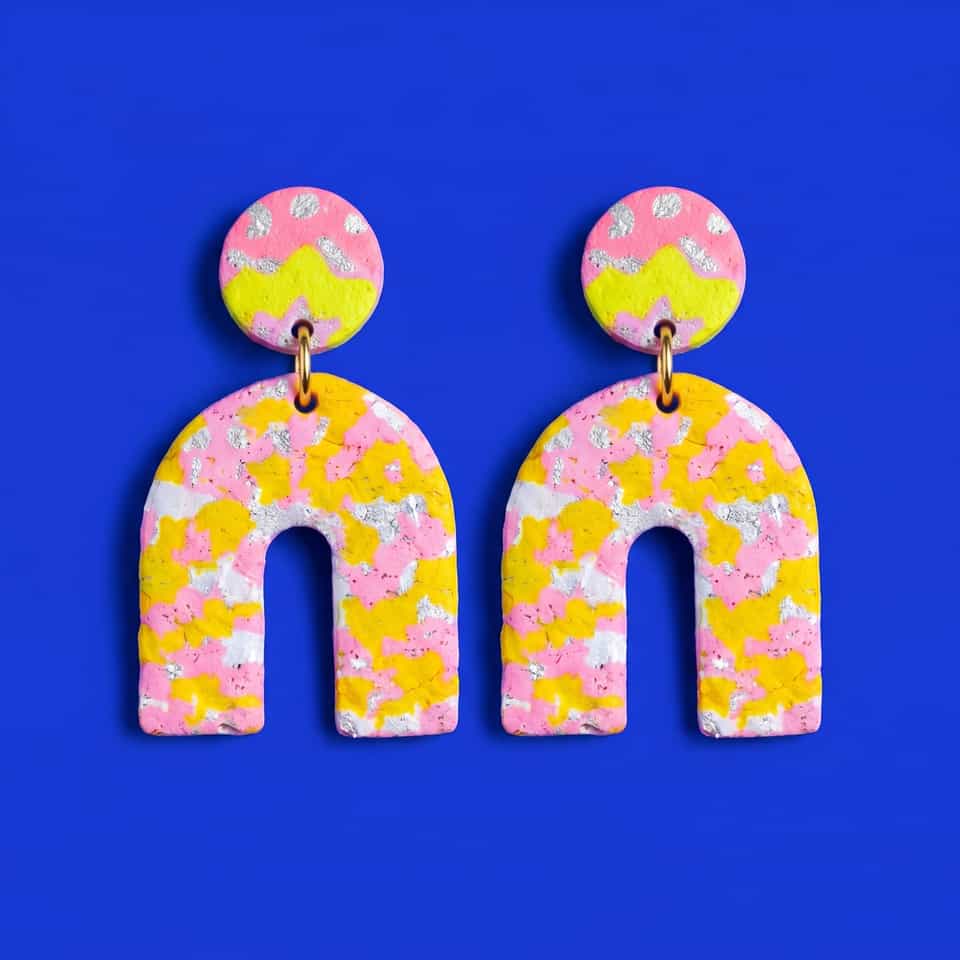
These read as one bold shape on each ear: a round speckled topper that flows straight into a tall open arch, in bright acid yellow with scattered white flecks like terrazzo. They hang as a single post drop, not a swinging two-part piece. Build them as a matched mirrored pair from one speckled slab so both flecks and shape relate side to side. Cut the inner arch opening while the slab is flat and rested, keep the wall thin so the pair stays light on the ear, and round every edge after baking. Attach a flat-pad post to the cured back of each topper, or build the topper and arch as two linked parts if you want a little movement.
A matched pair of bold acid-yellow earrings. Each is one continuous shape: a round speckled topper sitting on top of a tall open arch (inverted-U) drop with a cut-out center. Irregular white speckles scatter across the yellow like terrazzo, the slab edge shows a pale side wall, and the worn shot shows it hanging as a single post drop.
Lookbook view

A cutout slab earring with terrazzo-style speckling. You make a speckled yellow slab, cut the unified topper-and-arch silhouette, clear the inner arch opening, then bake flat and finish. The speckles can come from embedded white chips (terrazzo inclusion), surface-applied flecks pressed in, or a flicked-paint speckle on baked clay, and the shape can be one fused piece or two jump-ring-linked parts.
Condition your yellow clay until smooth. Roll an even slab on a thin pasta-machine setting or between thickness guides so the whole slab is one thickness; a thin even slab keeps the finished pair light on the ear and bakes without warping.
Speckle option A - terrazzo inclusion: roll a little white clay very thin, chop tiny irregular chips, scatter them across the yellow slab, then roll once more so the chips sit flush. This is what the photographed pair reads as.
Speckle option B - surface flecks: press small white clay dots or torn flecks onto the surface of the yellow slab and roll them in lightly so they stay raised but flush enough to cut through cleanly.
Speckle option C - flicked speckle after baking: leave the slab plain yellow, and after it is baked and cooled, flick thinned white acrylic off a stiff brush for a fine spatter, then seal over it. Test the paint and sealer on baked scrap first.
Optional dual-layer edge: back the speckled yellow with a thin white slab, pressing the raw faces together so they bond, which gives the pale side wall you can see on the photographed arch. Skip this for a single-color edge.
Cut a matched mirrored pair: cut both arches from the same slab area with one cutter so they match in size, then flip one blank so the speckle pattern reads as a reflection. Cut the round toppers the same way.
Shape the silhouette. For the photographed look, join each round topper to its arch as one continuous piece, smoothing the seam so it reads as a single shape. To get a little swing instead, keep the topper and arch separate for jump-ring linking later.
Clear the inner arch opening while the slab is still flat and rested, using a smaller arch cutter or a detail knife misted with water so it lifts clean without dragging. Leave a generous wall between the opening and the outer edge so the arch is not too thin.
If you are linking two parts or hanging the drop, pierce centered connector holes now (bottom of the topper, top of the arch) with a needle tool, keeping a reinforced margin back from the edge. Set both pairs of holes at the same height so the pair hangs level. Holes cannot be moved after baking.
Bake the pair flat on a ceramic tile lined with cardstock or parchment, at your clay brand's package temperature and time. Verify the oven with a thermometer, and tent thin edges with an index card so the high points do not scorch.
Let the pieces cool fully, then wet-sand the outer and inner edges through rising grits, keeping the edge moving so you round it rather than cutting a new flat. Rounded edges feel comfortable and will not catch hair.
Finish for the look you want: a thin water-based satin glaze for a soft sheen, or thin gloss coats to deepen the yellow and pop the speckles. Test the glaze on baked scrap first, since some finishes stay tacky on some clays.
Attach the finding the firm way. Sand a small spot on the cured back of each topper to bare clay and lightly roughen the metal pad, wipe both with isopropyl alcohol, then press a flat-pad post on with a small dot of gel super glue, such as Loctite Super Glue Ultra Gel Control or Gorilla Super Glue Gel, and wait the full label cure time before wearing. For an even firmer hold, embed a textured, slightly bent pad in the raw clay before baking instead.
If you built the two-part version, open a jump ring by twisting the ends sideways with two pliers, link each arch to its topper through the pierced holes, then twist the ends back until they meet flush. Dry-fit, confirm both earrings face forward and hang level, and check the weight feels comfortable.
Metal findings like posts, hooks, and jump rings may contain nickel or other allergens. If your wearer has sensitive skin, choose surgical steel or titanium findings and test any sealant or coating on a small spot before wearing.
What you will need
Before you buy, match the sizes and parts to the version you want to make.
Creates the acid-yellow body of both the topper and arch.
Used in tiny amounts for the visible speckles.
A firm yellow for the round top and the arch, so the arch edge stays crisp when you cut the open centre.
Keeps the topper-to-arch connection light and centered.
Useful for stud and topper builds that need a flat-pad finding after baking.
Needed for opening and closing jump rings cleanly during jewelry assembly.
Tick what you already have, then get only what is missing.
ClayBake makes matched cutter packs sized to this build, so repeated shapes stay consistent. 3D print or order the set from our tools.
Roll every sheet to the same calibrated thickness with the ClayBake slab height guides.
A lightweight clay with a cohesive suede finish that holds fine textures without sticky residue.
Provides a flexible, high-strength bond between cured clay and metal findings.
Optional extras for a different finish, size or fix.
Useful for hardware attachment after baking when the adhesive label supports the materials and cure time.
Each one walks through a technique used in this piece, in full detail.
Cutout arches and hoops work best when the wall width is even, the inner opening matches the outer curve, and the hardware choice is made from the finished front view.

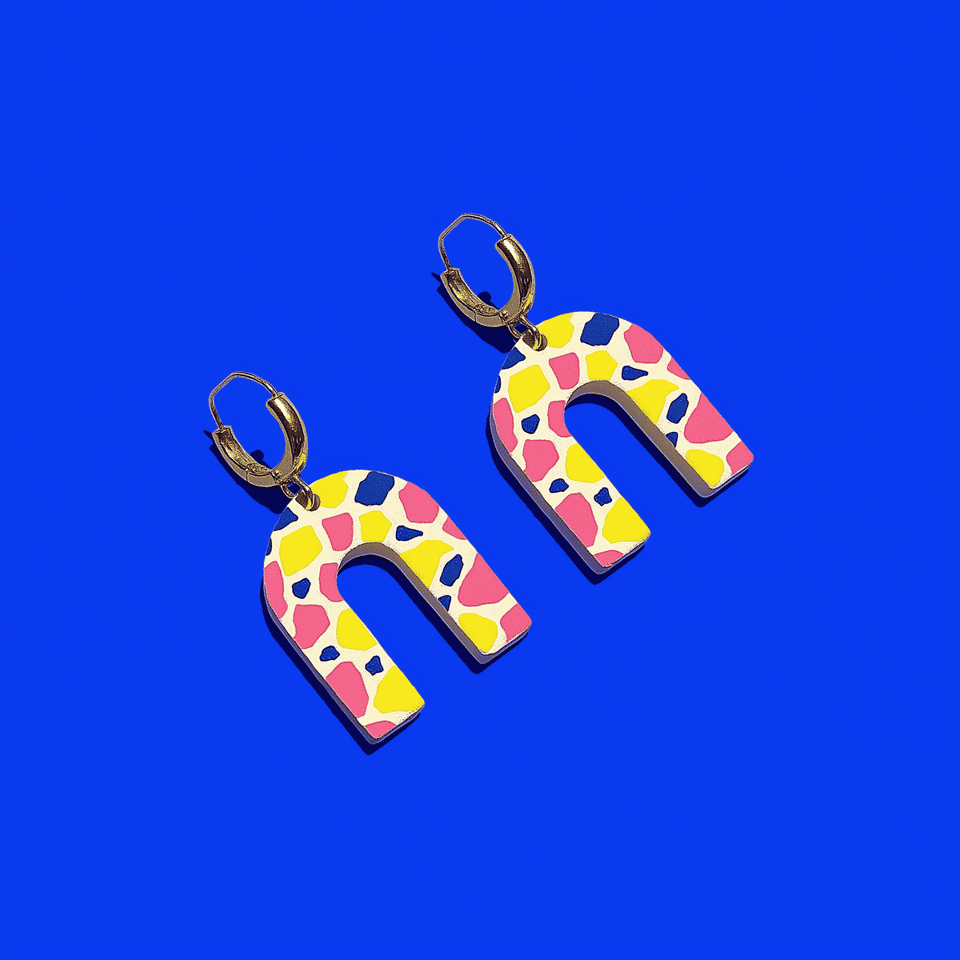
Roll thin chips in two to four colours, press them into a light base about 3 mm thick, roll them flush under paper, cut both earrings from the one slab, then bake and sand for the look of stone.
Custom range
Ask for a build pack to make it yourself (the cutter or tool files, a supply list, and a plan), or ask the studio to make the finished pieces for you.
More pieces with a related form, finish, or making path.
Pin it to a board, copy the link, or keep it saved here while you make your own version.
Tag Clay Bake Studio on Instagram or TikTok so we can see how you adapted it.