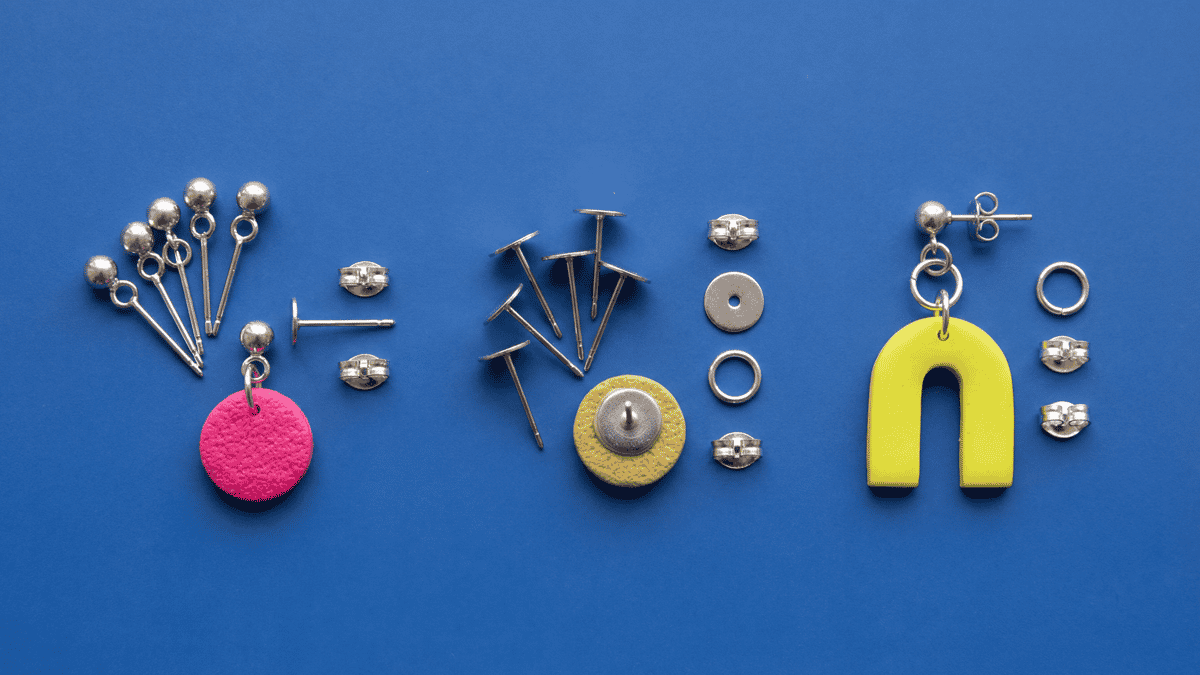
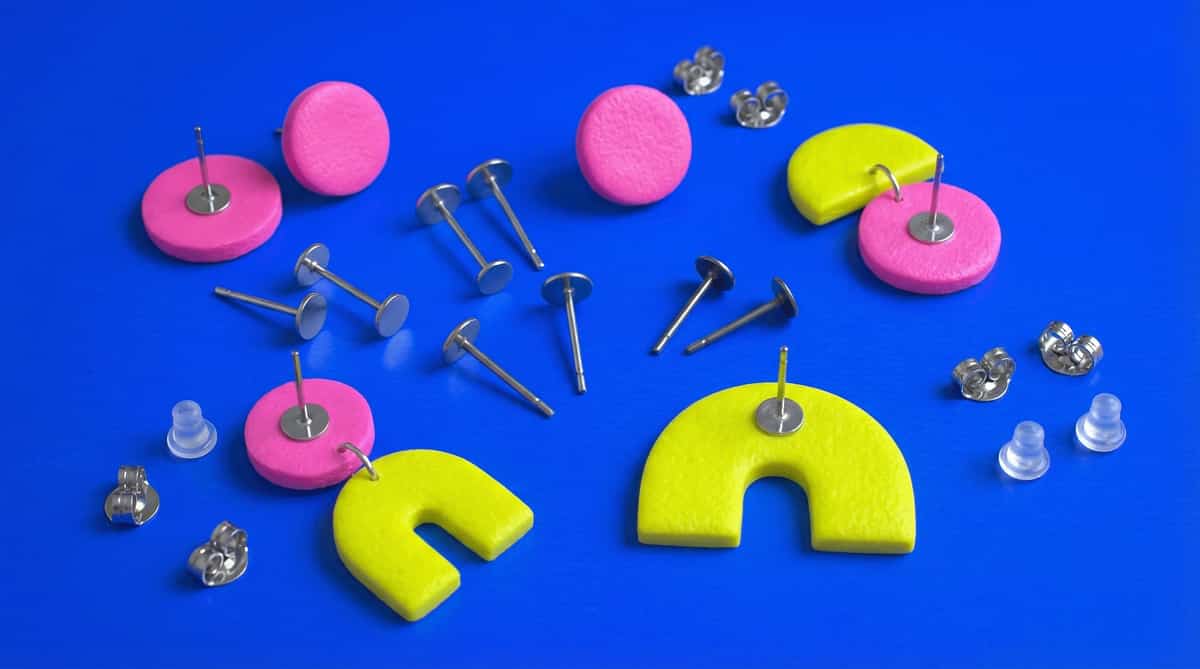
Small slab and ring choices decide whether the dangle swings freely or catches and twists. Use these material checks to reduce catching, twisting, and weak links.
Leave enough margin around your holes
01
Punching connector holes too close to the edge can make the clay tear through. Leave a few millimeters of solid clay between the hole and the edge, then check that the jump ring has enough room to swing without rubbing.
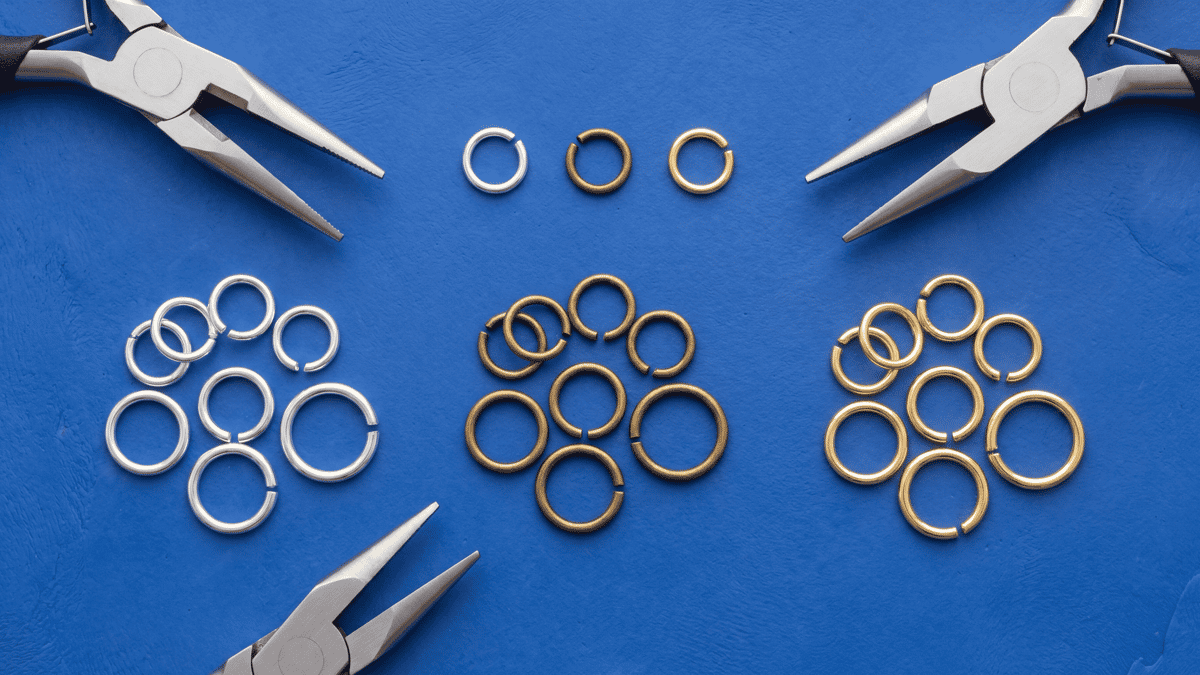
Lay out your multi-piece dangles flat on a tile to check alignment. Open and close jump rings by twisting them sideways with two pairs of chain-nose pliers; pulling them apart can weaken the metal and stress the baked clay hole.
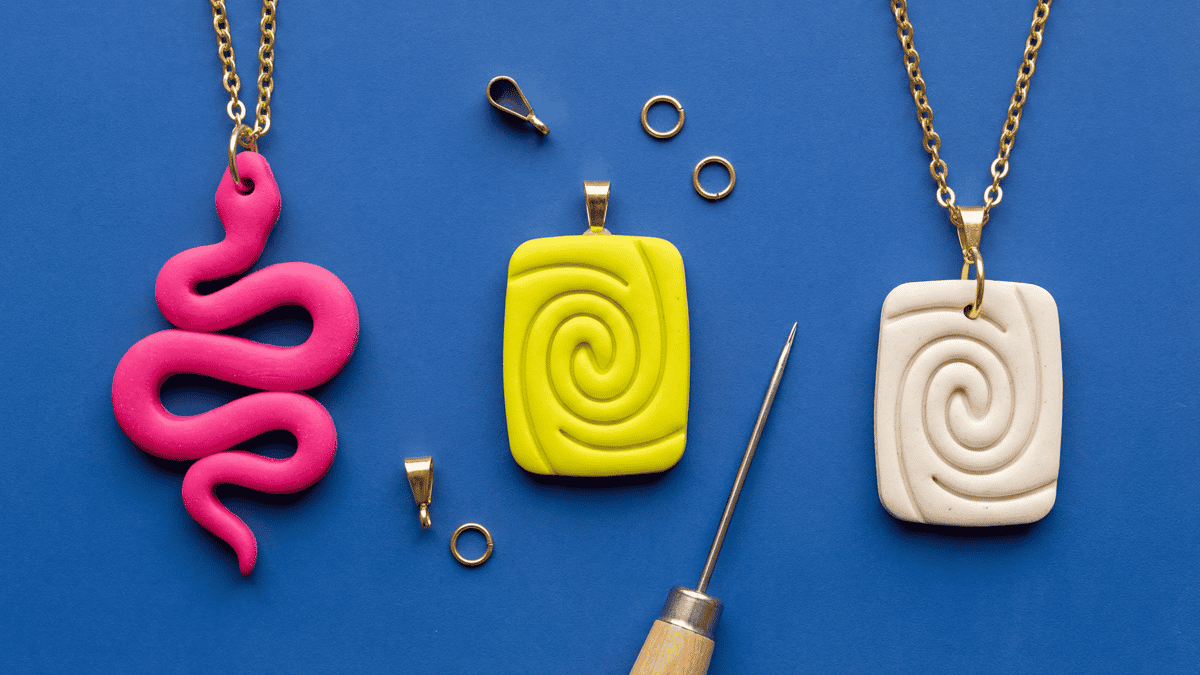
A jump ring settles perpendicular to its hole, so a front-to-back hole turns that segment sideways on the chain of links. Run holes side to side through each tier, and the whole dangle stacks facing forward with one ring per join.
Roll a scrap strip at your batch thickness and slide it into the jump ring before you cut anything. If the ring will not close flat around the clay, drop one pasta-machine setting or pick a larger inner-diameter ring so the dangle has room to swing.
Heavy clear coats or UV resin can pool in connector holes and clog them. Before curing or baking a topcoat, run a headpin or needle tool through the holes to clear out excess liquid.
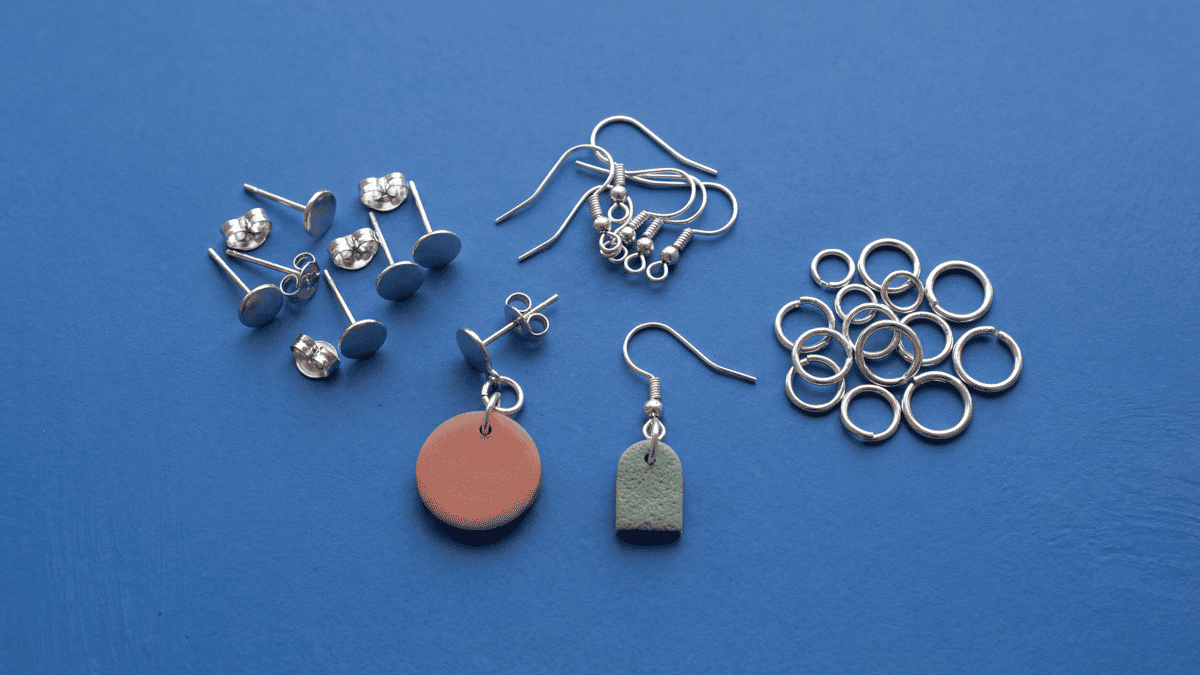
Dangles often fail because the hardware was bought before the layout was tested. Sketch the tiers, choose hole direction, then use the kit page to keep the first order focused on the rings and hooks that layout actually needs.
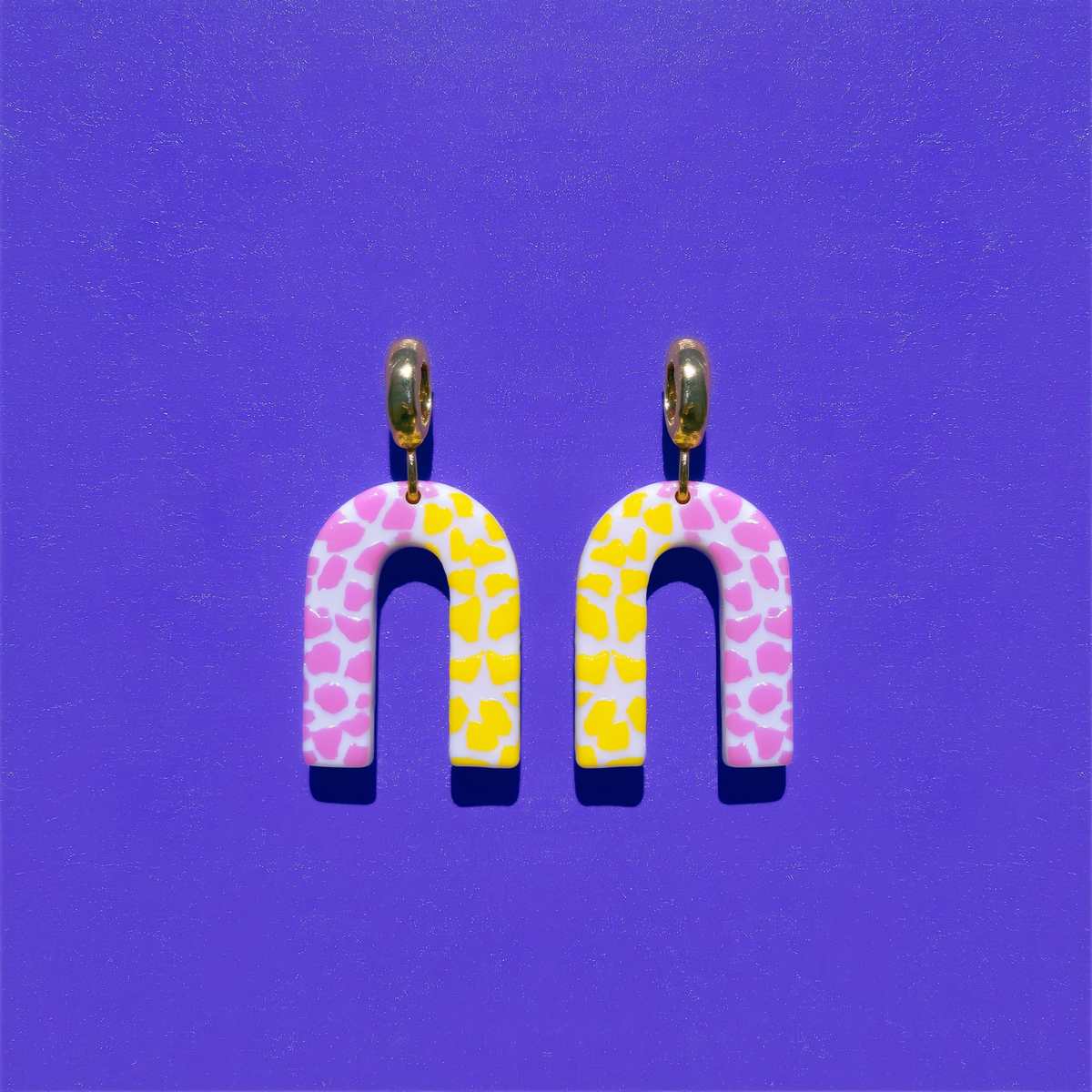
Use these examples for shape and movement first: single drops, linked pieces, stud-top drops, and hooks. Then check the hole placement and edge thickness before making your version.
JewelryYou can pierce holes before baking or drill them after baking and cooling. Test both approaches on scrap and choose based on the project and tool guidance.Read Guide
JewelryMatch the wire thickness of the jump ring (the small metal connector ring) to the ear hook. Mismatched wire thickness can make hand-assembled earrings look uneven.Read Guide
ToolsA rotary tool with a micro drill bit makes drilling clean holes in baked and cooled clay quick and consistent across a batch.Read Guide
JewelryWeigh a sample pair on a small scale so both sides start from the same target. Use cutouts, thinner sample slabs, and shorter ring paths to bring the weight down, then wear your own sample briefly.Read Guide
TroubleshootingIf glue is failing on finished clay and metal parts, rough both surfaces lightly and retest a silicone glue or instant-drying glue on scrap pieces first.Read Guide
FinishingRemove fingerprints after baking by starting with the lightest grit that will actually level the mark.Read Guide
JewelryYou can pierce holes before baking or drill them after baking and cooling. Test both approaches on scrap and choose based on the project and tool guidance.Read Guide
JewelryMatch the wire thickness of the jump ring (the small metal connector ring) to the ear hook. Mismatched wire thickness can make hand-assembled earrings look uneven.Read Guide
ToolsA rotary tool with a micro drill bit makes drilling clean holes in baked and cooled clay quick and consistent across a batch.Read Guide
JewelryWeigh a sample pair on a small scale so both sides start from the same target. Use cutouts, thinner sample slabs, and shorter ring paths to bring the weight down, then wear your own sample briefly.Read Guide
TroubleshootingIf glue is failing on finished clay and metal parts, rough both surfaces lightly and retest a silicone glue or instant-drying glue on scrap pieces first.Read Guide
FinishingRemove fingerprints after baking by starting with the lightest grit that will actually level the mark.Read Guide