guides2 min read
Polymer Clay Trinket Dishes, Forms, and Rims
Use a documented trinket-dish project as the starting point, verify the form and package bake, and keep the result decorative unless the maker supports another use.
Open the guide

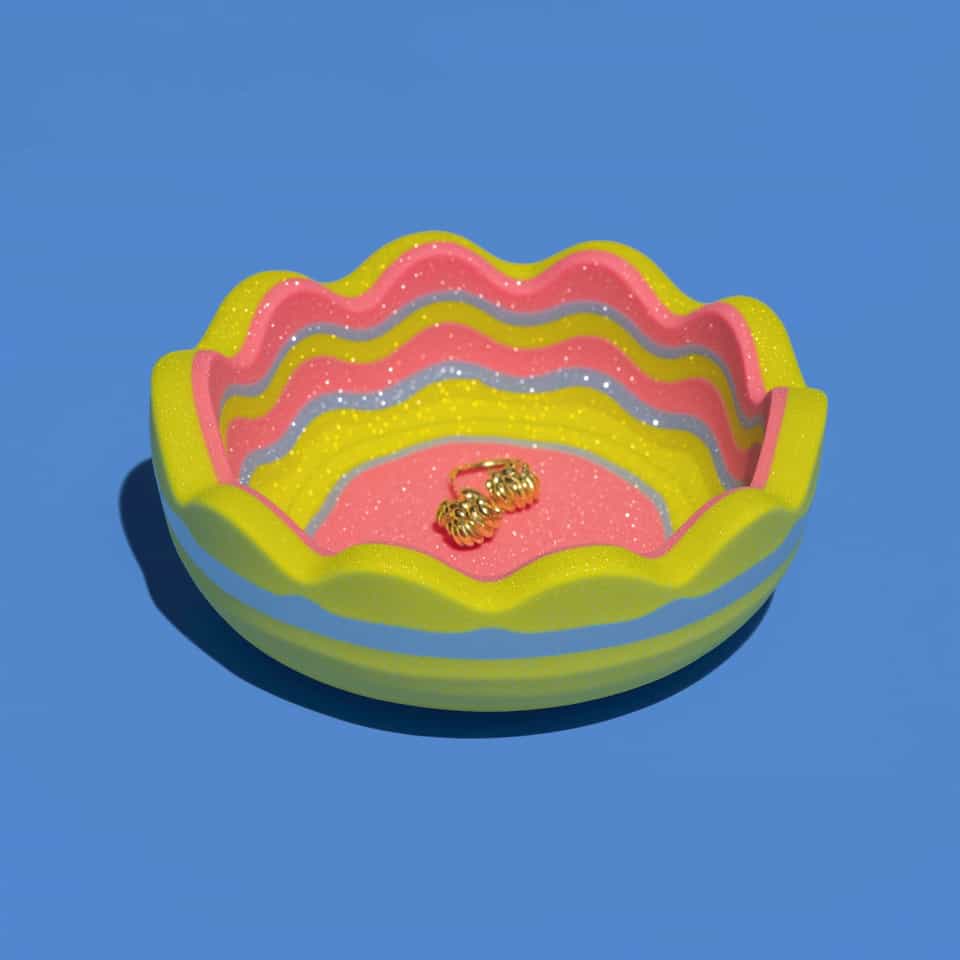
This ring dish is one thick slab of broad colour bands, orchid pink, white, acid yellow, a thin aqua line and royal blue, with a tall wavy rim and a sandy, matte texture all over. The steps join the bands edge to edge into one slab, press it into a glass custard cup, cut the rim into waves, stipple the whole surface and bake the dish in the cup so the wall holds its shape. The picture is here for inspiration: follow the steps as a guide, then change the colours, band widths, rim waves, size or texture to make your own version.
The pictures began as AI-assisted concept images and are here for inspiration. The steps are a guide to making your own version, so change the colours, size or details as you like. Clay brands, ovens, glues, finishes and hardware behave differently, so follow their product instructions and bake a scrap before a batch. Some product links on this page are affiliate links. If you buy through them, we may earn a commission at no extra cost to you. Check listing details, dimensions, materials, and fit before you buy. As an Amazon Associate I earn from qualifying purchases. Full disclosures
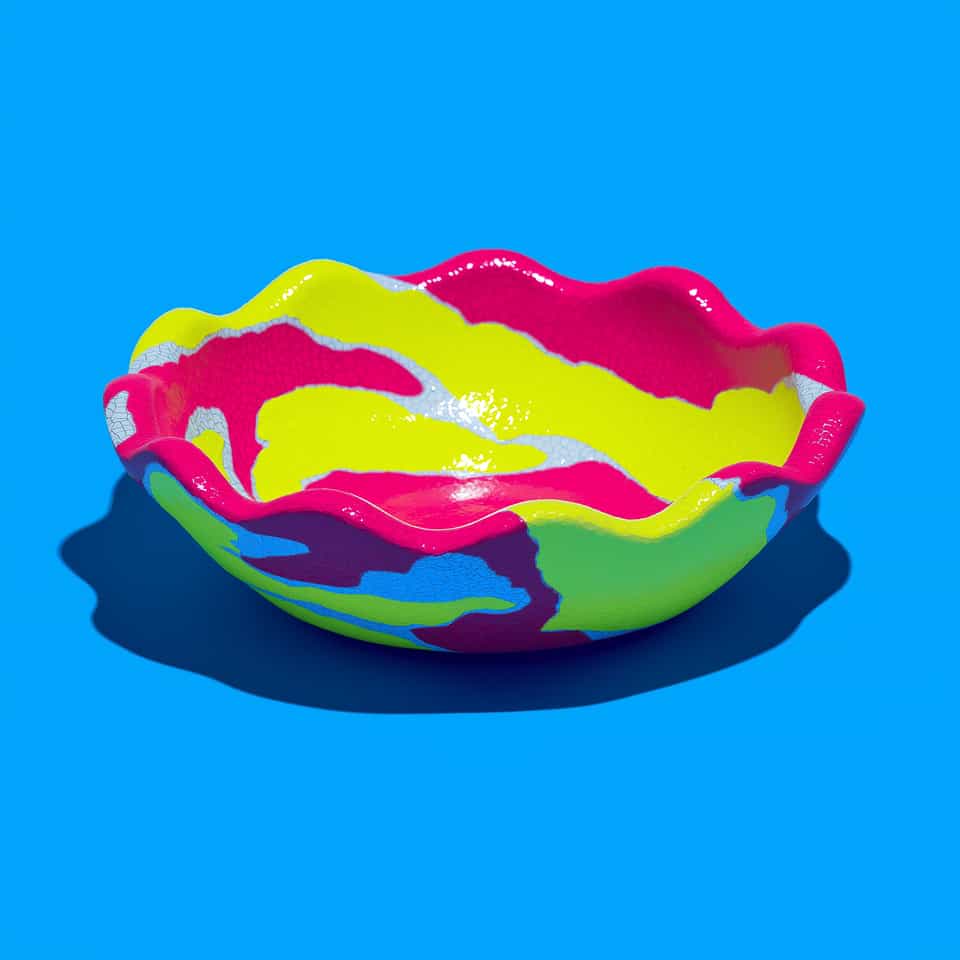
What gives it this look: the bands are wide and few, not a fine marble, and they cross the floor on a slant and run up the wall, with the pink taking about 40 per cent of the dish and the blue about a quarter. Where two colours meet, the line is ragged rather than ruler-straight, and the thin aqua line sits between the yellow and the blue. The wall is chunky, about 5 mm thick, and the rim rises and dips in four to six soft waves. The texture is finer on the pink floor and coarser on the blue rim, and a few specks of glitter catch the light on the rim. The second picture shows a smoother, marbled version in the same colours.
Lookbook view

Build the bands on a sheet of parchment on your worktable, then carry the slab to the cup, so the joins never have to be pulled apart. Condition every colour before you start and mix the two custom colours in one go, orchid pink and acid yellow, so they match across the dish. Clean your hands between colours, because blue on your fingers streaks the white band. This is a dish for dry trinkets: Sculpey does not recommend making dishes you eat or drink from or serve food on, even when glazed.
Condition all five colours. Knead a little white into the fuchsia until it matches the soft orchid pink in the picture, and knead a speck of turquoise into the yellow to pull it toward acid yellow; add colour a little at a time, because it is easy to darken a mix and hard to lighten it. Mix all of each custom colour now, so the band looks the same all the way across the dish.
Help with this step
Roll each colour into a sheet about 5 mm (3/16 in) thick, with a 5 mm guide strip or an equal stack of playing cards under each end of the roller. Every sheet has to be the same thickness, so the joined slab has no step where two bands meet and the dish wall bakes through evenly.
Help with this step
Cut each sheet into a strip with the tissue blade: a wide one of pink, a narrow one of white, a medium one of yellow, a very thin one of turquoise and a wide one of blue. Lay them on parchment edge to edge in that order and push each pair of edges firmly together. For the ragged meeting lines in the picture, tear the joining edges instead of cutting them. Roll across the seams, not along them, with light passes until the strips are one slab; when you lift a corner and flex it gently, no seam should open.
Trace a circle about 13 cm across on the slab with the needle tool, tilting it so the bands cross the circle on a slant, and peel away the waste. A 13 cm blank fills a 6 oz glass custard cup and leaves enough wall for the rim.
Lift the blank into the custard cup, bands side up, and let it settle onto the floor before you touch the wall. Press the floor flat with your fingertips first, then ease the wall up the glass a little at a time instead of stretching it. Where the clay gathers at the rim, push the extra upward rather than folding it over; it becomes part of the waves in the next step. Press out any air you feel under the floor, so it cannot bulge in the oven.
Help with this step
Cut the top edge of the wall with the needle tool along a wavy line, four to six soft waves round the dish, rising and dipping by about 5 mm. Pinch the rim gently between finger and thumb at each crest so it leans out a little, then round the cut edge with a fingertip, so it is not sharp and does not chip. Keep the wall the same thickness as the floor as you go, so the whole dish bakes through evenly.
Help with this step
If the clay feels soft or warm, rest the cup in the fridge briefly, so the bristles leave crisp grain instead of smearing. Then stipple the whole floor, wall and rim with the stipple tool, pressing straight down and working in rows so the grain is even; press a little harder along the blue rim for the coarser grain in the picture. The texture also hides the lines where the bands were joined. Turn the cup and check every part of the inside shows the same grain.
Stand the cup on the ceramic tile and bake by the instructions on the Premo packet, going by the 5 mm wall. Check the oven with a thermometer beside the cup, and tent a foil pan loosely over it to shield the pale white and yellow bands. Let the dish cool fully in the cup: clay is still slightly soft while hot and only firms up as it cools, so a dish lifted warm can sag out of shape. Once cool, it should pop out of the cup; set it on a flat table and it should sit without rocking.
Help with this step
Leave the finish matte, as in the picture: Sculpey says baked clay does not need a sealer, and the sandy grain keeps the colours soft and chalky. Use the dish for rings, earrings and other dry trinkets. Sculpey does not recommend dishes you eat or drink from or serve food on, even when glazed, and says its glazes do not seal the clay against water, so keep food, drinks and water out of it.
Help with this step
What you will need
Everything here is used in the steps above. The clay and the cup are for this dish; most makers already own the tools, so tick those off first.
One 2 oz (57 g) block each of fuchsia, white, yellow and cobalt blue, plus a small piece of turquoise, makes a dish about 10 cm across with some left over.
For the widest band. Knead in a little white until it matches the orchid pink in the picture. All five colours are Premo, so one packet's bake instructions cover the dish.
For the pale band between the pink and the yellow, and to lighten the fuchsia to orchid.
For the yellow band. A speck of the turquoise kneaded in pulls it toward the acid, slightly green yellow in the picture.
A small piece makes the thin aqua line between the yellow and the blue rim, and a speck tints the yellow.
For the wide royal-blue band that wraps the front of the rim.
Press the slab into a cup and bake the dish in it, so the floor stays flat and the wall keeps its lift. A 6 oz cup makes a dish about 10 cm across; keep the cup for clay only.
Pressed straight down over and over, it gives the whole dish the sandy grain in the picture and hides the joins between the bands. A stiff old toothbrush does a similar job.
Tick what you already have, then get only what is missing.
Rolls the five colour sheets to one thickness and presses the bands together across the seams.
Cuts the colour sheets into strips with straight sides that meet cleanly when you join the bands.
Traces the round blank and cuts the wavy top edge of the rim while the dish sits in the cup.
Stand the cup on it in the oven, as Sculpey's dish projects do, so you can carry the soft dish to the oven level.
Sits beside the cup so you bake at the temperature on the Premo packet. The white and yellow bands show scorching first if the oven runs hot.
For a tent over the pale bands, a dish that rocks, or a crack.
Turned upside down over the cup as a loose tent, it shields the pale white and yellow bands from direct heat.
Only if the baked dish rocks: rub the base flat on a wet sheet.
Wear it for any sanding on the baked dish, to keep clay dust out of your lungs.
Only for a crack: mixed with dust filed from a baked offcut of the same colour, it makes a matching putty that fills the crack.
Set one under each end of the roller so all five colour sheets come out the same thickness, and the bands join edge to edge into one level slab with no step between colours.
Each one walks through a technique used in this piece, in full detail.
Use a documented trinket-dish project as the starting point, verify the form and package bake, and keep the result decorative unless the maker supports another use.

Bake flat pieces on a glossy tile and move them onto plain card only for a matte back. Hold curves, limbs and overhangs with fiberfill, crumpled foil or an oven-safe glass form, bake round beads on skewers, and leave everything on its support until it feels cool.

Learn how to marble polymer clay with three colors, a roller, and a blade. A beginner tutorial with pulled, stacked, and tile-cut variations, plus the fix for muddy slabs.
Custom range
Ask for a build pack to make it yourself (a supply list and a making plan for your version), or ask the studio to make the finished pieces for you.

More pieces with a related form, finish, or making path.
Pin it to a board, copy the link, or keep it saved here while you make your own version.
Tag Clay Bake Studio on Instagram or TikTok so we can see how you adapted it.