Conditioning Polymer Clay for Clean Sheets, Crisp Cuts, and Better Canes
Conditioning is not just softening clay. It is how you get cleaner slabs, steadier cane reduction, and sharper cut edges before the piece ever reaches the oven.


Use this reference planas a maker reference, not a final spec. Some pages are researched and drafted with AI assistance, then reviewed by our team. Clay lines, ovens, tools, adhesives, and finishing products behave differently, so check your clay brand's instructions plus manufacturer safety guidance before baking, finishing, or attaching hardware.
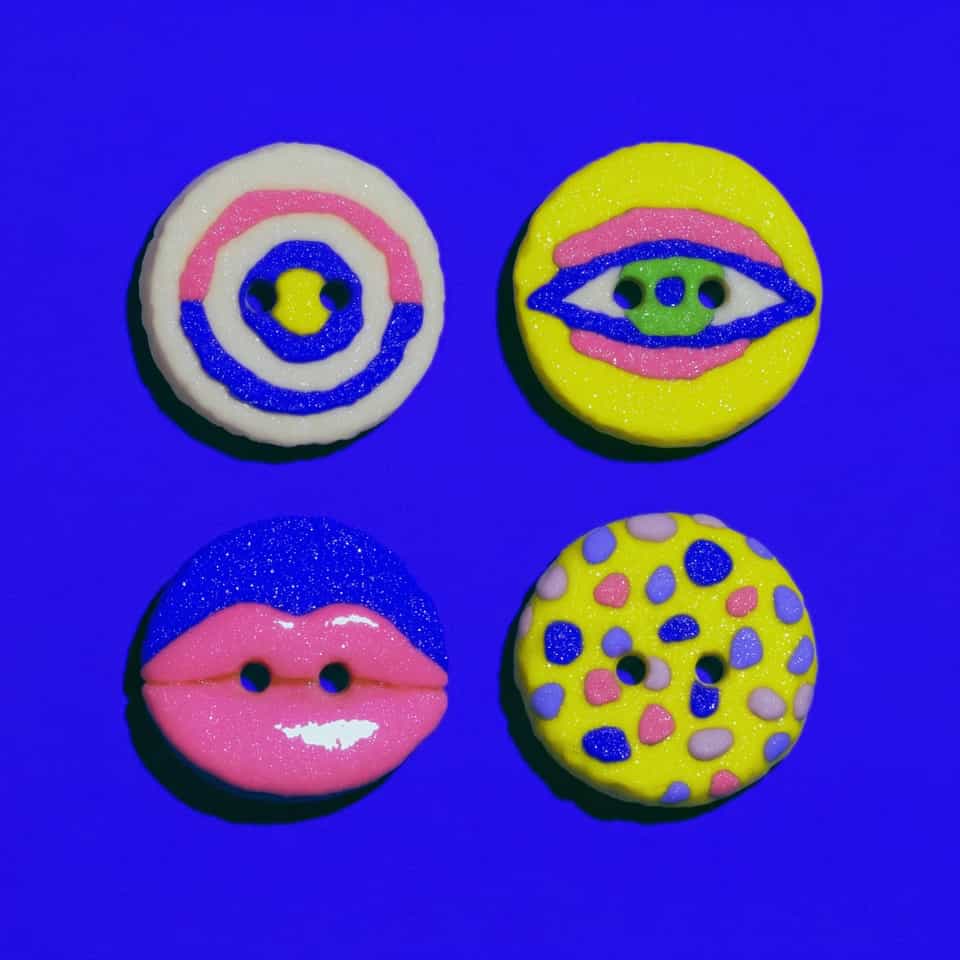
Start with five round blanks built from evenly rolled color-block sheets, because the image pair shows crisp pink, yellow, blue, and white sectors instead of marbling, stripes, or relief carving. Lock the quarter-circle, half-circle, and ring layouts into the front face first, then pierce the two holes only after the graphic seams are in the right place.
A quick read on the clay method, surface finish, and effort level before you start gathering tools.
Dimensions, motif spacing, and step timing below are build-ready estimates inferred from the reference image and the listed technique. Verify measurements against your own setup before cutting or assembling.
Work in sequence so the form, thickness, surface detail, and finishing stay controlled from prep through bake.
Condition each color to a similar softness, then roll even sheets so the yellow, blue, white, and pink sectors do not buckle against each other later.
Build each round face as its own simple geometry study by trimming half-circles, quadrants, rings, and wedges before you commit to the final button circles.
Cut the finished graphic faces into matching circles, then mark the two holes only after you know where the seams and center points land.
Keep every button on a flat tile through the full bake so the circles stay even and the two-hole spacing does not shift.
Clear the holes after cooling and keep the surface matte or softly buffed so the color-block layout stays clean.
Start with the clay colors, cutting tools, a hole-making tool, and a flat bake surface. Add finish or extra oven-control tools only if they fit the version you want to make.
Useful for the pink center ring and pie-slice sections.
Needed for the yellow half-circles and quadrant blocks.
Needed for the outer ring and white sectors.
Matches the blue half-circle and quadrant accents.
All five blanks are circular, so repeatable diameters matter.
Useful for straight radial cuts and clean color joins.
Helps you keep the flat color sheets even before you assemble the circles.
Keeps the sew-through holes centered after the graphic layout is finished.
Some links in this build guide are affiliate links. If you buy through them, we may earn a small commission at no extra cost to you. That support helps keep our guides and research free. As an Amazon Associate I earn from qualifying purchases. We choose products we think are relevant to the build, but check the listing details, dimensions, and material fit for your own setup before you buy.
These guides cover the cutting, hole placement, and surface-building choices that matter when you make small sew-through buttons in polymer clay.

Conditioning is not just softening clay. It is how you get cleaner slabs, steadier cane reduction, and sharper cut edges before the piece ever reaches the oven.

Small button sets fail when the holes are too close to the edge, the blanks bake unevenly, or the thickness drifts from one button to the next. This guide shows the repeatable build path that keeps polymer clay buttons more consistent and easier to test on garments.

A stainless cutter starter set in repeatable shapes is usually easier to learn with than a large novelty bundle. Clean release and even slab thickness matter more than a long shape list.
More button builds with different silhouettes, surface treatments, or finish ideas to compare before you make your own set.


Pop Art Graphic Buttons


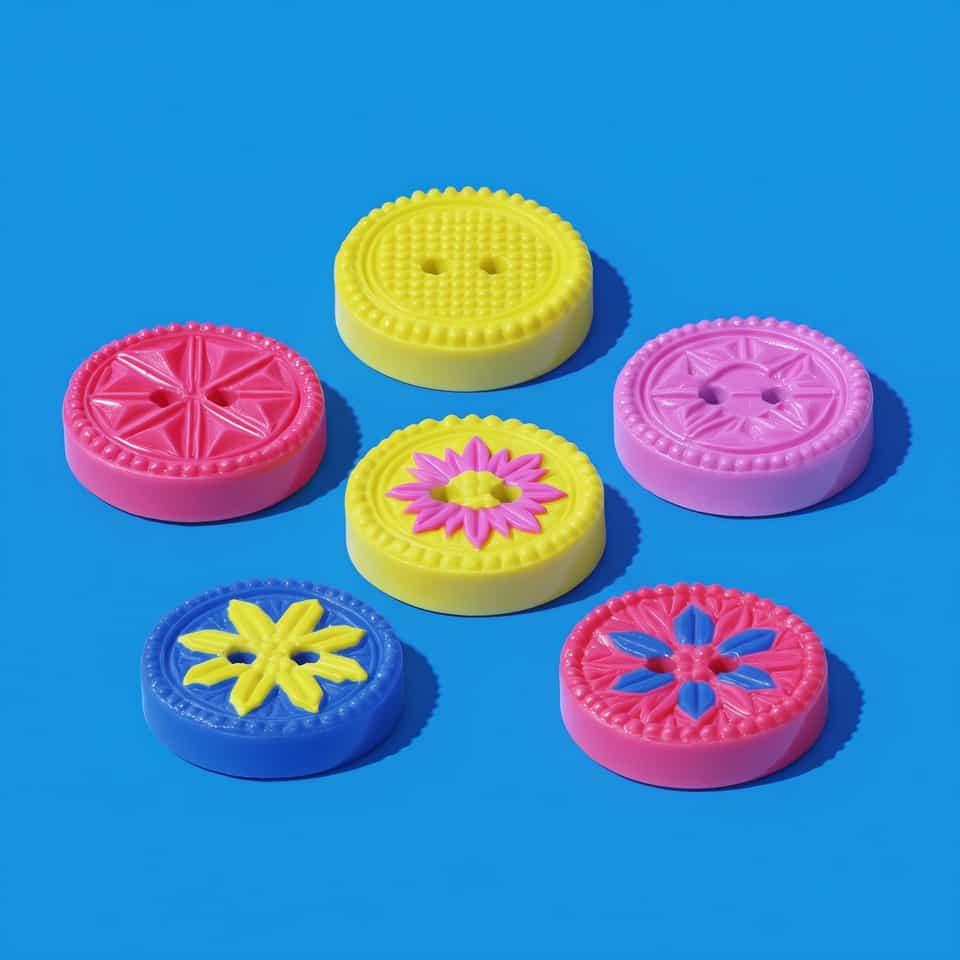
Neon Relief Medallion Buttons


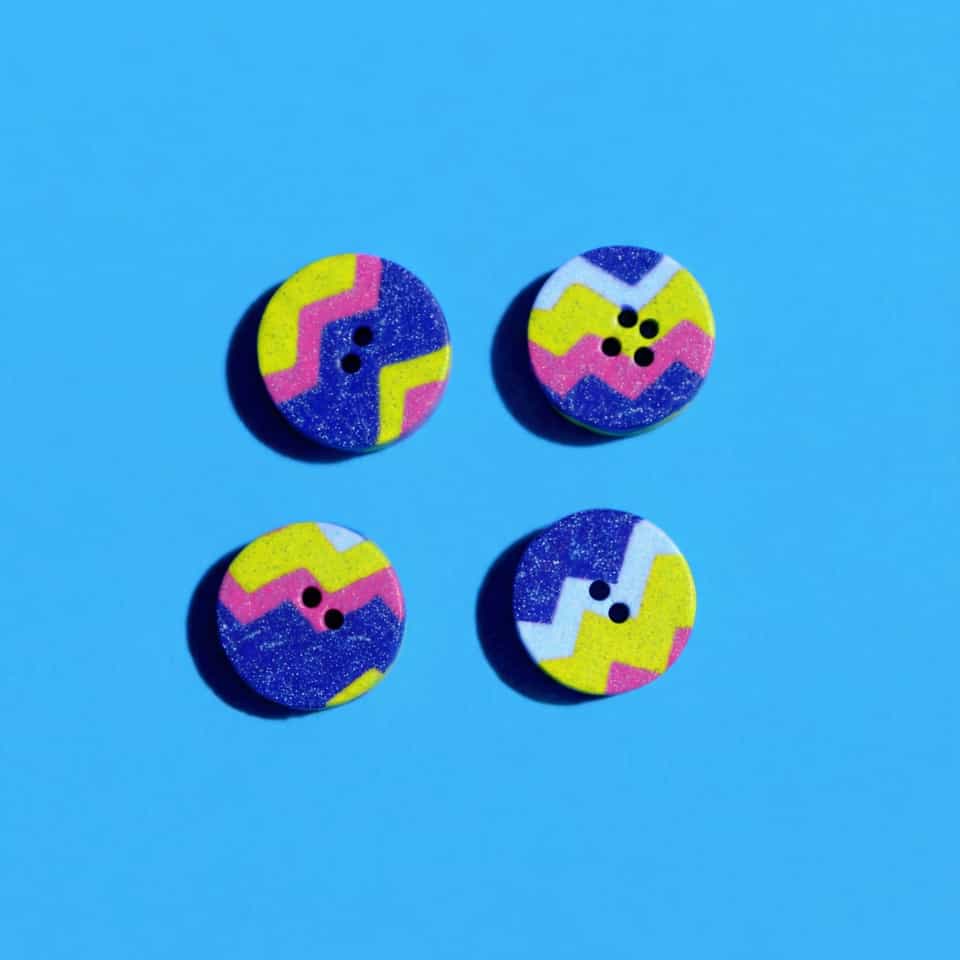
Cobalt, Pink, and Yellow Chevron Buttons


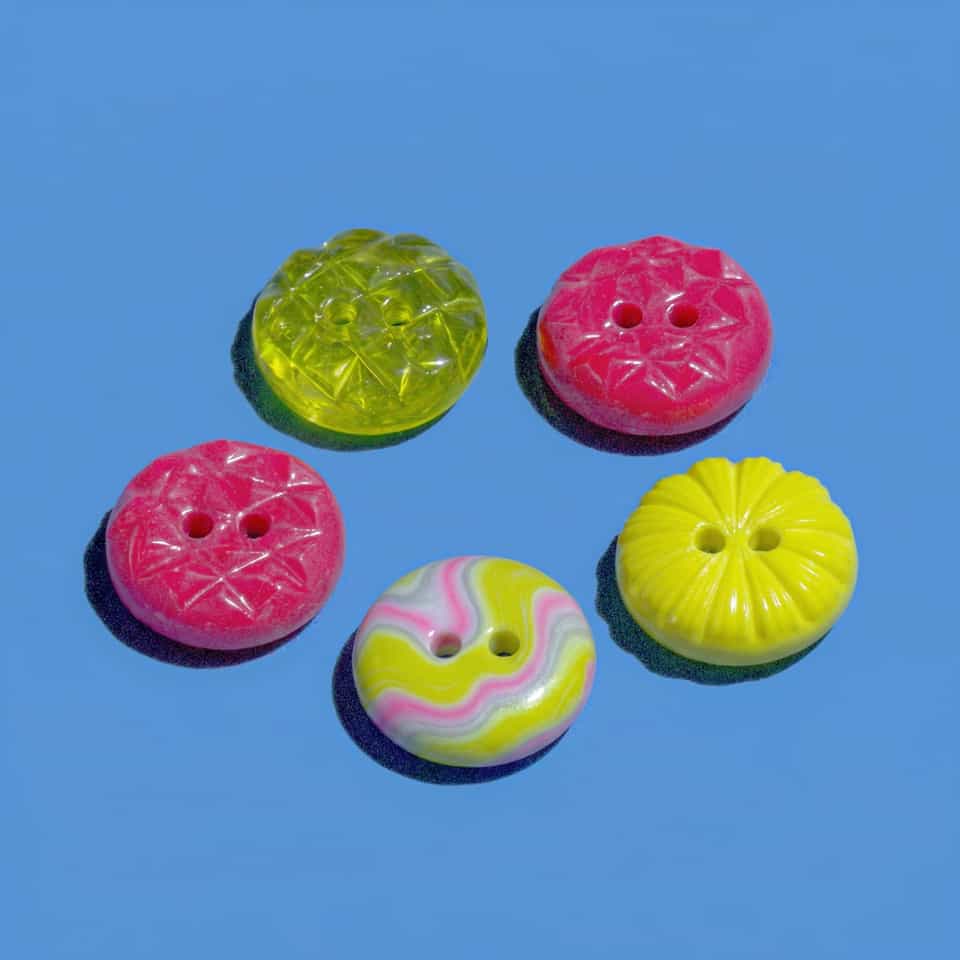
Black and Neon Art Deco Buttons
Start with sharp round cutters, even thickness control, and a needle tool setup that keeps each button disc and hole pair consistent.
See all guides
CuttersStart with a sharp stainless cutter set in circles, arches, or ovals. Clean release and repeatable slab thickness matter more than having dozens of shapes on day one.
Starter kitA practical first order can stay focused: clay, a tile, an acrylic roller, a tissue blade, and an oven thermometer.
Keep this build handy while you test your own version.
Tag #ClayBakeStudio on Instagram or TikTok.