Polymer Clay Silkscreens, Stencils, And Halftone Graphic Slabs
Graphic skulls and other bold printed slabs stay cleaner when the clay sheet is even, the screen seals tightly, and the silhouette gets cut only after the printed surface dries.


Use this reference planas a maker reference, not a final spec. Some pages are researched and drafted with AI assistance, then reviewed by our team. Clay lines, ovens, tools, adhesives, and finishing products behave differently, so check your clay brand's instructions plus manufacturer safety guidance before baking, finishing, or attaching hardware.
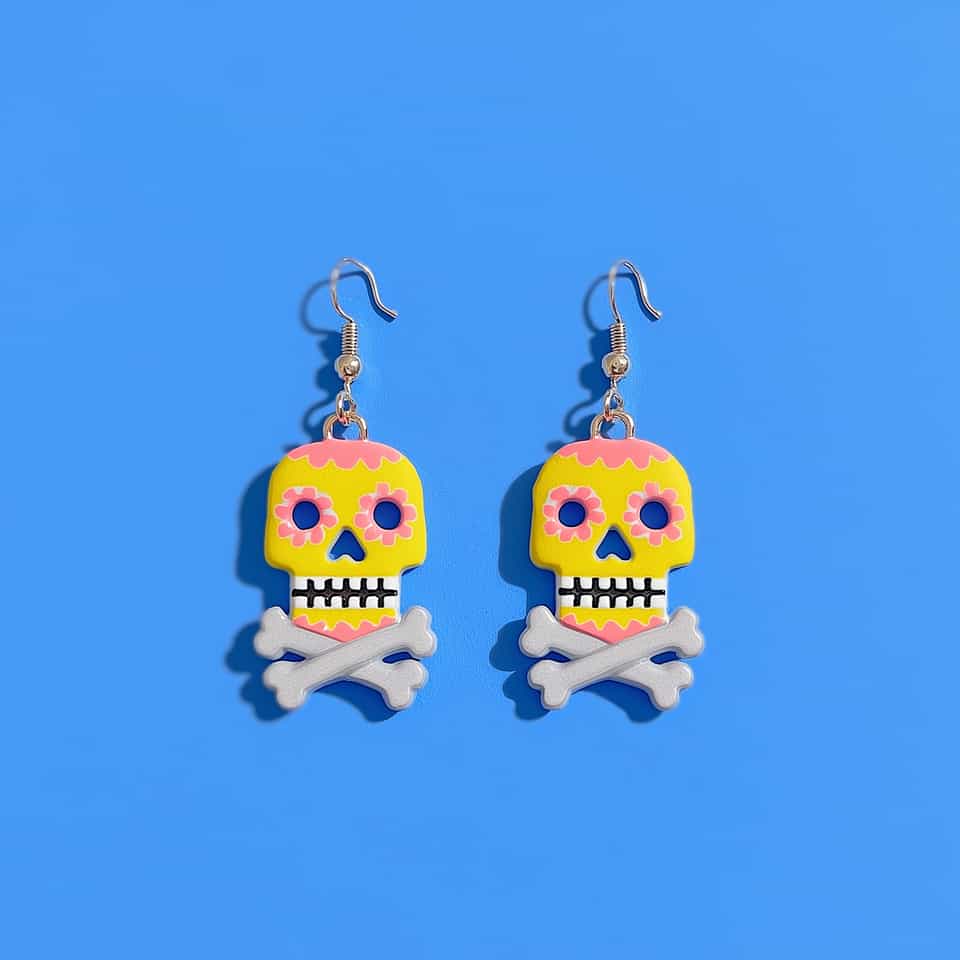
Start with two thin skull slabs and a silkscreen or stencil-style surface pass, because the image pair reads like a flat halftone skull graphic on a plaque rather than a sculpted sugar-skull charm. Roll the slab evenly first, print the color layers cleanly, let the surface dry, then cut the skull silhouettes and hang them from hooks only after both fronts match.
A quick read on the clay method, surface finish, and effort level before you start gathering tools.
Dimensions, motif spacing, and step timing below are build-ready estimates inferred from the reference image and the listed technique. Verify measurements against your own setup before cutting or assembling.
Work in sequence so the form, thickness, surface detail, and finishing stay controlled from prep through bake.
Roll an even hot-pink slab first so both earrings start at the same thickness and weight.
Seal the silkscreen or stencil to the raw clay, pull the yellow and blue graphic layers cleanly, and let the surface dry before cutting.
Trim the skull silhouettes only after the printed front already reads clearly, then pierce the hanging points while the clay is still raw.
Bake the skulls flat on a tile and assemble them on gold hooks and jump rings after cure.
Metal findings like posts, hooks, and jump rings may contain nickel or other allergens. If you have sensitive skin, choose surgical steel or titanium findings and test any sealant or coating on a small area before wearing.
Start with the core build kit, then add optional finishing or hardware only if it fits the version you want to make.
Matches the dominant hot-pink field behind the skull graphic.
Useful for the skull shapes and the brightest graphic contrast.
Covers the blue shadow blocks that give the design its poster-like depth.
Useful if you want to build the halftone field with a repeatable graphic surface instead of hand-placing every dot.
Helps you roll even slab blanks before the graphic layer goes down.
Useful for trimming the skull plaques and keeping the outer edges sharp.
Matches the gold-tone hook read in the lifestyle image.
Needed for a clean hanging connection if you keep the plaques as separate drops.
Keeps the flat graphic slabs from bowing during cure.
Some links in this build guide are affiliate links. If you buy through them, we may earn a small commission at no extra cost to you. That support helps keep our guides and research free. As an Amazon Associate I earn from qualifying purchases. We choose products we think are relevant to the build, but check the listing details, dimensions, and material fit for your own setup before you buy.
Read the technique guides that matter most for building this piece, refining the finish, or avoiding the most common mistakes.

Graphic skulls and other bold printed slabs stay cleaner when the clay sheet is even, the screen seals tightly, and the silhouette gets cut only after the printed surface dries.

Conditioning is not just softening clay. It is how you get cleaner slabs, steadier cane reduction, and sharper cut edges before the piece ever reaches the oven.
Explore adjacent builds with similar form, finish, or construction ideas.


Cream Terrazzo Mini Arch Huggies
Pink Pixel Cherry Earrings


Yellow and Pink Sugar Skull Crossbones Earrings


Pink and Yellow Glitter Open Octagon Earrings
Start with posts, glue, and cutters before you obsess over the silhouette. Those three decisions drive clean assembly and fewer failures.
See all guides
GlueMany makers reach for a two-part epoxy when they want slower setup time for post placement. Treat every adhesive as a test-first choice, especially if the clay, finding, finish, or prep routine changes.
PostsUse flat-pad posts with clear material specs when you want a common, easy-to-source assembly starting point. If you add titanium, verify the listing details and material spec before you position it as a separate hardware option.
Keep this build handy while you test your own version.
Tag #ClayBakeStudio on Instagram or TikTok.