tutorials2 min read
Polymer Clay Cane: A Small Recorded Pattern Exercise
Use a simple patterned-log exercise to test one clay, arrangement, cut face, and package-directed bake without turning it into a universal cane method.
Open the guide

The pictures began as AI-assisted concept images and are here for inspiration. The steps are a guide to making your own version, so change the colours, size or details as you like. Clay brands, ovens, glues, finishes and hardware behave differently, so follow their product instructions and bake a scrap before a batch. Some product links on this page are affiliate links. If you buy through them, we may earn a commission at no extra cost to you. Check listing details, dimensions, materials, and fit before you buy. As an Amazon Associate I earn from qualifying purchases. Full disclosures
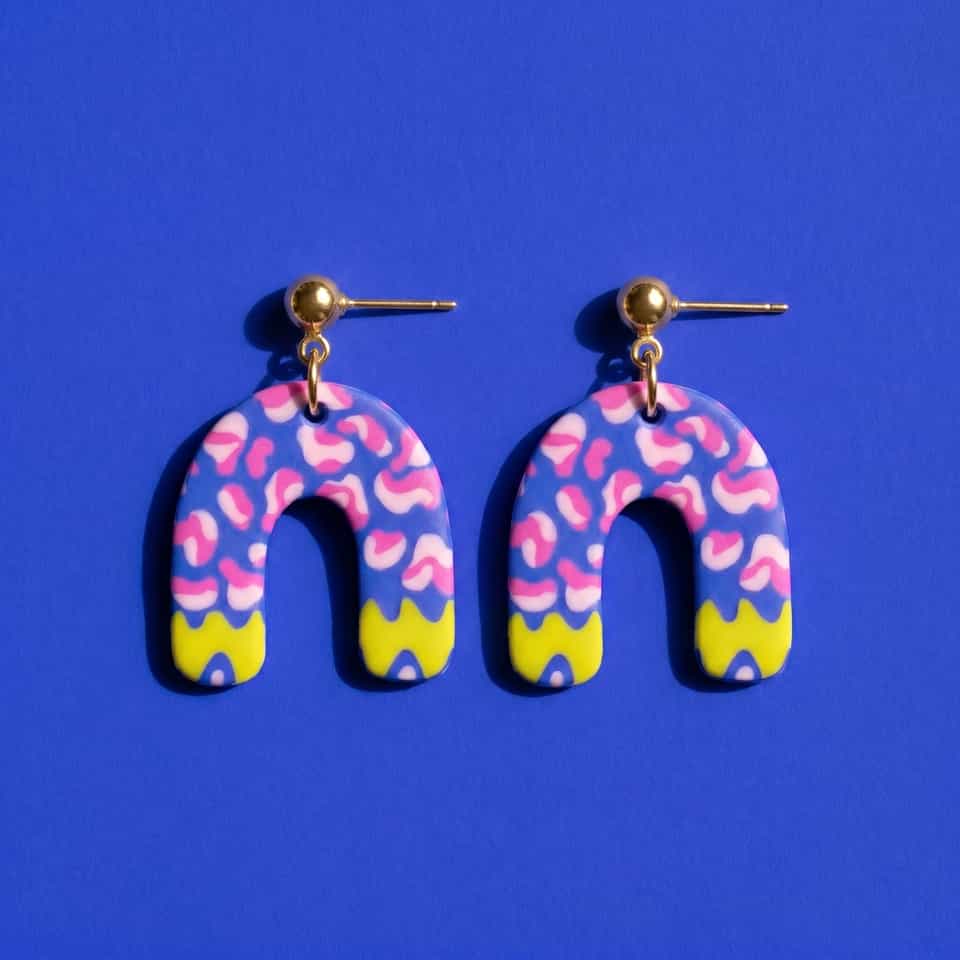
These are long neon ovals, each with a chartreuse border ringing a tight bullseye of hot-pink and white circles, hung on plain gold fish-hook ear wires from one jump ring at the top. The look depends on two things: the rings staying crisp and centered, and the two earrings reading as a matched mirrored pair. The simplest route is a reduced bullseye cane sliced and laid on a chartreuse slab, but you can also build the same look by stacking cut rings or stamping the circles. Cut both ovals from one slab, place the holes at the same height, bake them flat, then add the ear wires after the clay cools.
A matched, mirrored pair of long narrow oval drops in bright neon chartreuse. Each oval is bordered in chartreuse with a centered bullseye of nested hot-pink and white rings closing on a small pink dot. One pierced hole sits near the top center, linked by a small gold jump ring to a plain gold fish-hook ear wire. The face reads matte to softly buffed, with smooth rounded edges, and both earrings hang front-forward at the same length.
Lookbook view

The crisp, even rings read as a reduced bullseye cane sliced and applied to a chartreuse slab, not as mokume gane (mokume gives softer, irregular grain). That cane-slice route is the primary method, and it is the easiest way to get both earrings matching. You can reach the same look two other ways: cut-and-stack concentric clay rings nested by hand, or press the circles in with a bullseye stamp or a set of nested circle cutters. Whichever you pick, finish the same way: cut a mirrored pair, set matched holes, bake flat, round the edges, and add findings after cure.
Condition each color until it is smooth and the same firmness, so the pattern moves evenly and the colors do not shear apart later. Mix enough chartreuse for both ovals plus a little extra.
Roll one chartreuse base slab to an even thickness using guide rails on each side of the roller. One even slab is what lets you cut both earrings the same and keeps them light on the ear.
Pattern option A (bullseye cane): roll a hot-pink core snake, then wrap it in alternating thin sheets of white and pink to build concentric rings. Rest the cane an hour or two so it firms up, reduce it slowly by squeezing a gentle waist in the middle and working outward (do not roll it), then slice thin even rounds with a sharp blade. Chill the cane a few minutes if it smushes.
Pattern option C (stamp or deboss): press a bullseye stamp or a set of nested circle cutters straight down into the chartreuse face with even pressure, then fill or ink the rings. Press once and lift cleanly; rocking gives a doubled, blurry impression.
Lay the pattern onto the base. For cane slices, place them while cool so they do not stretch, then roll the slab lightly under parchment so the slices fuse flush and the surface is smooth before cutting.
Cut a matched mirrored pair: cut the first oval, then cut the second and flip it so the pattern reflects the first, or use a left-and-right oval cutter set. Cut both from the same slab so size and pattern match. Dust the cutter with a little cornstarch if the clay sticks.
Set the hanging holes at the same distance from the top edge on both ovals while the clay is raw, keeping a generous margin of clay between the hole and the edge so it will not tear. Confirm the pair reads as a balanced mirror before baking, since holes cannot be moved after cure.
Bake the ovals flat on a ceramic tile lined with parchment or cardstock, at your clay brand's package temperature and time. Baking flat keeps the long ovals from warping; an oven thermometer confirms the real temperature so the clay cures fully.
Let the pieces cool completely, then wet-sand the edges and faces through rising grits, keeping the paper wet, and keep the edge moving so you round it instead of cutting a new sharp flat. Rounded edges feel comfortable and do not catch hair.
Dry-fit both earrings side by side and confirm they hang at the same length, front-forward, before treating the pair as done.
Metal findings like posts, hooks, and jump rings may contain nickel or other allergens. If your wearer has sensitive skin, choose surgical steel or titanium findings and test any sealant or coating on a small spot before wearing.
What you will need
Before you buy, match the sizes and parts to the version you want to make.
Matches the hot-pink rings in the bullseye center.
Gets you close to the chartreuse base once it is mixed brighter or warmed with yellow.
Needed for the crisp white ring wraps in the bullseye pattern.
A firm clay for the pink and white bullseye cane, so the rings stay round and centred when you slice it and lay the slices on the chartreuse oval.
Matches the simple gold ear-wire hardware shown in both images.
Needed when the finished piece hangs from connectors rather than a single solid clay body.
Needed for opening and closing jump rings cleanly during jewelry assembly.
Tick what you already have, then get only what is missing.
Helps keep the base sheet even before you apply the centered cane veneer.
ClayBake makes matched cutter packs sized to this build, so repeated shapes stay consistent. 3D print or order the set from our tools.
Useful for trimming the cane slices and refining the oval edge cleanly.
Roll every sheet to the same calibrated thickness with the ClayBake slab height guides.
A lightweight clay with a cohesive suede finish that holds fine textures without sticky residue.
Optional extras for a different finish, size or fix.
Helps the long ovals cure flat so the centered rings stay straight.
A polymer-clay-compatible glaze option for a glossy finish. Test it on baked scrap before using it on the finished piece.
Each one walks through a technique used in this piece, in full detail.
Use a simple patterned-log exercise to test one clay, arrangement, cut face, and package-directed bake without turning it into a universal cane method.

Get every clay colour to the same softness, roll each layer to its measured thickness on a tile, and let warm clay firm up before you cut.
Custom range
Ask for a build pack to make it yourself (the cutter or tool files, a supply list, and a plan), or ask the studio to make the finished pieces for you.
More pieces with a related form, finish, or making path.
Pin it to a board, copy the link, or keep it saved here while you make your own version.
Tag Clay Bake Studio on Instagram or TikTok so we can see how you adapted it.