tutorials15 min read
How to condition polymer clay and roll an even slab for cutters
Get every clay colour to the same softness, roll each layer to its measured thickness on a tile, and let warm clay firm up before you cut.
Open the guide

The pictures began as AI-assisted concept images and are here for inspiration. The steps are a guide to making your own version, so change the colours, size or details as you like. Clay brands, ovens, glues, finishes and hardware behave differently, so follow their product instructions and bake a scrap before a batch. Some product links on this page are affiliate links. If you buy through them, we may earn a commission at no extra cost to you. Check listing details, dimensions, materials, and fit before you buy. As an Amazon Associate I earn from qualifying purchases. Full disclosures
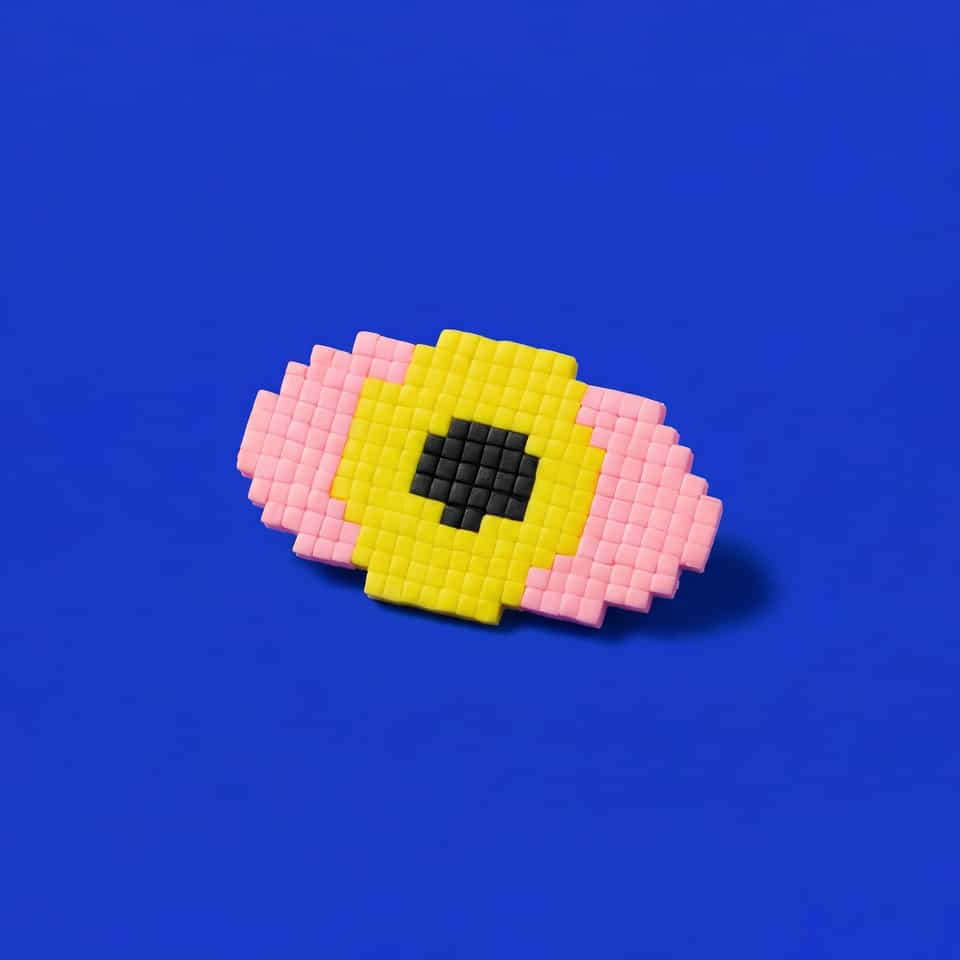
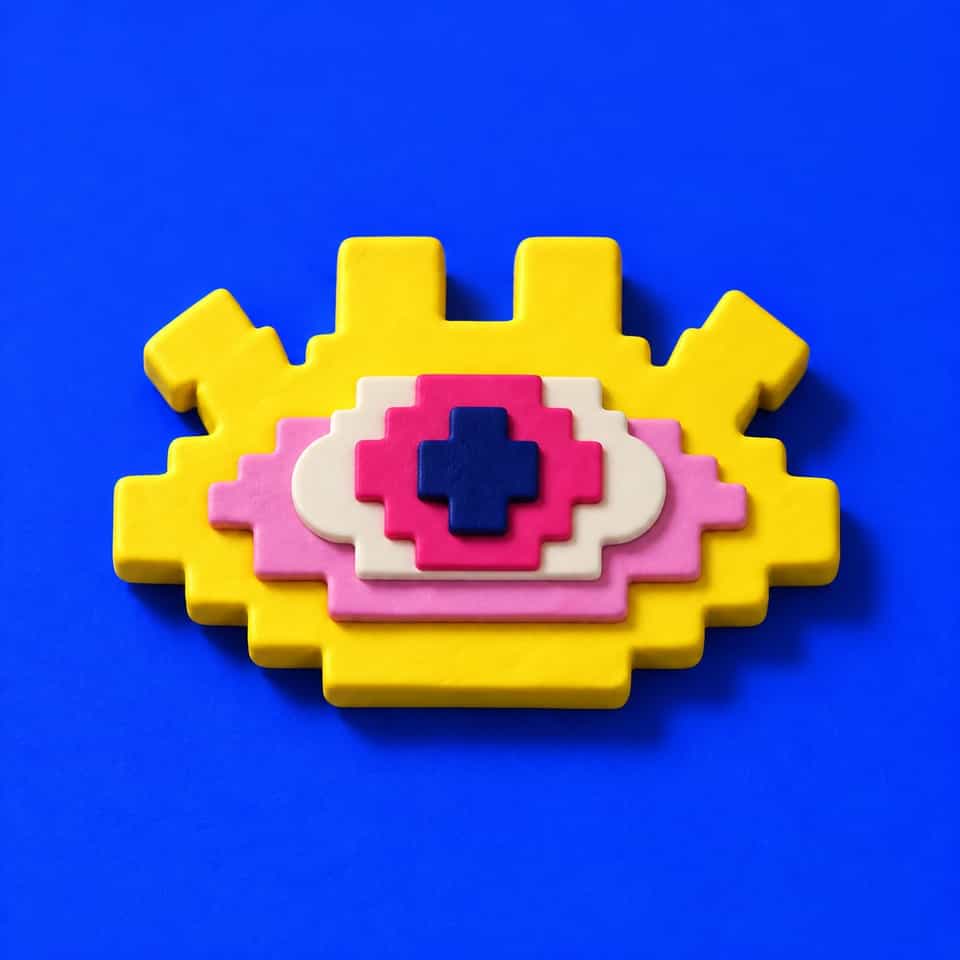
This is the Yellow Diamond Eye Pin: an open cadmium-yellow frame stretched into a long six-sided eye with two sharp side points, a soft light-pink rectangle filling the window, and one small hot-pink square sitting raised on top. The frame and pink plaque read flat in the same plane; only that little square stands proud. It is lightweight and worn flat on a collar or lapel. You can build the frame and center a few proven ways, so I have laid out the options below, then the shared baking, finishing, and pin-back steps that every version needs. Roll an even slab so it bakes flat, and set the pin bar high so the brooch hangs straight.
An elongated six-sided "eye" frame in cadmium yellow with two sharp side points and an open window through the middle. A soft light-pink rectangle fills the window and sits roughly flush with the frame. Centered on the pink rectangle is one small hot-pink square that stands up in low relief and casts a faint shadow. The face is clean and even with a matte to soft-satin finish, not high gloss. Worn flat against a chambray collar at small lapel-pin scale.
Lookbook view

Flat slab construction: cut an open yellow frame, fit a light-pink rectangle into the window so they sit in one plane, then add one raised hot-pink square as applied relief bonded with a thin liquid-clay film. The frame and center can be made several ways (cut from one even slab, cut-and-inlay, or a deboss-and-fill register), so the steps below label the options. Bake flat on a covered tile, then attach the pin back.
Condition each color until smooth, then roll the yellow to an even slab on your thickness guides so the whole frame bakes flat; an uneven slab is the main cause of a warped or rocking brooch. Roll the light pink a touch thinner so it sits flush in the window, and roll a small scrap of hot pink for the raised square.
Frame option A (cut from one even slab): cut the outer six-sided eye shape with the two side points from the yellow slab, then cut the inner window from the same slab so the border stays an even width all the way around. Cutting both from one setup keeps the frame uniform.
Frame option B (inlay, flush center): instead of an open window, cut a shallow recess the size of the rectangle into a solid yellow blank, or cut the window all the way through and back the whole piece with a thin yellow slab. Either way the pink rectangle drops in and sits flush with the yellow face.
Frame option C (deboss-and-fill register): press a square or rectangular stamp into a solid yellow blank to mark the center exactly, then fill that debossed well with the pink rectangle so it registers cleanly without a separate cut. Good if you want the frame and center dead-centered every time.
Cut the light-pink rectangle to fit the window snugly, and cut one small hot-pink square for the center. Keep the side points crisp; chill the cut pieces a few minutes if they soften so the geometry holds while you handle them.
Seat the pink rectangle into the yellow window so the two read as one flat plane. Brush a seriously thin film of liquid polymer clay along the seam where pink meets yellow so the join cures together rather than relying on pressed raw edges alone.
Center the hot-pink square on the pink rectangle, brush a thin film of liquid clay under it, and press it down. Blend only its foot so it looks like it grows out of the plaque while the top stays raised and crisp; this is the one element meant to stand proud.
If the blank feels thin where the pin will sit, laminate a second thin yellow slab onto the back with liquid clay between the layers before baking, so the pin seat has something solid to hold and resists cracking under the pin's leverage.
Pin option (embed before baking): texture and bend the pad of a bar pin, brush liquid clay over the seat, press the bent pad into the raw back in the top third, cover it with a thin clay cap, and seal the seam so the cured clay grips the metal.
Bake the brooch flat on a parchment- or cardstock-covered ceramic tile with a loose foil tent over it, at your clay brand's package temperature and time for the slab thickness; confirm the real oven temperature with a thermometer. For an embedded pin, nest the piece so nothing presses the back flat. Let it cool fully and flat before you handle it.
Pin option (glue after baking): once cool, sand the pin spot on the cured back to bare clay and lightly roughen the metal pad, wipe both with 99% isopropyl alcohol to remove oils, then glue a flat-pad or bar pin on with a small drop of gel super glue, such as Loctite Super Glue Ultra Gel Control or Gorilla Super Glue Gel, spread thin on the flat underside of the pad or bar. Set the bar in the top third of the back, centered left to right, so the weight below pulls the bottom edge in and the brooch hangs flat.
Let the adhesive cure fully and undisturbed for its full listed time before wearing, and do not re-bake a glued finding. Pick a pin whose hinge-to-catch length spans most of the frame width so the brooch cannot pivot or tip.
Leave the face matte for the look in the photo, or seal with a thin water-based polyurethane such as Varathane; brush a couple of thin coats and test it on a baked scrap of the same clay first so the finish does not stay tacky.
What you will need
Before you buy, match the sizes and parts to the version you want to make.
Useful for the full outer diamond frame.
Matches the centered inner plaque.
Useful for bonding raw-on-raw applique, layered details, and small joins without crushing the shape.
A firm clay for the yellow frame and the small pink square, so the sharp eye points and square corners stay crisp.
Fits the simplest hardware path for this flat geometric brooch.
Tick what you already have, then get only what is missing.
Helps you roll one even frame sheet before cutting the four points.
Roll every sheet to the same calibrated thickness with the ClayBake slab height guides.
Helps with the sharp diamond points and the inner window cut.
Keeps the flat plaque supported during cure.
Useful for attaching the brooch hardware after baking.
A lightweight clay with a cohesive suede finish that holds fine textures without sticky residue.
Provides a flexible, high-strength bond between cured clay and metal findings.
Optional extras for a different finish, size or fix.
Useful for checking the real shelf temperature before baking detailed or supported polymer clay pieces.
Each one walks through a technique used in this piece, in full detail.
Get every clay colour to the same softness, roll each layer to its measured thickness on a tile, and let warm clay firm up before you cut.

A clay brooch that flops forward on a jacket, spins round, or loses its pin comes down to where the pin sits and how the pad is glued. The fabric check at the end shows if you got both right.
Custom range
Ask for a build pack to make it yourself (the cutter or tool files, a supply list, and a plan), or ask the studio to make the finished pieces for you.
More pieces with a related form, finish, or making path.
Pin it to a board, copy the link, or keep it saved here while you make your own version.
Tag Clay Bake Studio on Instagram or TikTok so we can see how you adapted it.