Polymer Clay Miniature Food Charms: Bowls, Fish, and Tiny Toppings
Miniature food pieces usually read more clearly when the base shape, topping scale, and hardware choice are planned before the details go on. This guide covers shallow bowls, flat fish charms, noodle coils, egg slices, and how to keep small food builds lighter and clearer.
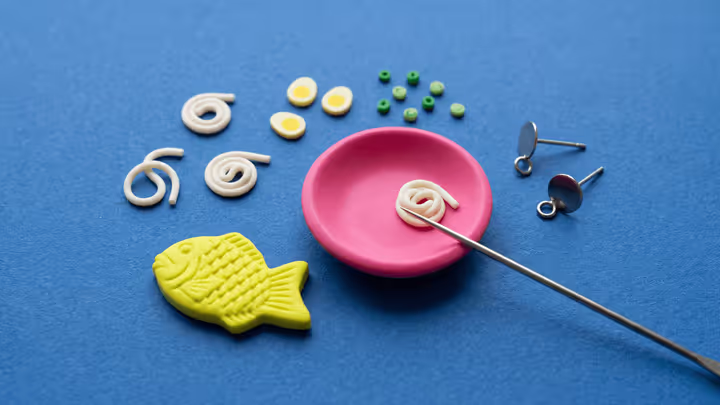
In brief
Key takeaways
- 1Start with the base silhouette first, because a clean bowl or fish shape matters more than adding toppings early
- 2Shallow bowls and flat charms are often easier to keep lighter and clearer than deep or bulky miniature food builds
- 3Keep noodle coils, egg slices, fins, and other toppings scaled to the front view of the piece
- 4Choose studs or hooks from the front read, finished size, and balance test, not from habit
Miniature food pieces read most clearly when the front view stays legible at a glance. If the build gets too deep, the toppings get oversized, or the hardware choice fights the shape, the piece can start feeling clumsy instead of intentional.
Decorative only. Polymer clay is not food-safe. Miniature food charms, bowls, plates, and toppings described in this guide are for wearable and display use only, never for serving, storing, or consuming food or drink.
A safer starting build order is to solve the base silhouette first, then add only enough decorative detail for the food motif to read at earring scale. That is true whether you are building shallow ramen bowl studs, flat taiyaki fish charms, or future pastries, toast, and snack motifs.
Start With The Base Read First
Choose the build family from the front view of the object, not from the temptation to sculpt everything in full miniature depth.
Many small food pieces fall into two common build paths:
- decorative shallow bowl- or plate-inspired plaque: common for ramen, soup, salad, and layered stud builds
- flat shaped charm: common for fish, pastry, toast, or cookie silhouettes that want to hang from hooks
That choice should shape the next tests. A bowl-inspired stud usually needs a flatter rear contact area and low relief for post testing. A hanging fish charm usually needs enough cured clay around the top hole or connector and a body profile light enough to pass a test hang.
Keep Miniature Food Light And Readable
Shallow relief is often a better starting test than full miniature depth because it can reduce bulk.
It is tempting to build a deep bowl or chunky pastry, but earrings need the front to read clearly without too much bulk. A ramen bowl can still look like ramen when the noodle bed and egg slices sit on a shallow disc. A taiyaki charm can still feel dimensional when the fins and belly are layered on a flat body instead of a rounded fish sculpt.
Build In A Clear Order
Base first, major toppings second, tiny accents last.
- Cut or shape the base silhouette.
- Add the largest structural details, such as a bowl rim or a fish belly strip.
- Place the medium toppings, such as noodles, fins, eggs, or chopsticks.
- Add tiny accents only after the food read is already obvious.
- Plan the stud pad or hanging hole before baking.
This build order matters because miniature food gets muddy fast when every detail goes on at once.
Maker reference
Maker reference only. Verify brand instructions, seller details, dimensions, and safety guidance for your own setup.
Affiliate note
Some links in this article are affiliate links. If you buy through them, we may earn a small commission at no extra cost to you. As an Amazon Associate I earn from qualifying purchases.
Scale The Toppings To The Piece
At small earring scale, the topping size matters more than the number of toppings.
Noodle coils should stay thin enough that the bowl still reads as a bowl. Egg slices should not be so large that they cover the whole ramen surface. Fish fins and tails should feel crisp and graphic instead of thick and gummy.
Needle tools are especially useful here because they let you place, score, and separate tiny details without flattening the whole build with your fingertips.
Choose Studs Or Hooks From The Front View
Start with the front read, then test studs or hooks against rear contact area, top-hole strength, and finished weight.
Some decorative bowl fronts are worth testing as studs when the cured back is flat enough for the chosen post pad. Fish, pastries, and shaped treats may be worth testing as hook charms when the top connection is strong, the weight is comfortable, and the piece hangs straight.
Flat pad stud posts are one option when the cured piece has enough flat, prepared rear contact area for the pad and adhesive. Gold-tone fish-hook findings are one option for flat charms only after the top hole or connector, metal details, weight, and hang balance are checked.
Use Clean Base Shapes
Clean silhouettes make the details easier, not less creative.
Round cutters are worth using for bowls and plate-like studs because they keep the base calm and consistent before the toppings go on. For fish or pastry shapes, start from a traced or hand-cut shape and refine it before you add the layered parts.
Bake Flat And Finish Lightly
Many miniature food earrings are easier to bake flat and finish lightly.
A flat ceramic tile can help keep a flat-backed piece calmer during baking, but follow the clay brand's baking directions and support any raised or projecting details that might slump. If you want extra shine on decorative broth, yolk, or pastry details, test the exact clay-compatible finish on a baked sample first. Keep the coating thin so it does not pool in grooves, and do not treat the finish as food-safe, waterproof, or required.
Use This Guide With The Lookbook
If an item page mentions miniature food, noodle coils, egg slices, bowls, or taiyaki, use this guide as a starting framework, then adapt for the actual clay line, cured thickness, support needs, finish, and hardware plan.
It is most useful for:
- shallow ramen bowl studs
- flat taiyaki fish charm earrings
- future cookie, pastry, toast, fish, and bento-style novelty builds
Take the next step
Continue the series with the next guide in this path.


