Pendants
Polymer clay pendant tutorials for vertically balanced bails, chord paths, drilling holes, and weight planning.

Articles
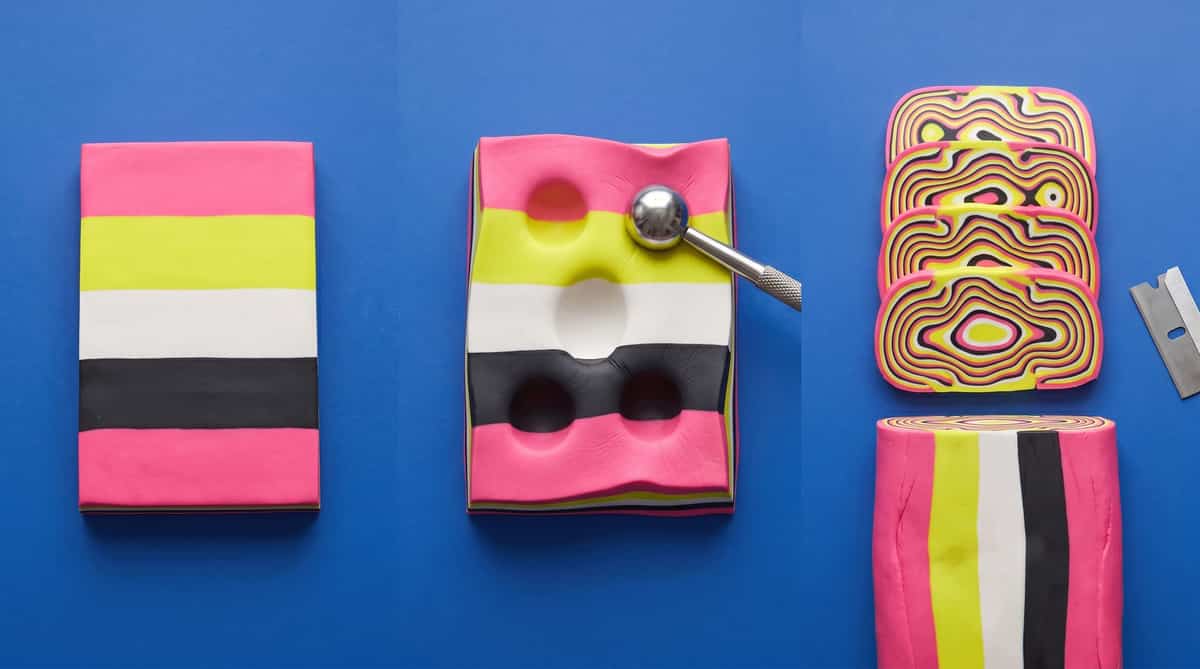
Polymer Clay Mokume Gane: Reduction, Distortion, and Slicing
Mokume gane only reveals its topographic pattern when the stack is distorted before slicing. This guide covers slab thickness, the poke-and-press distortion step, and slicing the stack so each layer makes a clean ring instead of a smear.
Read the guide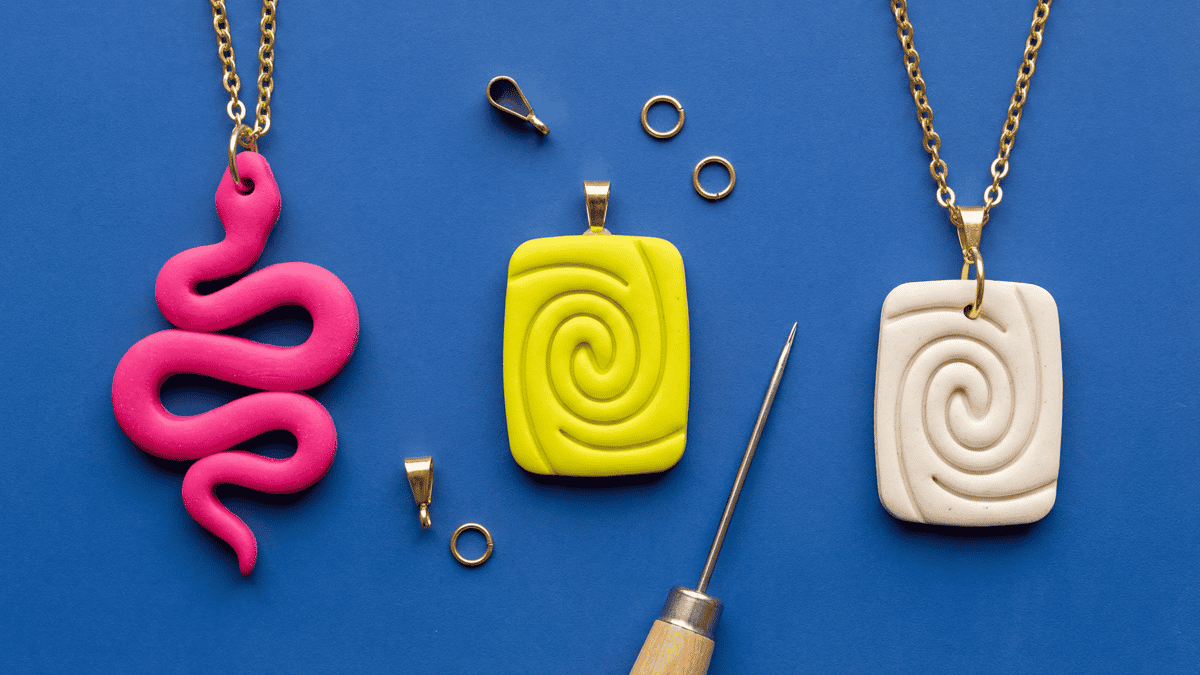
Polymer Clay Pendant Holes, Bails, and Jump Ring Placement
Choose a hole when the top has room for it, or a glue-on bail when you want an uninterrupted front. Position the attachment, leave clearance for the chain, and check which way the finished pendant faces.
Read the guide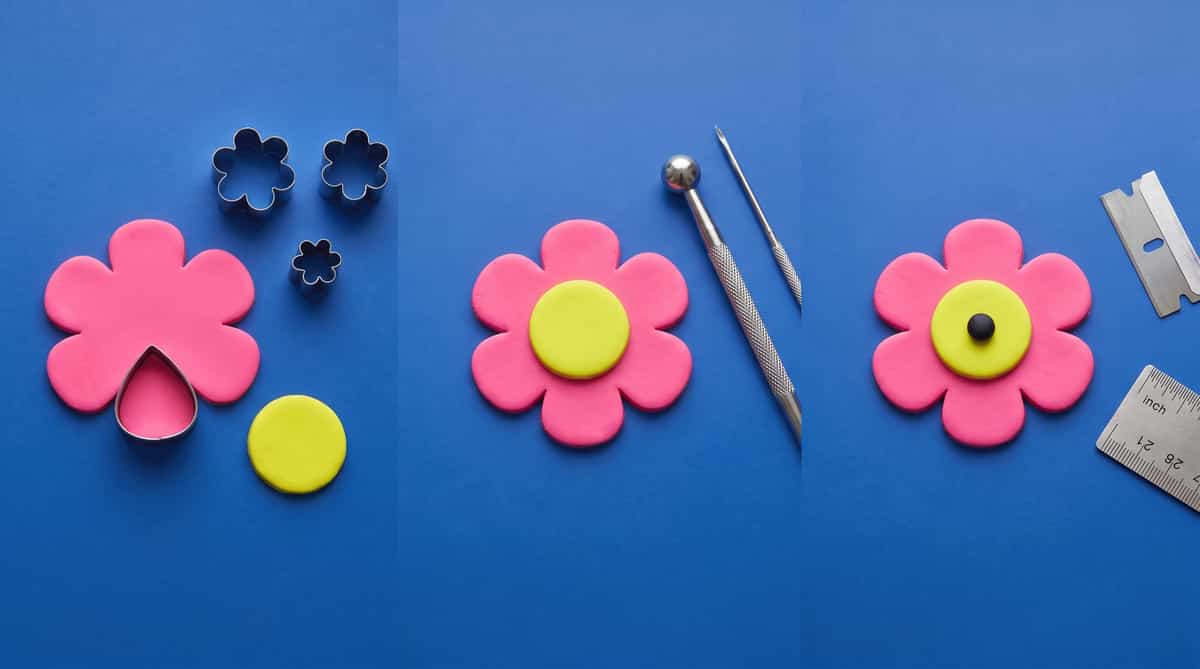
Two-Color Flower Applique: Buttons, Pendants, Earrings
Hand-built two-color flower applique for buttons, pendants, and earrings looks deliberate when the petal layer, contrasting center disc, and tiny accent dot are built in scale relationships. This guide covers petal cutter sizing, center disc proportions, and how to seat the parts without flattening the petals.
Read the guidePolymer clay pendants
Balance the top hole, bail, and finished weight.
Unlike earrings, pendants wear against the chest and need to sit without twisting or pulling on their chain. These articles suggest vertically balanced bail positioning, cord paths with enough clearance, drilling clean holes, and choosing the right clay thickness so large statement pieces don't feel too heavy. Build a plain scrap mockup to test the hang before baking.
Studio notes
Get polymer clay pendant notes
New project notes, small checks, and practical links as they publish. Free, no spam, unsubscribe anytime.
By subscribing you agree to get Clay Bake Studio emails about new guides, tools, build kits and offers. Unsubscribe anytime. We do not sell your email. Read our privacy policy.