Conditioning
+4

Conditioning Polymer Clay for Clean Sheets, Crisp Cuts, and Better Canes

Conditioning is not just softening clay. It is how you get cleaner slabs, steadier cane reduction, and sharper cut edges before the piece ever reaches the oven.

Updated
10 min read
Conditioning Polymer Clay for Clean Sheets, Crisp Cuts, and Better Canes

In brief

Key takeaways

  1. 1Conditioning is what makes clean sheets, crisp cuts, and stable cane reduction possible
  2. 2Get every color to a similar softness before building color-block seams or canes
  3. 3Crumbly clay usually needs more work and warmth, while sticky clay usually needs less handling and a short rest
  4. 4Roll to final thickness only after the clay stops cracking and dragging at the edges

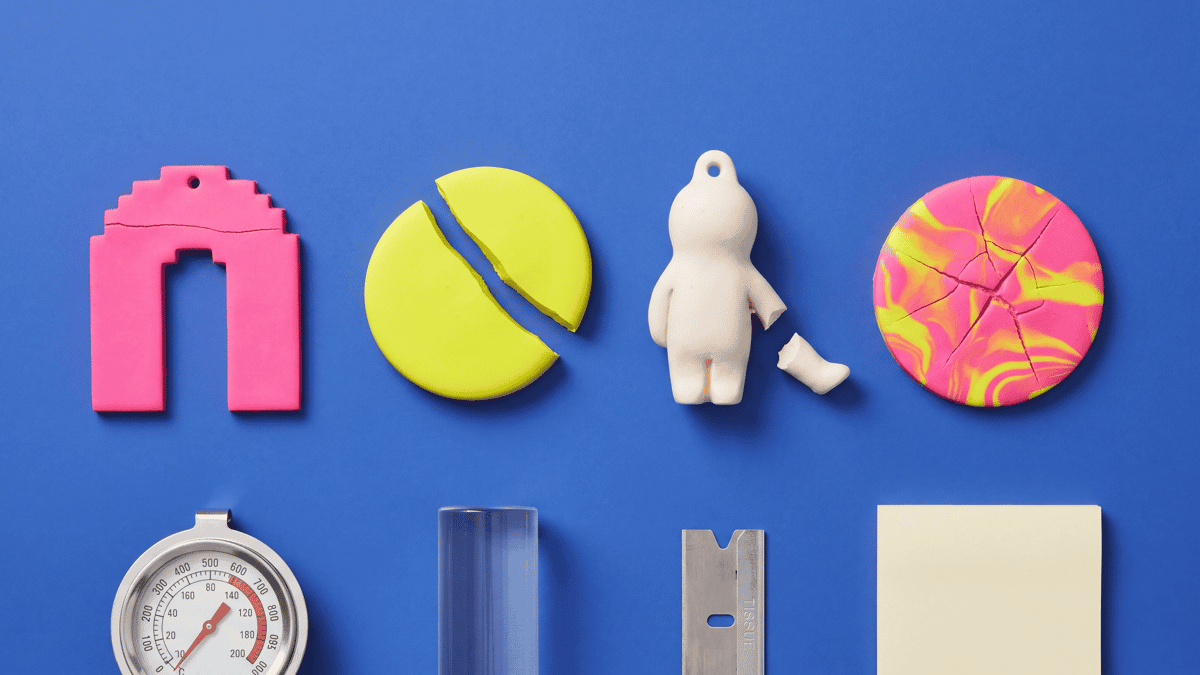
Conditioning is the step that decides whether your polymer clay behaves like a clean design material or a frustrating sticky mess. If your slabs keep cracking, your cutter edges keep tearing, or your cane slices look warped before you even bake them, the problem often started here.

For lookbook builds, conditioning is not just a beginner warm-up. It is what lets a Bauhaus button stay crisp, a flower cane reduce evenly, and a relief motif press into place without dragging the base out of shape.

What Conditioning Actually Does

Conditioning distributes the plasticizers evenly through the clay so it rolls, cuts, and stretches as one material instead of as a patchy mix of soft and stiff spots.

That matters for three common lookbook problems:

  • clean sheets: uneven clay rolls to uneven thickness and leaves cracked edges
  • clean cuts: under-conditioned clay drags, chips, and resists the blade
  • clean canes: colors with different softness distort at different speeds during reduction

How To Tell When Clay Is Ready

Your clay is ready when it bends and rolls smoothly without cracking, and when separate colors in the same build feel equally workable.

Look for these cues:

  • the sheet rolls out without split edges
  • folds compress smoothly instead of breaking into crumbly lines
  • the surface looks even instead of streaky
  • two colors used in the same build feel similar in firmness

Maker reference

Maker reference only. Verify brand instructions, seller details, dimensions, and safety guidance for your own setup.

Affiliate note

Some links in this article are affiliate links. If you buy through them, we may earn a small commission at no extra cost to you. As an Amazon Associate I earn from qualifying purchases.

Full disclosures

Best Conditioning Setup For Most Lookbook Builds

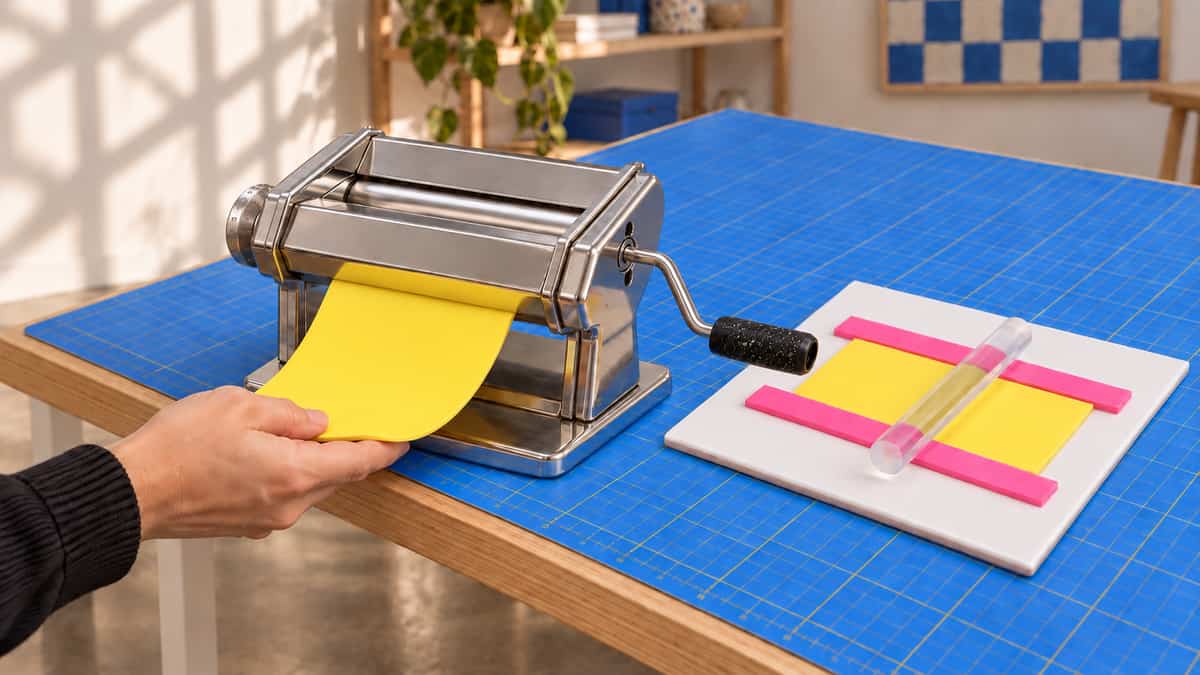
A pasta machine gives the most repeatable conditioning, but an acrylic roller and thickness guides still work well for smaller batches and simpler projects.

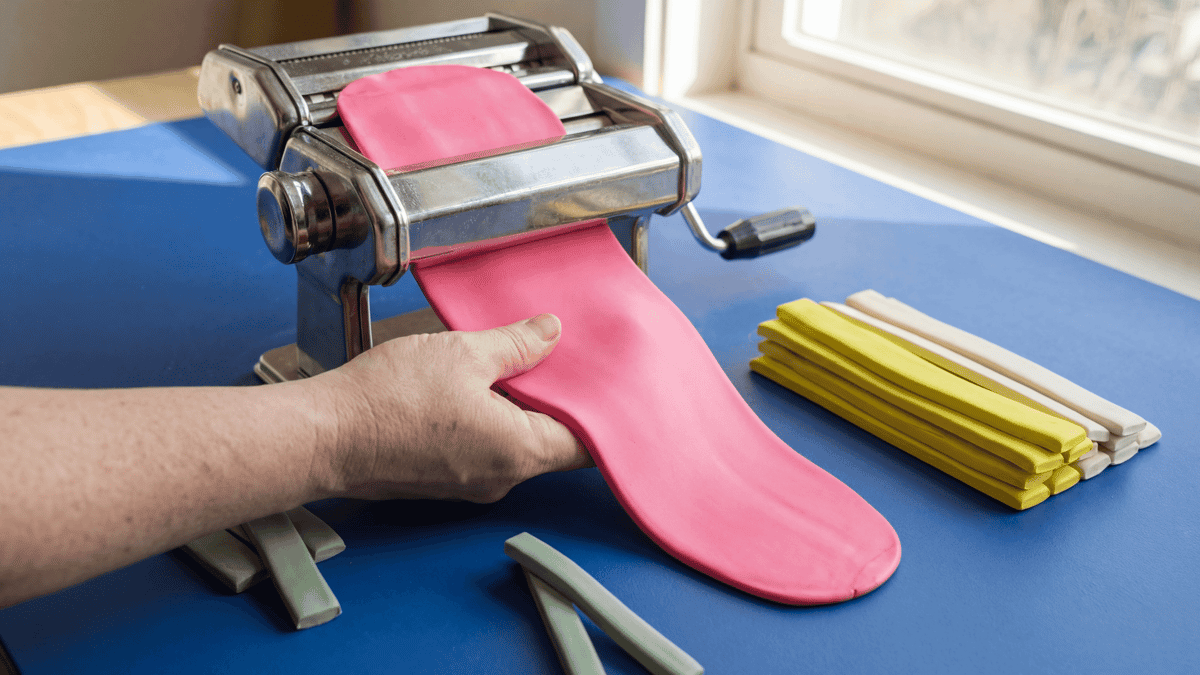
Atlas Pasta Machine is still the easiest way to condition clay evenly when you are making canes, color-block sheets, or repeated button blanks.

Acrylic roller works well when you are building smaller batches by hand and want to keep your setup simple.

Thickness guide strips help you turn well-conditioned clay into sheets that stay even enough for buttons, brooches, and clean geometric seams.

How To Condition For Clean Sheets

Work the clay until it is flexible first, then roll it in gradual passes instead of forcing it straight to the final thickness.

  1. Cut the block into smaller pieces if it feels very stiff.
  2. Warm it by hand just enough to start folding it without cracks.
  3. Roll or machine it through thicker settings first.
  4. Fold and repeat until the sheet stops breaking at the edges.
  5. Only then start stepping down to your target thickness.

This is especially important for button blanks and color-block work, where one rough edge can telegraph through the whole design.

How To Condition For Clean Cuts

Condition first, rest briefly if the clay becomes too soft, then cut with a sharp blade or cutter while the sheet is still even and calm.

When the clay is too stiff, it chips and resists the blade. When it is too warm and sticky, it drags and stretches. The sweet spot is smooth, cohesive clay that still holds an edge after rolling.

If your circles distort the second you lift them, the clay may be overhandled for that specific step. Let it rest a little, or cool it slightly, before making your final cuts.

How To Condition For Canes

Get every color to roughly the same softness before you assemble the cane. That matters more than making each color ultra-soft on its own.

Many cane problems happen because one color is buttery soft and another is still resistant. During reduction the softer section stretches first, which twists petals, smears dots, and collapses crisp backgrounds.

Before you build the cane, compare your colors directly:

  • press them side by side with the same pressure
  • fold them once and compare how they bend
  • run the stiffer one a little longer until they respond similarly

Crumbly Versus Sticky Clay

Crumbly clay usually needs more work and warmth. Sticky clay usually needs less handling, more rest, or a cooler setup before precision steps.

If the clay is crumbly:

  • work smaller pieces instead of one stubborn chunk
  • use more conditioning passes before rolling thin
  • do not force crisp cuts until the sheet stops cracking

If the clay is sticky:

  • stop overworking it once it is already smooth
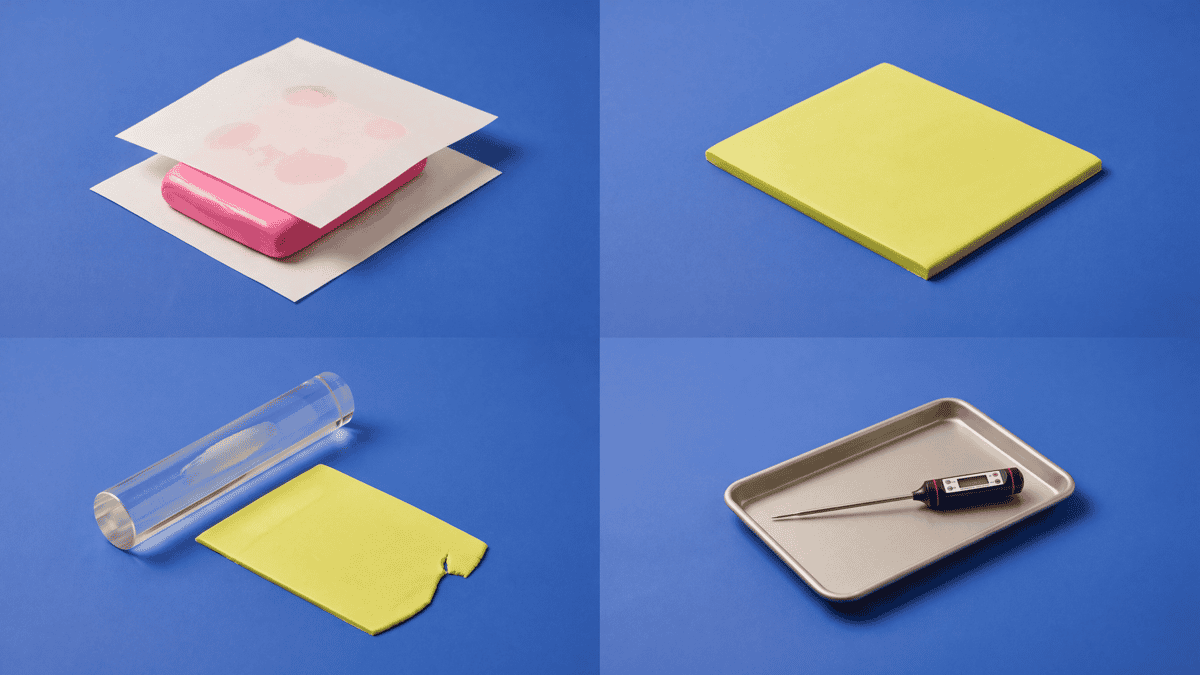
  • let it rest on a tile or paper for a short time
  • cool it briefly before final cuts or cane slicing

Use This Guide With The Lookbook

If an item page mentions clean sheets, crisp color joins, neat circles, or cane reduction, read that as a conditioning problem first and a cutting problem second.

That usually means your best next move is:

  • bring every color to a similar softness
  • roll to even thickness before cutting
  • let the clay rest if it gets too warm
  • only then move to canes, applique, or button-hole placement

Written by The ClayBake Team

ClayBake Team

We publish polymer clay inspiration, practical guides, and material notes for makers planning what to make next.

maker researchreference curationpractical guides

Made your version?

Tried a technique from this article in earrings, charms, or a seller collection? Tag #ClayBakeStudio on Instagram or TikTok.