Polymer Clay Surface Applique, Confetti, and Inlay for Flat Builds
If an inspiration piece looks like it was built from placed petals, dots, lips, stars, or tiny cut motifs, this is usually the technique family you need. Learn when to applique, when to press pieces flush, and how to keep flat builds crisp instead of lumpy.

In brief
Key takeaways
- 1Applique keeps the motif raised, while inlay presses the design flatter into the base
- 2Build the base first, then prepare repeated petals, dots, or graphic pieces before attaching them
- 3Press only hard enough to seat the motif or you will blur edges and warp the base
- 4Flat buttons, brooches, and pendants often read cleaner with shallow relief than with bulky layered surfaces
Many flat lookbook pieces use a base plus placed motifs, but the exact build path varies. If you can make a clean disc, petal, dot, lip, crescent, or leaf, you can build a surprising amount of the lookbook.
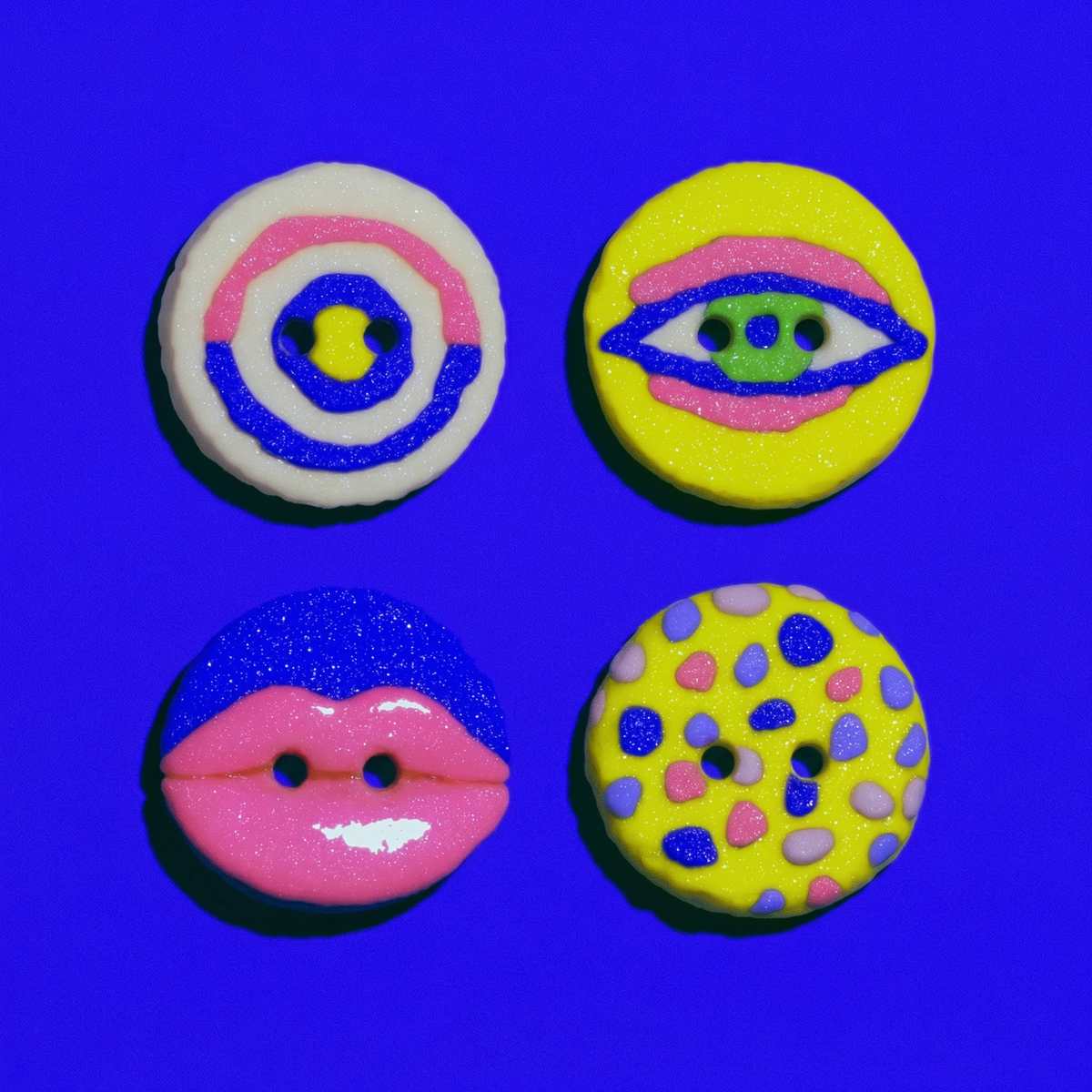
This is the technique family behind floral mosaic pendants, graphic pop-art buttons, relief medallion buttons, and many cameo-like surfaces. The real question is not whether the shapes are hard. It is whether they should sit proud, press flush, or land somewhere in between.
Applique Versus Inlay
Use applique when the motif should stay visibly raised. Use inlay when the front should stay flatter and cleaner.
Think of it like this:
- applique: petals, lips, leaves, or borders sit slightly on top of the base
- inlay: cut pieces are pressed more flush so the face feels flatter
- shallow relief: the most common middle ground for lookbook buttons and pendants
That middle ground is a common fit for wearable pieces because it keeps the motif readable without making the surface bulky.
Start With The Base First
Finish the base disc, slab, or button blank before you start placing the motif pieces.
If the base is still changing size or thickness while you add petals and dots, the whole design shifts. For flat builds, lock in the silhouette first, then move to surface placement.
Maker reference
Maker reference only. Verify brand instructions, seller details, dimensions, and safety guidance for your own setup.
Affiliate note
Some links in this article are affiliate links. If you buy through them, we may earn a small commission at no extra cost to you. As an Amazon Associate I earn from qualifying purchases.
Build Repeated Shapes In Batches
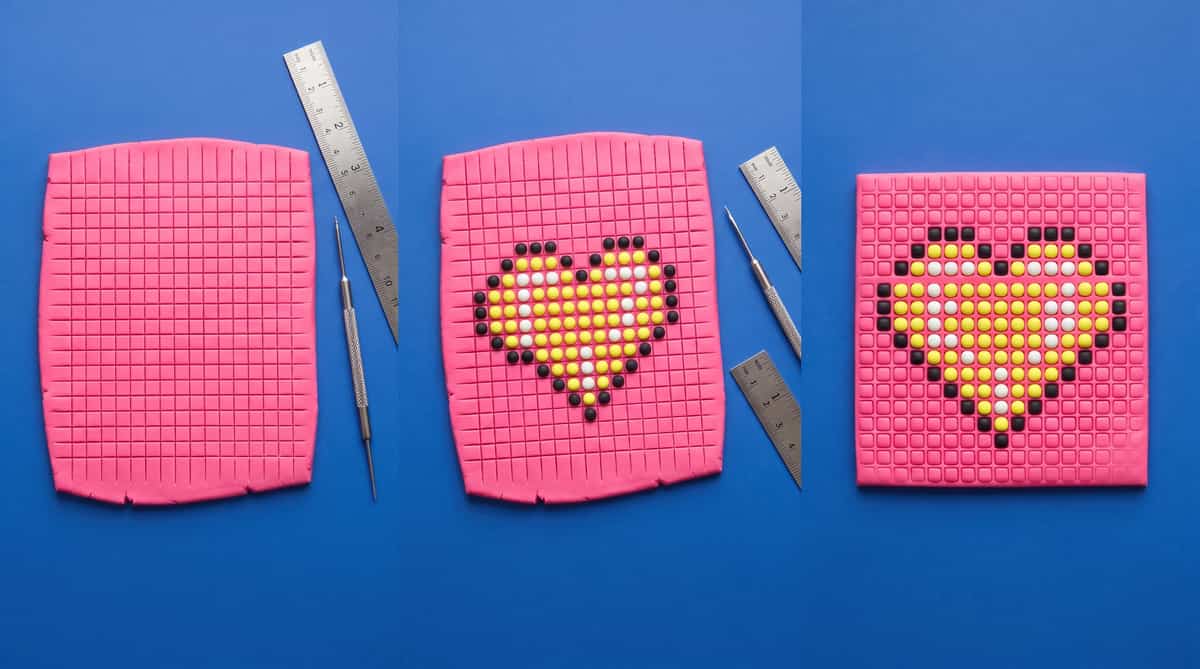
When the design uses repeated petals, dots, rings, or blossoms, make the full set of motif pieces before you start attaching them.
That makes the final surface more even and helps you compare shape size before anything is pressed into the base.
Mini flower cutters can help when you want repeated blossoms to stay cleaner and more consistent than hand-cut petals alone.
Clay Blade Set helps with lips, crescents, stripes, confetti pieces, and any small inserts that need a crisp edge.
How Hard To Press
Press only hard enough to seat the motif into the base. More pressure is not the same thing as better placement.
Too much pressure creates three problems fast:
- the base warps out of shape
- the motifs spread and blur
- the edges lose the crisp shadow that makes the design readable
Needle tools and silicone detail shapers help you press pieces into place without flattening the whole face with your fingertips.
How To Keep Flat Builds Flat
Keep the relief low, support the piece on a tile, and avoid piling too many thick shapes into one small area.
Flat buttons, brooches, and pendants are usually easier to keep clean when the motif pieces stay thin enough for the face to read as one front plane. If the petals or confetti chunks start stacking on each other, the piece often stops feeling intentional.
Where This Shows Up In The Lookbook
Use this guide when an inspiration page shows placed petals, dots, eyes, lips, leaves, rope borders, or tiny motif pieces rather than an all-over cane or a deeply sculpted form.
That often means:
- graphic art-deco and pop-art buttons
- floral medallion buttons
- cameo-style buttons and brooches
- flat pendants with placed blossoms or confetti-like fragments
Use This Guide With The Lookbook
If the item page says applique, inlay, confetti, or low relief, read that as a placement problem, not a sculpting marathon.
Your build order is usually:
- make the flat base first
- prepare the repeated small shapes
- place the largest motifs first
- fill gaps with small accents
- press lightly and bake on a flat support
Take the next step
Continue the series with the next guide in this path.